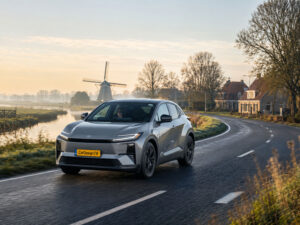
Volkswagen and the Danger of Becoming the Default Brand


When platform strategy works for the Group but weakens the brand at the center
There is an uncomfortable question hanging over the Volkswagen brand.
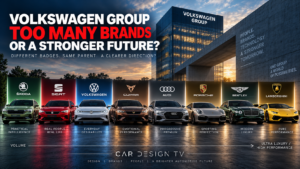
Not Volkswagen Group. Volkswagen Group is a vast industrial machine with extraordinary platform, engineering, manufacturing, and brand-management capability. It owns or controls some of the strongest names in the automotive world: Volkswagen, Audi, Porsche, Škoda, SEAT, CUPRA, Bentley, Lamborghini, Ducati, Volkswagen Commercial Vehicles, and others. As a corporate structure, it has mastered the art of spreading technology across brands while allowing those brands to speak different emotional languages.
The question is narrower and more dangerous:
What is Volkswagen itself supposed to stand for now?
For decades, the answer was clear. Volkswagen was the intelligent mainstream car. Not cheap, not flashy, not premium in the traditional luxury sense, but solid, rational, well-engineered, and quietly desirable. The Beetle, Golf, Passat, Transporter, Scirocco, Corrado, GTI, and even the early Touareg all carried some form of that identity. Volkswagen was not simply a brand. It was a standard.
A Golf was not just a compact hatchback. It was the benchmark.
A Passat was not just a family car. It was a disciplined, high-quality alternative to the mainstream.
A GTI was not just a performance version. It was a cultural idea.
But today Volkswagen risks becoming something less powerful: the neutral center of its own Group. The sensible brand. The default brand. The one from which the more interesting derivatives are created.
That is a serious strategic and design problem.

The old American warning: badge engineering without belief
To understand the risk, it is useful to look back at the American car industry of the 1960s, 1970s, and 1980s.
General Motors, Ford, and Chrysler once operated large brand portfolios covering multiple price levels and customer groups. Chevrolet, Pontiac, Oldsmobile, Buick, Cadillac, Ford, Mercury, Lincoln, Plymouth, Dodge, Chrysler and others all had roles within a hierarchy. In the best years, each brand had its own voice, its own engineering emphasis, and its own customer culture.
But as cost pressure increased, platform sharing and badge engineering became more obvious. Many cars shared bodies, doors, glass, hard points, interior structures, engines, and driving character. The visible differences became grilles, trim, lamps, badges, and marketing language.
At some point, customers began to notice.
If an Oldsmobile no longer felt meaningfully different from a Chevrolet, why should it exist? If Mercury was mostly a slightly different Ford, what was the reason to pay attention? If Plymouth could not offer a clear identity separate from Dodge, what was the brand promise?
Long term, many of those brands disappeared.
The lesson is not that platform sharing is wrong. Platform sharing is unavoidable in modern car manufacturing. The lesson is that a brand cannot survive on differentiation theatre. It needs a real reason to exist.
If the customer sees the engineering sameness but does not feel an emotional, practical, or cultural difference, the badge loses power.
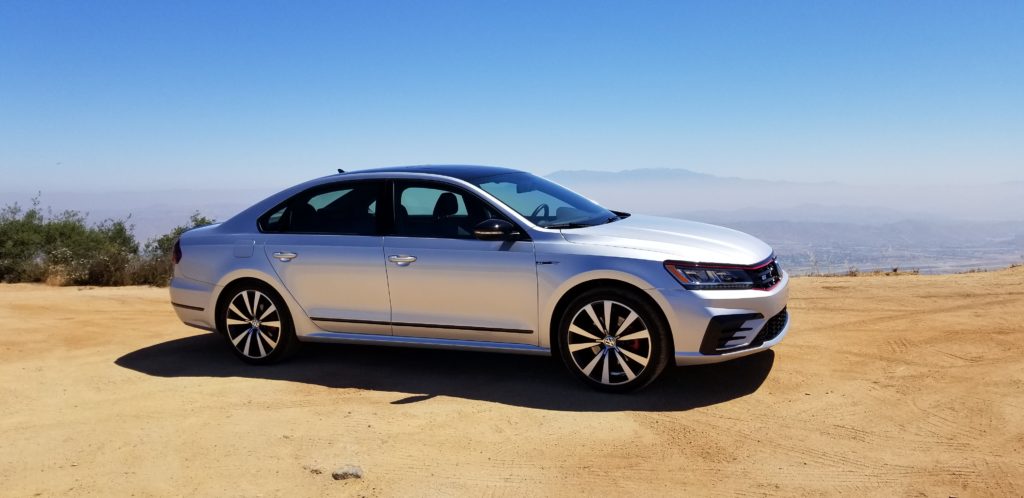
Volkswagen Group is not old Detroit — but the risk is related
Volkswagen Group’s current model is far more sophisticated than old American badge engineering.
The Group does not simply put different badges on identical cars. It creates modular architectures, shared powertrains, shared electronics, common purchasing structures, and common manufacturing logic, then allows brands to interpret those shared ingredients differently. Škoda, CUPRA, Volkswagen, and Audi may share platform DNA, but they can differ significantly in design language, interior tone, pricing, brand image, and target customer.
This is not crude badge engineering. It is modular brand engineering.
That distinction matters. It is one of Volkswagen Group’s greatest strengths. It allows the company to achieve economies of scale while covering a broad range of markets. A single platform strategy can support value-oriented family cars, sporty emotional models, premium Audis, and pragmatic fleet-friendly vehicles.
The problem is not that the Volkswagen Group brands share technology.
The problem is that the Volkswagen brand itself can become the least emotionally specific expression of that technology.
When the bones are shared, the skin, experience, and brand story become more important. If Volkswagen’s own interpretation is too cautious, too neutral, or too visually anonymous, then the same platform may feel more desirable when sold as a Škoda, CUPRA, or Audi.
That is the paradox.
The Group may be strong precisely because its derivatives are strong. But Volkswagen Passenger Cars may be weakened by the success of its own relatives.

Škoda: the rational challenger from within
Škoda is no longer simply the cheaper Volkswagen.
That idea is outdated.
Modern Škoda has become one of the clearest brands in the Group. Its promise is practical intelligence, space, value, usability, and increasingly confident design. Škoda has mastered the art of making the customer feel clever. The cars often appear less pretentious than Volkswagens, more spacious than expected, and better aligned with everyday use.
In many markets, Škoda has become the rational buyer’s choice. It does not need to pretend to be premium. It does not need to chase fashion. It offers space, utility, and honest value with enough design confidence to avoid feeling cheap.
That is a powerful formula.
It also directly threatens Volkswagen’s traditional territory. Volkswagen used to be the brand of intelligent mainstream engineering. But if Škoda now offers equal platform quality, more space, clear value, and a friendlier brand character, then Volkswagen has to justify its higher price and more central position.
Often, the justification is not obvious enough.
That does not mean Volkswagen is worse. It means Škoda has become very good at being what many customers actually need.
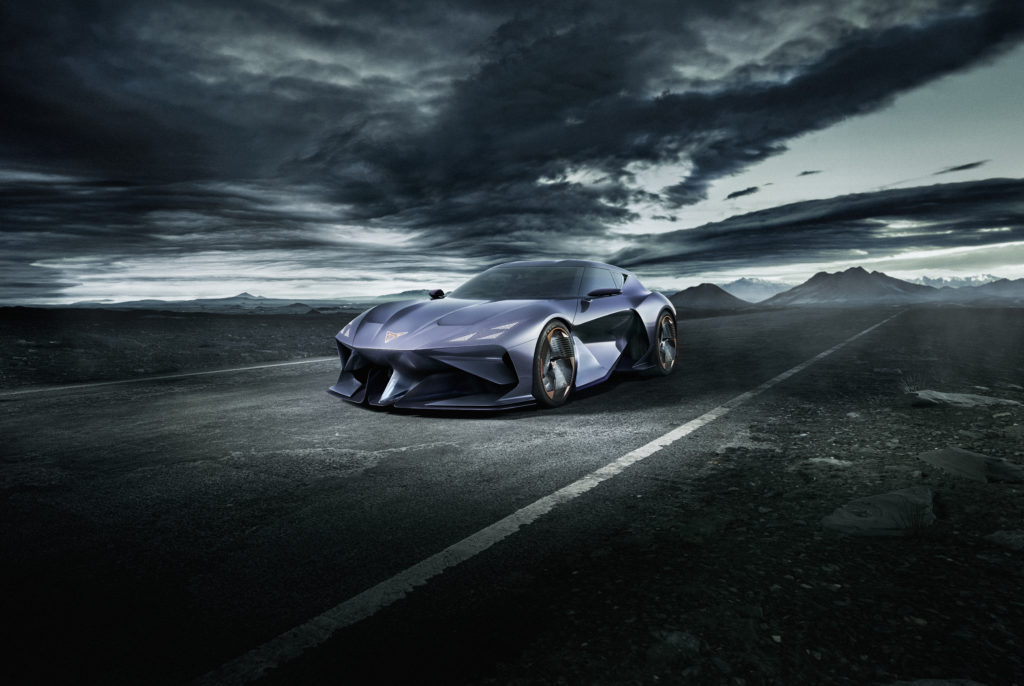
CUPRA: the emotional territory Volkswagen neglected
CUPRA represents a different internal threat.
Where Škoda attacks Volkswagen rationally, CUPRA attacks it emotionally.
CUPRA has taken over much of the youthful, sporty, design-led, slightly rebellious energy that Volkswagen once partly owned through GTI culture. The GTI used to be one of the clearest emotional assets in the Volkswagen world. It made a practical car exciting without making it silly. It combined everyday usability with real driver identity.
But in recent years, Volkswagen’s broader product range has often become visually safe and emotionally cautious. CUPRA stepped into that space with sharper graphics, stronger stance, warmer interiors, more expressive color/material choices, and a more performance-oriented attitude.
Even when a CUPRA shares underlying technology with Volkswagen Group relatives, it often feels more deliberately styled and better targeted at an audience that wants character.
That is dangerous for Volkswagen because a mainstream brand cannot live on rationality alone. It also needs emotional hooks. Historically, Volkswagen had several: Beetle charm, Golf precision, GTI culture, Transporter lifestyle, Passat solidity, Scirocco/Corrado aspiration.
Today CUPRA often feels more confident about emotion than Volkswagen itself.
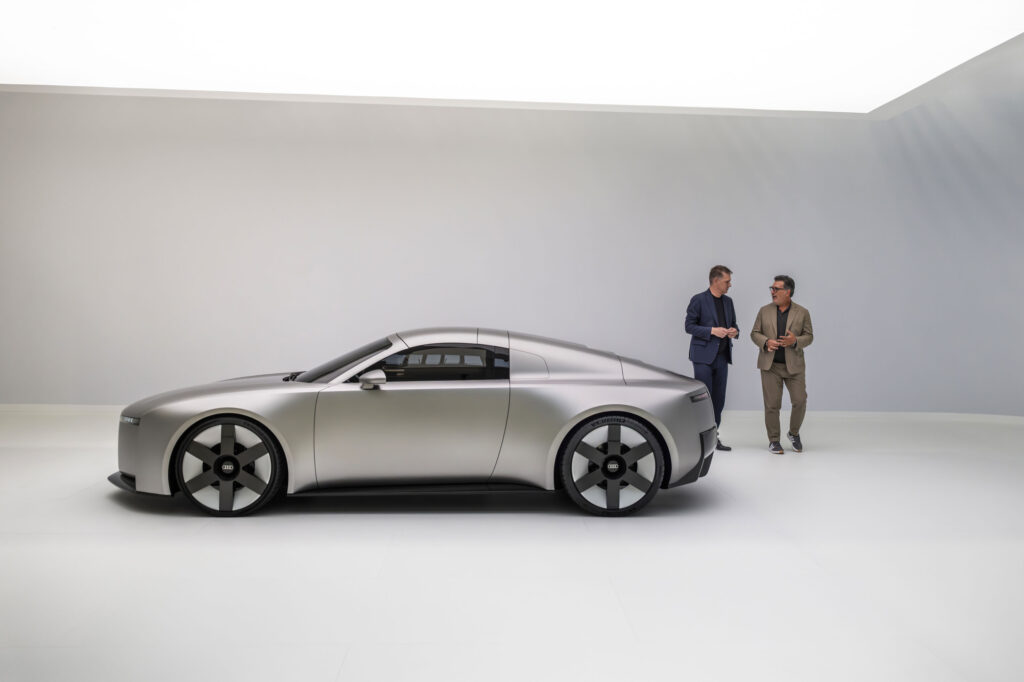
Audi: the premium ceiling
Above Volkswagen sits Audi, traditionally the more technical, premium, design-conscious expression of Group engineering.
Audi has had its own identity challenges in recent years, but the brand still owns a clearer premium territory than Volkswagen. Audi can justify more expensive materials, more advanced lighting, stronger design refinement, and a more status-driven customer proposition. It can also experiment with a more architectural, high-tech design language.
Volkswagen cannot simply move upward without colliding with Audi.
This creates a difficult strategic squeeze. If Volkswagen tries to become more premium, Audi blocks the path. If Volkswagen becomes more value-oriented, Škoda is already there. If Volkswagen becomes more emotional and sporty, CUPRA is waiting. If Volkswagen becomes too neutral, it becomes invisible.
So the question becomes unavoidable:
Where is Volkswagen’s unique space?

The Volkswagen brand-name contradiction
Volkswagen means “people’s car.”
That name carries enormous historical power, but also strategic tension. A brand called Volkswagen can move upmarket only so far before the name itself begins to resist. There is nothing wrong with making high-quality mainstream cars. In fact, that was always Volkswagen’s strength. But when Volkswagen becomes expensive without feeling emotionally or functionally superior, the brand promise weakens.
The original idea of Volkswagen was not cheapness. It was intelligent accessibility. It was a car that made high-quality mobility feel democratic.
The modern challenge is to reinterpret that idea for the electric, digital, software-defined age.
That should be a huge opportunity.
Volkswagen could be the brand that makes EVs understandable, desirable, durable, and genuinely usable for normal people. It could be the brand that solves interfaces better than premium brands, packages people better than crossovers, prices EVs more honestly than luxury brands, and designs cars with clarity instead of visual noise.
But to do that, Volkswagen needs more conviction.
It cannot be merely the midpoint between Škoda and Audi.
The ID era: a missed Golf moment
The ID family exposed the weakness more clearly than any previous generation of Volkswagens.
The ID.3 should have been the electric Golf moment. It should have been the car that said: this is the new people’s car for the EV age. It did not need to be dramatic. It needed to feel inevitable.
Instead, the ID.3 arrived with a somewhat cautious exterior, controversial interior cost decisions, and software issues that damaged confidence. The ID.4 and ID.5 gave Volkswagen important EV volume, but they did not fully establish a new emotional identity. The ID.7 is a more mature product, but again it feels like a competent car rather than a cultural reset.
Meanwhile, related Group products often appeared more distinctive. The Škoda Enyaq gave buyers a more practical and approachable version of the MEB idea. The CUPRA Born gave the same basic EV hatchback concept more attitude. The Audi Q4 e-tron gave the platform a more premium surface.
That is the problem in miniature.
Volkswagen created the platform logic, but other brands sometimes created the more memorable emotional expressions.
Design neutrality as a brand risk
Volkswagen design has often been strongest when it was simple. But simplicity and neutrality are not the same thing.
The original Golf was simple but not anonymous. The Beetle was simple but unforgettable. The early Transporter was simple but iconic. The first-generation Scirocco was simple but sharp. The Mk1 GTI was simple but full of attitude. The W8 Passat and Phaeton era may have been strategically questionable, but they showed Volkswagen’s belief in engineering seriousness. The Up! was simple but intelligently designed. The ID. Buzz, among recent models, succeeds partly because it has a clear emotional idea.
The risk today is that many Volkswagens are designed to offend no one.
That can work for fleet sales and conservative buyers, but it weakens cultural relevance. In a market crowded with Korean design confidence, French rediscovery, Chinese speed, Tesla disruption, and internal Group alternatives, visual politeness is not enough.
A Volkswagen does not need to shout. But it must have a point of view.
The Group logic: why internal competition is tolerated
From the corporate perspective, internal competition is not necessarily a disaster. If a customer chooses a Škoda instead of a Volkswagen, the Group may still keep the sale. If a younger buyer chooses CUPRA instead of Volkswagen, the Group may keep that buyer within the family. If a more affluent customer moves from Volkswagen to Audi, margin may improve.
This is why multi-brand groups tolerate overlap. The broader objective is not always to protect one brand at all costs. It is to keep customers inside the Group ecosystem.
But this logic has limits.
If the central Volkswagen brand loses desirability, the Group loses more than sales volume. It loses one of the most valuable automotive identities ever created. Volkswagen is not just another brand in the portfolio. It is the name on the building. It is the historical anchor of the Group. It is the brand that should define what intelligent mainstream mobility means.
If that brand becomes vague, the Group becomes more dependent on satellites.
That is not healthy long term.
Dealers can feel the weakness before headquarters does
Brand problems often show up at the retail level before they become obvious in corporate strategy documents.
A dealer or salesperson does not sell abstract platform strategy. They sell the car in front of the customer. If a customer compares a Volkswagen with a Škoda, CUPRA, Hyundai, Kia, Toyota, Renault, Peugeot, BYD, Tesla, or MG, the salesperson needs a clear answer to the question:
Why this Volkswagen?
If the answer is only “because it is a Volkswagen,” that may not be enough anymore.
Dealers are pragmatic. They gravitate toward products that customers respond to. If Škoda offers more space and value, CUPRA more excitement, and Audi more premium status, dealers will naturally feel where the energy is.
This can create a feedback loop. Less customer excitement leads to less dealer enthusiasm. Less dealer enthusiasm leads to weaker presentation. Weaker presentation leads to even more customer drift.
A brand can survive this for a while because of recognition and installed customer base. But it gradually loses heat.
Chinese brands sharpen the threat
The rise of Chinese EV brands makes Volkswagen’s identity question even more urgent.
Chinese manufacturers are not only competing on price. They are competing on speed, technology, screen experience, battery value, equipment levels, and increasingly design. Brands such as BYD, NIO, XPeng, Zeekr, MG, and others are attacking different parts of the European market with confidence and speed.
Volkswagen cannot respond with bland competence alone.
A customer comparing an electric Volkswagen with a Chinese EV may see more equipment, more range, more digital content, more visual novelty, or more aggressive pricing elsewhere. Volkswagen’s advantage should be trust, engineering maturity, dealer support, quality, design intelligence, and usability.
But those qualities must be visible and felt. They cannot remain hidden in corporate heritage.
The new competition forces Volkswagen to become clearer, not more cautious.
The danger of fake premium
One possible wrong answer is for Volkswagen to simply push itself higher.
This has been tried before. The Phaeton was an extraordinary engineering achievement but a confused brand statement. It proved that Volkswagen could build a luxury car, but it did not prove that customers wanted a luxury Volkswagen. The Touareg worked better because SUVs could stretch the brand upward while still feeling useful and robust. But the lesson remains: Volkswagen must be careful when chasing premium status.
Premium is not just better materials and higher prices. Premium is permission. Audi has that permission. Porsche has that permission. Bentley has it. Volkswagen has a different kind of permission: to build the best intelligent car for real use.
That permission is extremely valuable.
Volkswagen should not abandon it.
The danger of becoming too cheap
The opposite wrong answer is to chase low-cost competition directly.
Volkswagen cannot simply become Dacia. Nor should it. The brand’s strength has never been cheapest possible transportation. It has been high perceived quality at an attainable level.
If Volkswagen strips too much content, reduces interior quality too far, or makes cost-cutting too visible, it damages the reason customers historically paid more for a Volkswagen.
The brand must find a difficult balance: affordable enough to feel true to its name, but substantial enough to feel like a Volkswagen.
That is a design challenge as much as a financial one.
The right answer: intelligent desirability
Volkswagen’s future should be built around intelligent desirability.
Not luxury.
Not cheapness.
Not aggression.
Not fashion.
Intelligent desirability means a car that feels so well considered that it becomes emotionally attractive through use. The door closes correctly. The seating position is natural. The visibility is good. The interface is clear. The materials are durable. The software works. The controls are logical. The packaging is clever. The design is simple but memorable. The price feels fair. The car feels honest but not boring.
That is Volkswagen’s natural territory.
It is also exactly where modern cars are often failing.
Many cars today are overstyled, over-screened, overcomplicated, expensive, heavy, and ergonomically compromised. Volkswagen could become the brand that restores common sense without losing desire.
That would be a powerful position.
Design: less anonymous, not more decorative
Volkswagen does not need more styling tricks. It needs stronger design principles.
The answer is not fake vents, exaggerated grilles, aggressive lighting, or CUPRA-like theatrics. Volkswagen should remain clean and disciplined. But the design should have more identity, more confidence, and more emotional warmth.
A future Volkswagen should be:
- simple, but recognisable;
- friendly, but not childish;
- technical, but not cold;
- efficient, but not anonymous;
- practical, but not dull;
- affordable, but not cheap-looking;
- German, but not bureaucratic.
This is hard. It is much harder than adding drama. But it is exactly the kind of design discipline Volkswagen once understood.
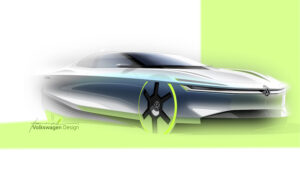
The ID. Buzz shows that Volkswagen can still create emotional clarity when it has a strong idea. The challenge is to bring that same clarity to mainstream hatchbacks, crossovers, wagons, sedans, and EVs without relying only on nostalgia.
The return of names matters
Volkswagen’s decision to return familiar names to its EV strategy is significant. Names like Golf, Polo, Passat, Tiguan, and GTI carry emotional memory. The ID numbering system felt abstract and technological. It may have made sense as a clean EV sub-brand, but it lacked the warmth and cultural depth of Volkswagen’s established names.
Using known names again is not just marketing. It is an admission that Volkswagen’s past still contains useful emotional capital.
But names alone are not enough.
An electric Golf must feel like a Golf. An ID. Polo must feel like a proper small Volkswagen, not just an affordable EV with a familiar badge. A future electric GTI must not merely be quick; it must recover the relationship between everyday usefulness and driver engagement that made the original GTI meaningful.
Volkswagen should use its names as promises, not labels.
The small EV is the real test
The most important future Volkswagen may not be the most expensive one. It may be the affordable electric car.
Volkswagen has shown concepts such as the ID. 2all and ID. EVERY1, previewing EVs in the €25,000 and eventually around €20,000 classes. These cars are strategically critical because they return Volkswagen to its deepest mission: mobility for many people, not only affluent early adopters.
This is where the brand can become relevant again.
If Volkswagen can create a small EV that feels solid, usable, charming, efficient, well-made, and genuinely desirable, it can reclaim the “people’s car” idea for the electric age. If it creates a cost-driven appliance with a famous badge, it will lose the opportunity.
The affordable EV will reveal whether Volkswagen still knows how to build not just a car, but a benchmark.
What Volkswagen can learn from Škoda, CUPRA, and Audi
Volkswagen should not imitate its sister brands, but it can learn from them.
From Škoda, Volkswagen can learn clarity of usefulness. Škoda often knows exactly why a customer would buy the car. Volkswagen needs that same practical confidence, but with more refinement and brand warmth.
From CUPRA, Volkswagen can learn emotional courage. CUPRA proves that platform sharing does not have to produce dull cars. Volkswagen should not become aggressive, but it should rediscover character.
From Audi, Volkswagen can learn technical calm and premium restraint. But Volkswagen must interpret those qualities democratically, not luxuriously.
From its own past, Volkswagen can learn the most important lesson: the best Volkswagen is not the most expensive, fastest, or most dramatic. It is the one that feels correct.
What Volkswagen should stop doing
Volkswagen should stop relying on the brand name alone.
It should stop assuming that conservative design automatically equals timeless design.
It should stop treating software and interface as secondary to hardware quality.
It should stop allowing interior cost-cutting to damage perceived trust.
It should stop positioning itself awkwardly between Škoda and Audi without a sharper reason to exist.
It should stop making cars that look like the most neutral possible answer to a product-planning question.
Most importantly, it should stop confusing scale with identity.
Volkswagen’s size is not its soul.
What Volkswagen should do instead
Volkswagen should define a new brand manifesto around human-centered intelligent mobility.
That manifesto could include:
Clarity of use
Every Volkswagen should be easy to understand, easy to enter, easy to see out of, easy to control, and easy to live with.
Design warmth
The cars should be modern and clean, but not cold. The face, stance, graphics, and interior should feel human rather than bureaucratic.
Real quality
Not superficial premium imitation, but durable materials, good tactility, excellent assembly, robust controls, and long-life design.
Interface leadership
Volkswagen should become the benchmark for intuitive automotive controls, not another brand chasing touchscreen fashion.
Packaging intelligence
Volkswagen should lead in space efficiency, comfort, visibility, access, and ergonomics. This would reconnect directly with the “people’s car” idea.
Affordable EV excellence
The next small EVs should not feel like compromised entry products. They should feel like the new Beetle/Golf moment.
Emotional everyday performance
GTI, GTX, and other performance sub-brands should not only add horsepower. They should create driving character.
Honest sustainability
Recyclability, repairability, battery longevity, and efficient manufacturing should be visible parts of the brand promise.
If Volkswagen does these things, it does not need to compete with Škoda, CUPRA, or Audi on their terms. It can reclaim its own.
The bigger question: who owns the mainstream future?
The mainstream car is changing.
For decades, the mainstream car was defined by combustion packaging, mechanical reliability, dealer network strength, and brand loyalty. In the EV era, it will be defined by battery cost, software, charging, interior space, user interface, digital trust, residual value, and the emotional confidence that the technology will not become obsolete too quickly.
This is exactly the kind of market Volkswagen should own.
But to own it, Volkswagen must become more than a platform provider with a familiar badge. It must create cars that feel intelligently designed from the human experience outward.
That may be the great opportunity.
The world does not need Volkswagen to become another premium brand. It does not need Volkswagen to become another low-cost brand. It does not need Volkswagen to become another aggressive design brand.
It needs Volkswagen to become the best version of Volkswagen again.
Final verdict: the Group strategy works, but the Volkswagen brand needs renewal
Volkswagen Group’s multi-brand platform strategy is not the same as old American badge engineering. It is far more advanced, more global, and more successful. The Group’s brands are differentiated with greater care, and the shared technology can be interpreted in genuinely different ways.
But the historical warning still matters.
A brand loses strength when customers no longer understand why it exists. Volkswagen is not in immediate danger of disappearing like Oldsmobile, Mercury, or Plymouth. It is too large, too global, and too deeply embedded in the market. But it is in danger of becoming emotionally vague.
That may be worse in the long run because it happens slowly.
Škoda is clearer on value and usefulness. CUPRA is clearer on emotion and attitude. Audi is clearer on premium technology. Chinese and Korean competitors are clearer on price, equipment, and speed of innovation. Against all of that, Volkswagen cannot survive indefinitely as the sensible middle.
Volkswagen must rediscover conviction.
It should not shout. It should not chase fashion. It should not imitate its own sub-brands. It should not become fake premium or visibly cheap.
It should become the brand of intelligent desirability: cars that are beautifully usable, honestly engineered, emotionally calm but not boring, affordable but not compromised, and designed around real human life.
That is not a small task.
But it is exactly the task Volkswagen was born to perform.
The future of Volkswagen will not be decided only by platforms, batteries, software partnerships, or production scale. It will be decided by whether customers once again feel that a Volkswagen is the most obvious, most intelligent, most satisfying choice in its class.
For a company whose name still means “people’s car,” that should not be a nostalgic idea.
It should be the mission.