Bentley Torcal: Reinventing the Bentley for the Electric Era

Bentley has finally revealed the car that may prove to be considerably more important than simply its first fully electric production model. The new Bentley Torcal represents a fundamental rethink of what a modern Bentley should be. It introduces a new exterior design language, a new interior philosophy, a fully electric 800-volt architecture, active suspension, extraordinarily rapid charging and even an entirely new approach to creating the emotional soundtrack traditionally supplied by a large combustion engine.
More importantly, Bentley describes the Torcal as a template for future Bentleys, irrespective of powertrain. That makes this five-metre-long electric SUV one of the most consequential new models from Crewe in decades, and from a design perspective there is a lot to unpack.

Not Simply an Electric Bentayga
Perhaps the most important decision Bentley made was not to turn the Torcal into an electric interpretation of the Bentayga. Instead, Design Director Robin Page and his team have created a considerably lower and sleeker vehicle that begins establishing a new generation of Bentley design.
That distinction matters. The luxury EV market has already demonstrated how easily traditional premium brands can lose their visual identity when confronted with the aerodynamic and packaging requirements of an electric platform. Remove the radiator grille, shorten the bonnet and optimise everything around aerodynamic efficiency, and suddenly cars from historically very different manufacturers begin adopting remarkably similar proportions.
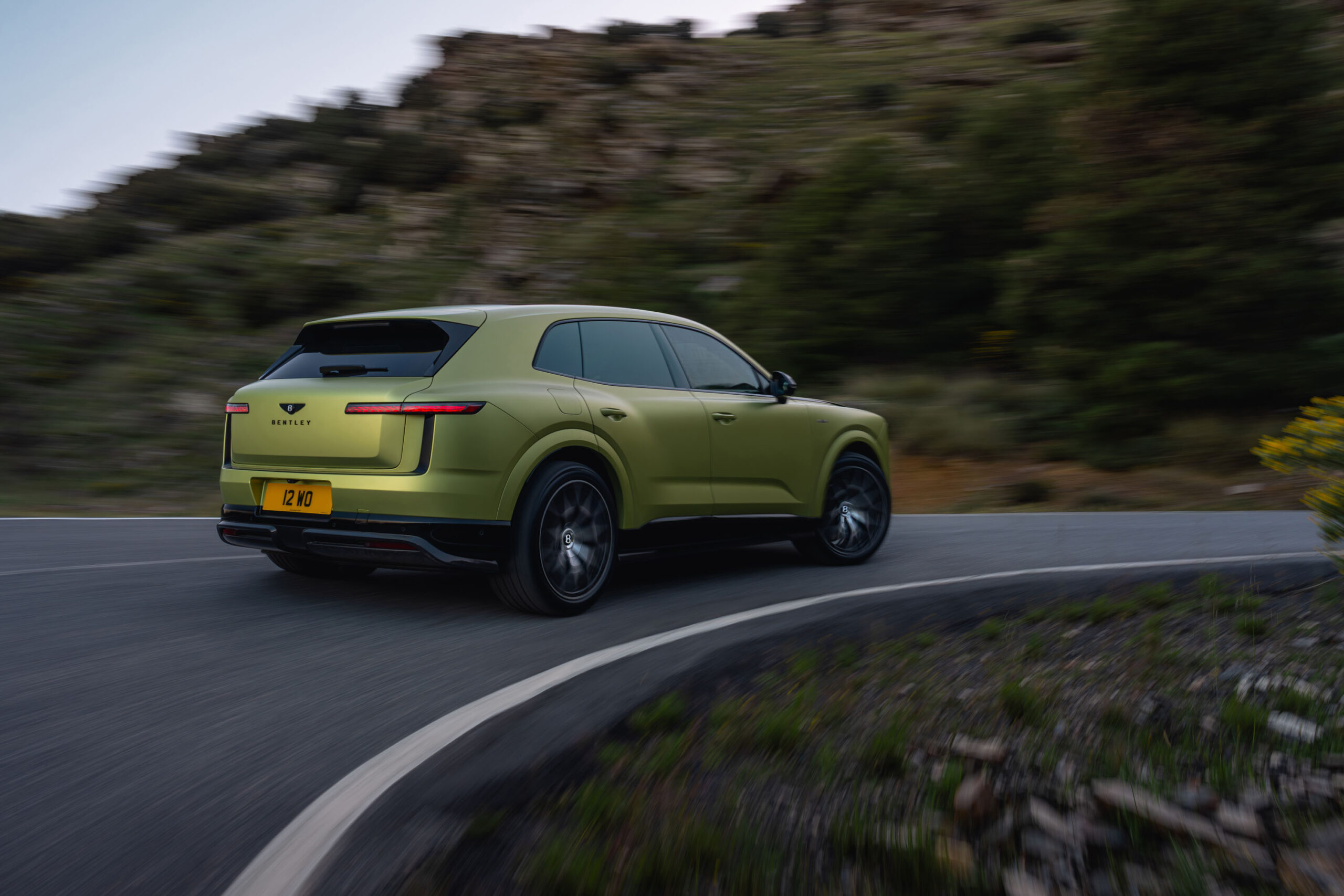
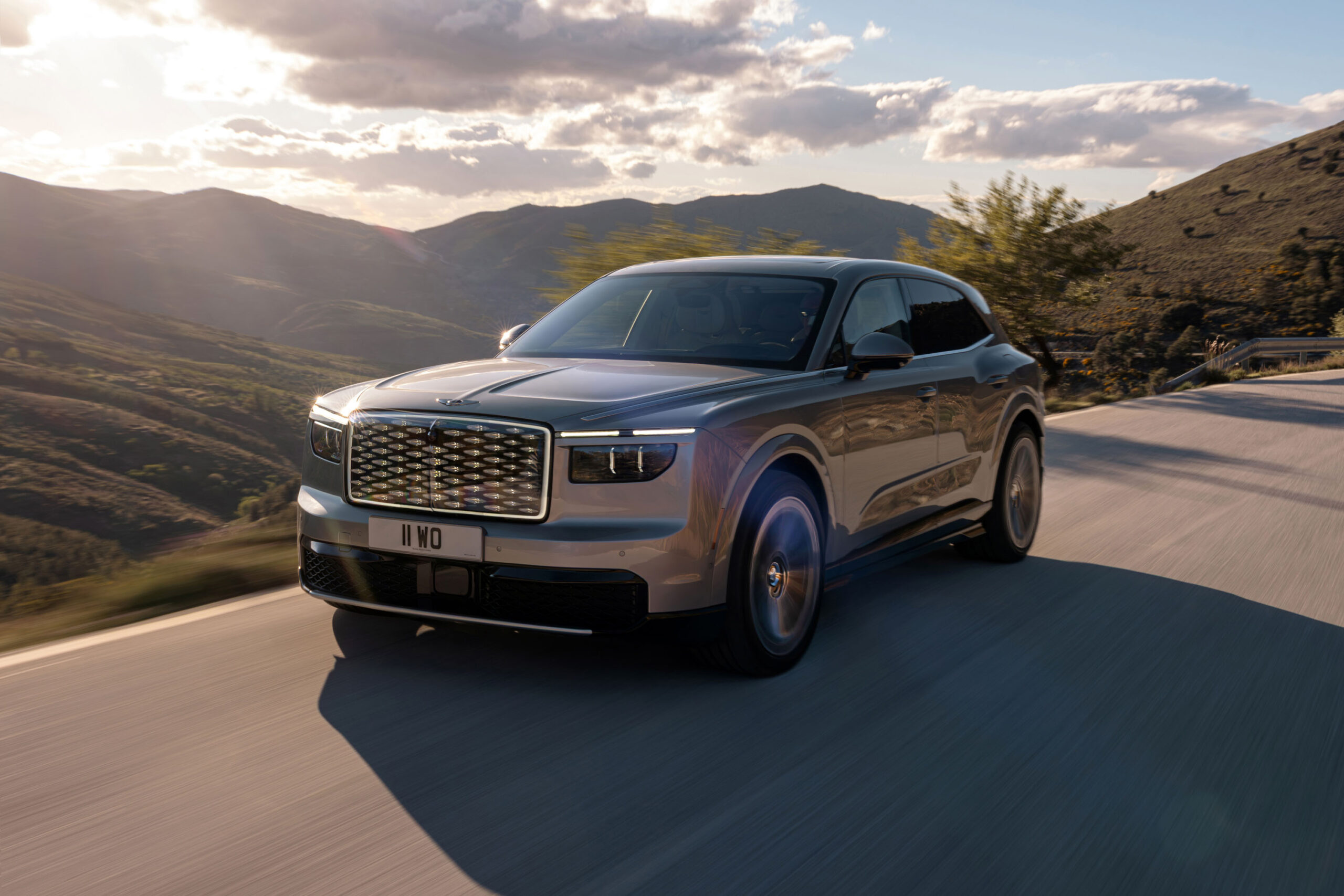
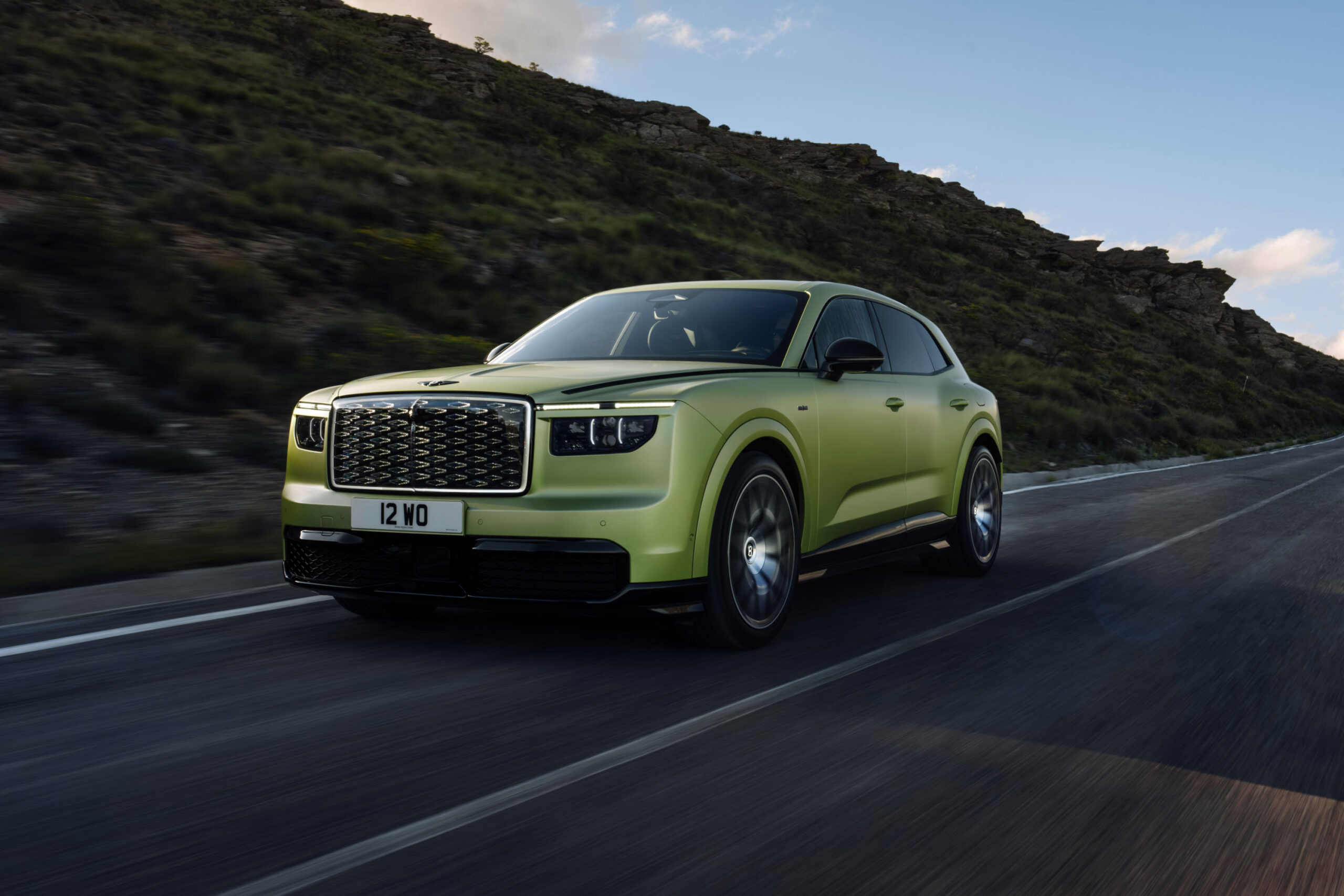
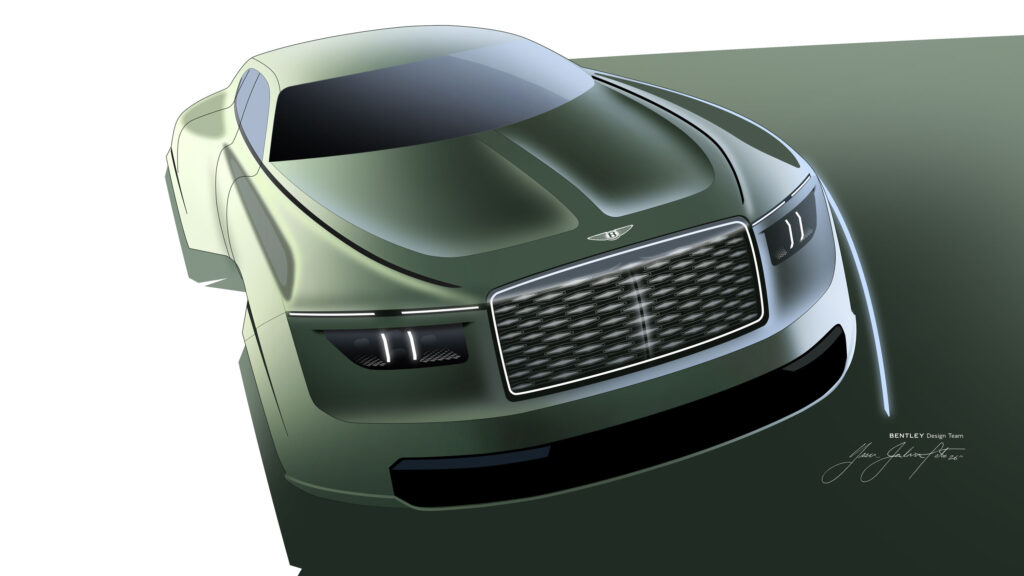
Bentley has taken a different route. The Torcal retains the visual ingredients that make a Bentley immediately understandable as something substantial, expensive and powerful. The long wheelbase is combined with short overhangs, but importantly the front remains proud and upright. Bentley describes this philosophy as “upright elegance.” There is another particularly interesting expression being used by the designers: the “endless bonnet.” That tells us a great deal about Bentley’s priorities.
An electric vehicle technically has very little need for the enormous bonnet traditionally associated with powerful luxury automobiles. Bentley could therefore have pushed the cabin much farther forward and exploited the freedom offered by the EV architecture. It deliberately chose not to. Instead, the proportions continue to communicate power in the traditional automotive sense. This is an important distinction between designing an electric car and designing a Bentley that happens to be electric.

Bentley’s Four Reads of Design
Robin Page describes Bentley design through what the company calls four “reads”: proportion, graphics, surface and detail. It is an interesting way of formalising something automotive designers instinctively understand. You don’t perceive an automobile in one instant. From a distance you initially understand its silhouette and proportion. As it gets closer, you recognise its graphic identity. Then the surfaces become apparent. Only at close range do you begin noticing individual details and craftsmanship.
The Torcal’s first read is therefore its stance. A long wheelbase, relatively short overhangs and the visually extended bonnet establish the car before any individual detail becomes important. This is especially significant for Bentley because the traditional luxury-car proportion has been under pressure during the transition to electrification. Instead of celebrating the cab-forward possibilities of an EV platform, Bentley continues to use proportion to communicate prestige. The cabin sits confidently between substantial body volumes rather than appearing perched on top of a battery skateboard. There is visual mass, but not simply bulk, and for a vehicle approximately five metres long, the Torcal looks remarkably planted.
Creating a New Bentley Face
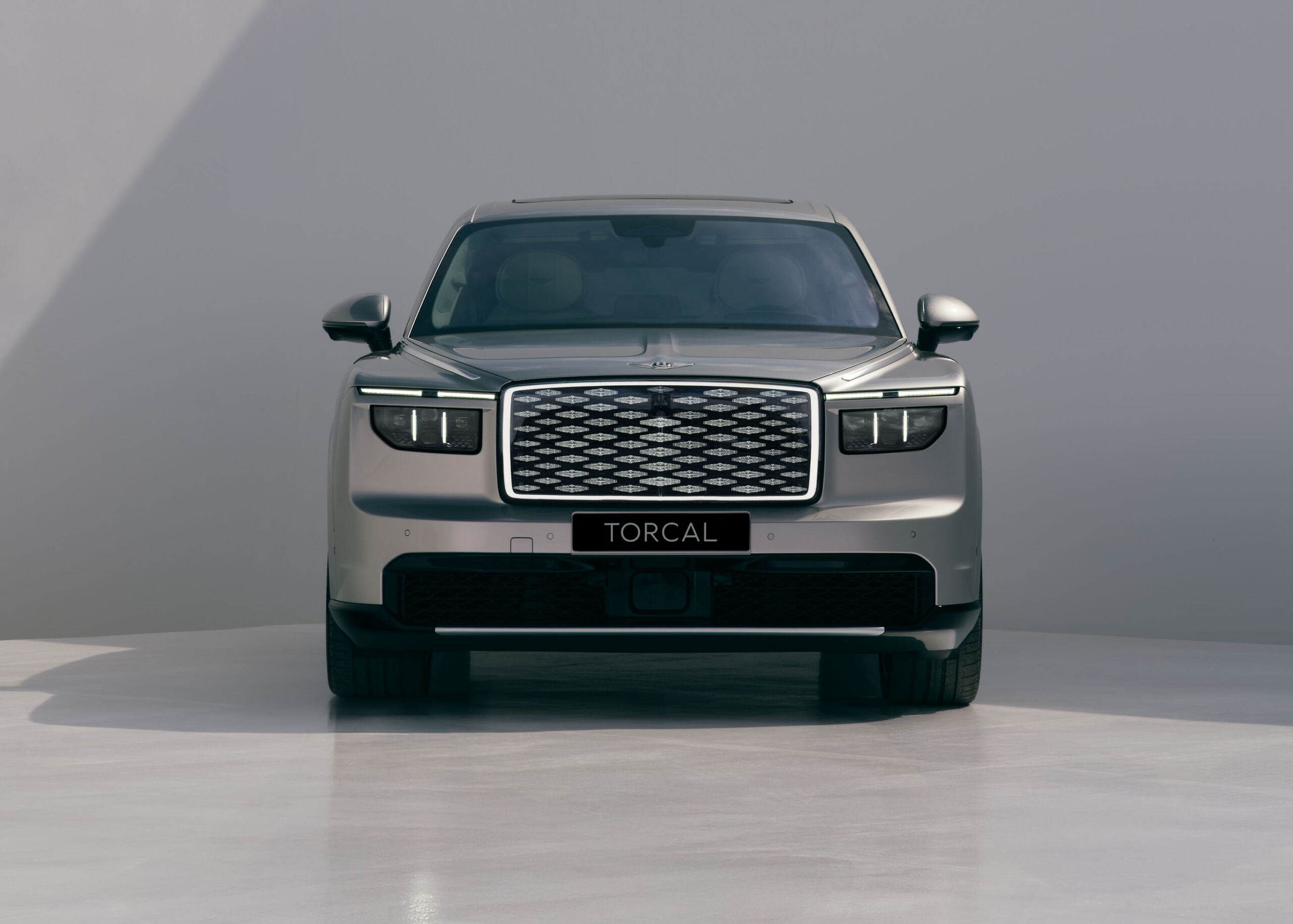
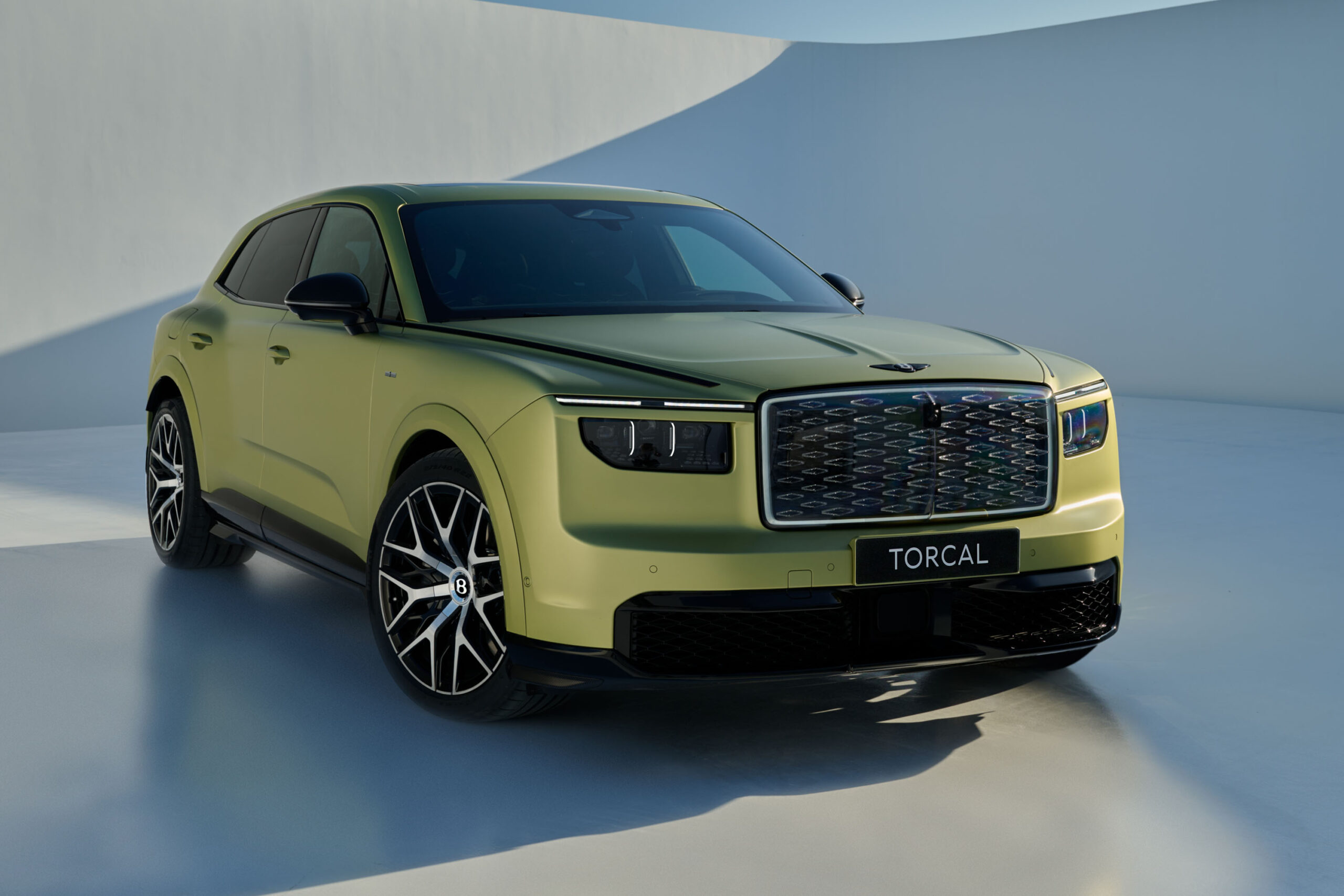
The second read concerns graphics, particularly the face. Bentley has historically relied heavily on its grille and paired lighting signatures for recognition. Electrification makes that more difficult because the enormous cooling aperture of a traditional Bentley is no longer functionally necessary. Rather than simply deleting it, Bentley has transformed it.
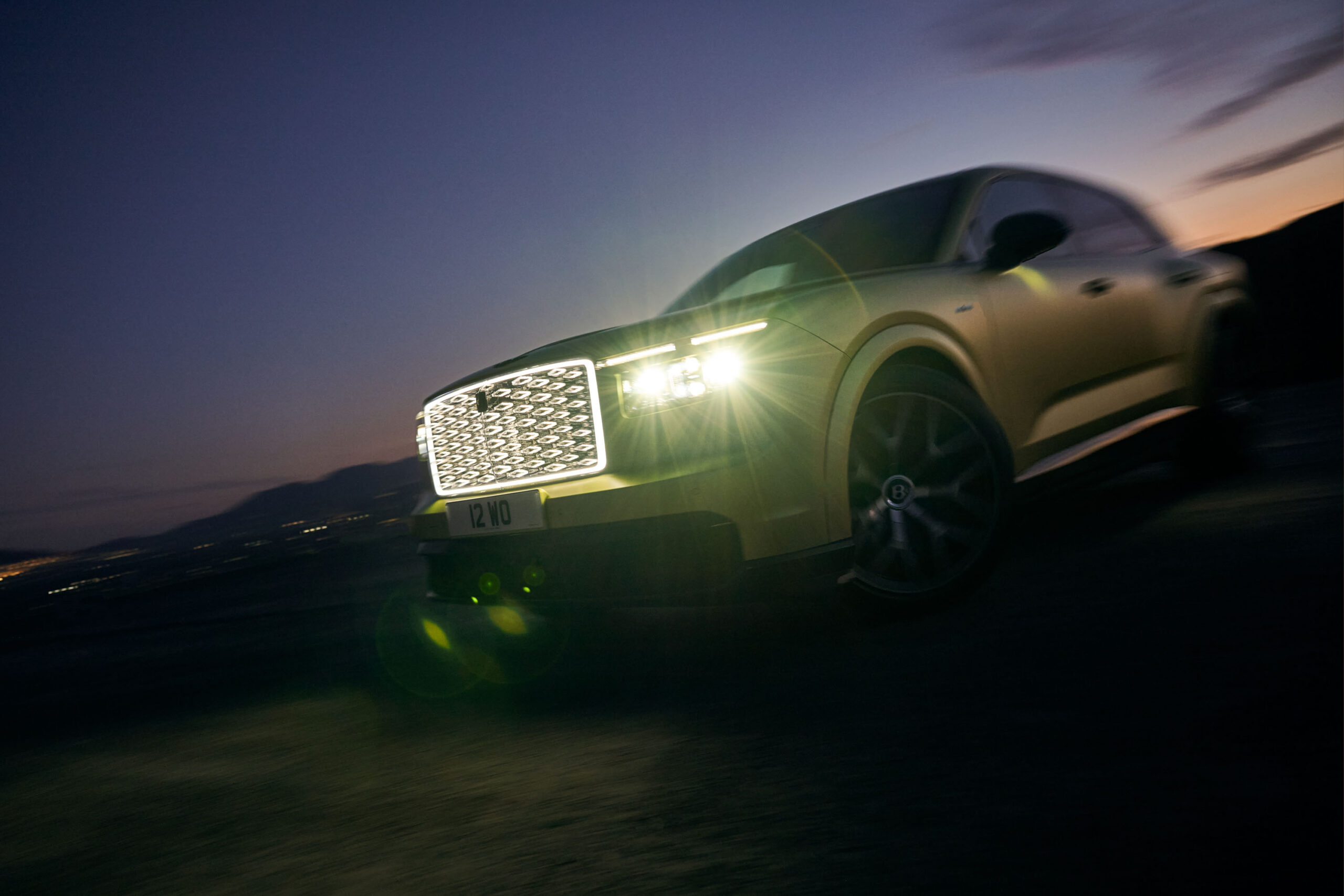
The Torcal uses an illuminated diamond grille that preserves the visual position and importance of the traditional Bentley radiator while treating it as a graphic element rather than pretending an EV requires the same cooling architecture as a W12 Continental GT. There are references to previous Bentleys too, including the Continental T, but they are not literal reproductions.
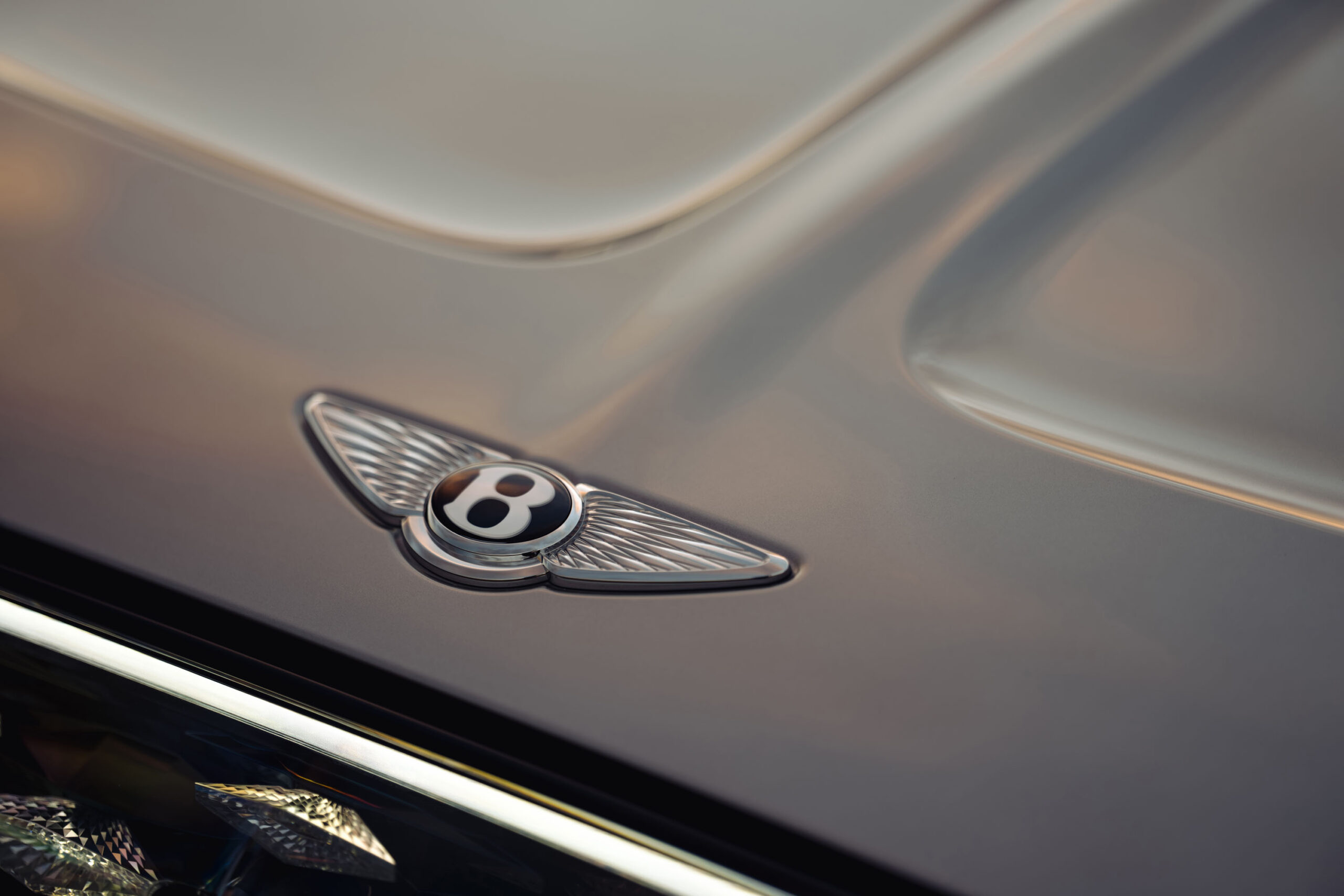
This is exactly where heritage design becomes difficult. Too little reference to the past and a century of accumulated brand recognition disappears. Too much and the designer ends up creating a caricature of an old Bentley wrapped around completely new technology. The Torcal attempts to occupy the space between those extremes and is also the first production Bentley to wear the company’s redesigned and modernised winged emblem.
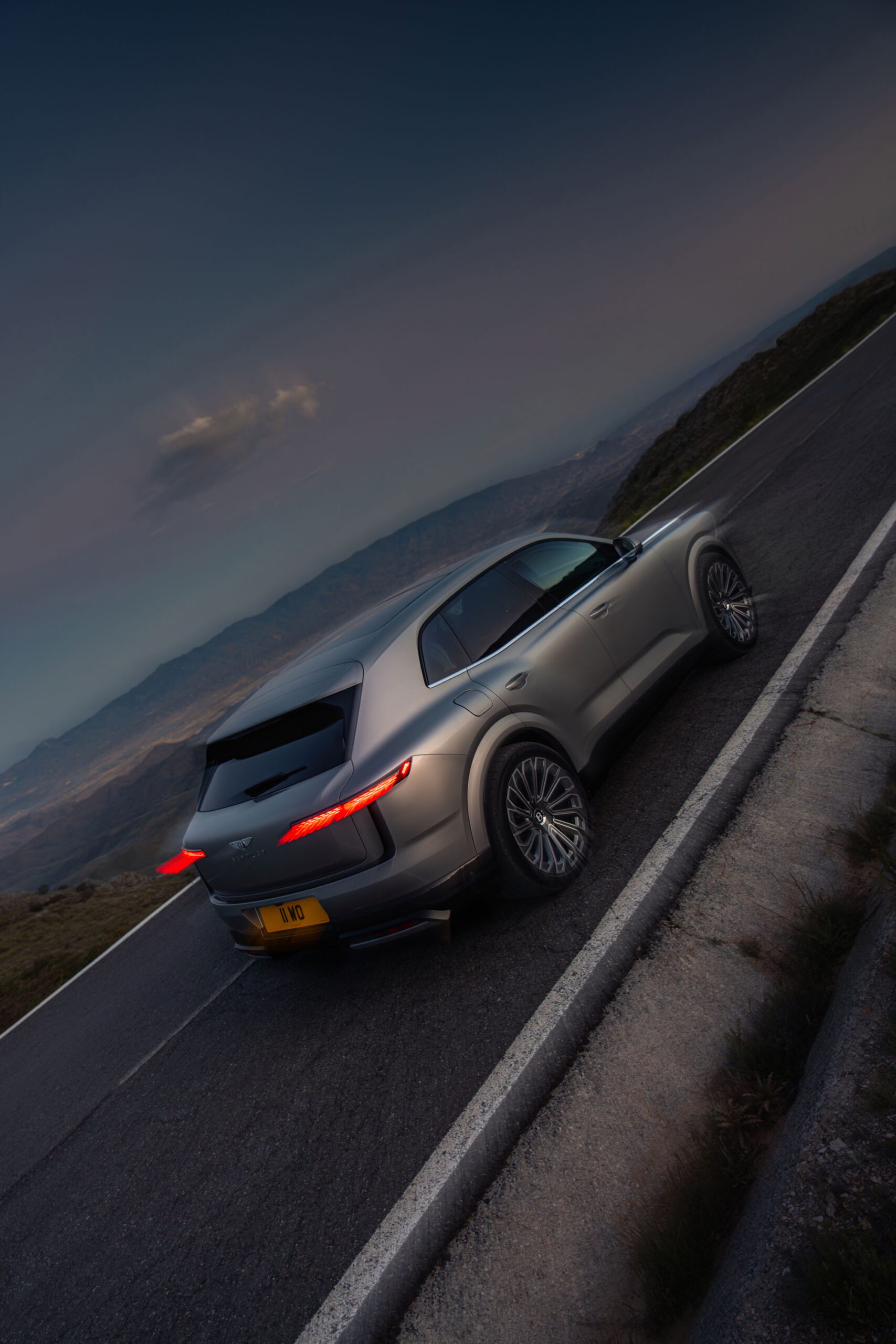
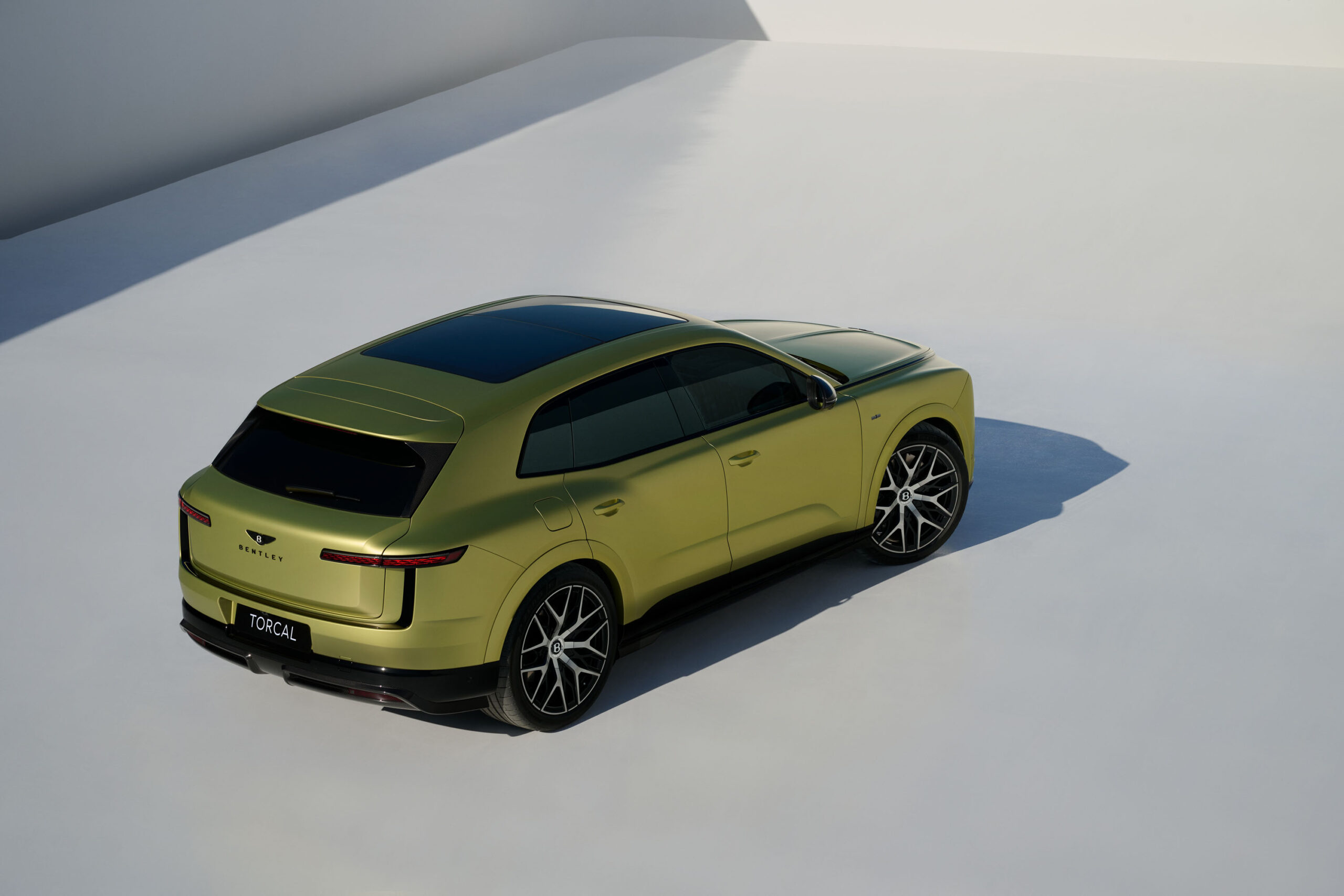
At the rear, Bentley introduces another expression from its developing design vocabulary: the “prestigious shield.”First explored on the EXP 15 concept, the idea is to create a clean and visually strong rear graphic rather than covering the tail with unnecessary decoration. The result is much more architectural than ornamental.

Letting the Surfaces Do the Work
For me, this may be the most interesting part of the Torcal. Bentley says it has deliberately reduced unnecessary lines, which sounds obvious but is increasingly rare. Contemporary automotive design has spent much of the last decade accumulating creases, cuts, floating elements, air curtains, decorative inserts and increasingly complicated lighting graphics. Sometimes these elements genuinely resolve aerodynamic or manufacturing requirements. Often they simply compensate for weak underlying volumes.
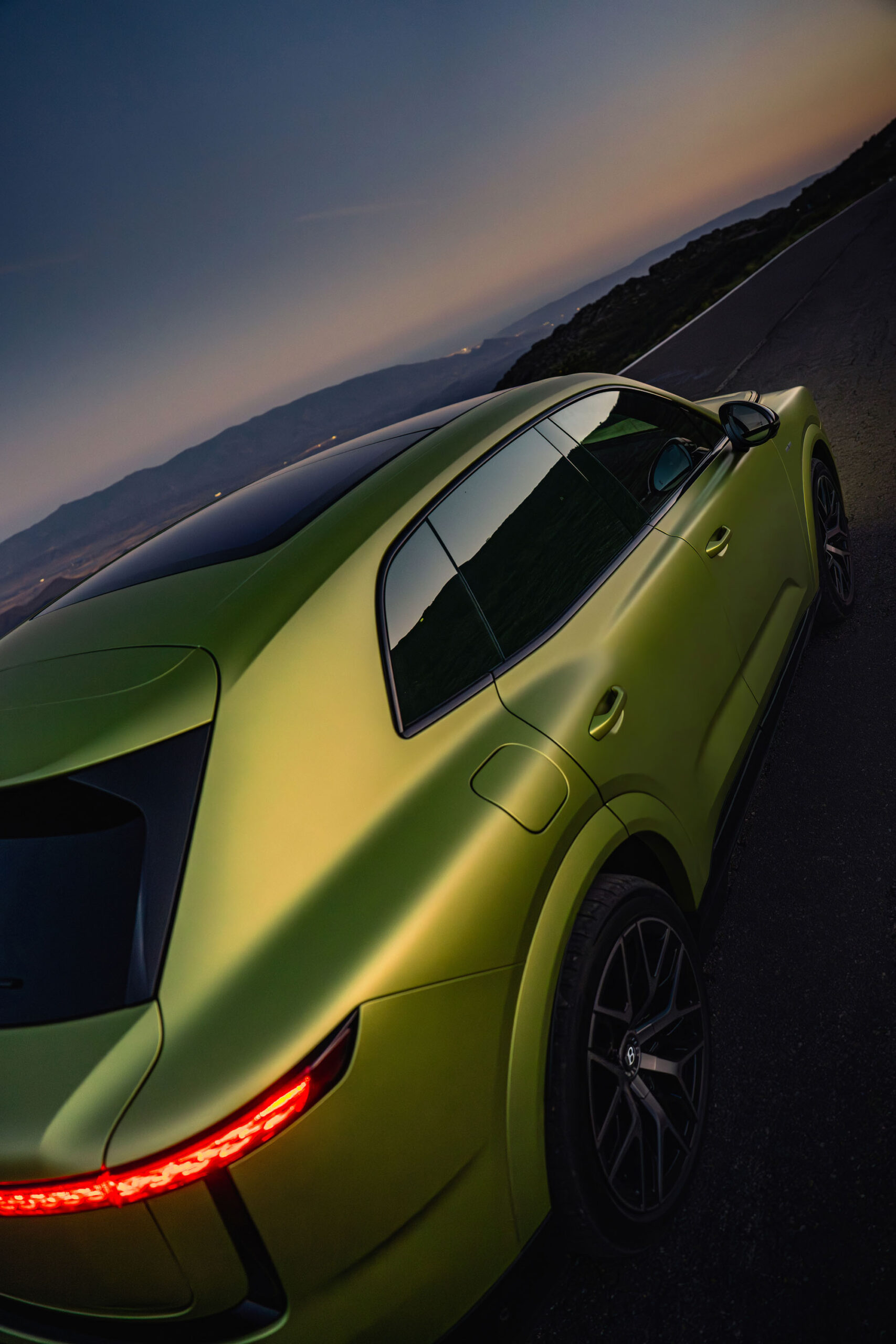
The Torcal takes the opposite approach. Its character is intended to come primarily from proportion and sculpture. The most successful expression of this is around the rear quarters, where the cabin tapers inward as it moves rearward while the body expands over the rear wheels. That creates the strong rear haunch historically associated with powerful rear-driven grand tourers.
Bentley calls this the “resting beast,” and it is a surprisingly appropriate description. The car should appear powerful even while stationary, with the energy contained within the volume rather than advertised through dozens of superficial styling devices. That philosophy is particularly appropriate for Bentley because a car with this degree of presence should not need to shout to attract attention.

Detail and Craftsmanship
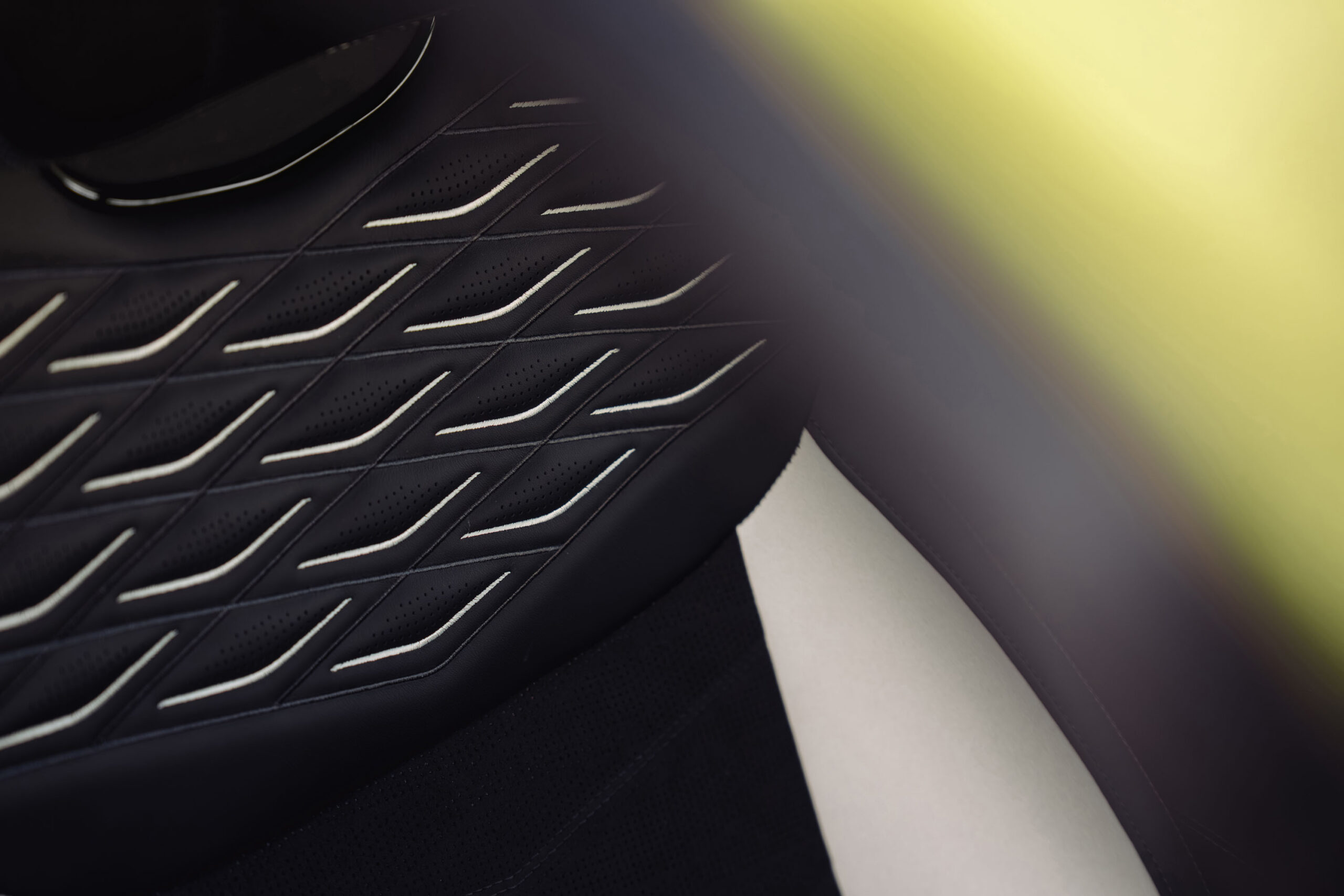
Only when approaching the Torcal does Bentley want the fourth layer of design to reveal itself. Here the diamond becomes a recurring theme, sometimes appearing explicitly and elsewhere abstracted into materials, textures and patterns. This is where Bentley’s traditional craftsmanship becomes particularly important because luxury at this level cannot depend solely upon screen size, computing power or acceleration figures.
Technology becomes obsolete extraordinarily quickly, while materials and craftsmanship age differently. That distinction becomes even more important as luxury manufacturers enter the EV era and increasingly share similar underlying technologies. A motor’s power output or a battery’s charging speed can be overtaken within a few years; the tactile and visual quality of a beautifully executed interior remains a much more durable part of the ownership experience.

An Interior That Hasn’t Forgotten the Human Being
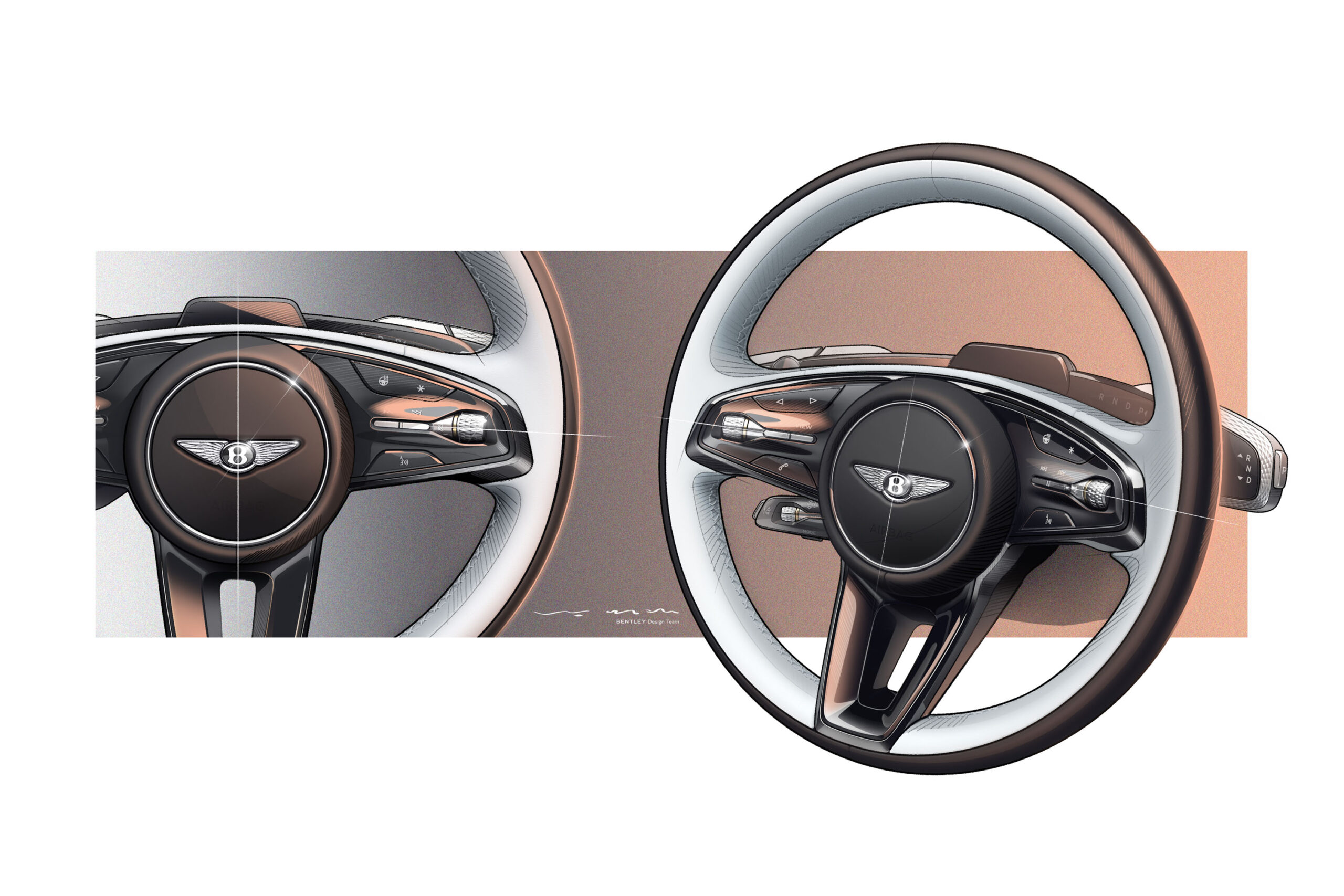
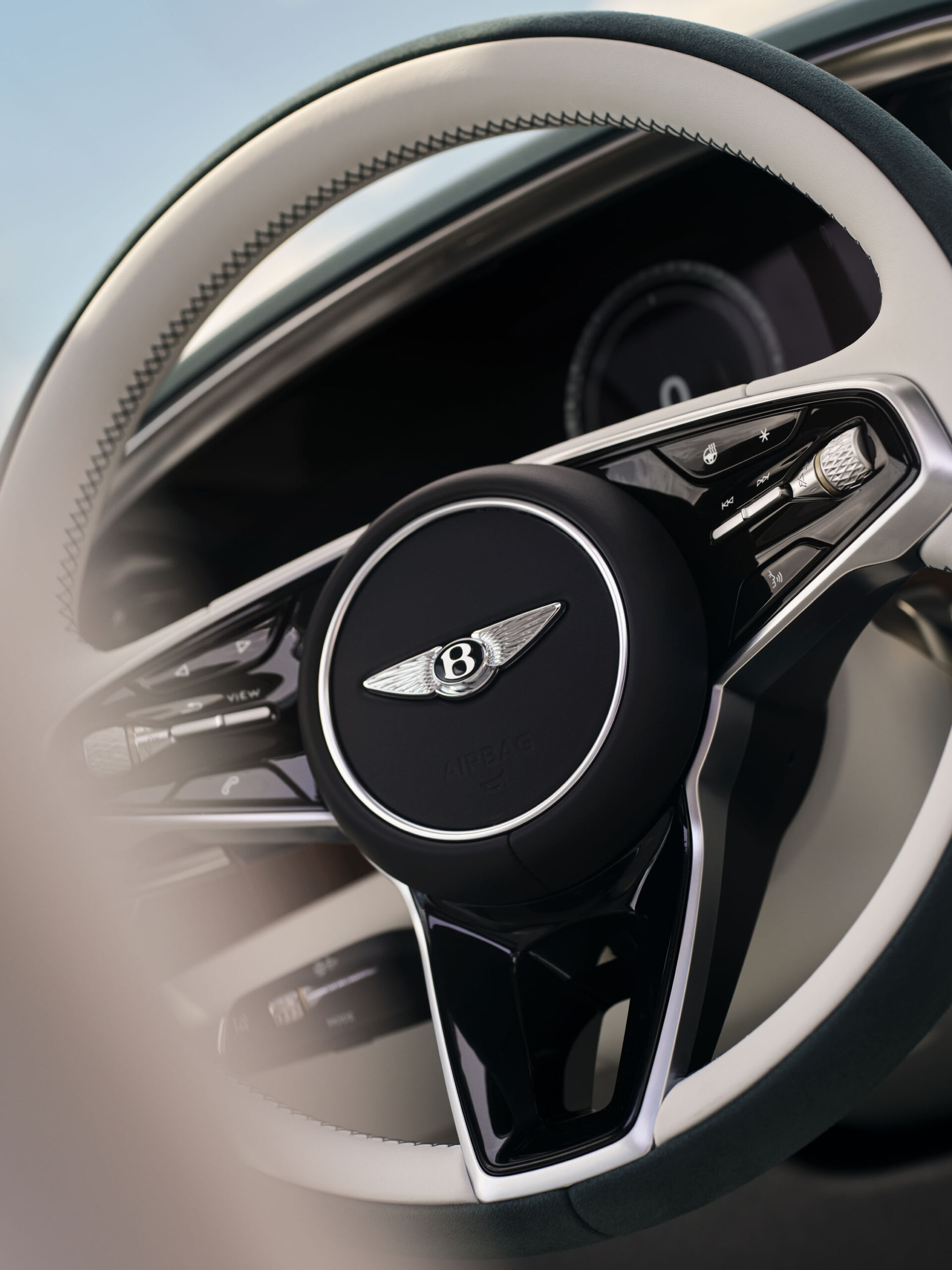
The Torcal interior may actually contain one of Bentley’s most important design decisions: it still has physical controls. Bentley has resisted the industry’s tendency to conclude that technological sophistication requires every function to disappear into a touchscreen. Physical controls remain on the centre console and steering wheel for functions that occupants naturally want to operate by touch.
That should not be remarkable, but in 2026 it almost is. A luxury interior should reduce effort, not require a driver to navigate menus for functions that previously required one movement of a finger. Bentley combines those controls with curved OLED displays and an augmented-reality head-up display, so this is not resistance to technology. It is an attempt to put technology in the appropriate places.
The traditional Bentley wing architecture remains visible in the dashboard, creating symmetry across the cabin. Large, relatively sheer surfaces then provide space for leather, wool, aluminium and veneer rather than turning the interior into a collection of decorative shapes. The familiar bullseye vents have been reinterpreted rather than abandoned, while knurled controls provide the mechanical tactility expected from the brand. This combination of digital technology and physical interaction may ultimately prove more luxurious than the minimalist screen-only interiors currently dominating the industry.

Luxury Through Materials Rather Than Gadgets
The material programme is particularly interesting. Bentley has developed what it says is the world’s first 100 percent Merino wool automotive fabric, working with historic Somerset textile manufacturer Fox Brothers. The material has also achieved Responsible Wool Standard certification. That is a far more convincing interpretation of sustainable luxury than simply replacing leather with plastic and giving it an environmentally friendly marketing name.
Mulliner’s new Ombré Walnut is even more unusual. It uses as many as 1,000 individually selected layers of responsibly sourced walnut offcuts combined with recycled craft paper. These are compressed and sliced into veneers less than a millimetre thick, creating a gradient running through several walnut tones. There is also Sunburst Aluminium, inspired by the engine-turned aluminium used in historic Bentleys.
Again, the important point is not nostalgia. Bentley is taking manufacturing and decorative ideas associated with its history and interpreting them using contemporary processes. Customers can choose from 15 leather colours, corresponding Dinamica shades, five colours of Merino wool, multiple traditional veneers, technical finishes and six piano finishes. In an era when many electric interiors increasingly resemble consumer-electronics showrooms, Bentley appears determined to remind us that luxury can still be tactile.

888 PS – But Bentley Deliberately Stopped There
Then we arrive at performance. The Torcal S develops 888 PS and 1,350 Nm and reaches 100 km/h in 2.9 seconds. The regular Torcal produces 821 PS and 1,194 Nm and reaches 100 km/h in 3.4 seconds. Those figures are enormous, but perhaps the most revealing part of Bentley’s engineering philosophy is that the company says it consciously chose not to pursue even more extreme acceleration.
That is refreshing. Electric power has made extraordinary straight-line performance relatively easy to achieve, and manufacturers have consequently become locked into increasingly extreme acceleration competitions in vehicles supposedly designed primarily for comfort and luxury. Bentley’s engineers concluded that acceleration substantially beyond the Torcal’s performance becomes uncomfortable for many customers. In other words, 2.9 seconds to 100 km/h is enough. We may finally have reached the point where another tenth of a second has ceased to represent meaningful progress in a luxury automobile.

Two Motors, 800 Volts and a 113 kWh Battery
The drivetrain uses two permanent-magnet synchronous motors. The front axle has an open differential, while the rear motor works through a locking differential using multi-plate clutches on the output shafts. Energy comes from a 113 kWh net-capacity battery containing 192 lithium-ion pouch cells and operating at a nominal 800 volts.
Bentley quotes a maximum range of approximately 600 kilometres, or 375 miles. More impressive is the charging performance. At a suitable charger, the Torcal can accept up to 400 kW, allowing the battery to go from 10 to 80 percent in just under 20 minutes. Bentley says approximately 161 kilometres – 100 miles – of range can be added in seven minutes.
That begins to address one of the genuine weaknesses of large luxury EVs. A Bentley is fundamentally a long-distance automobile, and enormous performance means relatively little if a long European journey is repeatedly interrupted by lengthy charging stops. A real-world 600-kilometre range will obviously depend heavily on speed, temperature and driving conditions, but the combination of a large battery and extremely high peak charging rate is much more relevant to the Torcal’s mission than another increment of horsepower.
Active Suspension Changes the Chassis Equation
The Torcal is also the first Bentley fitted with fully active suspension. Rather than using conventional anti-roll bars to control body movement, each adaptive two-valve damper can independently generate the forces required to control the body. The system can therefore separate two traditionally conflicting requirements: during straight-line driving the suspension can prioritise isolation and comfort, while during cornering it can generate the required anti-roll forces.
Bentley describes the resulting ride as its familiar “magic carpet” experience, while claiming the dynamic bandwidth stretches from Flying Spur levels of comfort to Continental GT Speed levels of handling. Rear-wheel steering is standard and can turn the rear wheels by as much as five degrees, giving this five-metre luxury SUV a turning circle of only 11.1 metres. For everyday usability, that number may actually matter considerably more than 888 PS.
Giving an Electric Bentley a Soundtrack
Bentley faced another fascinating problem: what should an electric Bentley sound like? For more than a century, the engine has been part of the Bentley experience. Whether six-cylinder, V8, W12 or something else, sound provides both emotion and useful feedback to the driver. Simply synthesising a fake combustion engine would have been the obvious solution, but Bentley chose something stranger and considerably more interesting.
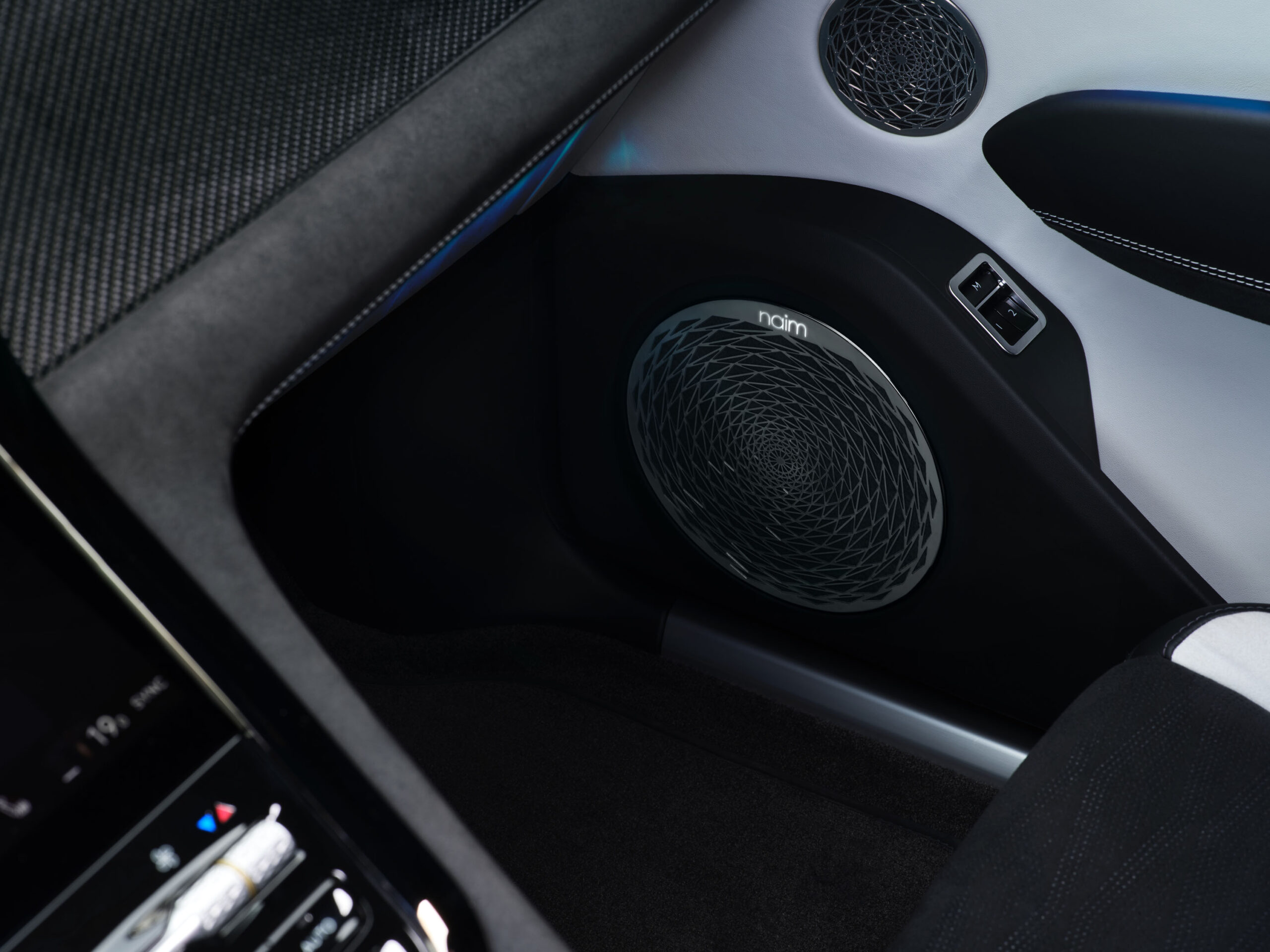
Its engineers studied what made the rhythm of a Bentley V8 emotionally effective and then worked with actual musical instruments, including drums, viola and bass guitar. The result is called the Bentley Dynamic Symphony. Rather than digitally impersonating pistons and exhausts, the soundtrack uses human-created musical elements, including the tiny imperfections naturally produced by real instruments. Its intensity changes with speed and torque demand and becomes more prominent in Sport mode. Importantly, it can also be switched off.
Even the indicator sound was created from a recording of a hammer striking leather in Bentley’s upholstery workshop, while another interface sound originates from a crystal glass. Some will inevitably regard this as theatrical, and perhaps it is, but at least Bentley is acknowledging that removing the combustion engine also removes an important sensory communication channel. It is trying to create something new rather than simply pretending the engine never disappeared or electronically reproducing something that is no longer there.
Four Modes That Change More Than the Suspension
Bentley’s four Experience Modes extend beyond the normal throttle, steering and suspension adjustments. They coordinate chassis behaviour with lighting, sound, climate control, airflow and information presentation. Bentley Modeprovides the default balance between comfort and driver involvement, while Comfort Mode reduces distraction and can effectively create a digital detox by hiding non-essential information.
Sport Mode increases the vehicle’s dynamic responses and makes the Dynamic Symphony more prominent, while the fourth setting, Refresh, increases fresh-air circulation, brightens the lighting and creates a deliberately more invigorating cabin environment. This represents an interesting shift in luxury-car thinking. Instead of merely asking how the vehicle should behave, Bentley is also asking how its occupants want to feel during the journey.
Technology That Should Make the Car Easier to Use
The Torcal surrounds itself with 25 cameras, radar units and sensors, enabling the latest driver-assistance and parking functions. One feature stands out in particular. When confronted with an obstacle on a narrow road, the Torcal can remember the path it has just travelled and automatically reverse back to a previously identified passing point. Anyone who has driven a large luxury car down a narrow British country lane will immediately understand why that could be useful.
The car also provides towing assistance, garage and parallel-parking systems, wheel-rim protection functions, remote parking and the ability to learn frequently repeated parking manoeuvres. Even the four doors are radar controlled and powered. Passengers can initiate closing by fastening their seatbelt, while the driver can close the driver’s door by pressing the brake pedal.
Facial recognition can identify the driver and restore preferences including seating position, steering-wheel position and ADAS settings, while a smartphone can function as the vehicle key. Again, the critical measure should not be how much technology Bentley can install, but whether that technology actually makes operating the car easier.
Surprisingly Practical
At approximately five metres long, the Torcal is actually Bentley’s shortest four-door model, yet it provides seating for five, a 460-litre rear luggage compartment and an additional 90-litre front luggage area. The rear bench can also power-fold, another Bentley first.
The combination of 600-kilometre claimed range, extremely rapid charging, four proper doors, meaningful luggage capacity and an unusually tight turning circle suggests Bentley wants this to be much more than a technological flagship. It is intended to function as an everyday Bentley rather than an electric statement piece that owners reserve for particular journeys.
Torcal and Torcal S
Two versions arrive initially. The standard Torcal develops 821 PS and 1,194 Nm, accelerates from 0–100 km/h in 3.4 seconds and reaches 250 km/h. The Torcal S increases output to 888 PS and 1,350 Nm with Launch Control, reducing the 0–100 km/h time to 2.9 seconds and increasing maximum speed to 260 km/h.
The S receives black exterior brightwork and mirror caps, darker rear lamps, more aggressive lower-body treatments, red brake calipers, S badging, black Bentley wing badges, sports pedals and its own interior quilting and stitching. The standard car rides on 21-inch wheels, while the S receives 22-inch wheels. Several additional 22-inch designs are available, including an aerodynamically optimised version.
Braking is appropriately serious. Standard iron discs measure 420 mm at the front and 370 mm at the rear, while the optional Carbon Silicon Carbide system increases those dimensions to a remarkable 440 and 410 mm respectively.
Has Bentley Found the Right Way Into Electrification?
This is ultimately what makes the Torcal interesting. Its specifications are impressive, but another extremely powerful electric SUV is hardly revolutionary in 2026. The more difficult challenge was preserving the reasons someone wanted a Bentley in the first place. Bentley has therefore concentrated on proportion, presence, material richness, craftsmanship, tactile interaction, ride quality and effortless performance rather than allowing electrification itself to become the car’s identity.
The Torcal does not need to constantly announce that it is electric. It needs to be immediately understood as a Bentley, with the electric drivetrain simply becoming the technology underneath it. There are aspects that will undoubtedly divide opinion. The illuminated grille will need to be judged in the metal. The artificial soundtrack could either become a fascinating new form of driver feedback or feel unnecessarily theatrical. And the sheer mass inevitably associated with a 113 kWh battery will present its own challenges no matter how sophisticated the active suspension becomes.
From a design standpoint, however, Bentley appears to have understood something several established manufacturers struggled with during the first generation of luxury EVs. Electrification does not require abandoning brand identity, nor does modernity require deleting physical controls, replacing natural materials with acres of plastic or making every premium vehicle look like an aerodynamic appliance.
The Torcal instead attempts to reinterpret the traditional Bentley values of presence, craftsmanship, comfort and effortless performance around a completely different propulsion system. That is why this car potentially matters more than its 888 PS, its 2.9-second acceleration or even the fact that it is Bentley’s first EV.
The real question facing Bentley is much larger: what should a Bentley be when the combustion engine is no longer the thing that defines it? With the Torcal, Bentley’s answer appears to be that almost everything else that made it a Bentley in the first place should remain, while the technology underneath it is allowed to change completely.