Mercedes-AMG GT SUV: Bringing Supercar Performance to the Electric SUV

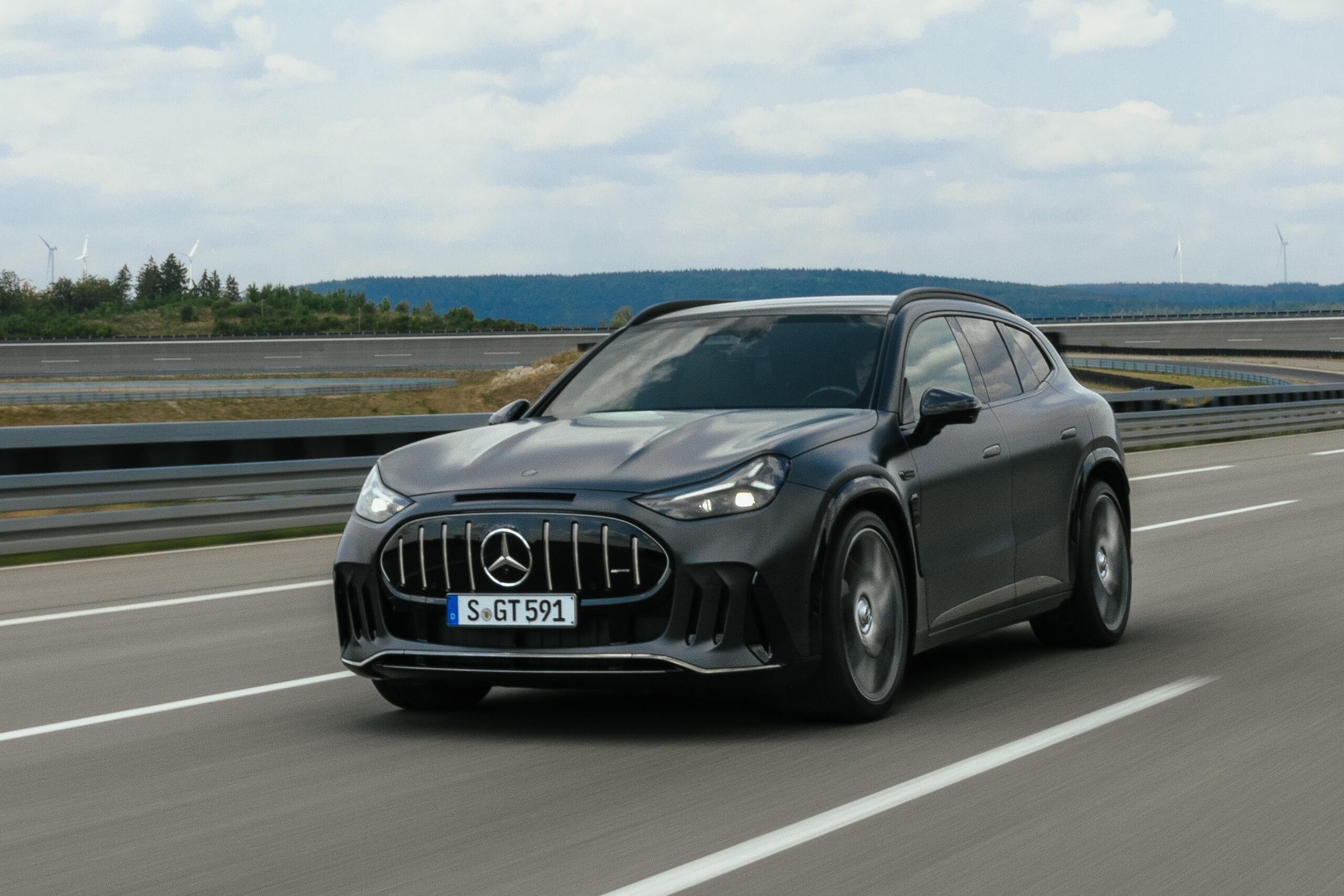
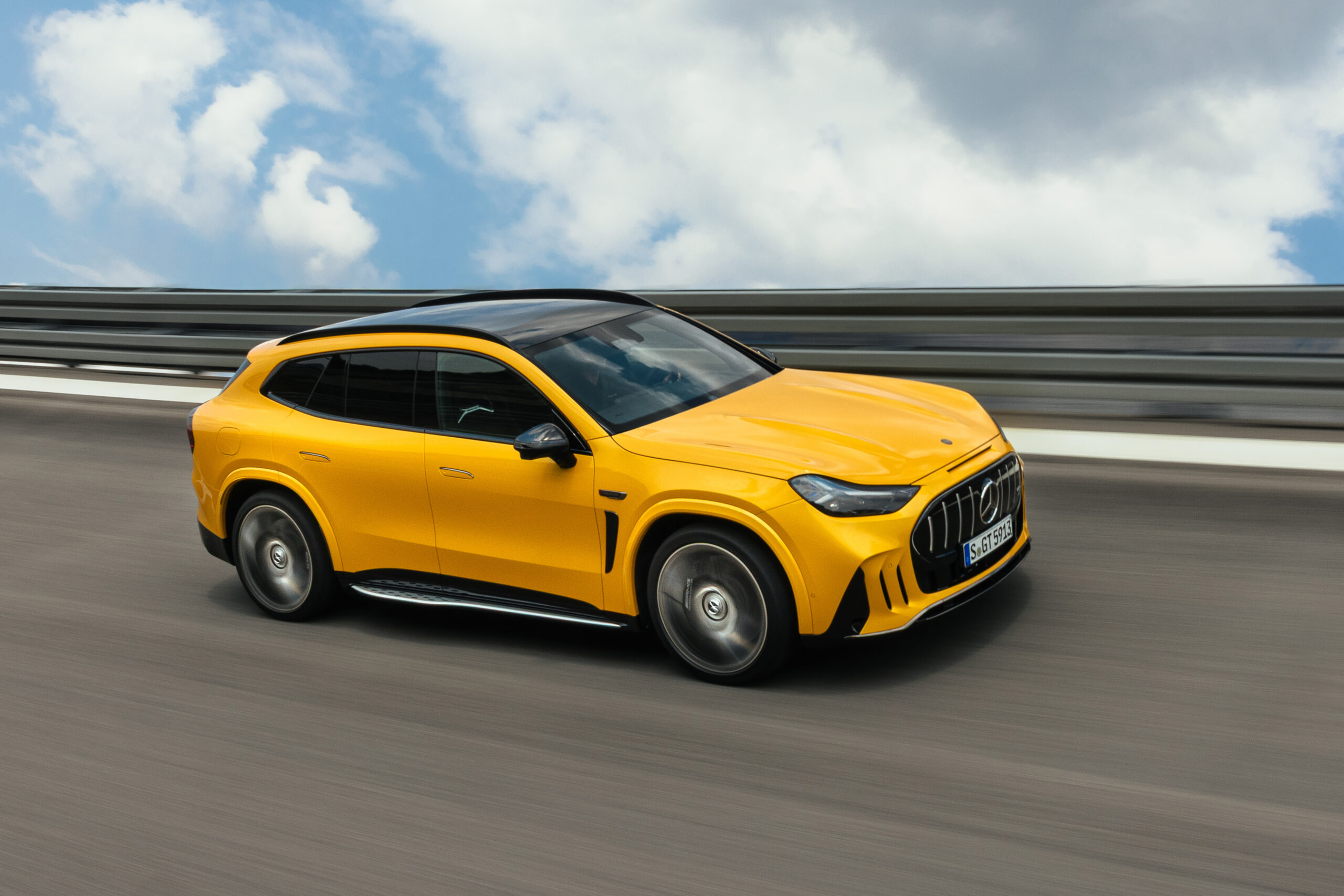
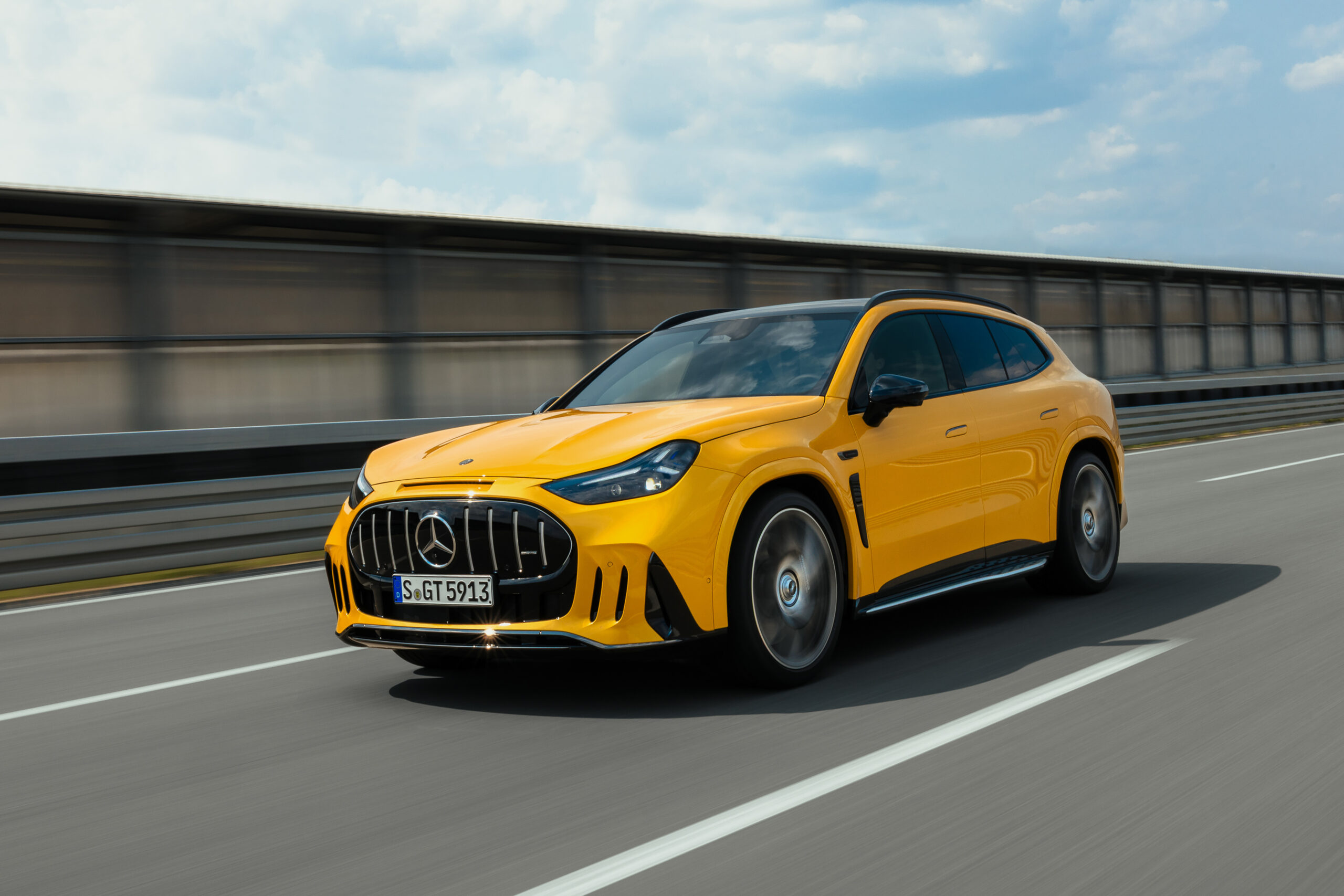
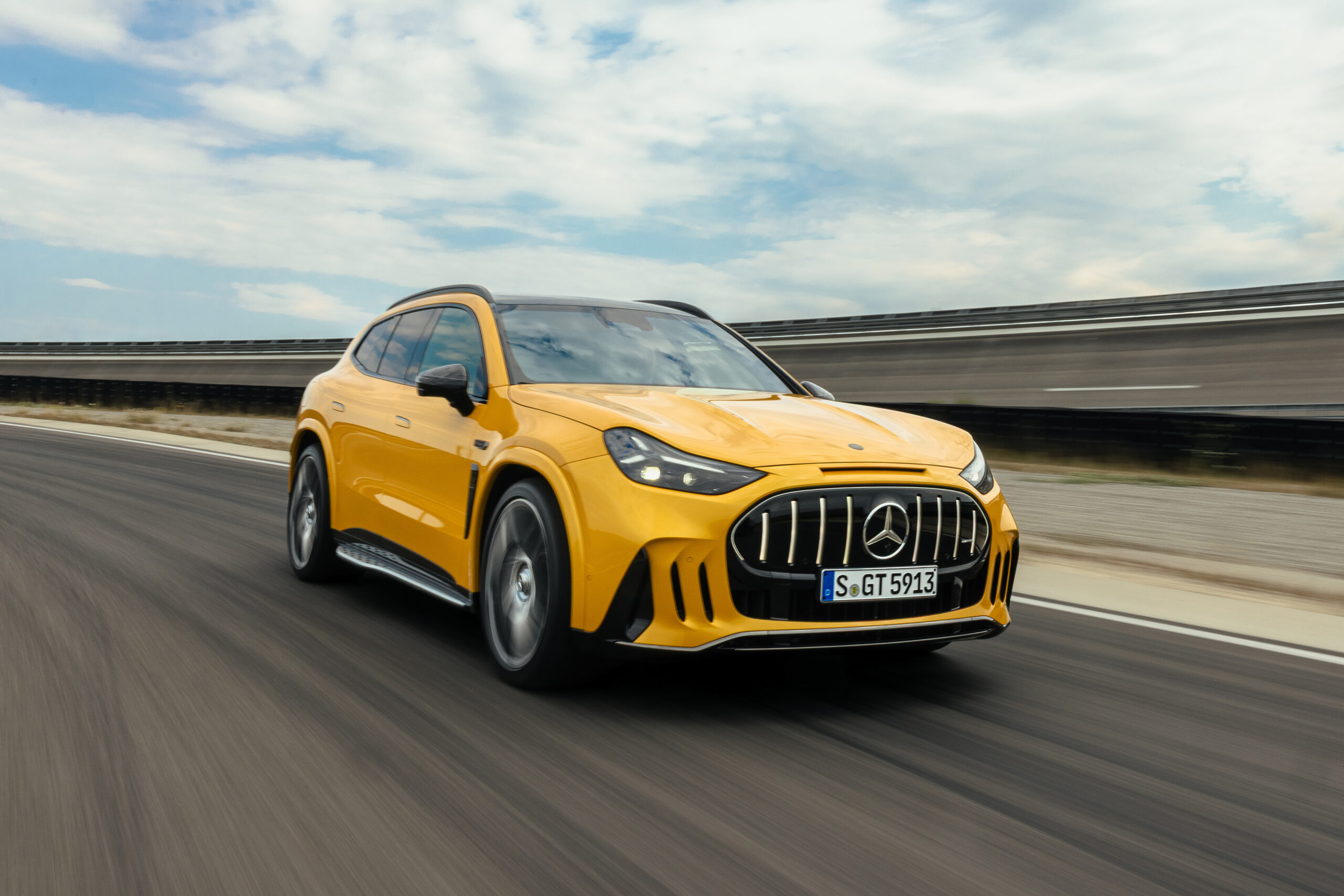
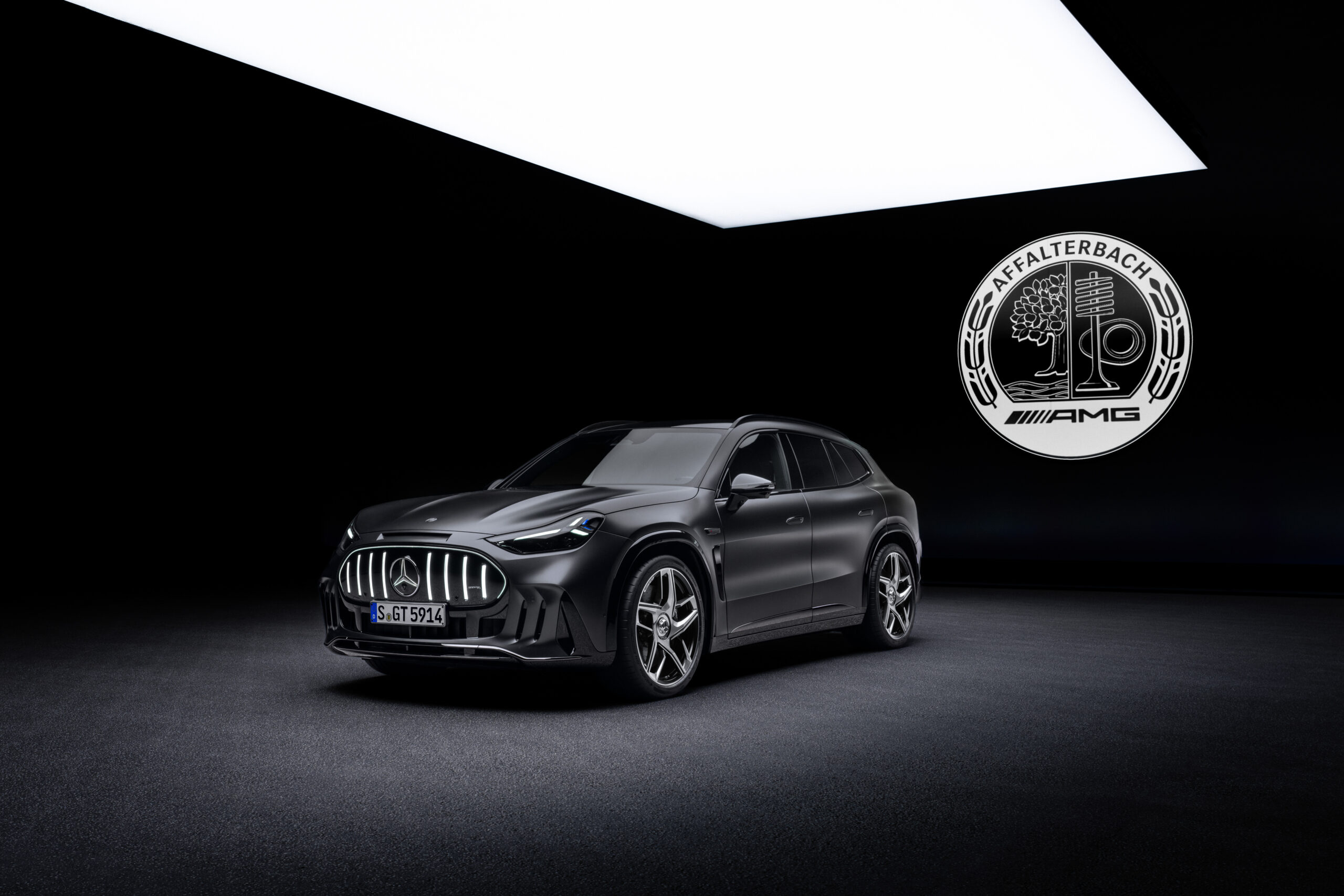
Der neue Mercedes-AMG GT SUV, Affalterbach, 2026. The all-new Mercedes-AMG GT SUV, Affalterbach, 2026.
Mercedes-AMG has introduced the new AMG GT SUV, marking an important milestone in the performance division’s history. For the first time in its 59-year existence, AMG has developed a full-size SUV entirely in-house, rather than transforming an existing Mercedes-Benz model into a high-performance derivative.
Built on the new AMG.EA electric architecture, the GT SUV combines the practicality and comfort of a large luxury SUV with extraordinary performance capabilities. With up to 1,169 horsepower, three electric motors and an advanced 800-volt electrical system, Mercedes-AMG is entering a segment where electric performance has reached levels previously associated with the world’s most exotic supercars.
However, the significance of the new GT SUV extends beyond its impressive technical specifications. It also represents an interesting evolution of AMG’s design philosophy, attempting to translate the proportions, visual character and driving experience of a traditional Grand Turismo into a considerably larger and more versatile vehicle.

A New Interpretation of AMG Design
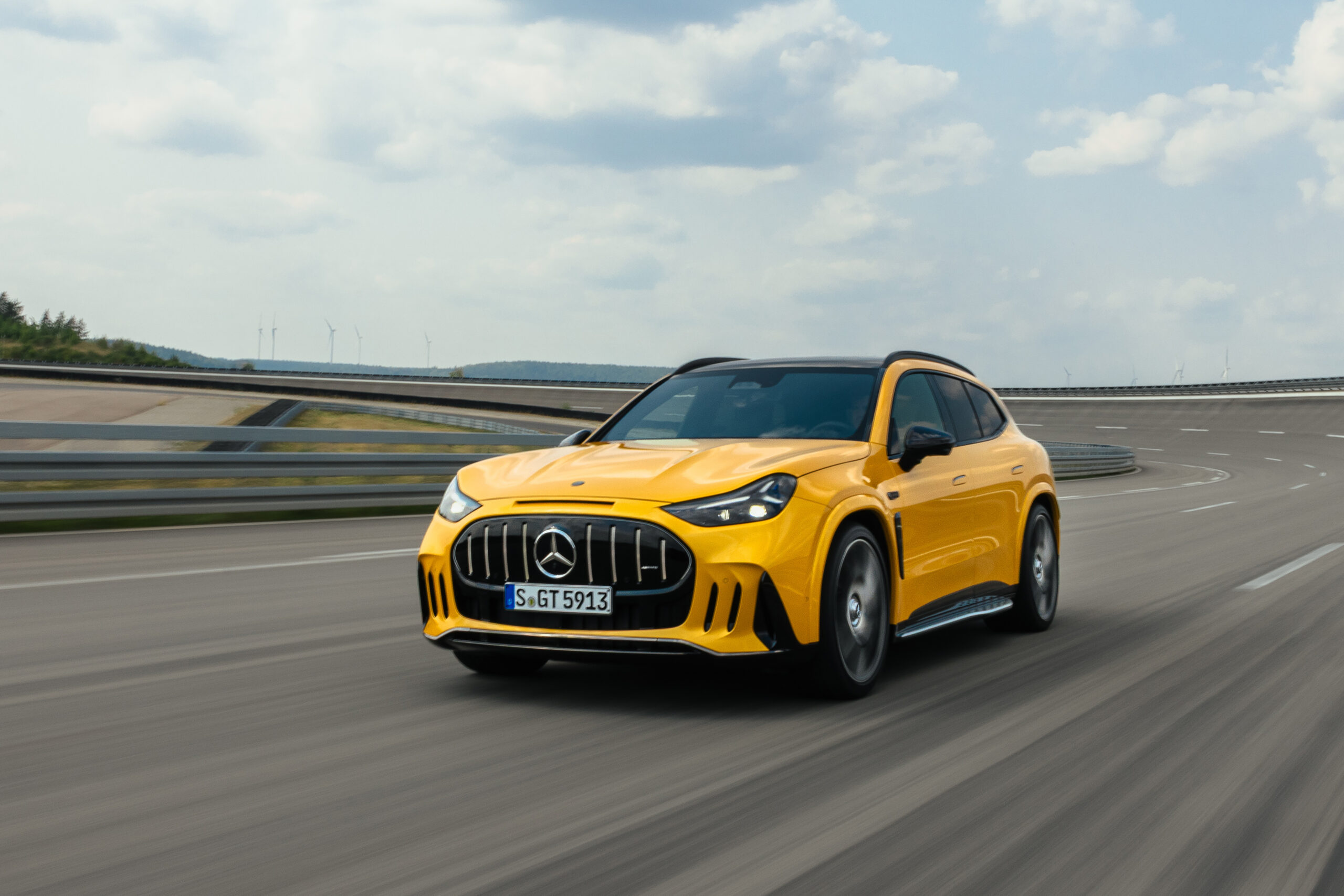
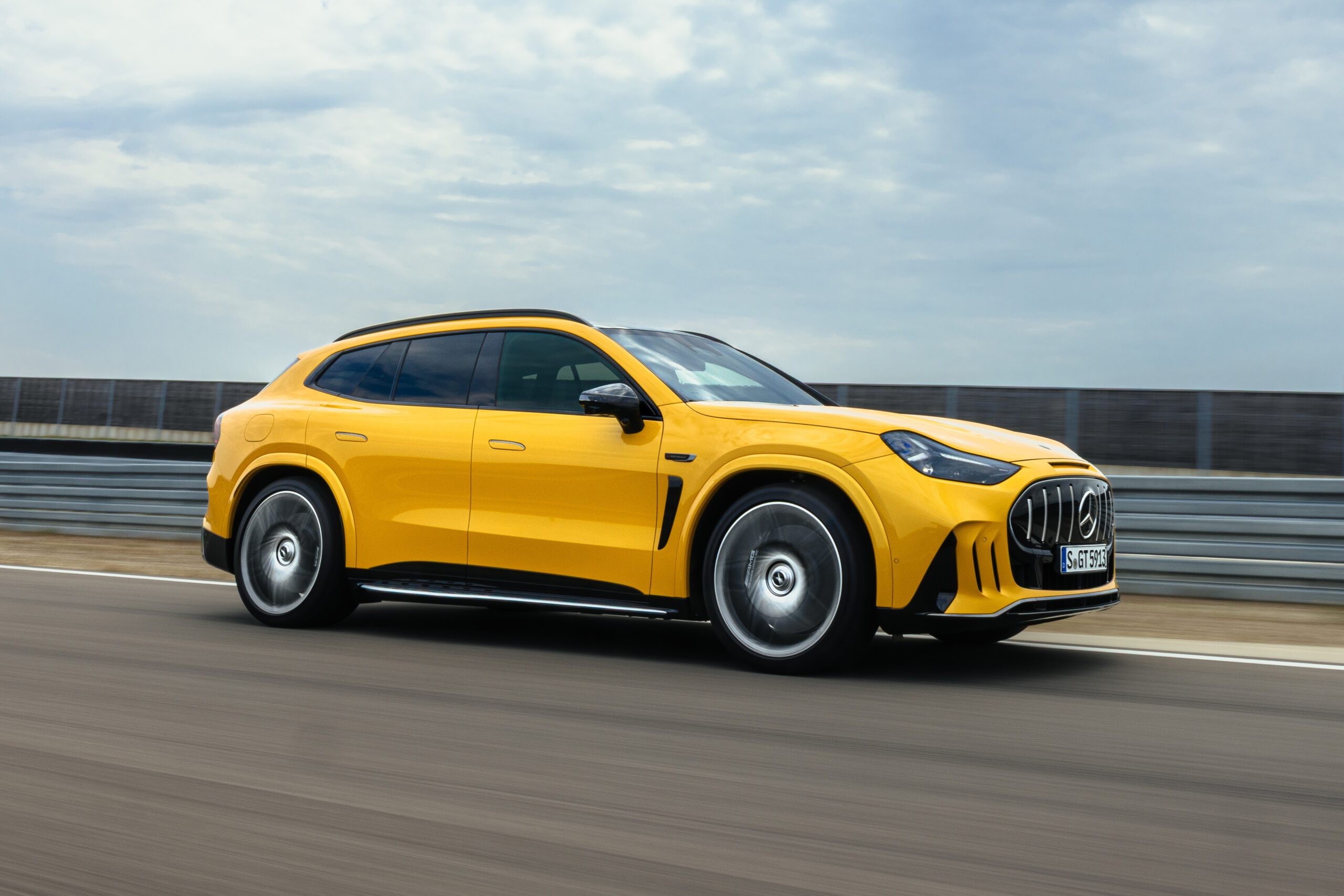
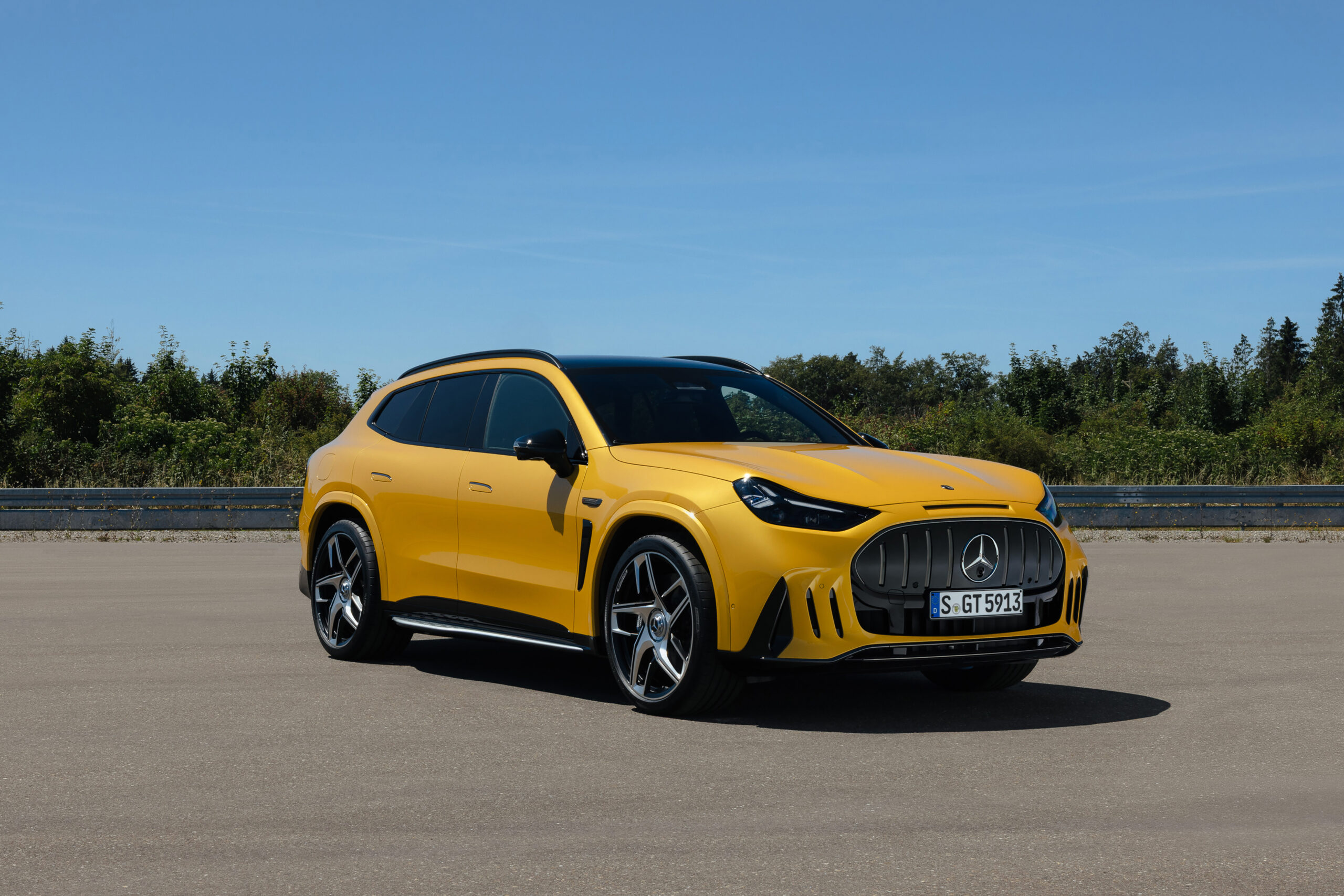
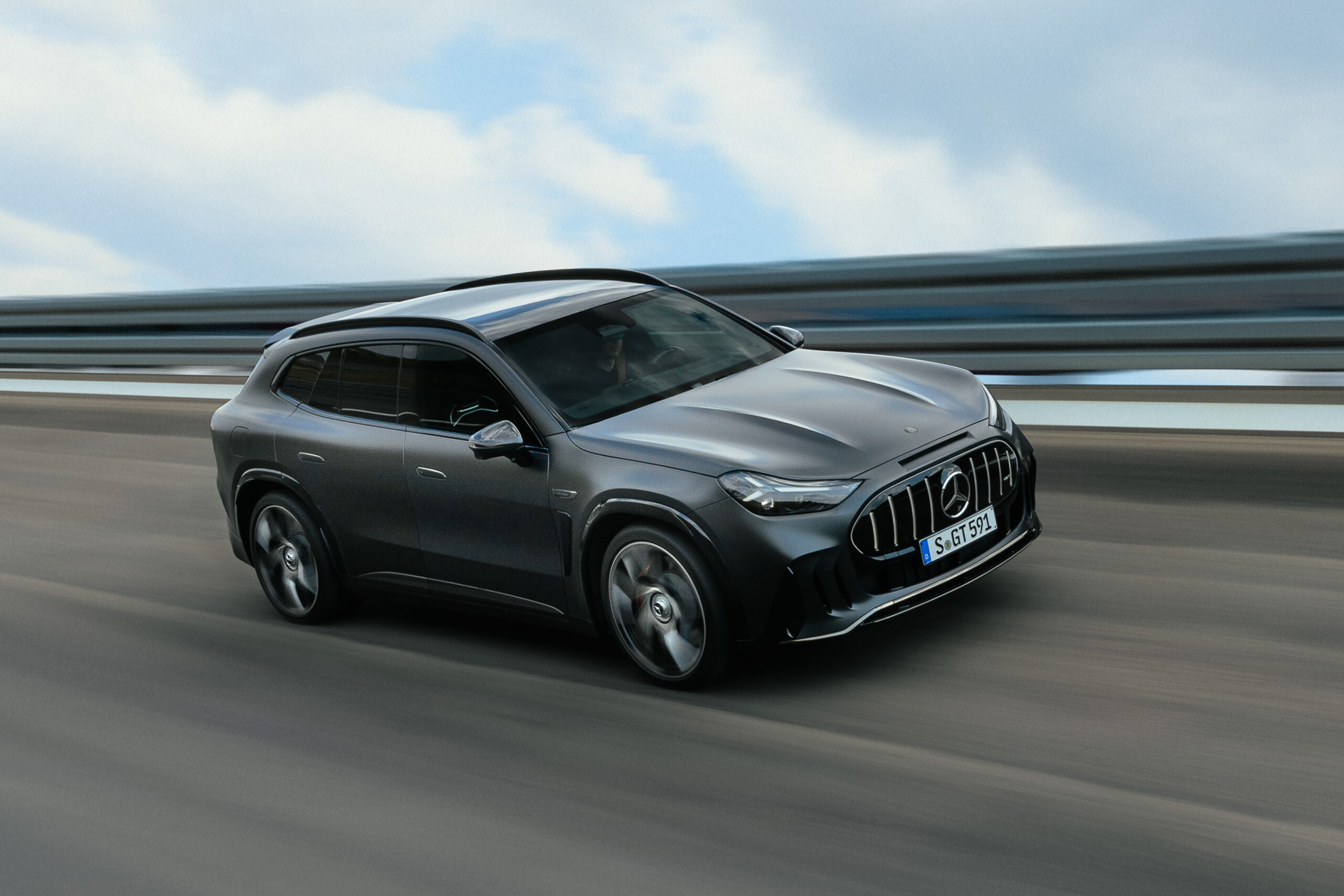
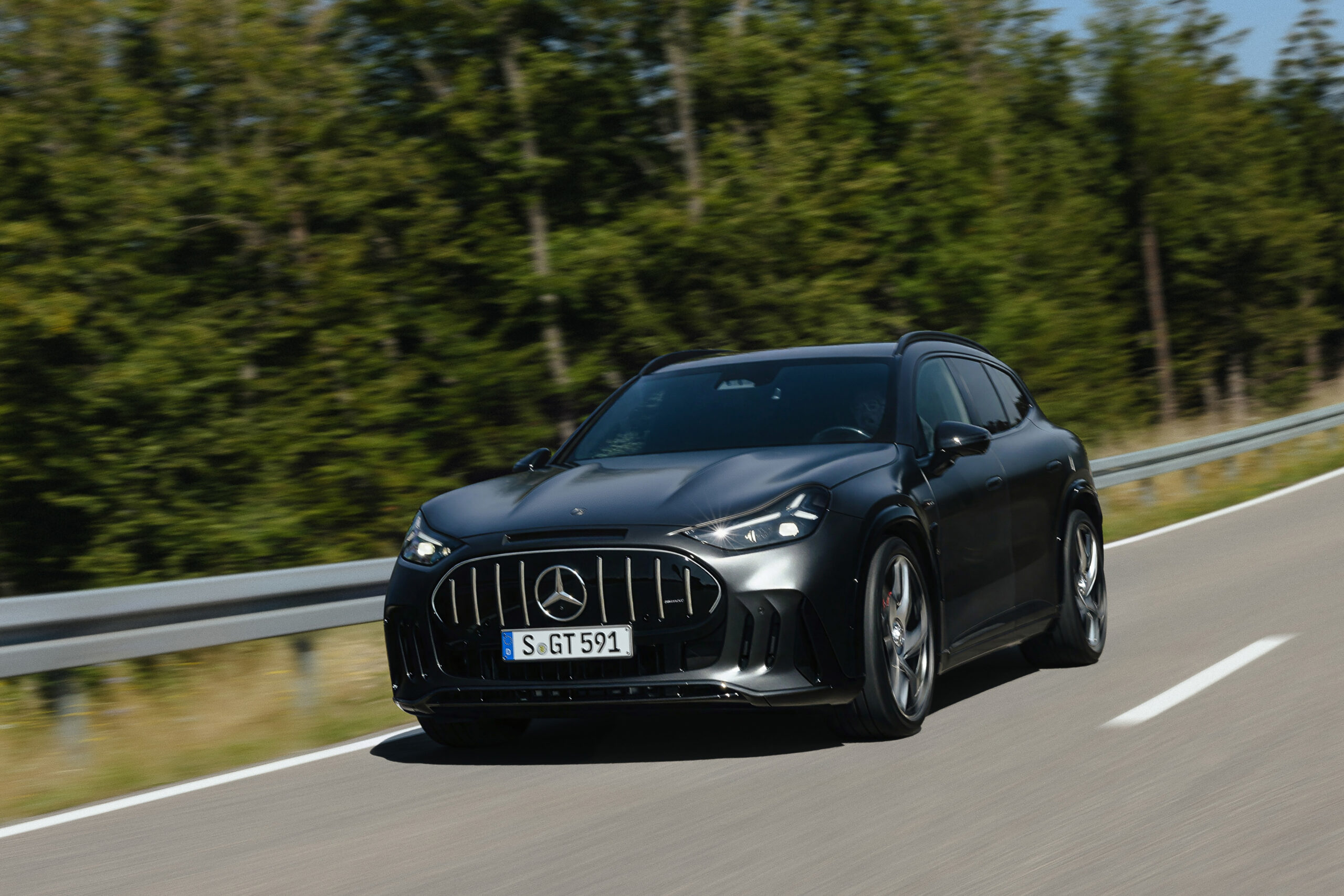
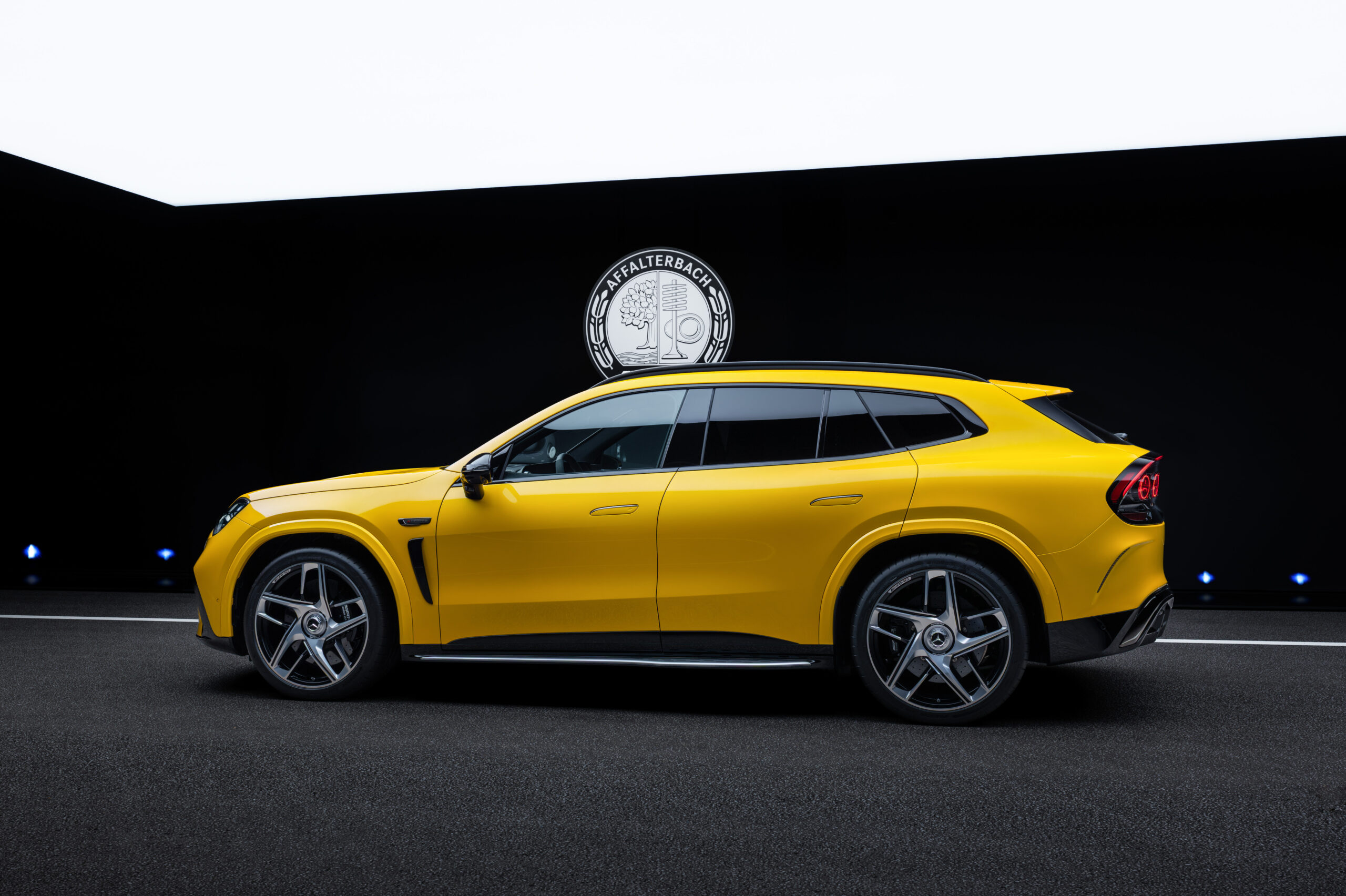
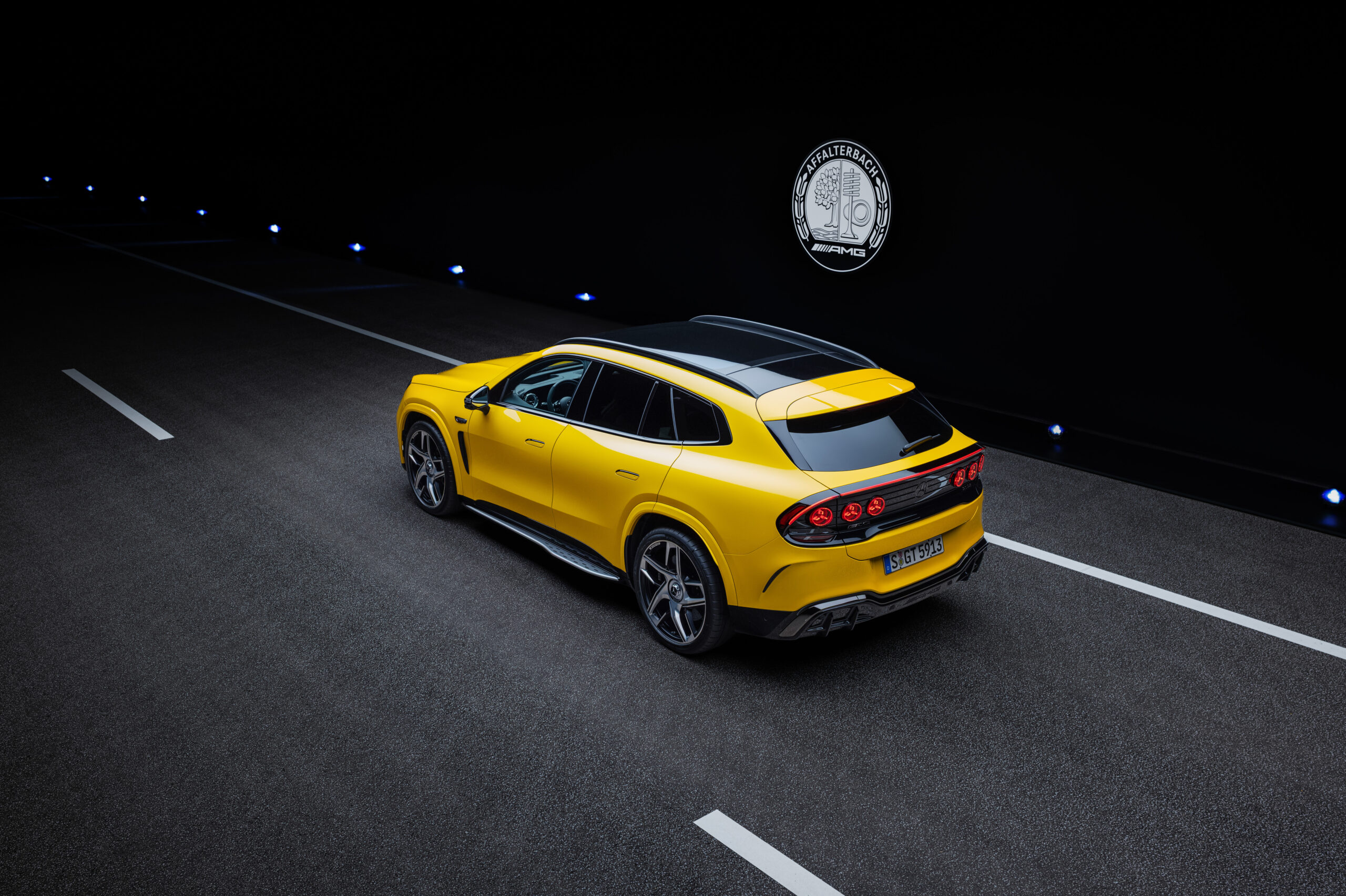
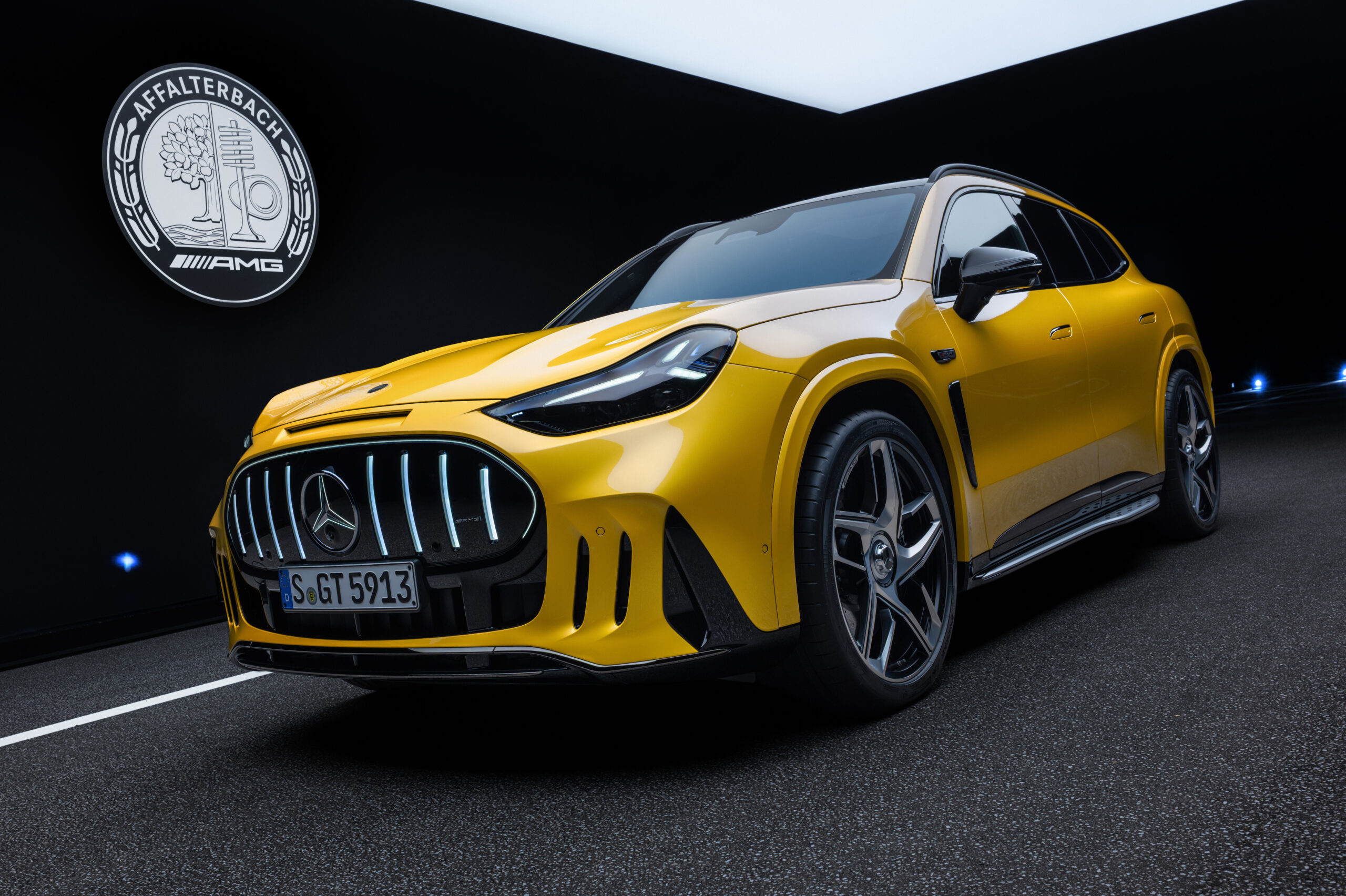
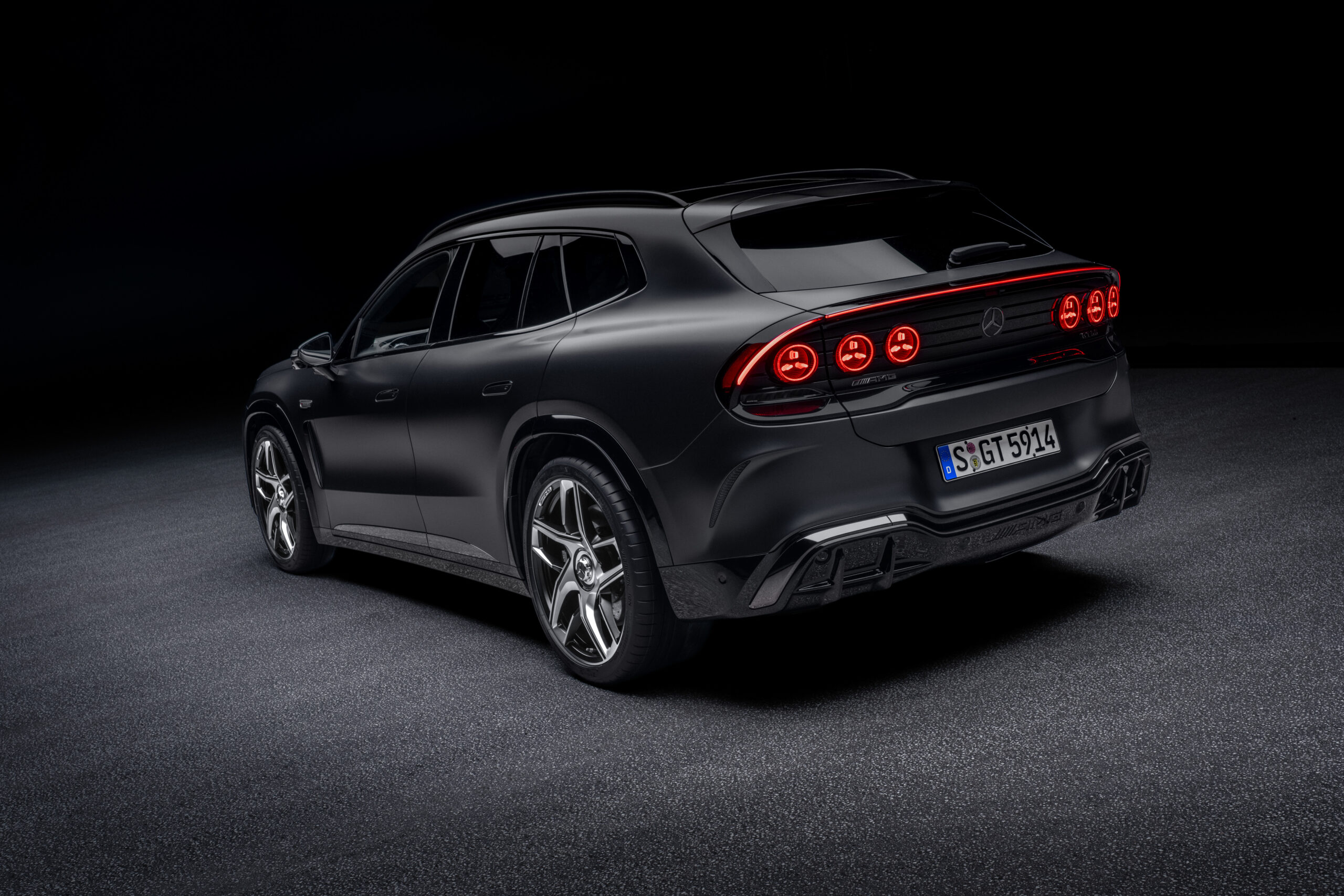
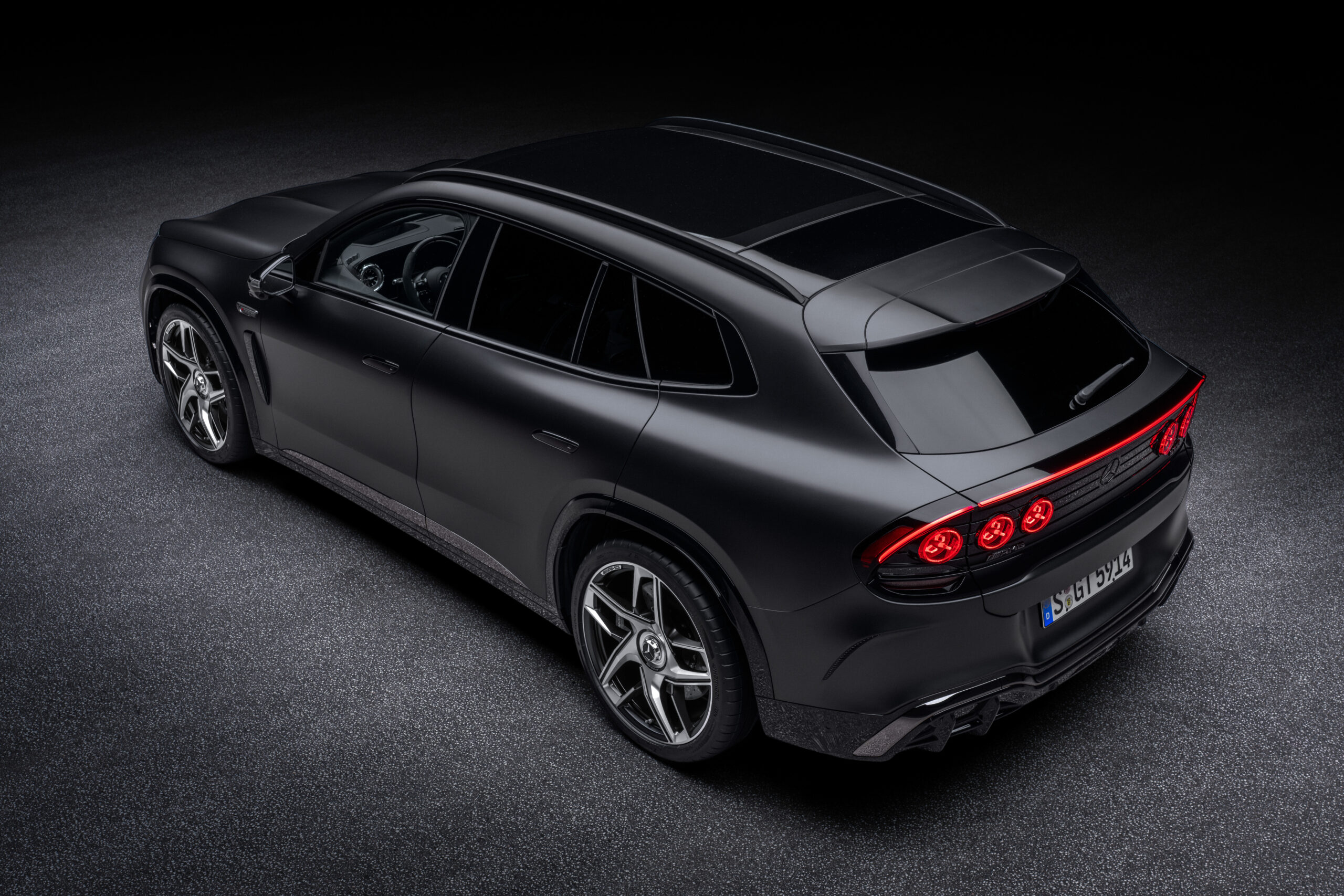
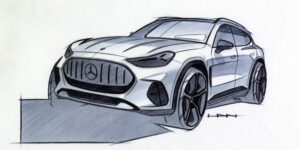
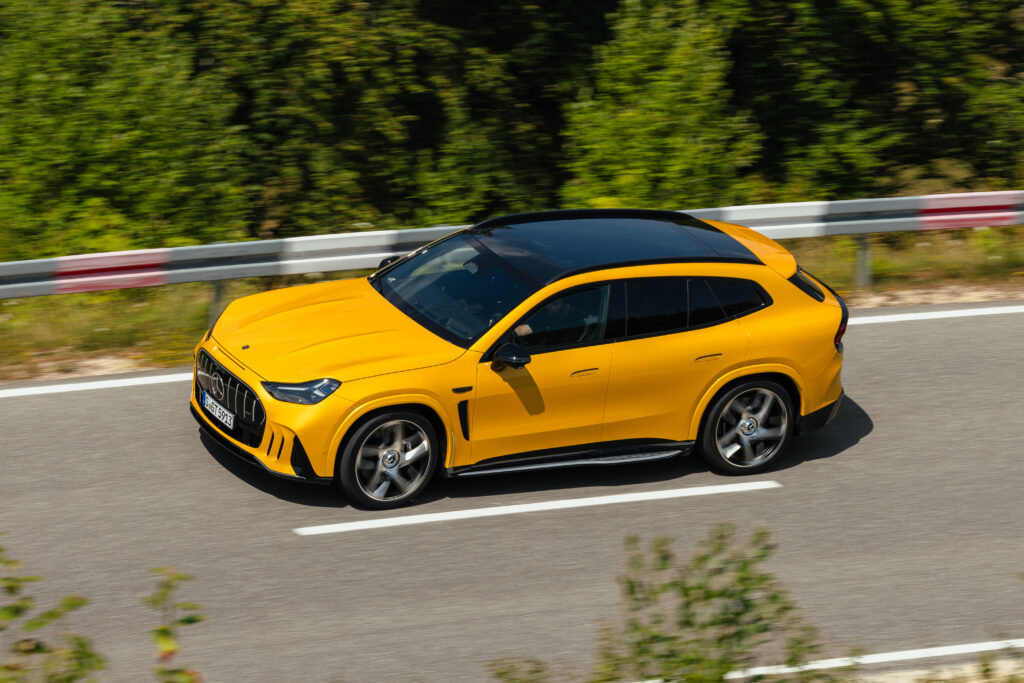
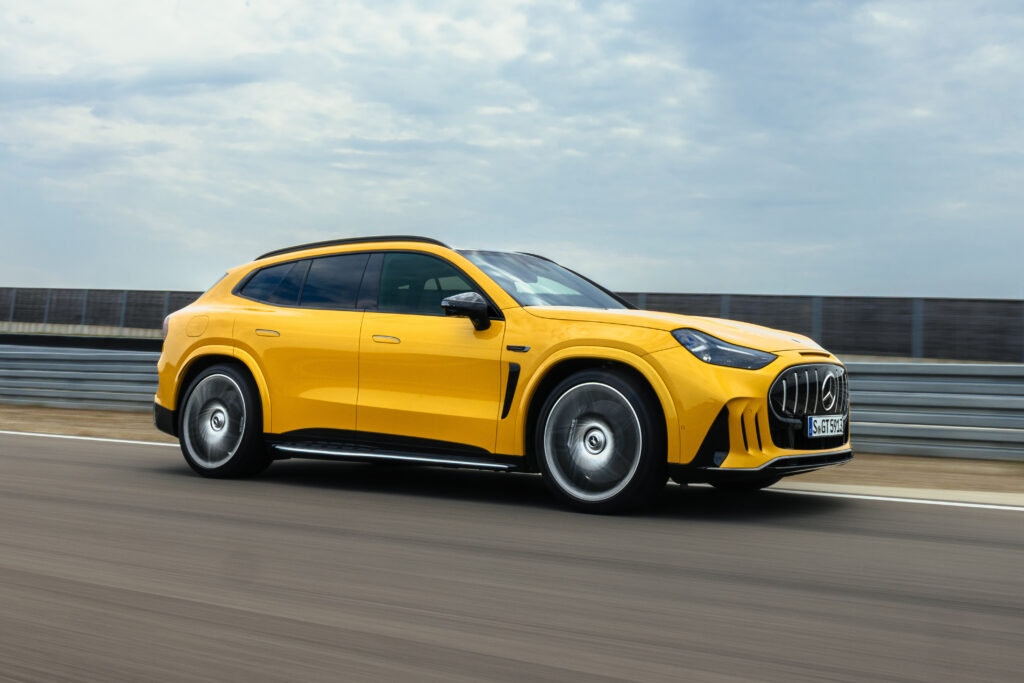
The exterior of the Mercedes-AMG GT SUV is defined by its relatively low silhouette, substantial width and pronounced muscular surfaces. At 5.08 metres long, 2.00 metres wide and approximately 1.65 metres high, the vehicle is unmistakably a full-size SUV, yet its proportions have been carefully developed to create a more sporting appearance than that of a conventional luxury utility vehicle.
The long 3.04-metre wheelbase, short overhangs and wide track give the body a planted stance, while the gently descending roofline and relatively shallow windshield introduce some of the visual characteristics traditionally associated with a GT.
The designers have emphasized the wheel arches and rear shoulders, creating a sense of power concentrated around the wheels. These sculptural elements are particularly important because they help visually reduce the considerable height and mass of the vehicle.
The side profile also benefits from frameless door windows, relatively small exterior mirrors and carefully integrated brightwork extending toward the rear quarter windows. Together, these details create a more elegant, coupe-like appearance without sacrificing the accessibility and interior accommodation expected of a large SUV.
From a design perspective, the challenge is obvious. A high-performance SUV must communicate considerable power while retaining the practicality that defines the vehicle category. Mercedes-AMG has approached this by emphasizing width, horizontal proportions and muscular body sculpture rather than attempting to disguise the vehicle’s substantial dimensions.

A Distinctive Front and Rear Identity
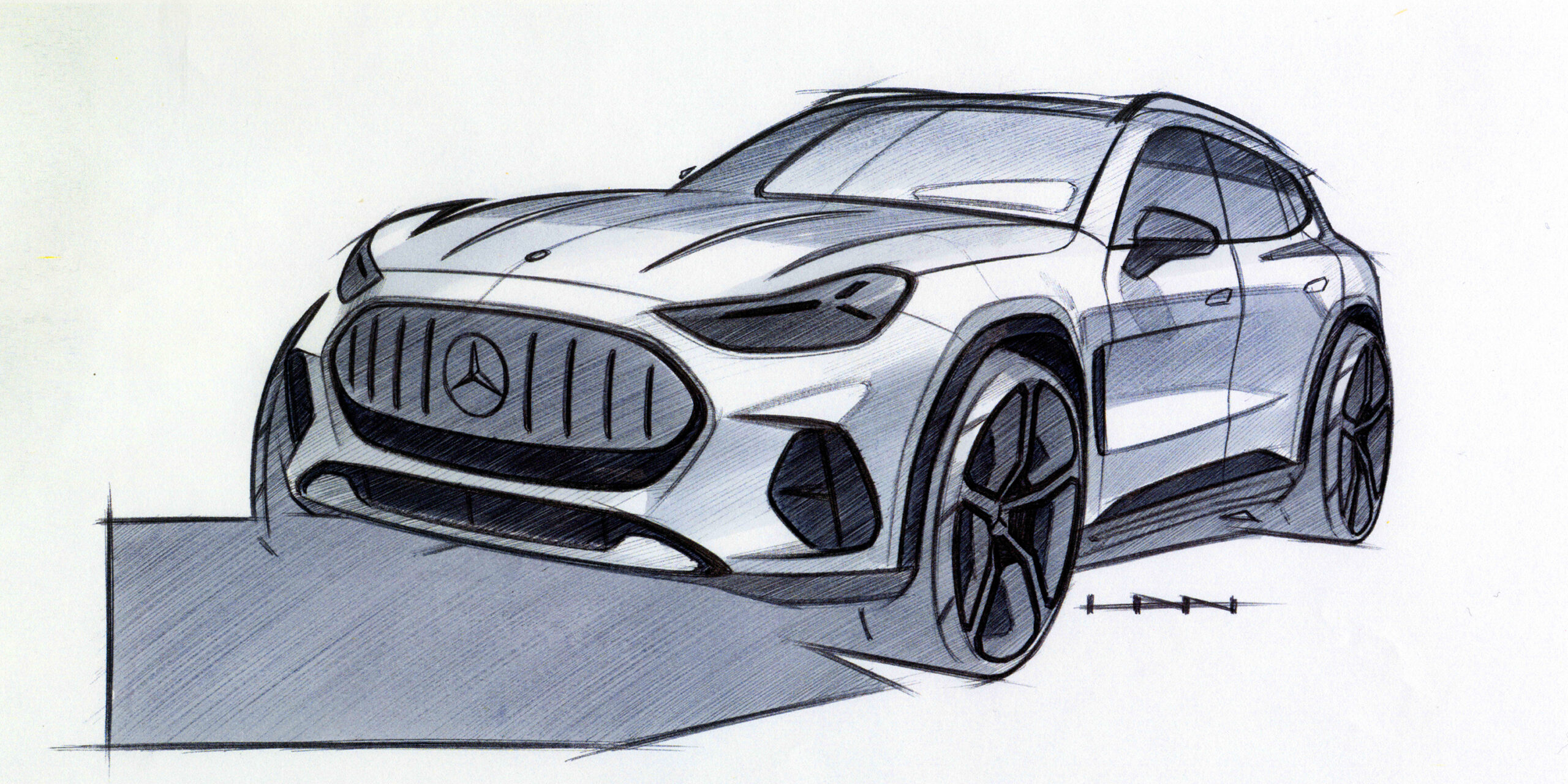
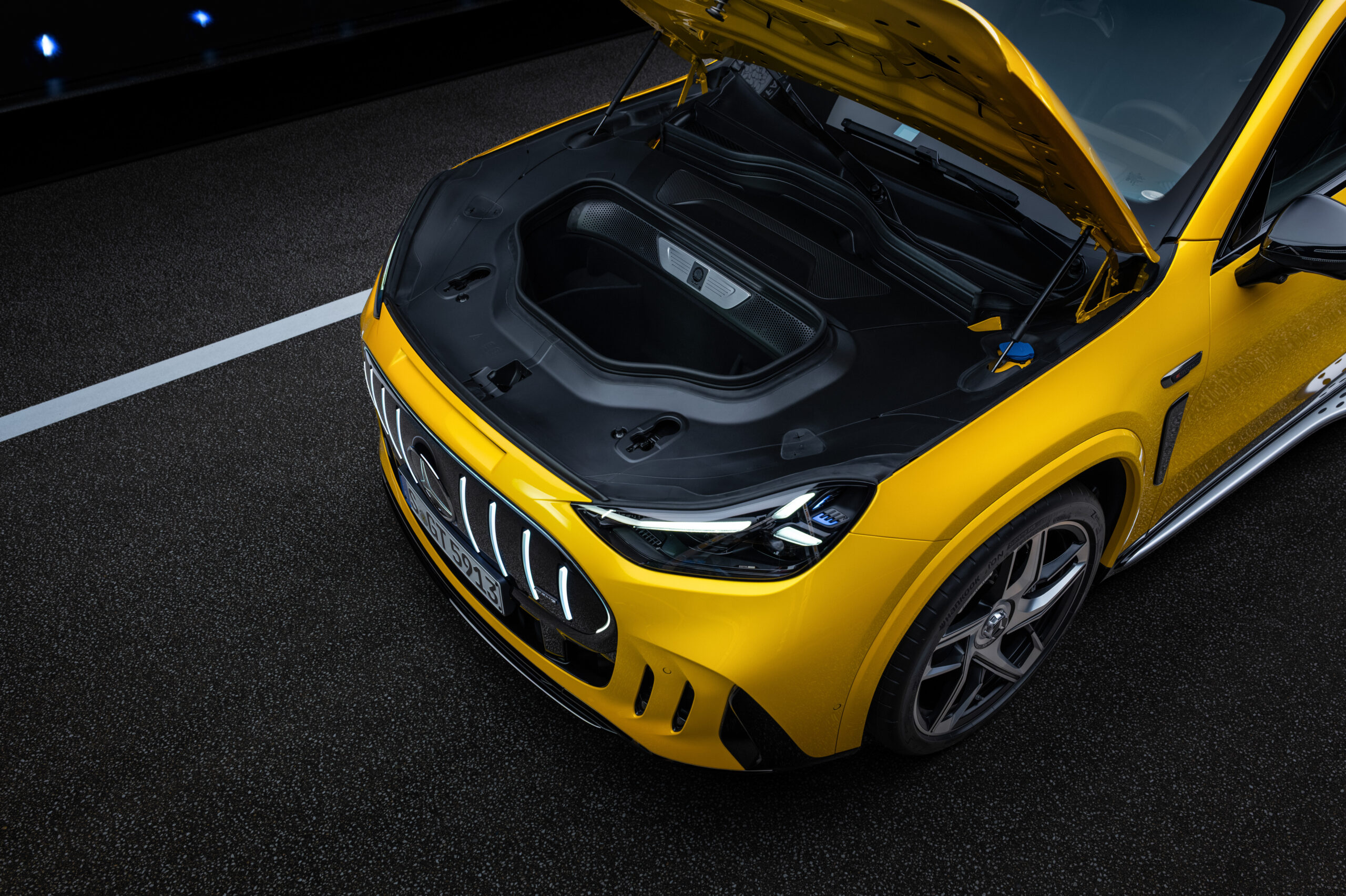
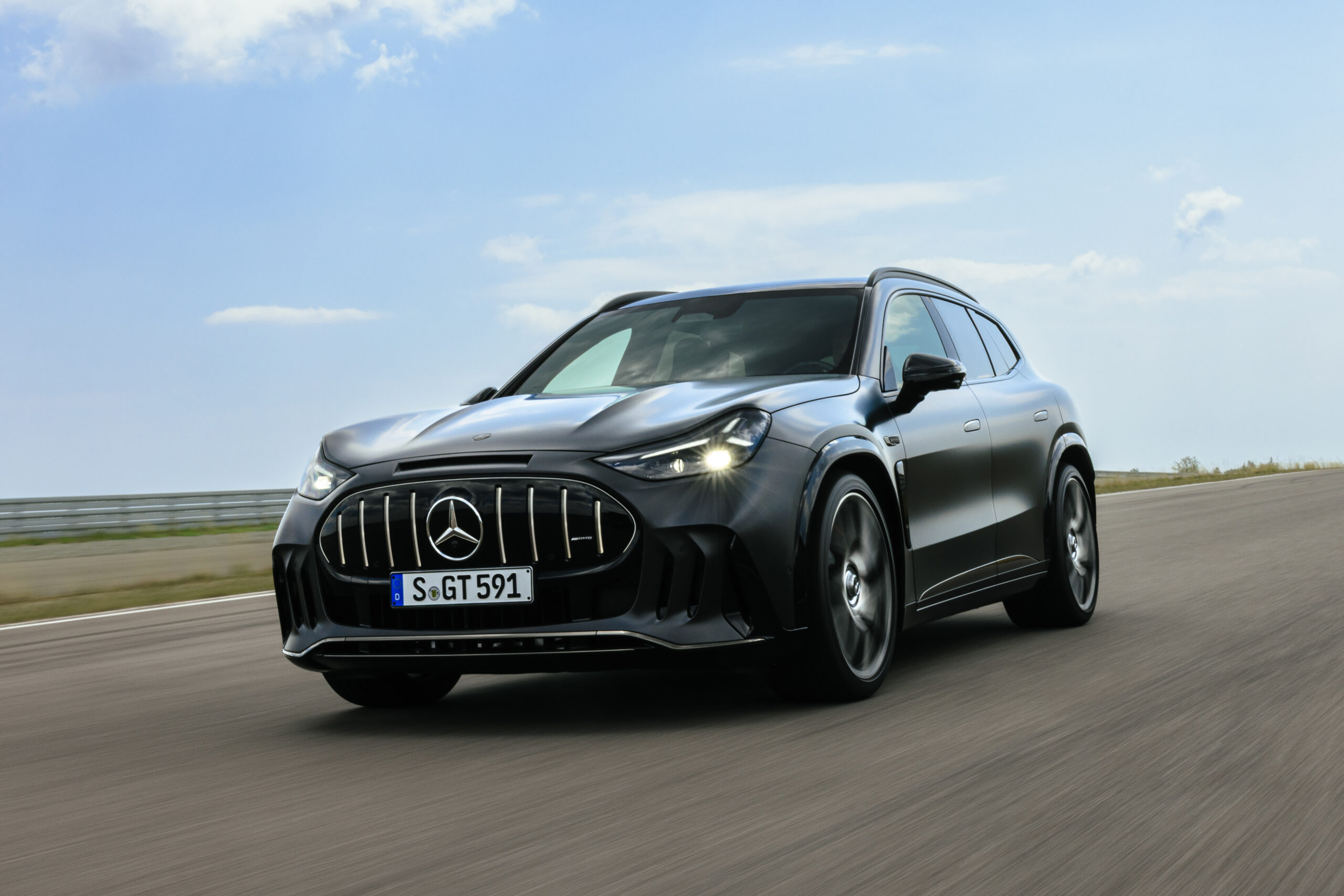
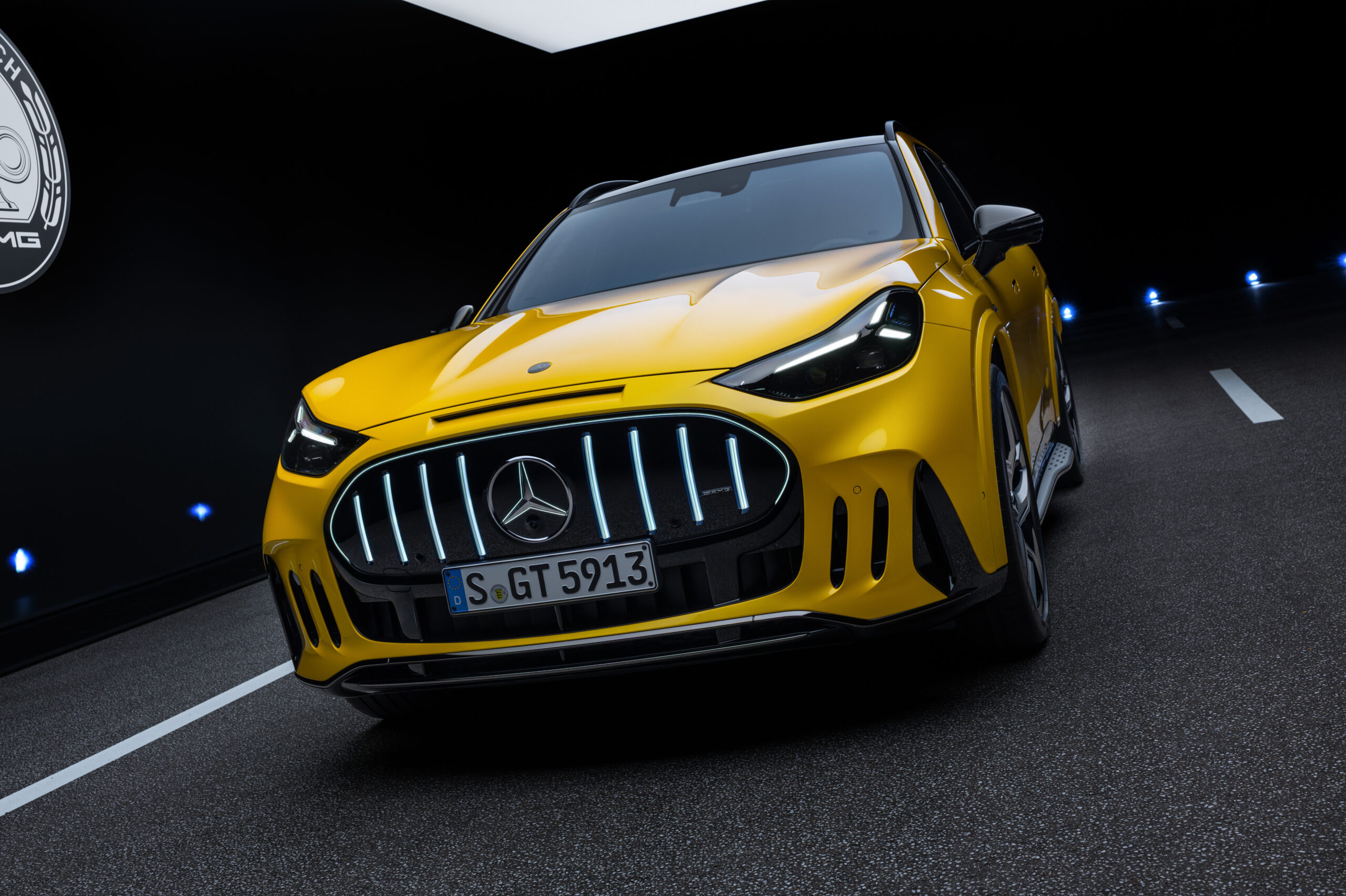
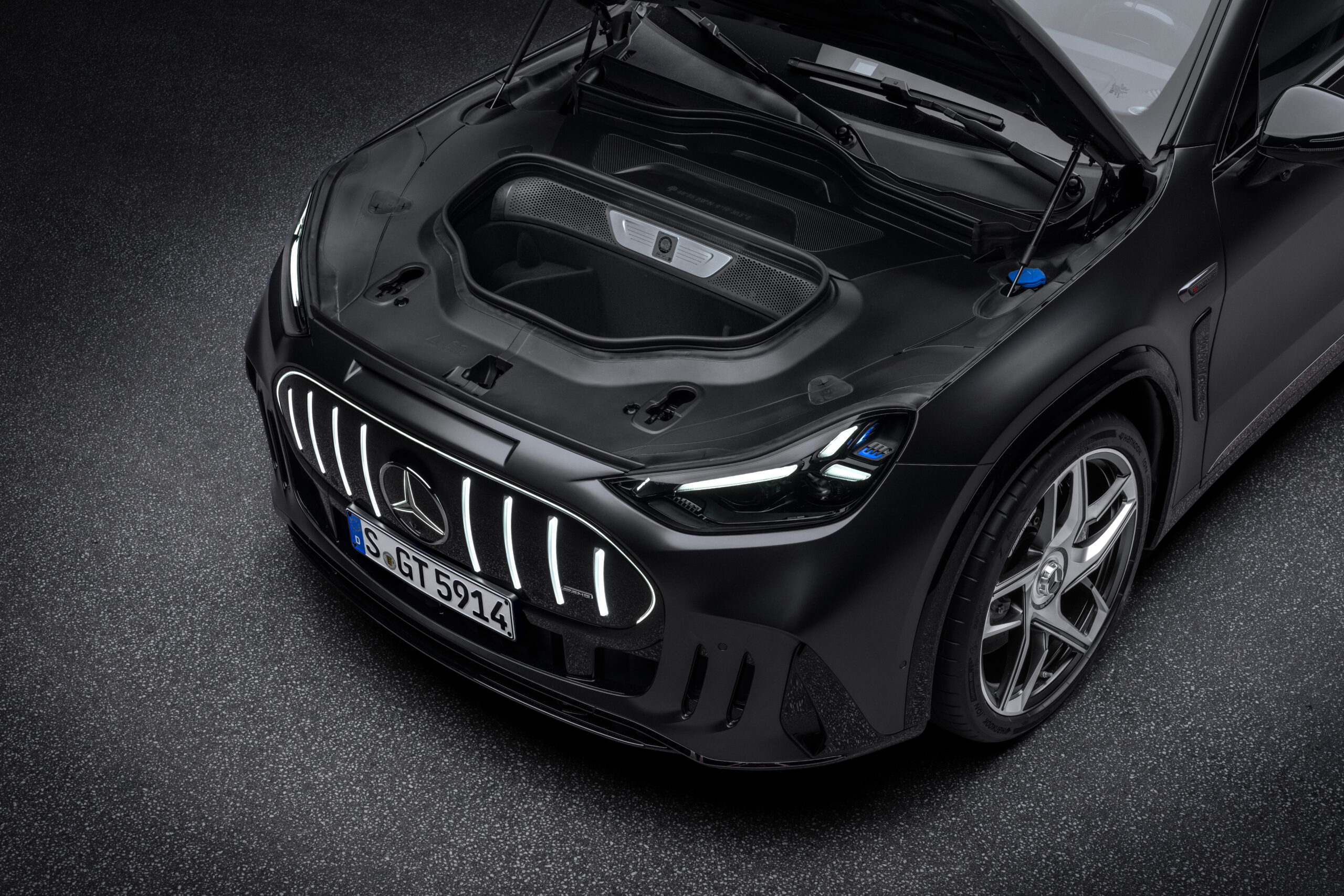
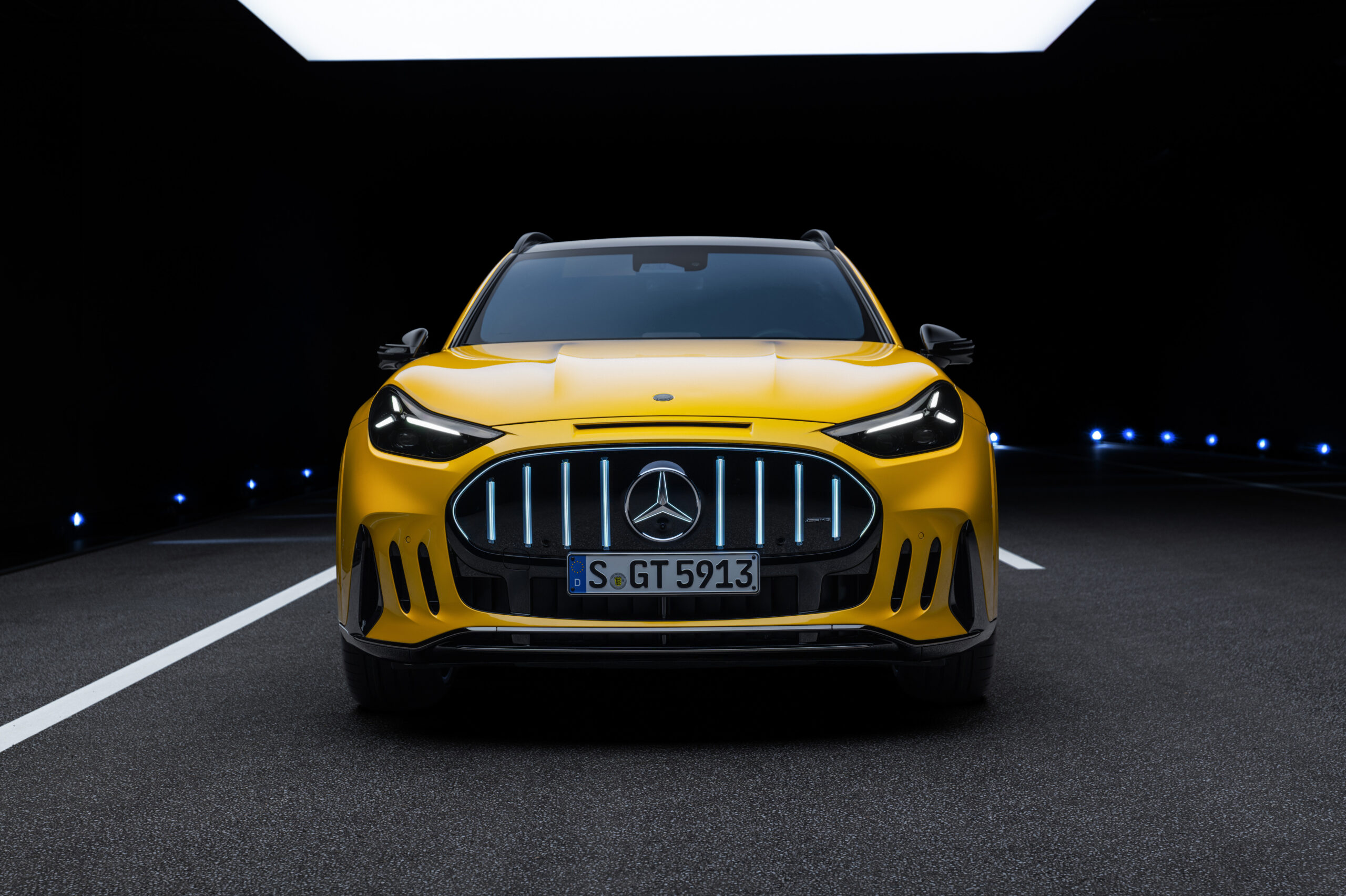
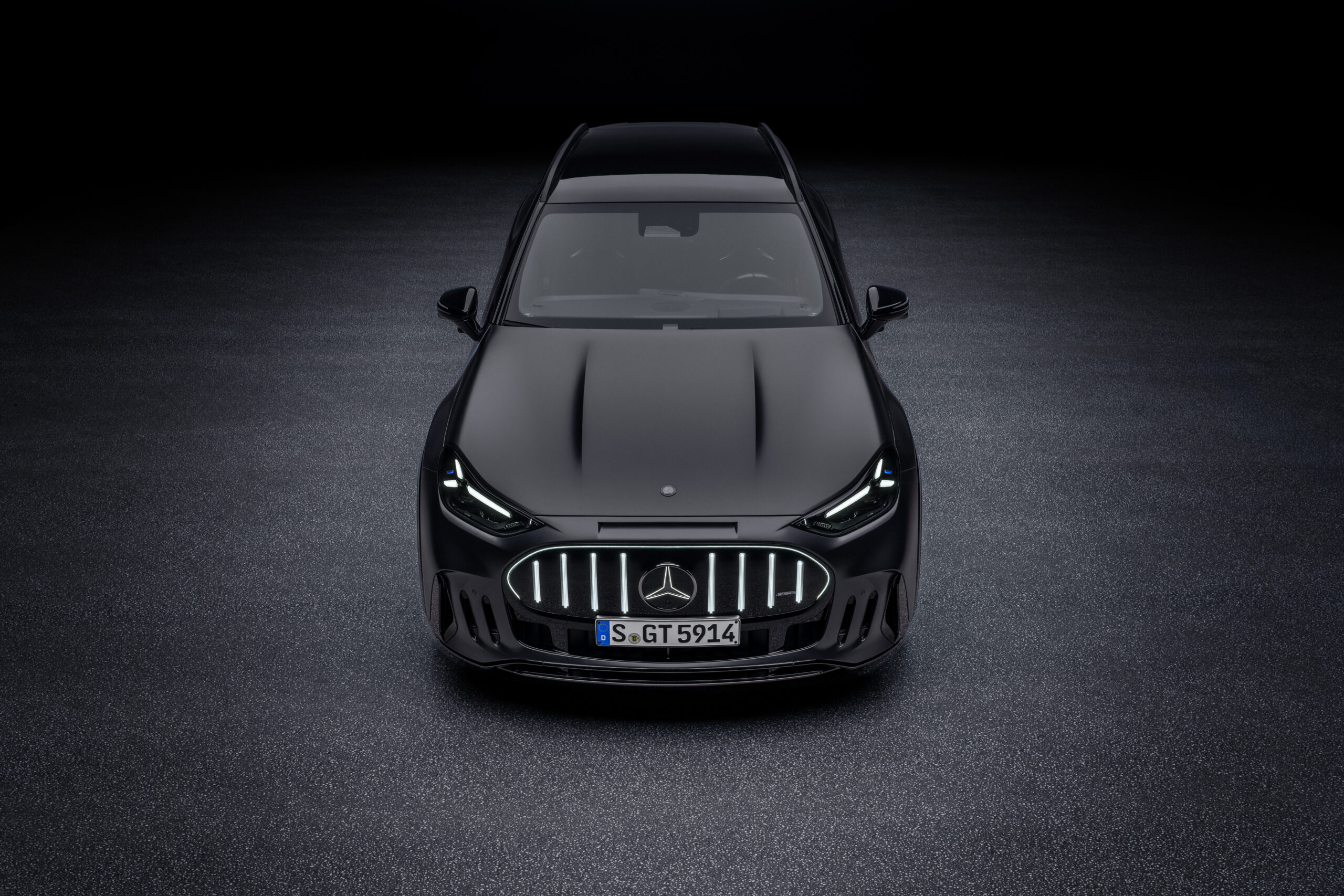
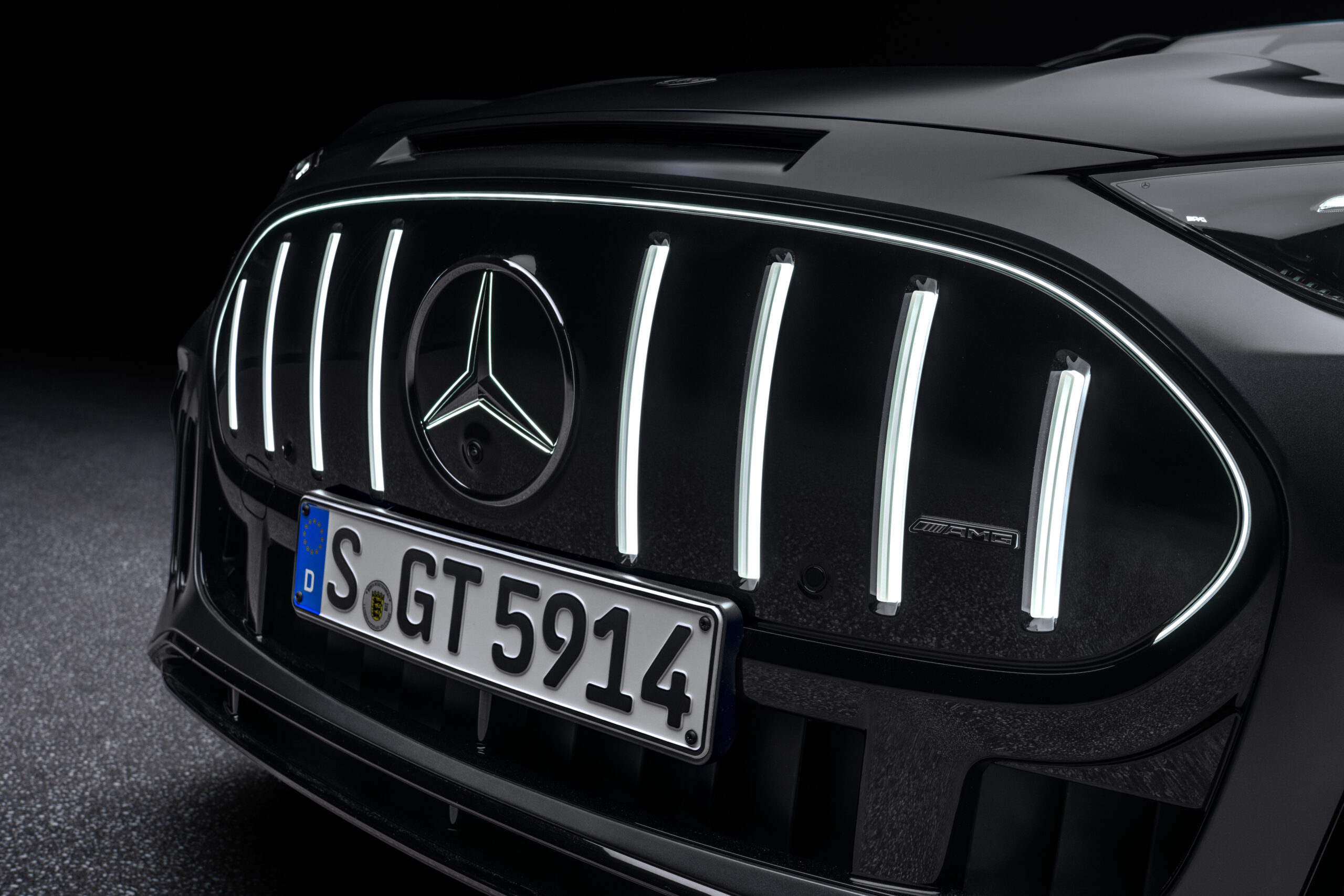
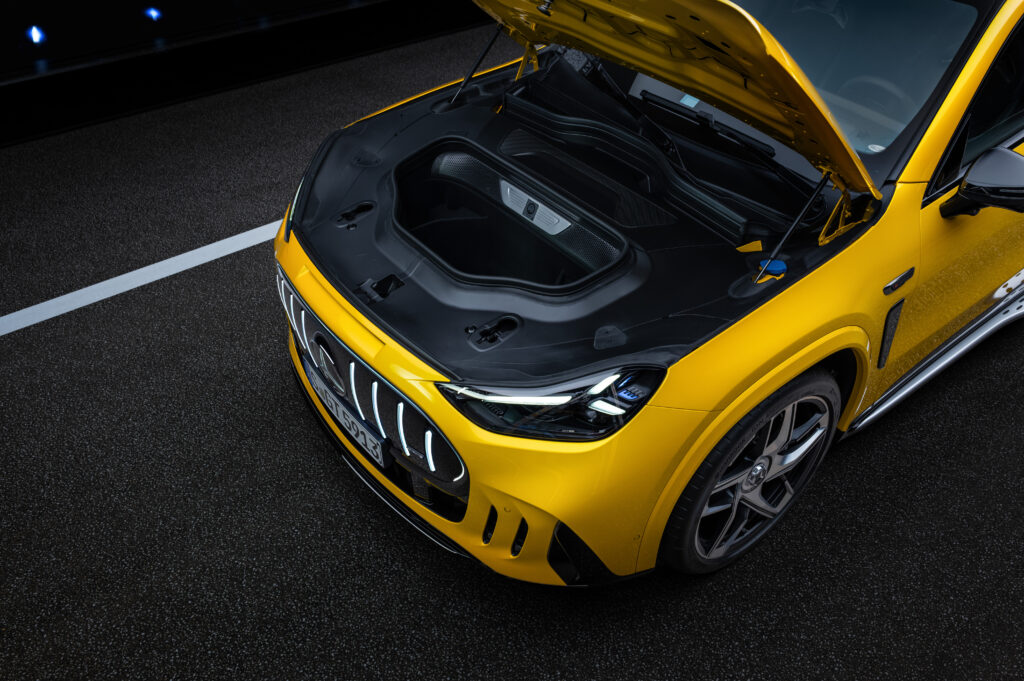
The front of the AMG GT SUV retains the familiar AMG grille identity, with its vertical metallic elements enclosed within a prominent frame. The grille can be illuminated, while the centrally positioned Mercedes-Benz star is also available with illumination.
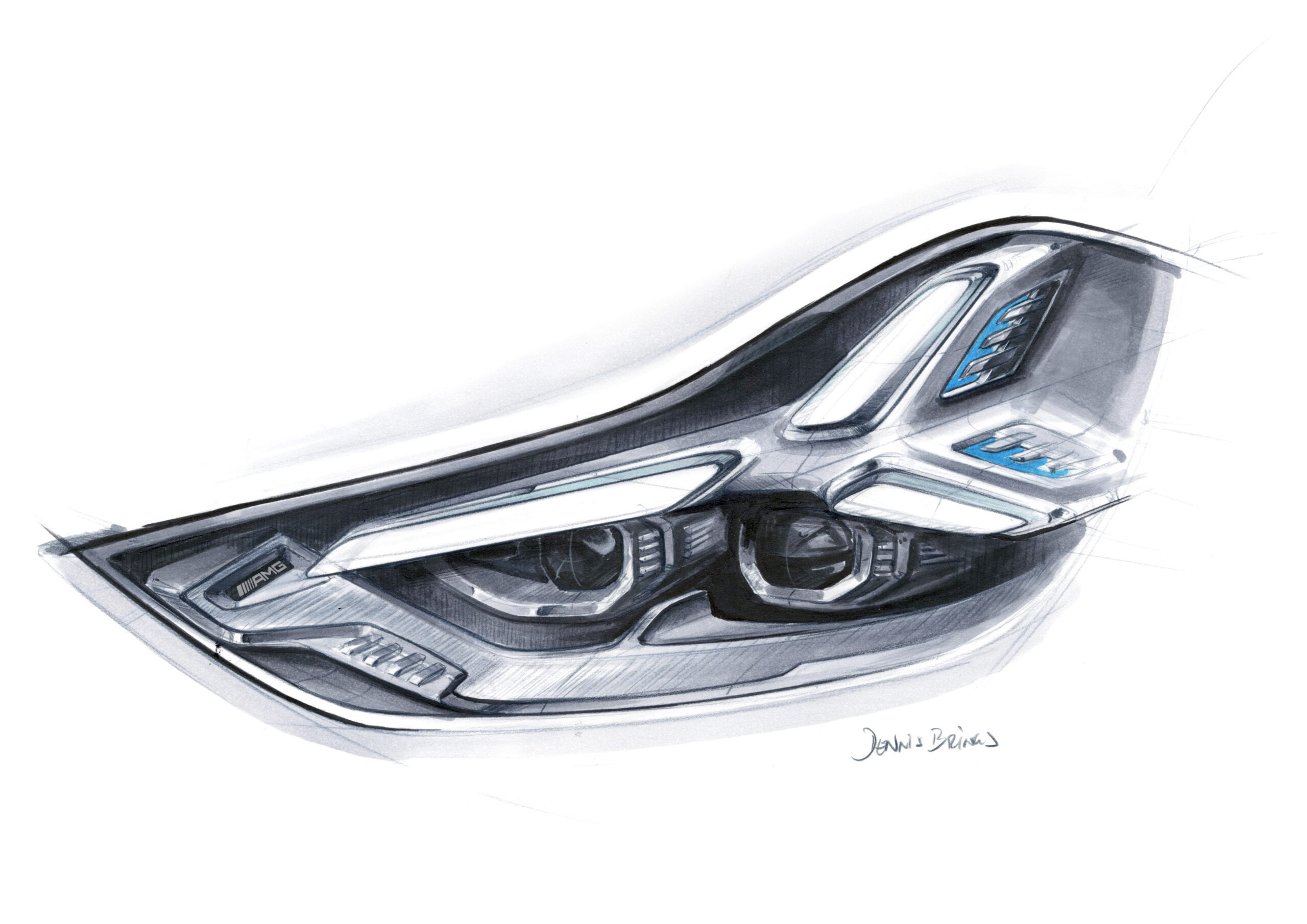
The headlights incorporate the increasingly familiar Mercedes-Benz star-shaped daytime running light graphics, reinforcing brand recognition through lighting rather than relying exclusively on traditional body details.
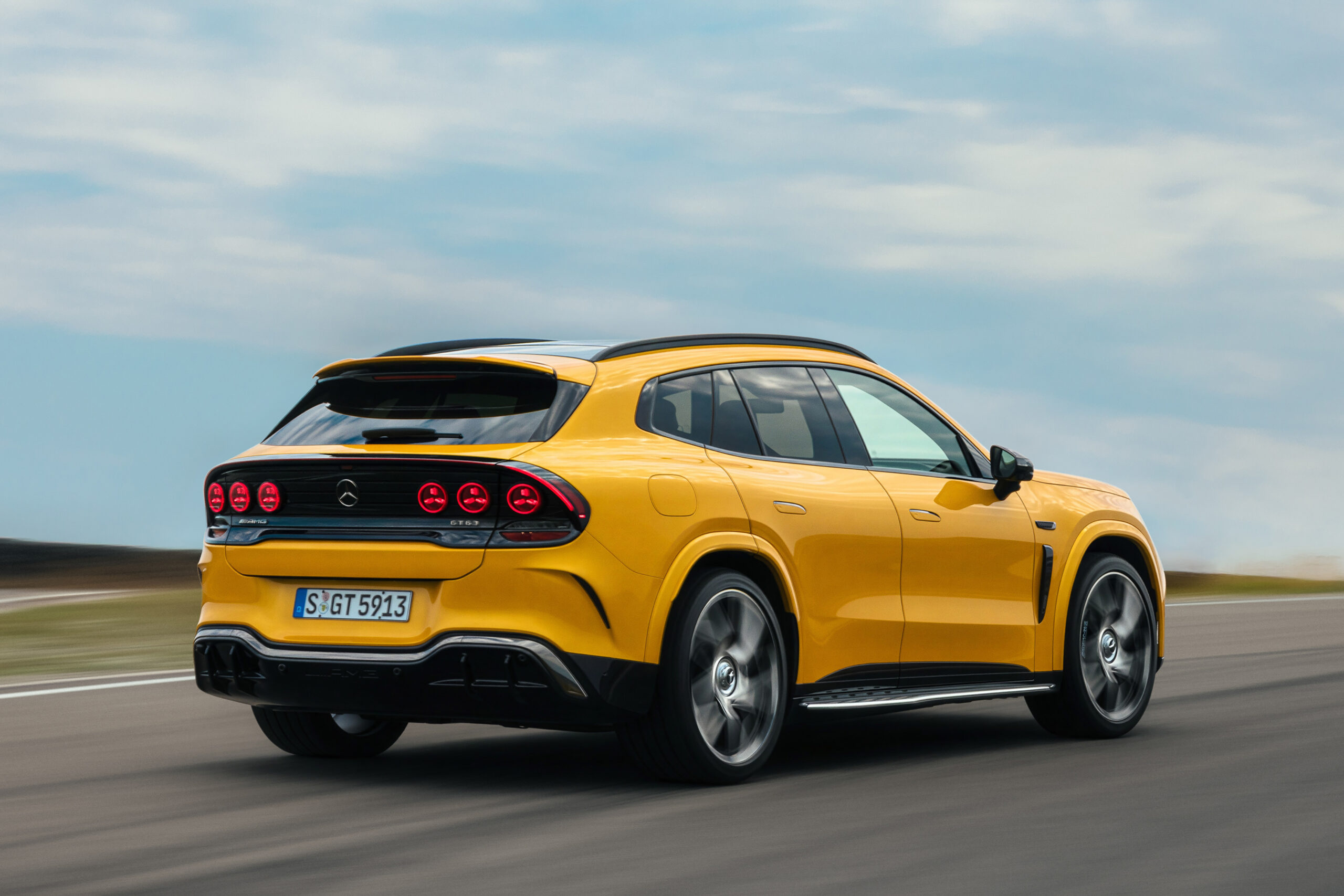
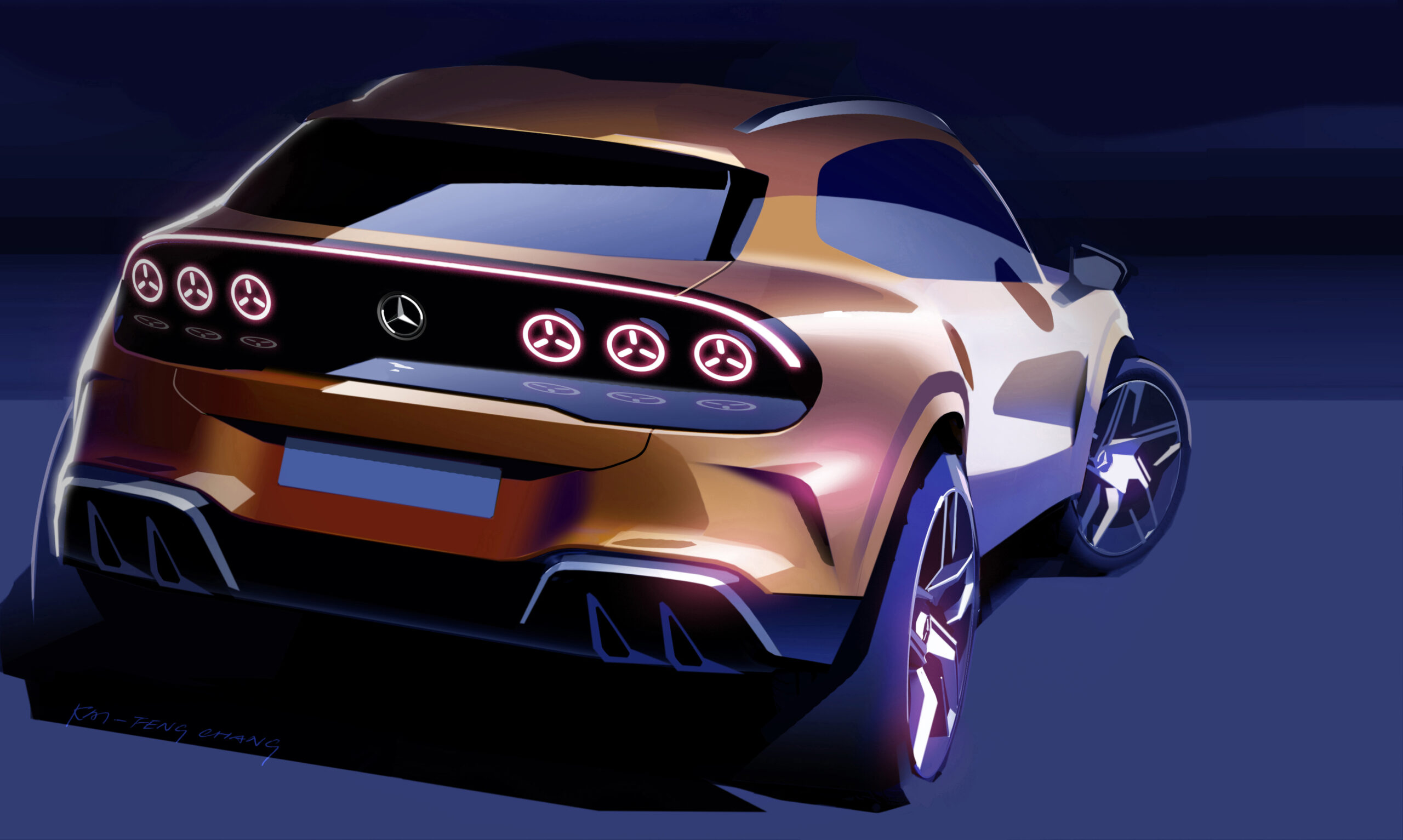
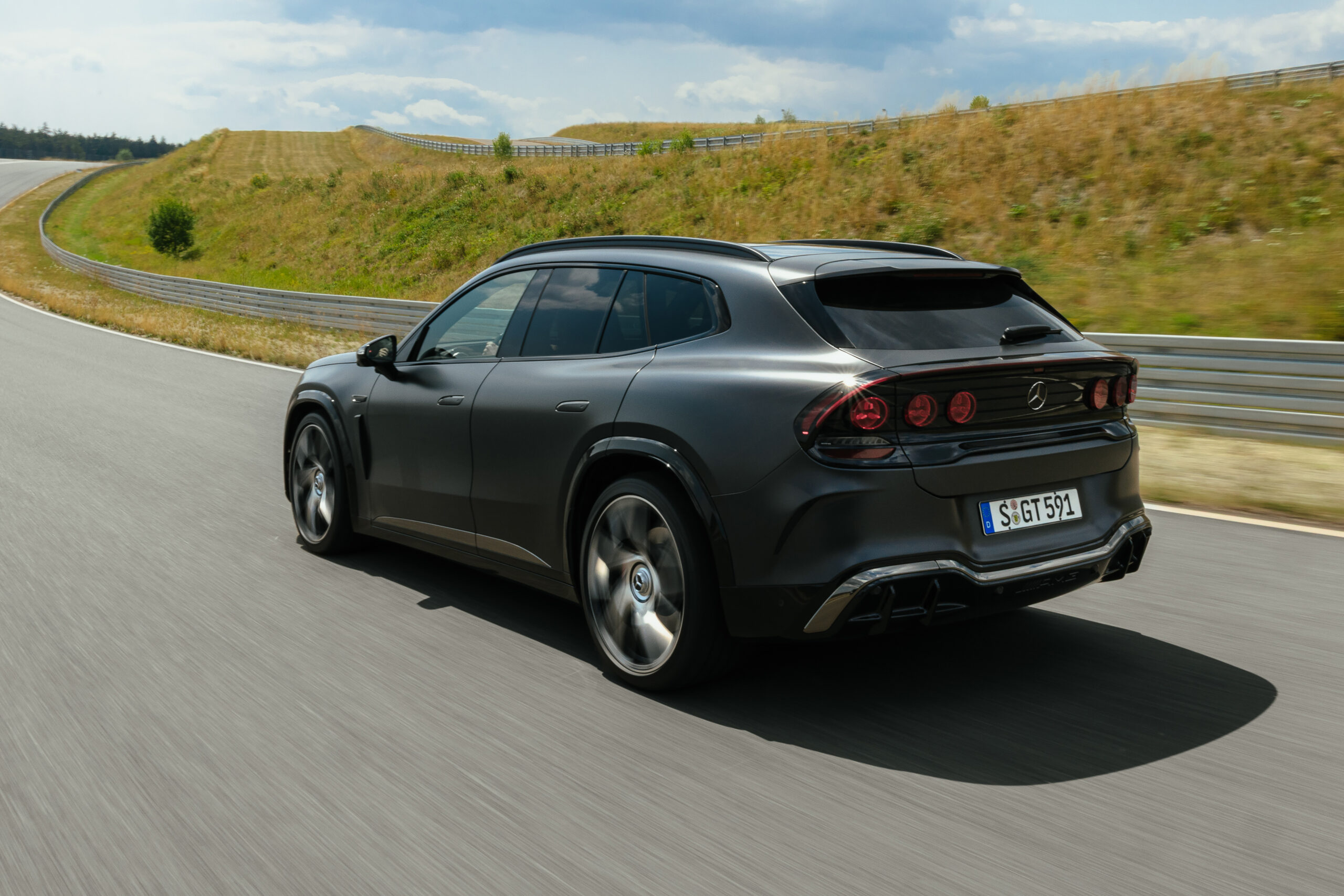
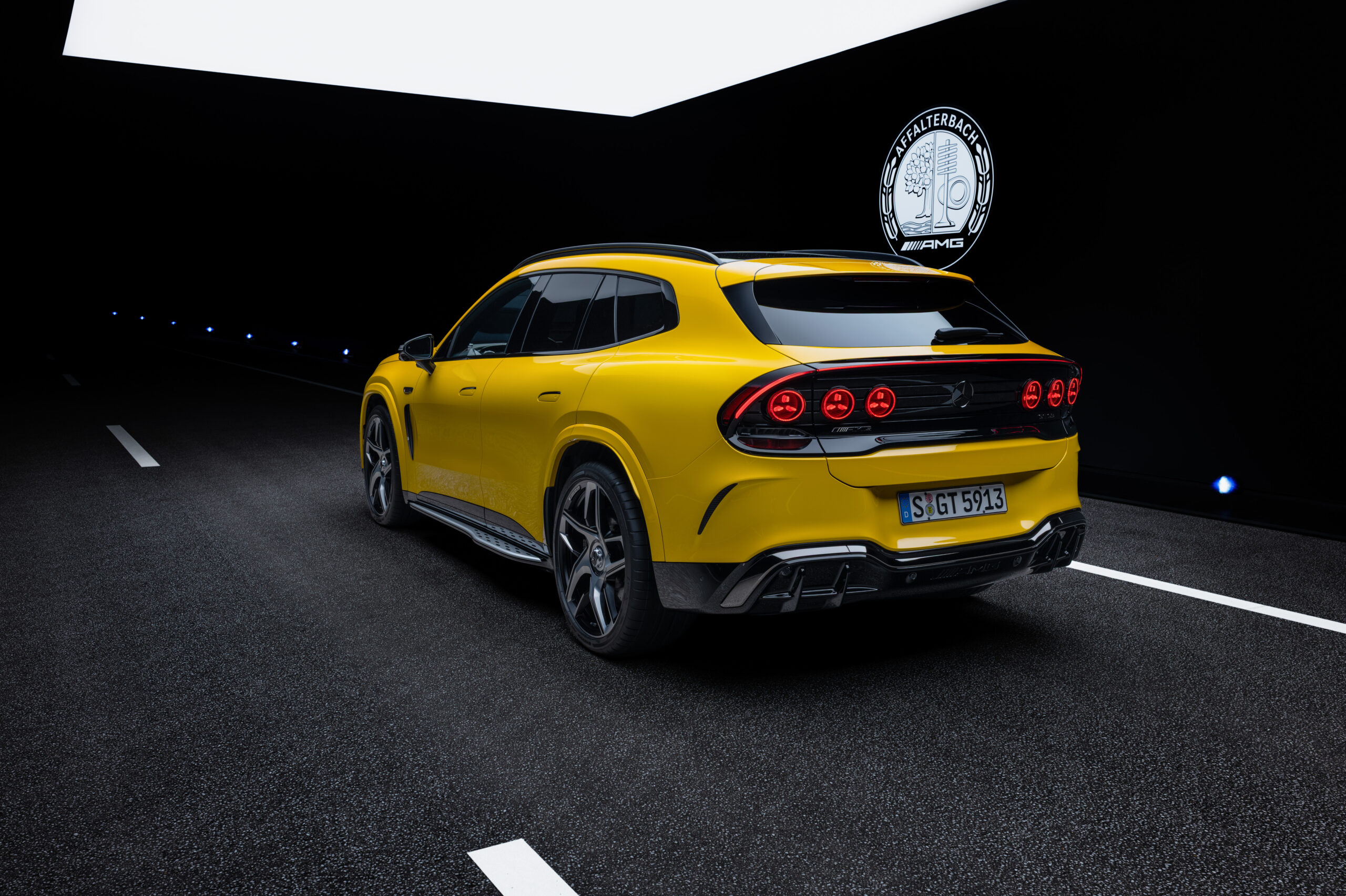
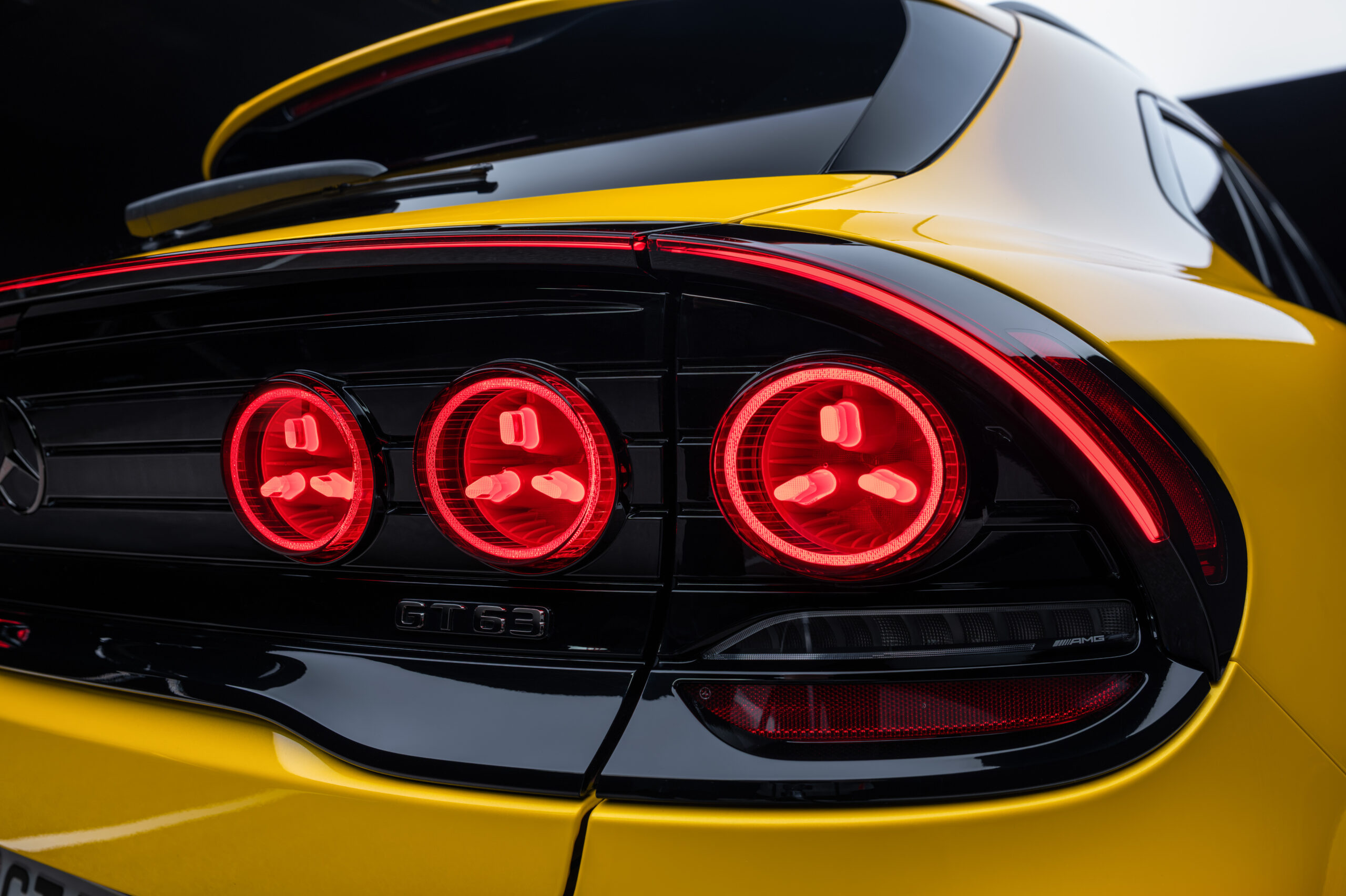
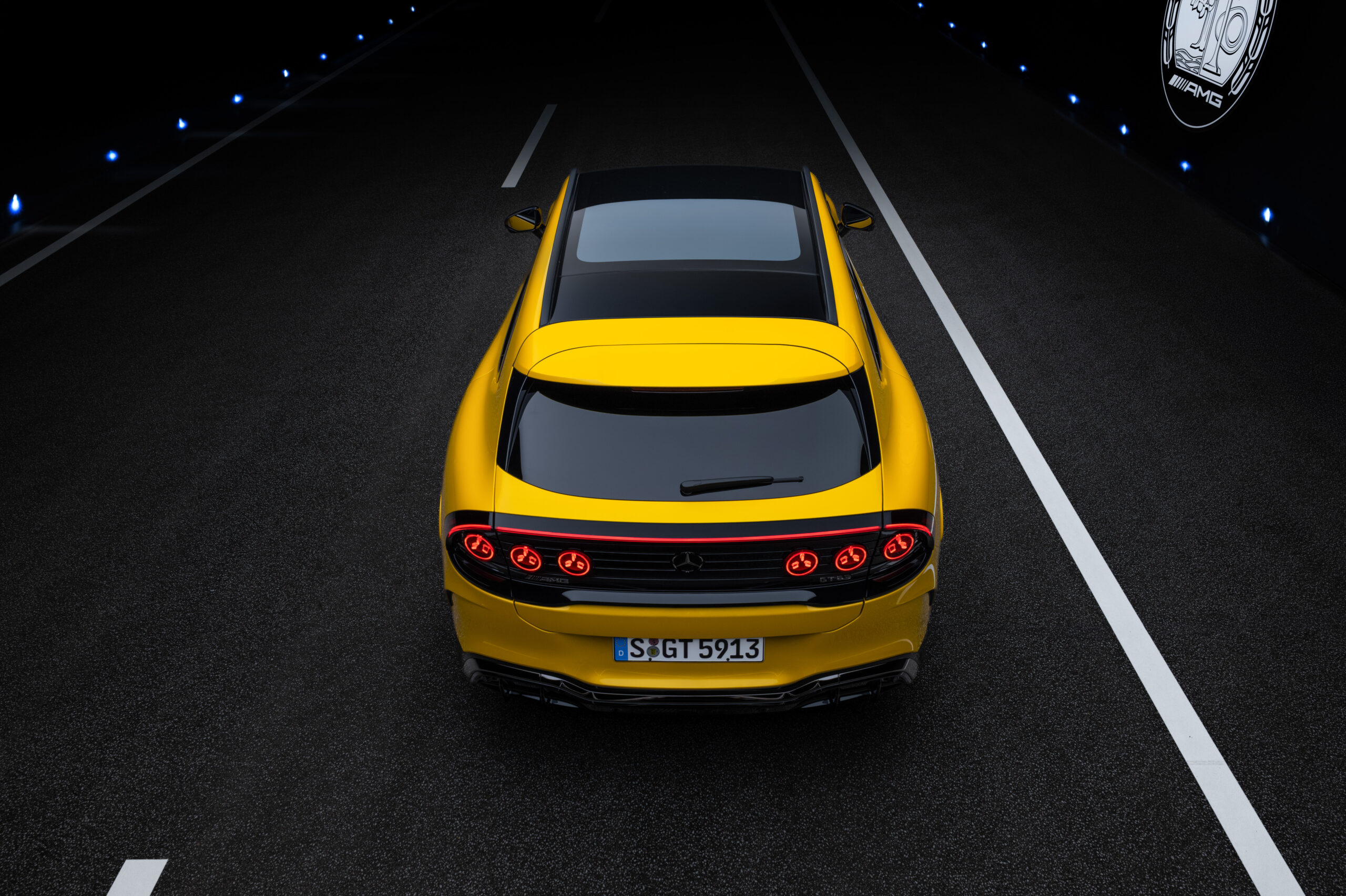
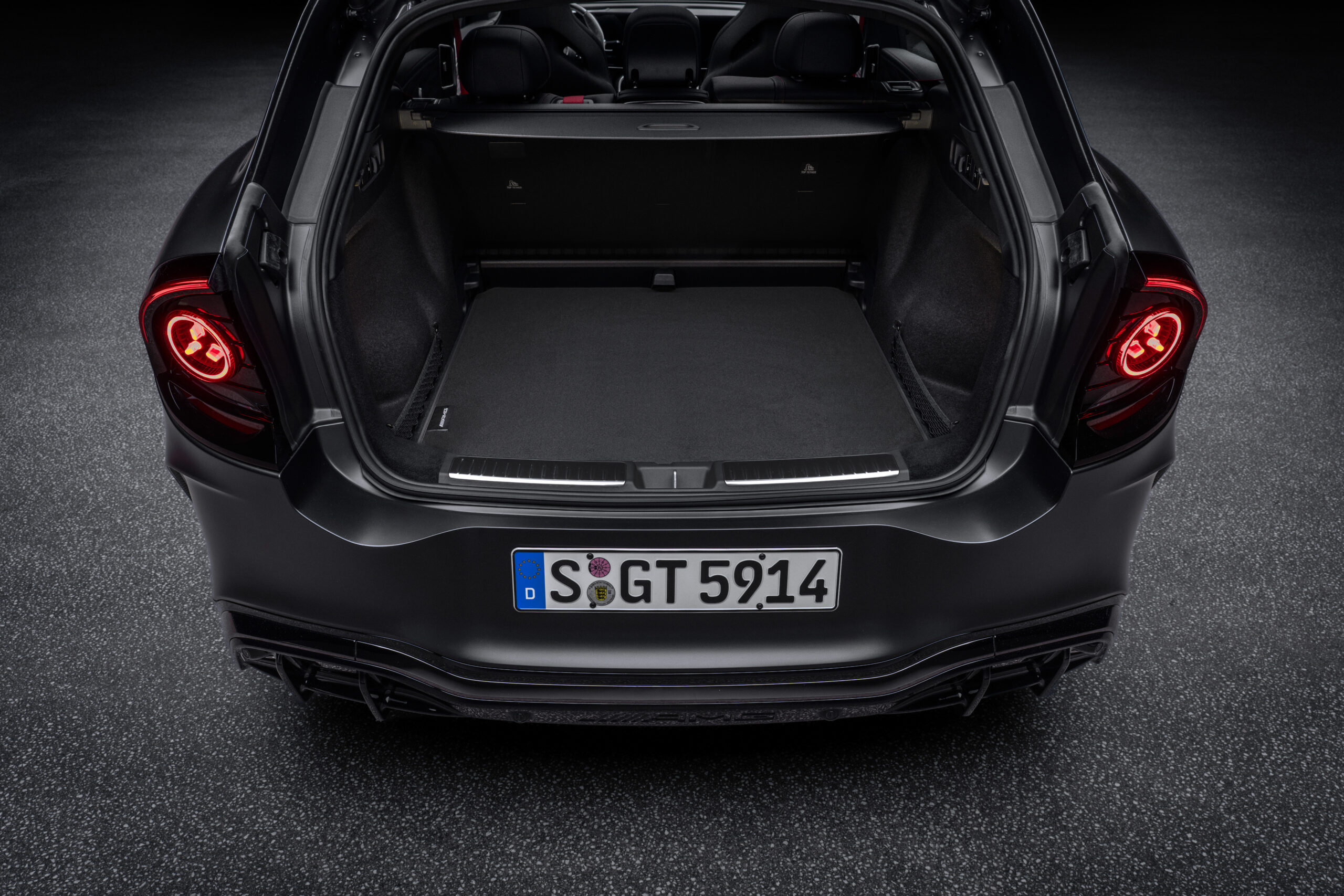
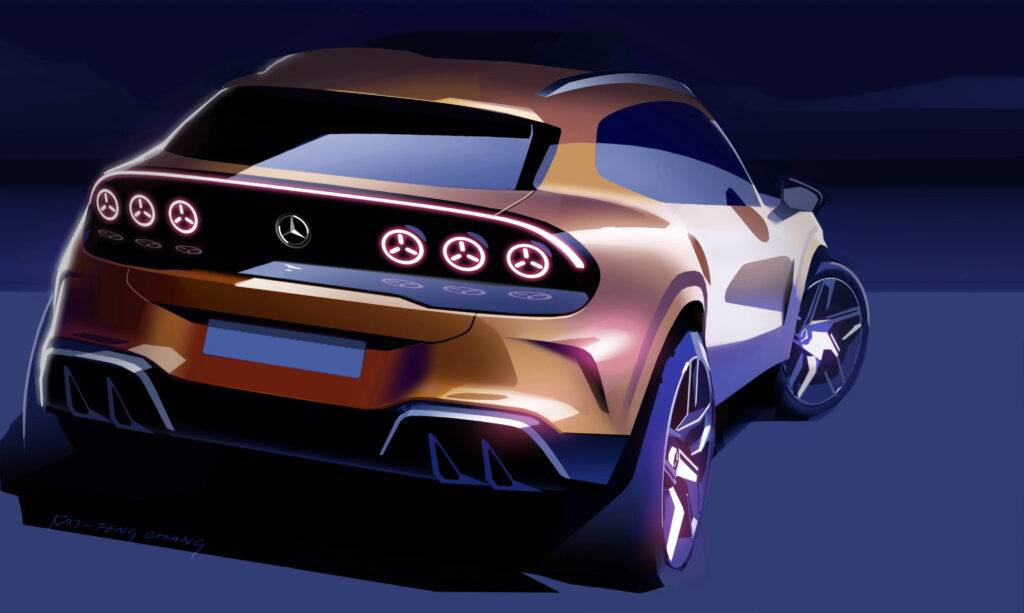
At the rear, six circular taillights feature a turbine-inspired design, creating a distinctive graphic that separates the GT SUV from other Mercedes-Benz models. An optional illuminated connecting strip further emphasizes the vehicle’s width.
These elements contribute to a recognizable appearance, although the increasing reliance on illuminated brand signatures raises an interesting design question. While lighting technology offers considerable opportunities for differentiation, the underlying body proportions and surface treatment must remain strong enough to establish identity without illumination.
Fortunately, the GT SUV’s broad shoulders, relatively low roofline and carefully controlled surfaces provide a substantial foundation for its visual character.
Aerodynamics Become an Active Design Element
Aerodynamic efficiency plays a particularly important role in the development of high-performance electric vehicles, where minimizing drag directly contributes to driving range.
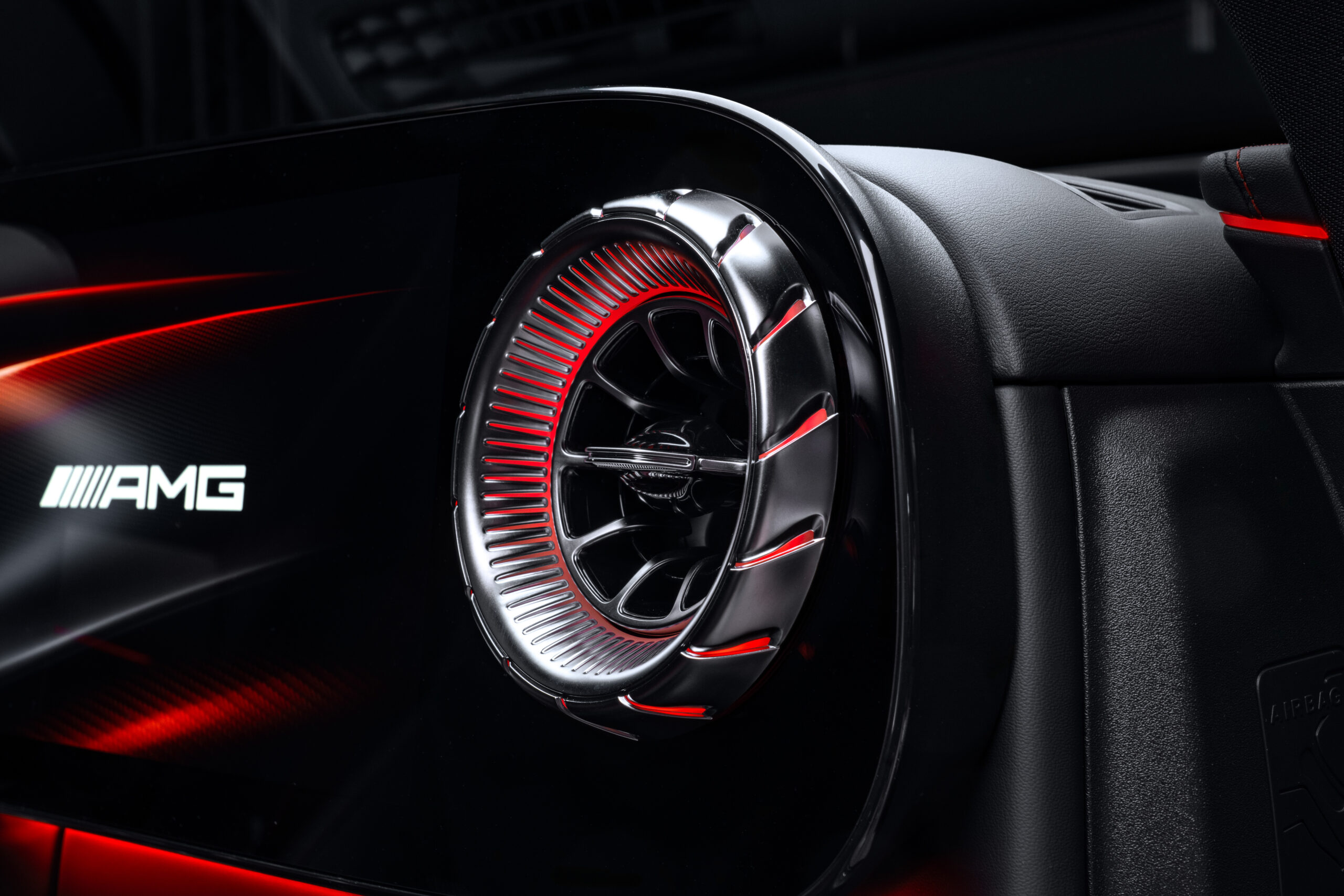
Mercedes-AMG has equipped the GT SUV with an intelligent active aerodynamic system called AEROKINETICS, incorporating adjustable front air intakes and an active roof spoiler on the GT 55 and GT 63 variants.
The front Airpanel system uses vertical shutters to regulate cooling airflow. Under normal conditions, these remain closed to reduce aerodynamic resistance, opening only when additional cooling is required.
At speeds above 150 km/h, the active roof spoiler adjusts its position according to driving conditions, balancing aerodynamic drag with stability and traction. During more aggressive driving, the spoiler adopts a steeper angle to increase aerodynamic effectiveness.
The resulting drag coefficient of 0.27 for the GT 55 and GT 63 is particularly impressive considering the vehicle’s width and performance requirements. The GT 53 achieves a slightly higher figure of 0.28.
This integration of aerodynamic functionality into the exterior design demonstrates how increasingly sophisticated engineering solutions can help reconcile the conflicting requirements of performance, efficiency and visual appeal.
Three Electric Motors and Extraordinary Performance
The AMG GT SUV will initially be offered in three versions: GT 53, GT 55 and GT 63.
The entry-level GT 53 uses two permanent-magnet synchronous motors, one at each axle, producing 544 horsepower and 800 Nm of torque. Acceleration from 0 to 100 km/h takes 4.2 seconds, already placing the vehicle firmly within high-performance territory.
The GT 55 introduces AMG’s advanced axial-flux motor technology, using three electric motors to generate 816 horsepower and 1,860 Nm of torque. Acceleration to 100 km/h takes just 3.1 seconds.
At the top of the range, the AMG GT 63 SUV produces an extraordinary 1,169 horsepower and 2,000 Nm of torque, accelerating from 0 to 100 km/h in 2.7 seconds. Mercedes-AMG also quotes 2.5 seconds using the one-foot rollout measurement method. The maximum speed reaches 270 km/h with the optional Driver’s Package.
Perhaps more significant than these peak figures is AMG’s emphasis on sustained performance. The GT 63 can deliver up to 530 kW of continuous power, reflecting an engineering approach intended to maintain high output rather than provide only brief acceleration bursts.
For an electric performance vehicle, thermal management and repeatable power delivery are becoming increasingly important differentiators.

Battery Technology Inspired by Formula 1
The AMG GT SUV uses an advanced 800-volt battery architecture developed around directly cooled cylindrical cells.
Two battery capacities are available for the GT 55 and GT 63: 106 kWh and 128 kWh of usable energy. The GT 53 uses the 106-kWh battery.
The larger battery offers a claimed WLTP driving range of up to 700 kilometres in the higher-performance variants, while the GT 53 achieves up to 668 kilometres with its smaller battery.
Mercedes-AMG has placed particular emphasis on charging performance. The 106-kWh battery supports DC charging at up to 600 kW, while the larger 128-kWh battery can accept up to 710 kW under suitable conditions.
According to AMG, the larger battery can recover approximately 450 kilometres of WLTP range in just ten minutes, while charging from 10 to 80 percent can take as little as 12 minutes.
These figures are remarkable, although achieving such charging speeds requires suitable high-power charging infrastructure, which remains relatively uncommon.
The direct cooling system circulates a non-conductive fluid around the individual battery cells, allowing more precise temperature control during demanding driving and rapid charging. This approach is intended to maintain consistent performance while reducing the thermal limitations traditionally associated with high-output electric powertrains.
Chassis Technology to Challenge the Laws of Physics
One of the greatest challenges facing high-performance electric SUVs is their considerable weight. Depending on specification, the AMG GT 63 weighs approximately 2,585 to 2,695 kilograms, making sophisticated chassis control essential.
Mercedes-AMG addresses this through its newly developed AMG ACTIVE RIDE CONTROL+ suspension system, which combines air suspension with active hydraulic control of body movements.
Instead of relying on conventional anti-roll bars, the system actively manages roll and pitch, reducing body movement during cornering, acceleration and braking.
The result should be a wider operating range between comfortable long-distance driving and the precise body control required for high-performance handling.
Active rear-wheel steering is also standard, allowing the rear wheels to turn by as much as six degrees at lower speeds to improve manoeuvrability. At higher speeds, the rear wheels turn in the same direction as the fronts to enhance stability.
The combination of active suspension, rear-wheel steering and fully variable all-wheel drive demonstrates the extent to which modern vehicle dynamics increasingly depend on the integration of mechanical engineering and sophisticated electronic control systems.

A Driver-Focused Interior With a Digital Personality
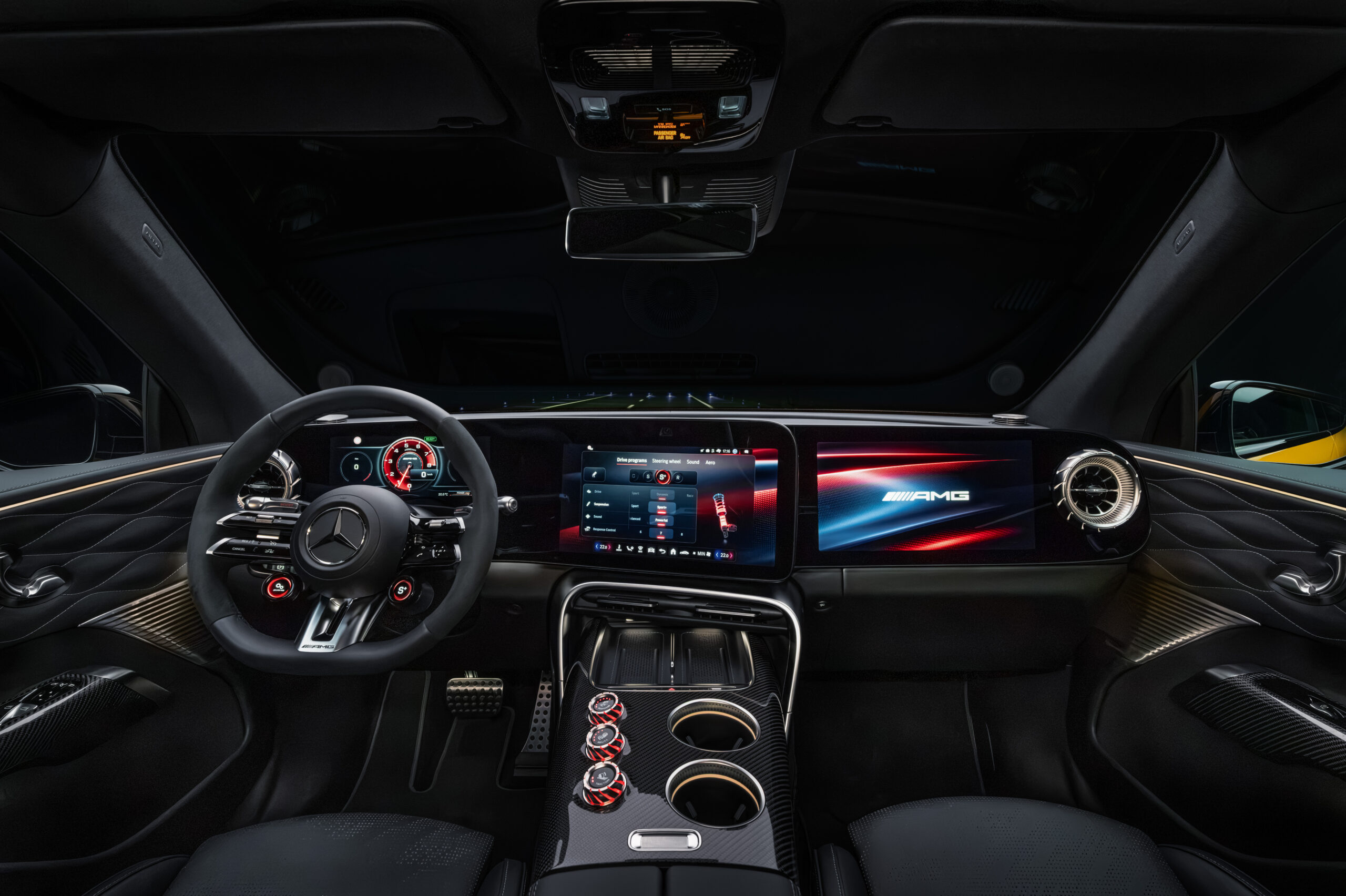
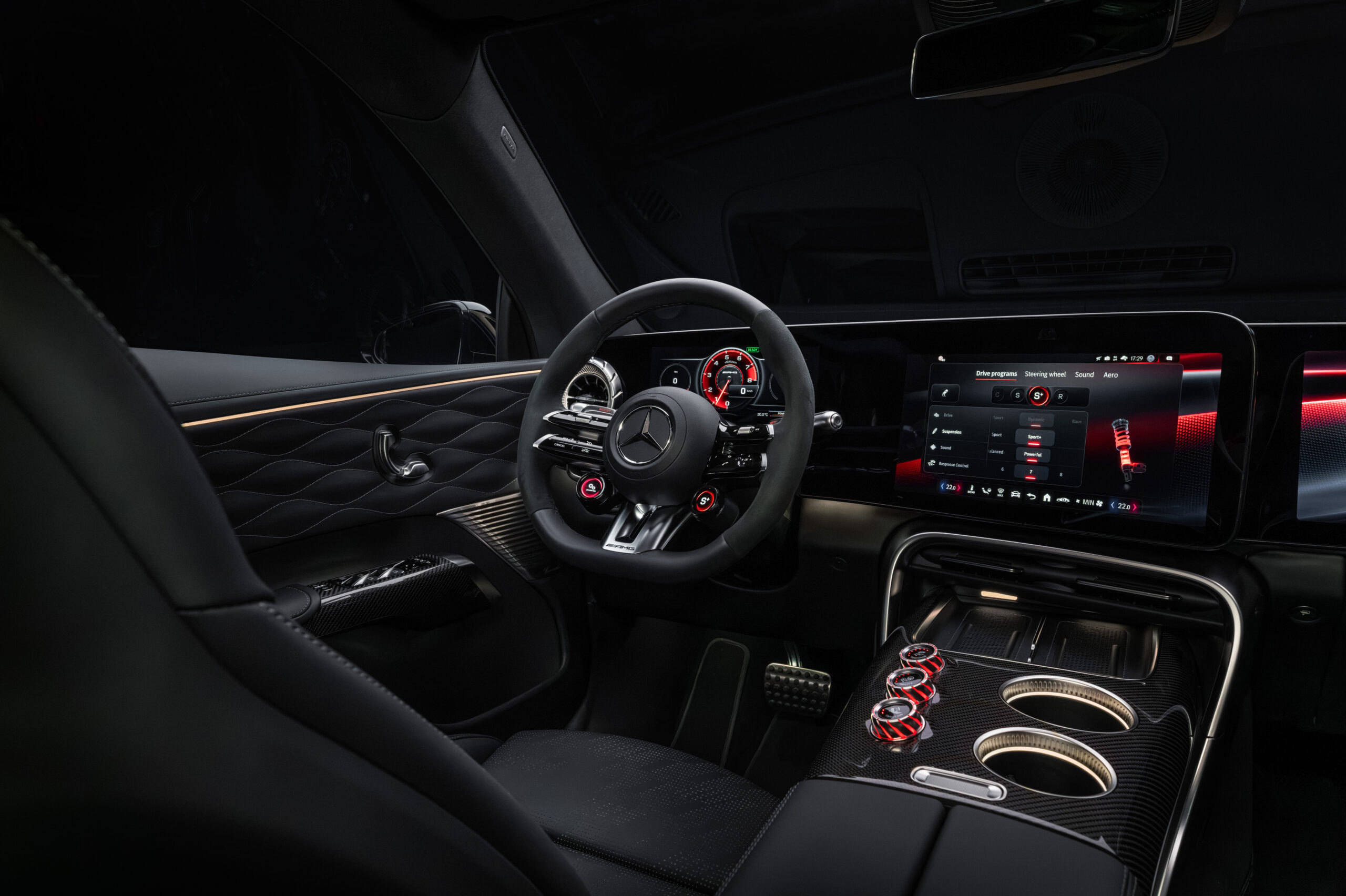
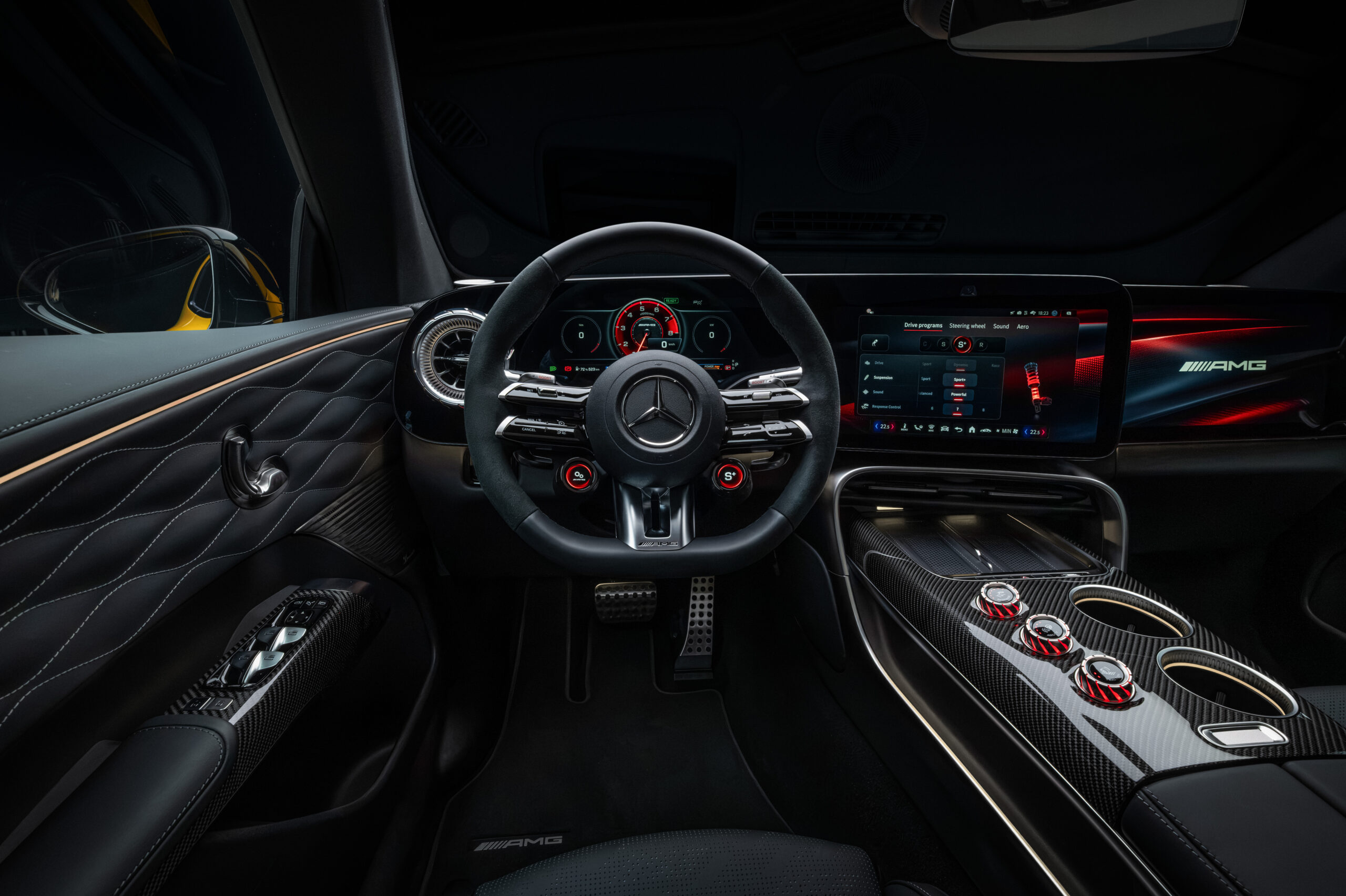
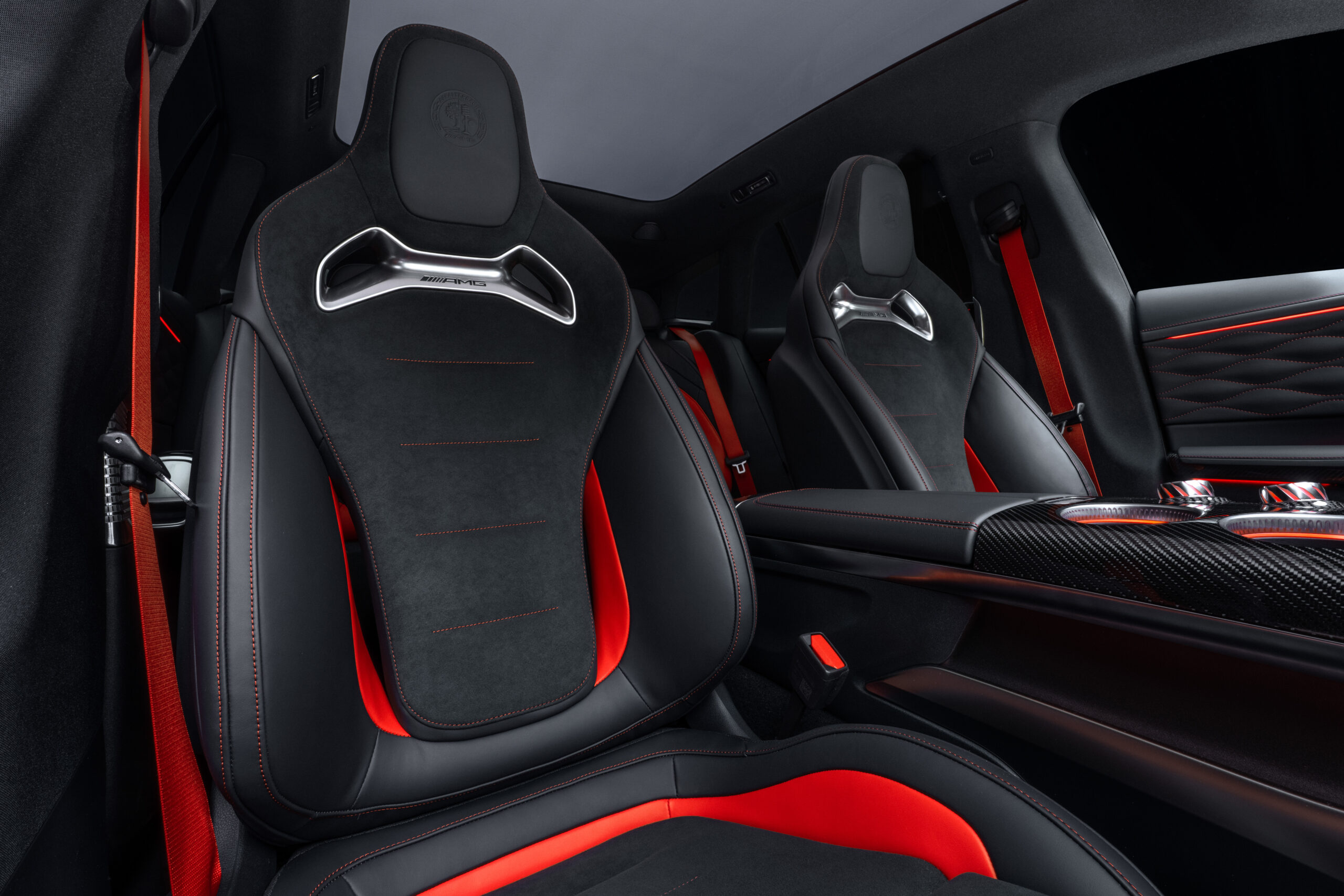
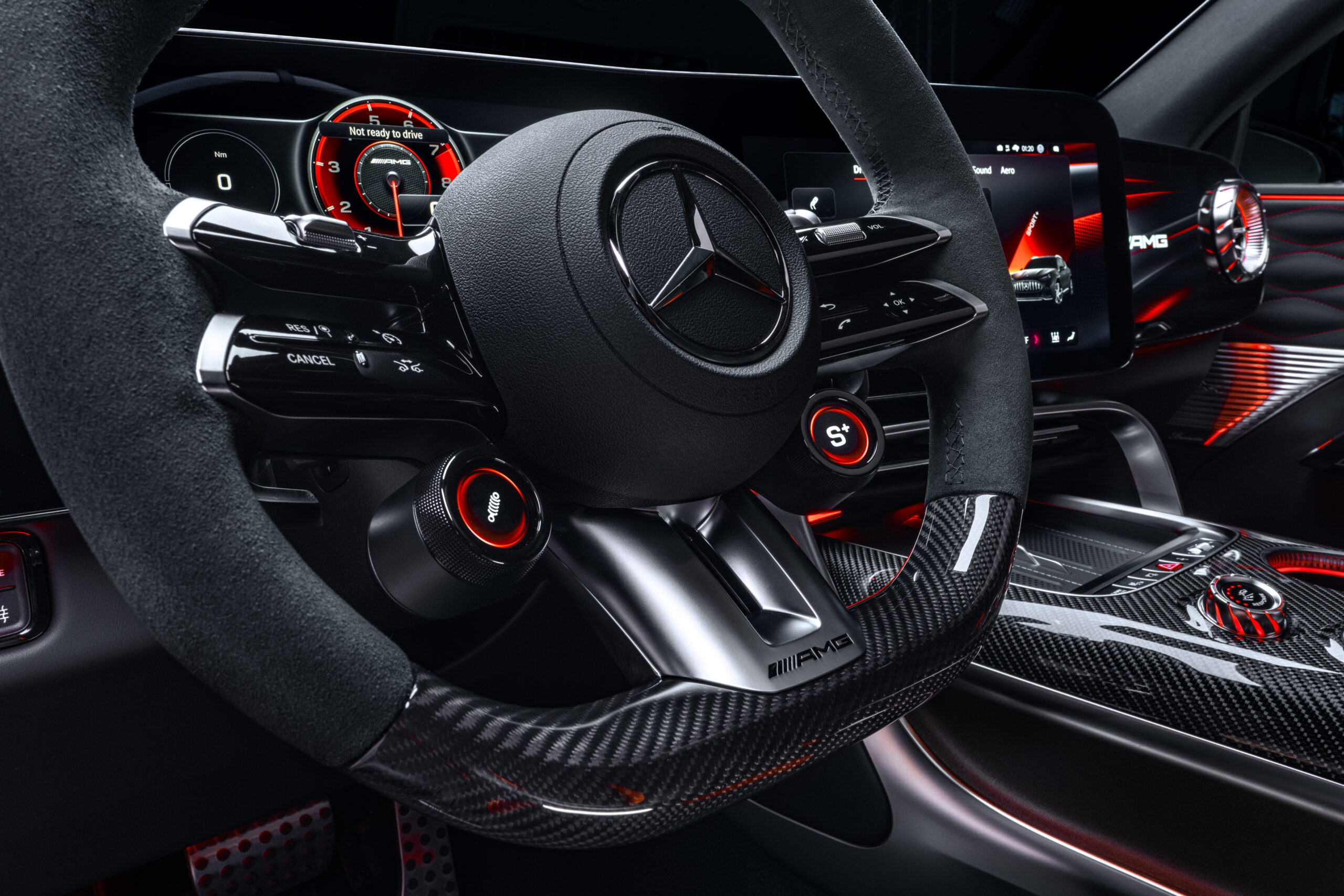
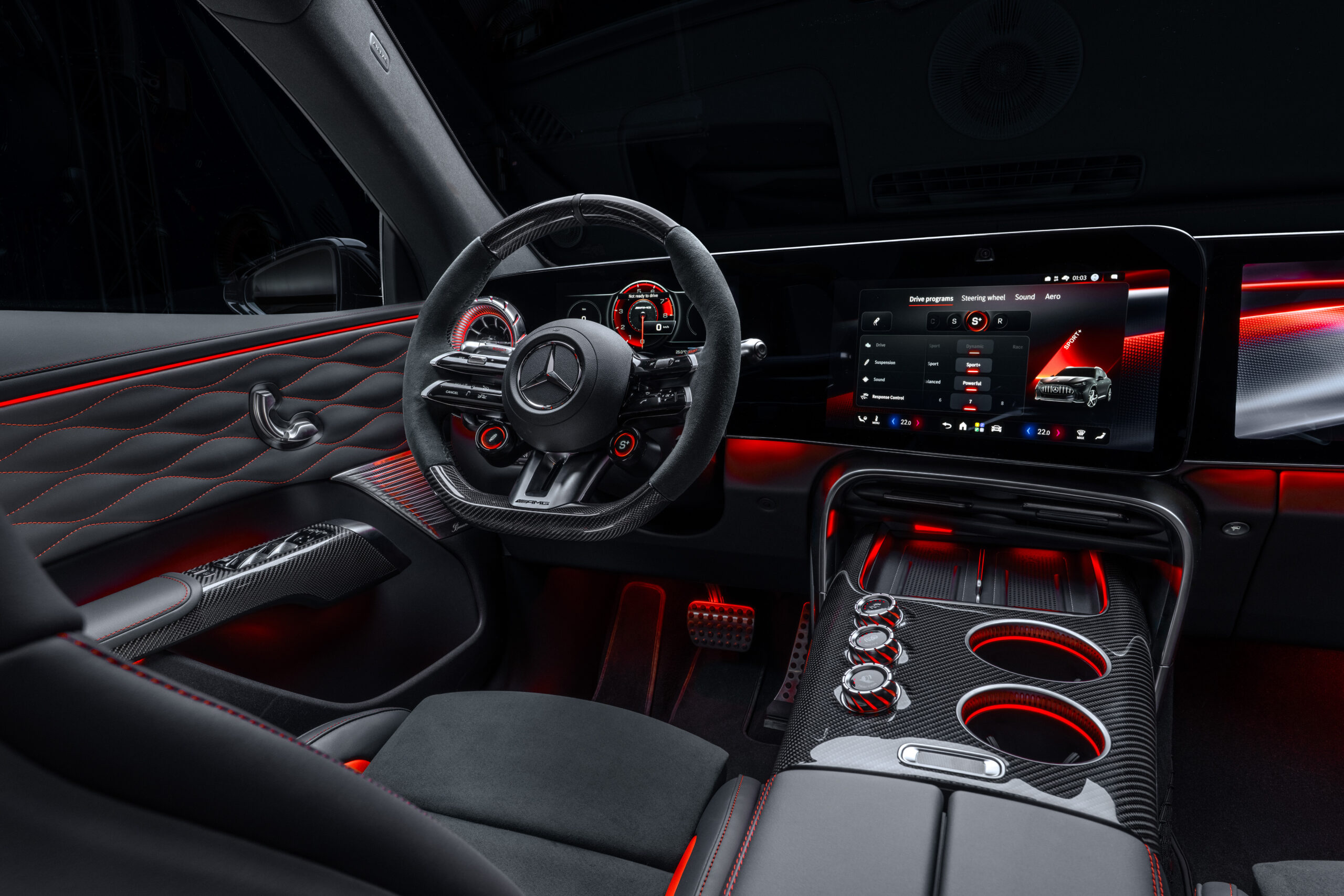
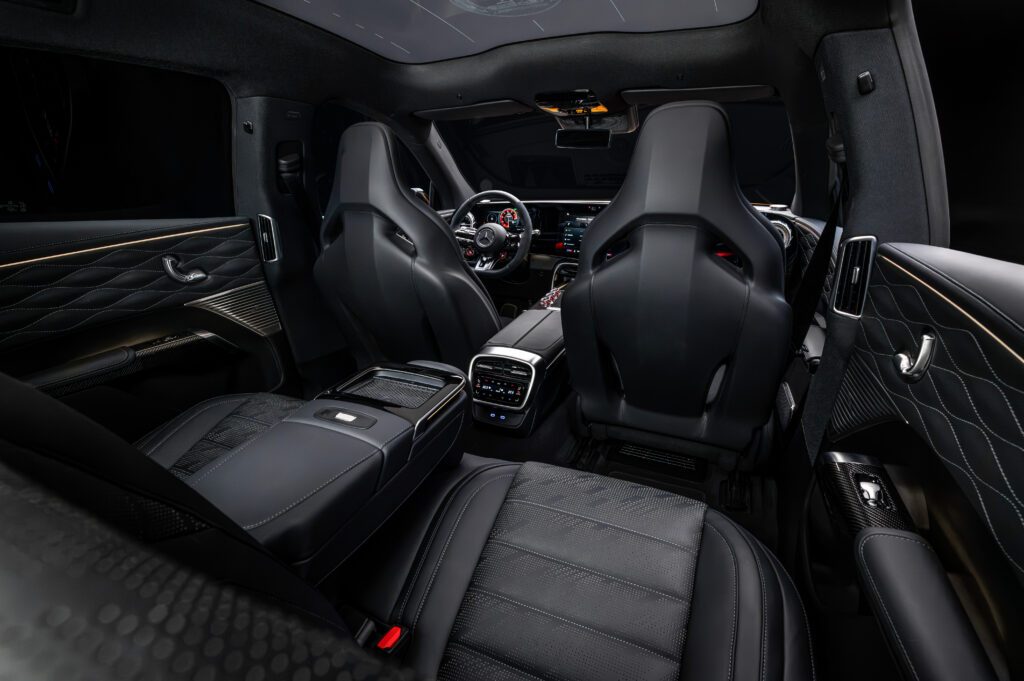
Inside, Mercedes-AMG has attempted to recreate the driving position and atmosphere of a traditional AMG GT within the more spacious architecture of an SUV.
The driver sits relatively low in the vehicle, surrounded by a dashboard designed to emphasize the cockpit rather than the elevated seating position typically associated with SUVs.
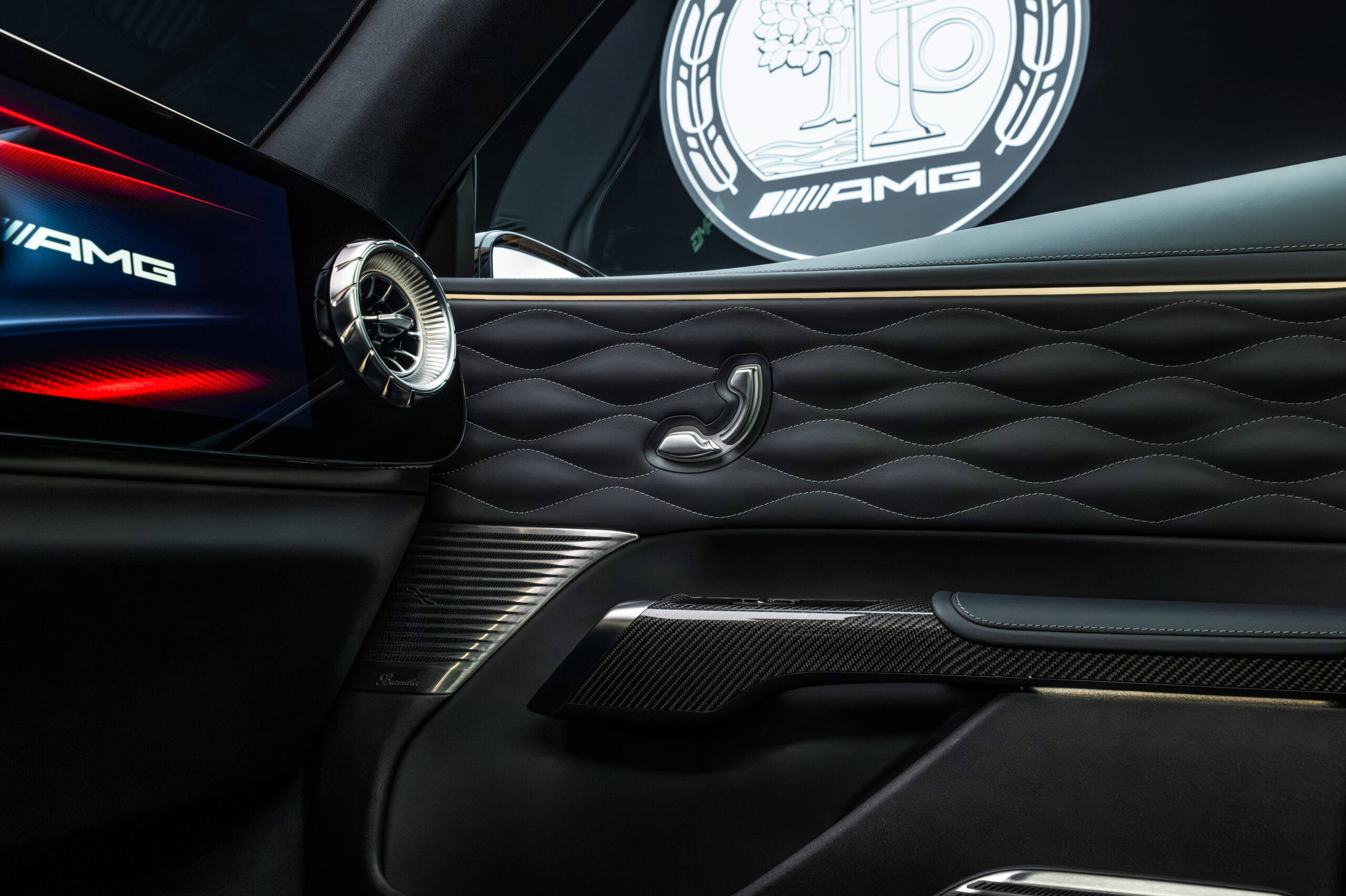
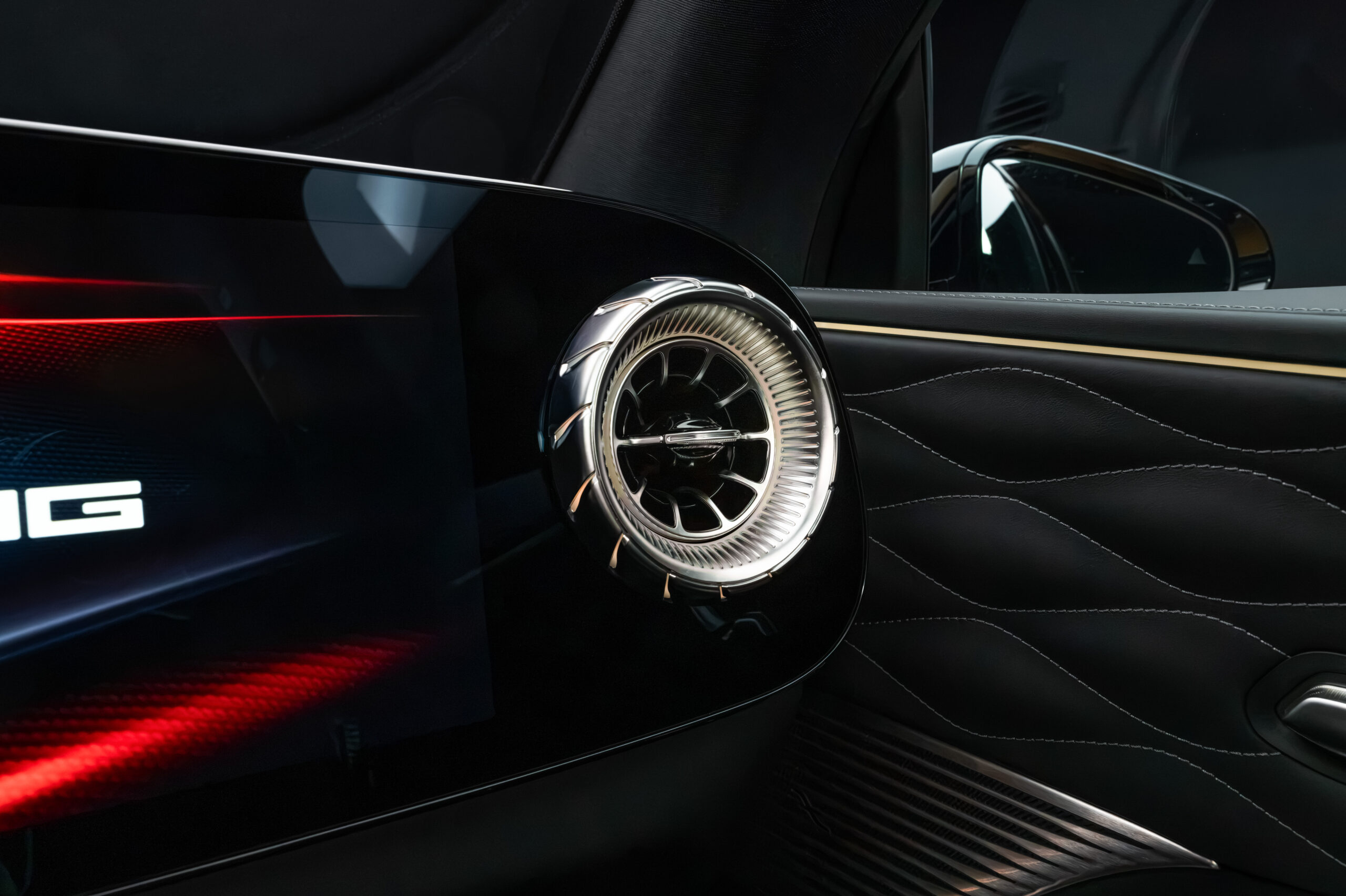
A 10.2-inch digital instrument display is combined with a 14-inch central multimedia screen angled toward the driver. A separate 14-inch display is provided for the front passenger.
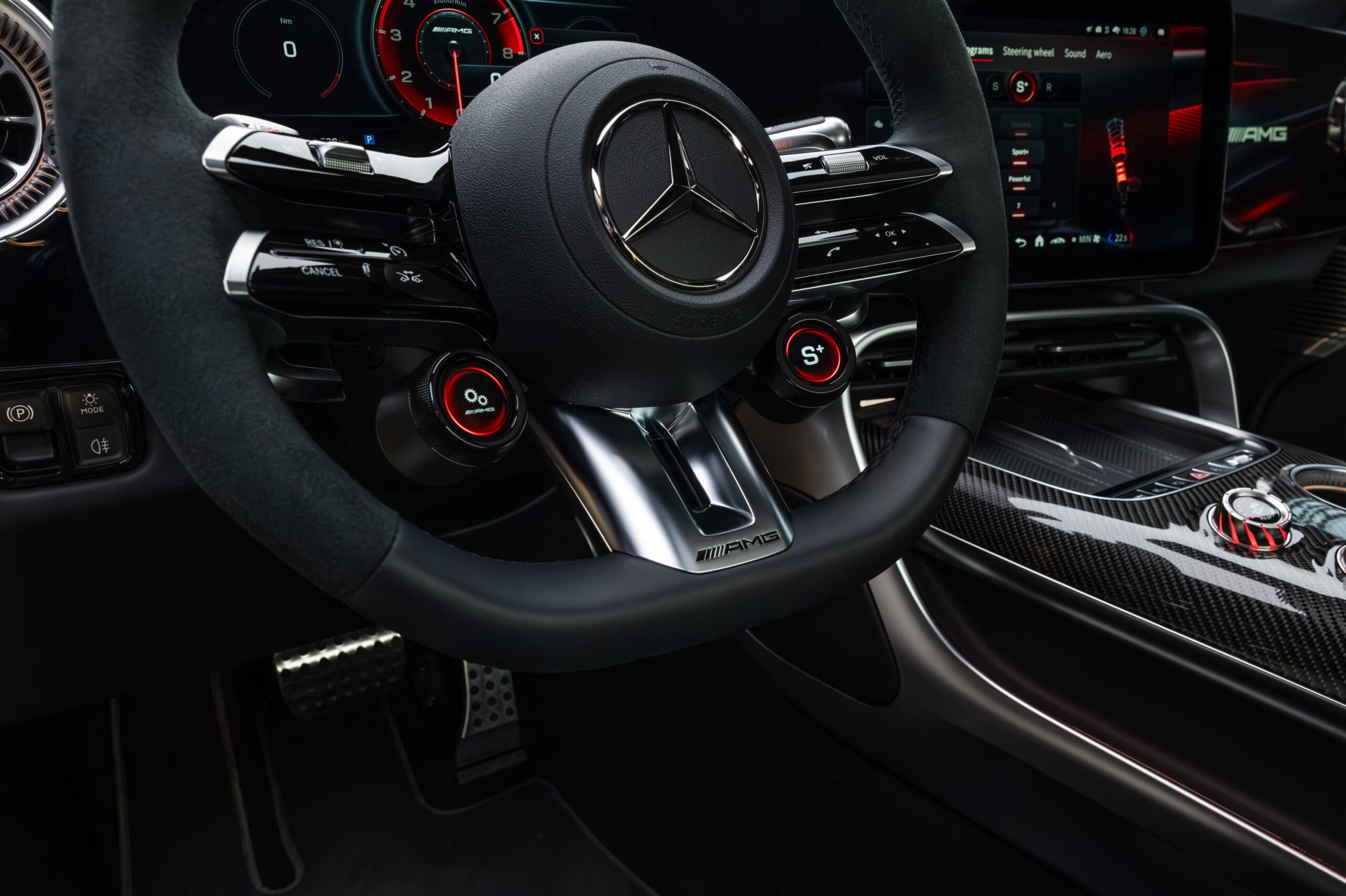
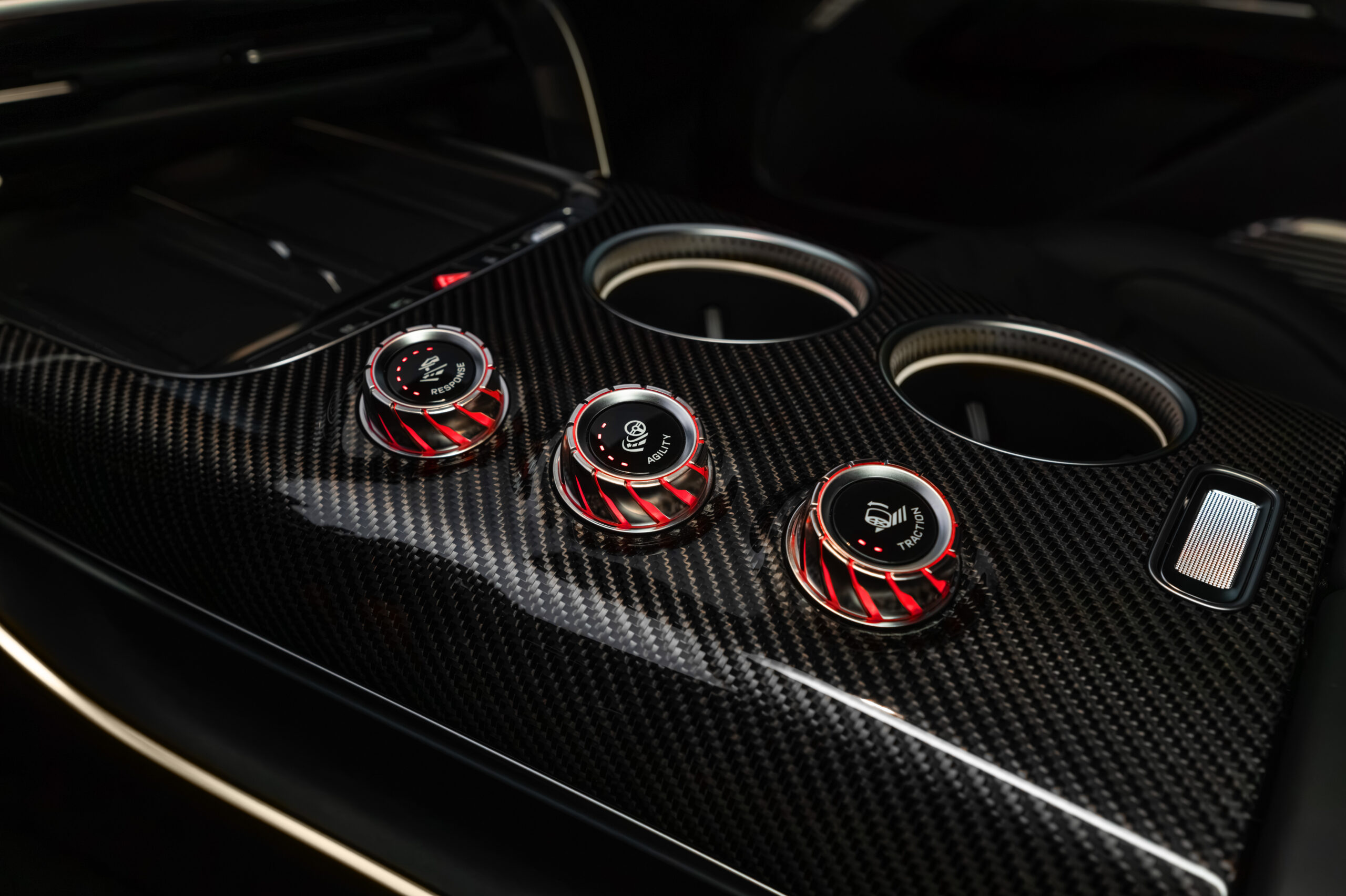
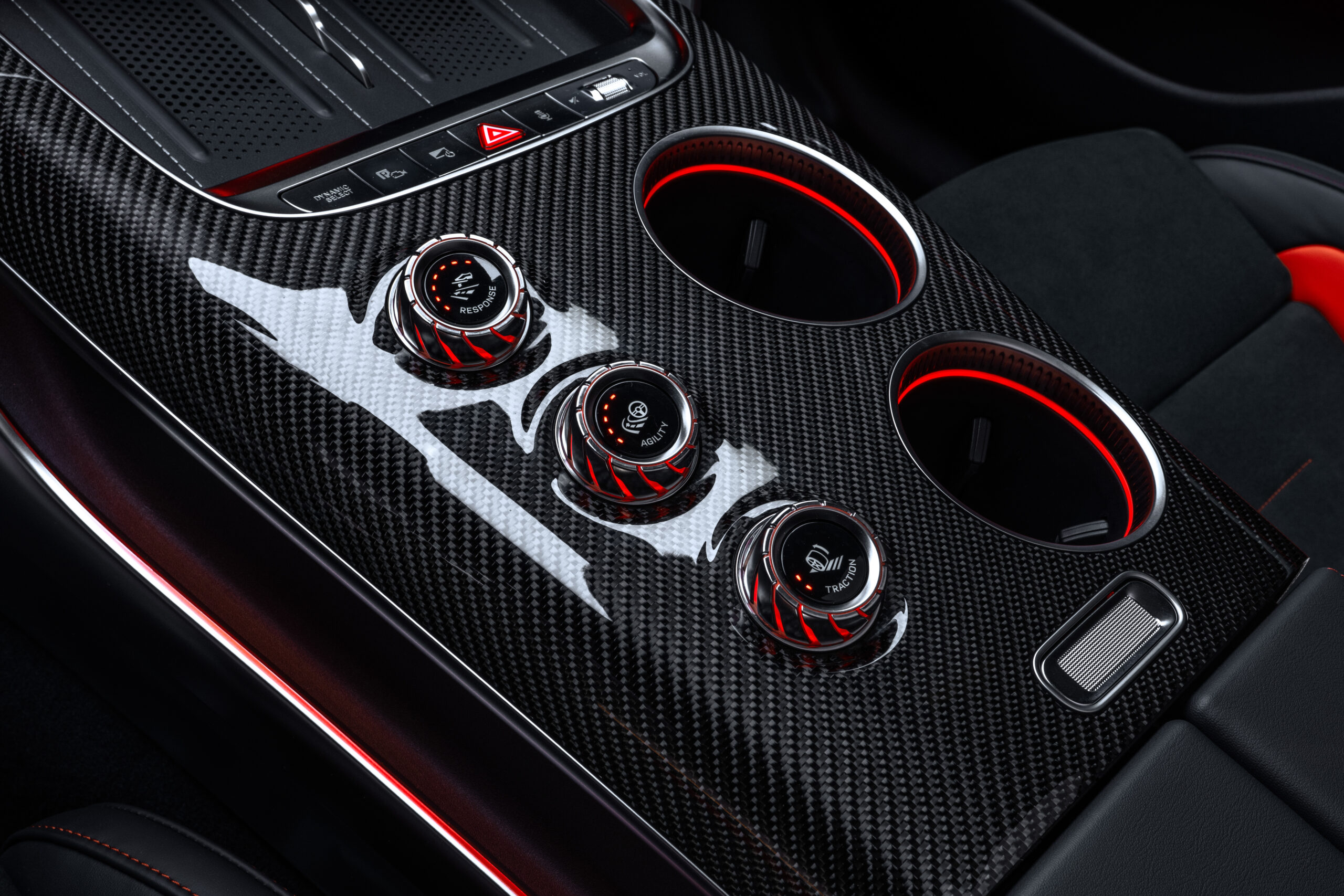
The centre console incorporates three physical rotary controls in the GT 55 and GT 63, allowing the driver to adjust throttle response, cornering behaviour and traction characteristics through the AMG RACE ENGINEER system.
This is a welcome ergonomic decision, particularly in a vehicle where driving dynamics form such an important part of the experience. Physical controls provide immediate feedback and allow adjustments without navigating multiple digital menus.
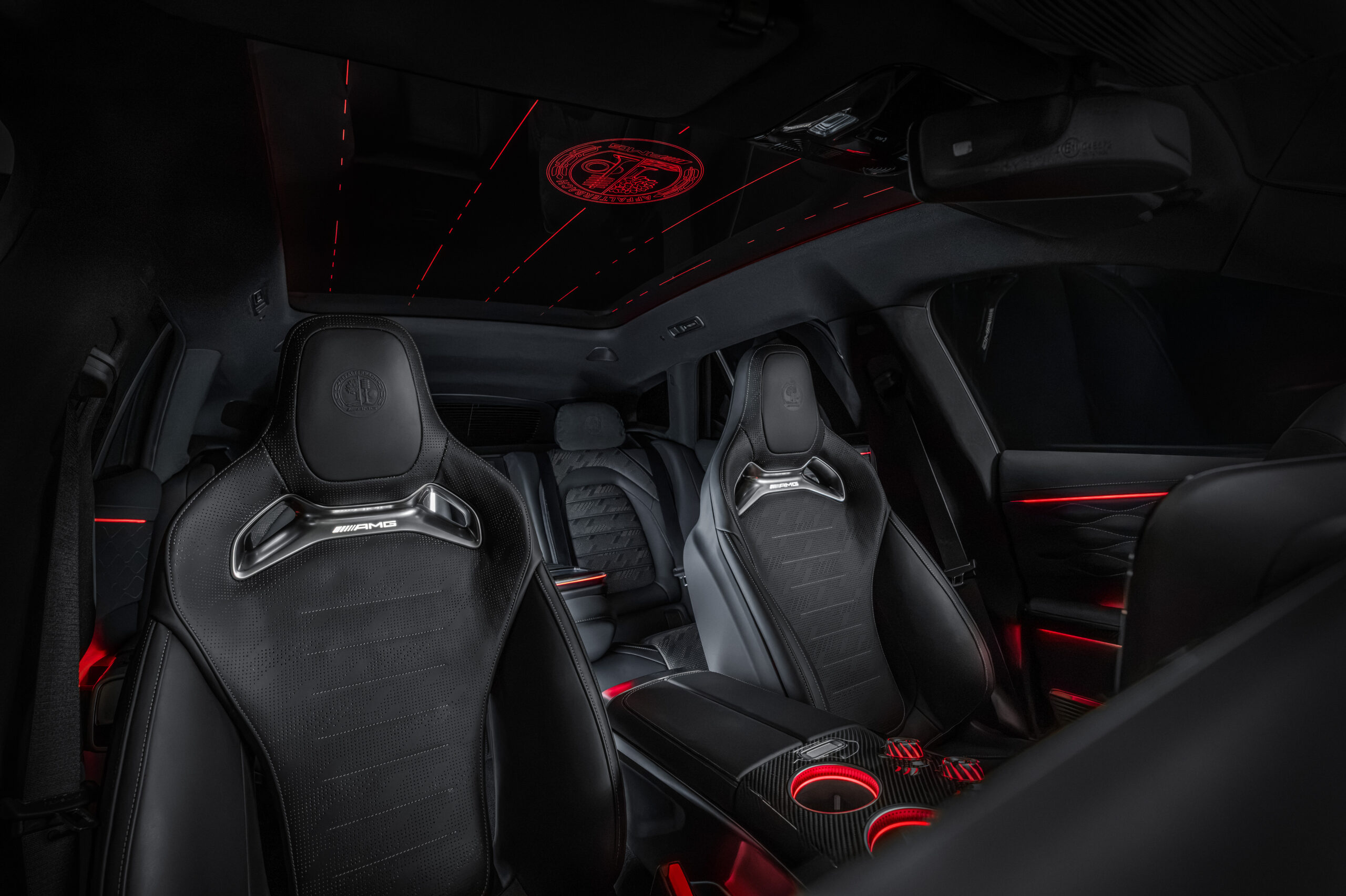
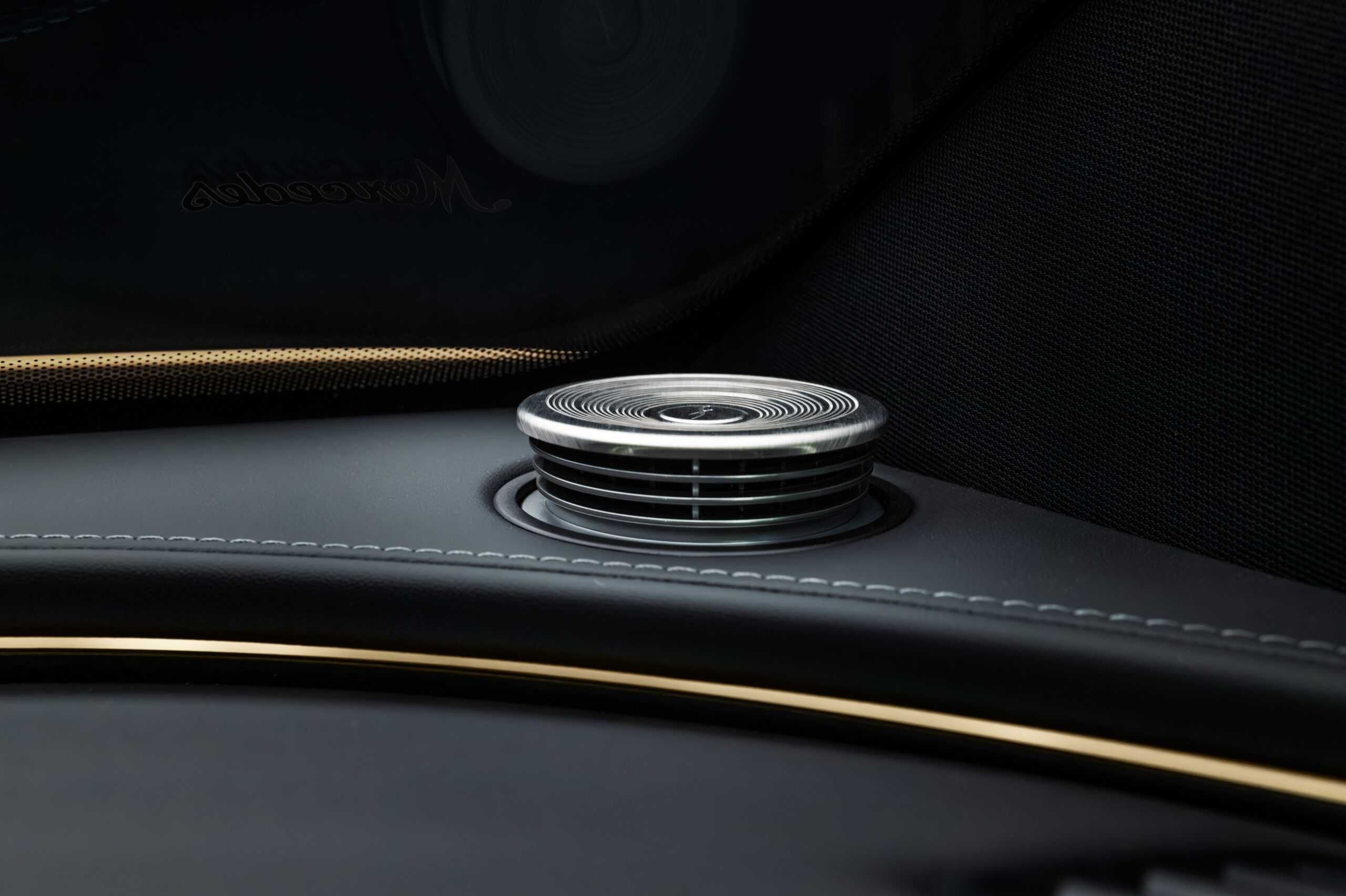
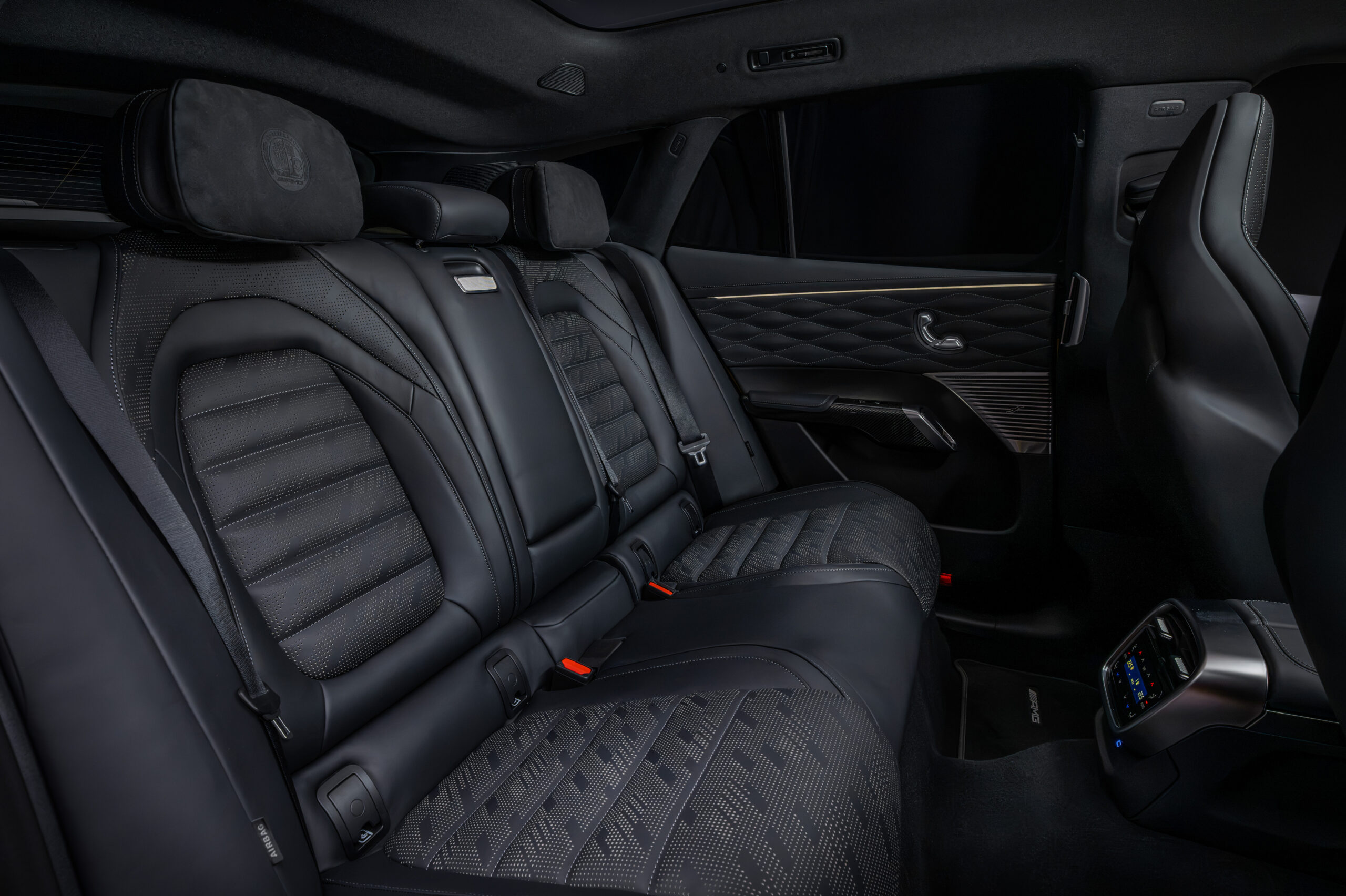
The rear passenger compartment retains the practical advantages of a full-size SUV, offering generous accommodation, a three-person rear bench and folding backrests. A large panoramic SKY CONTROL glass roof can switch between transparent and opaque states, while extensive ambient lighting and optional Burmester audio contribute to the luxury atmosphere.
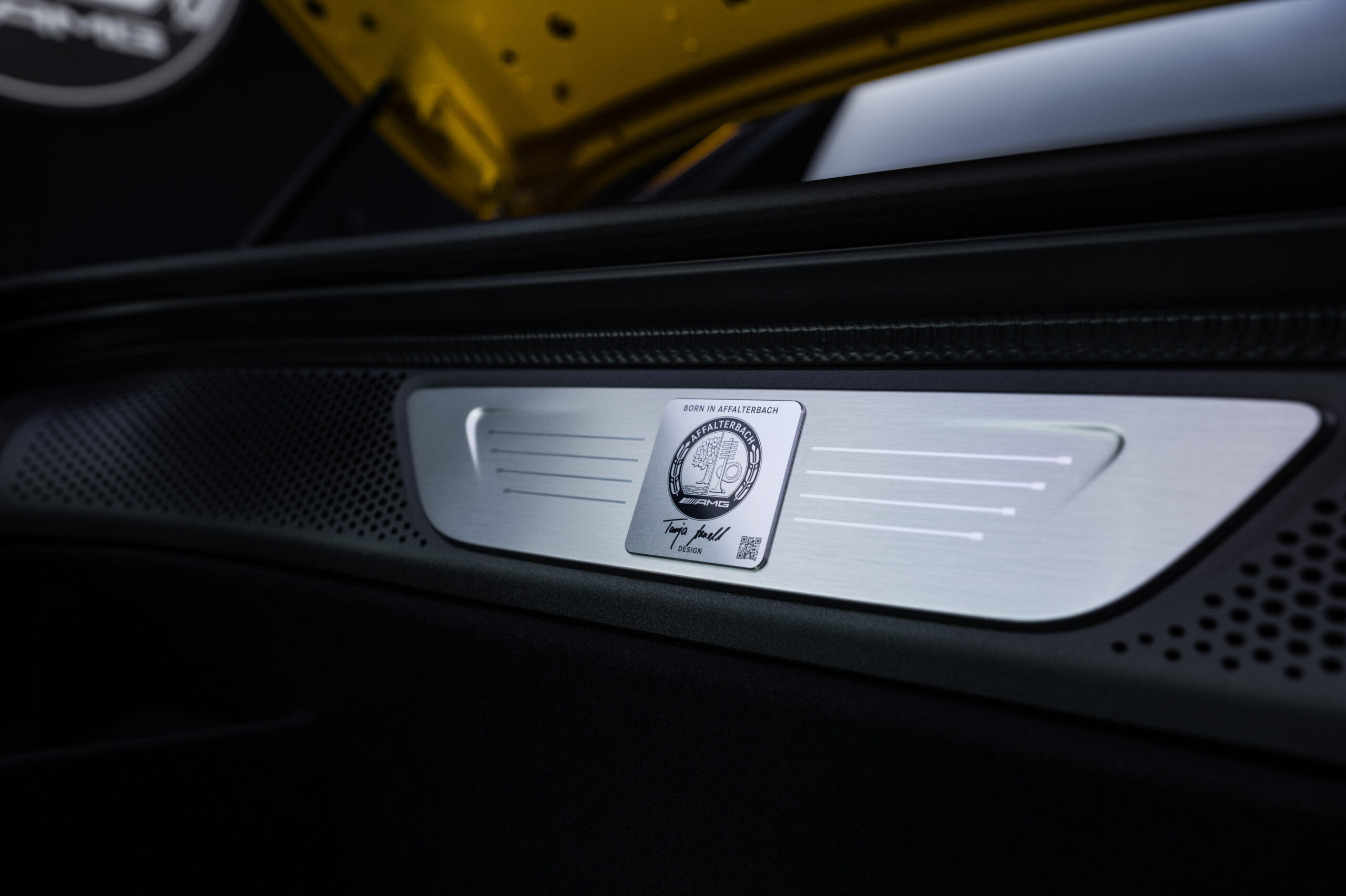
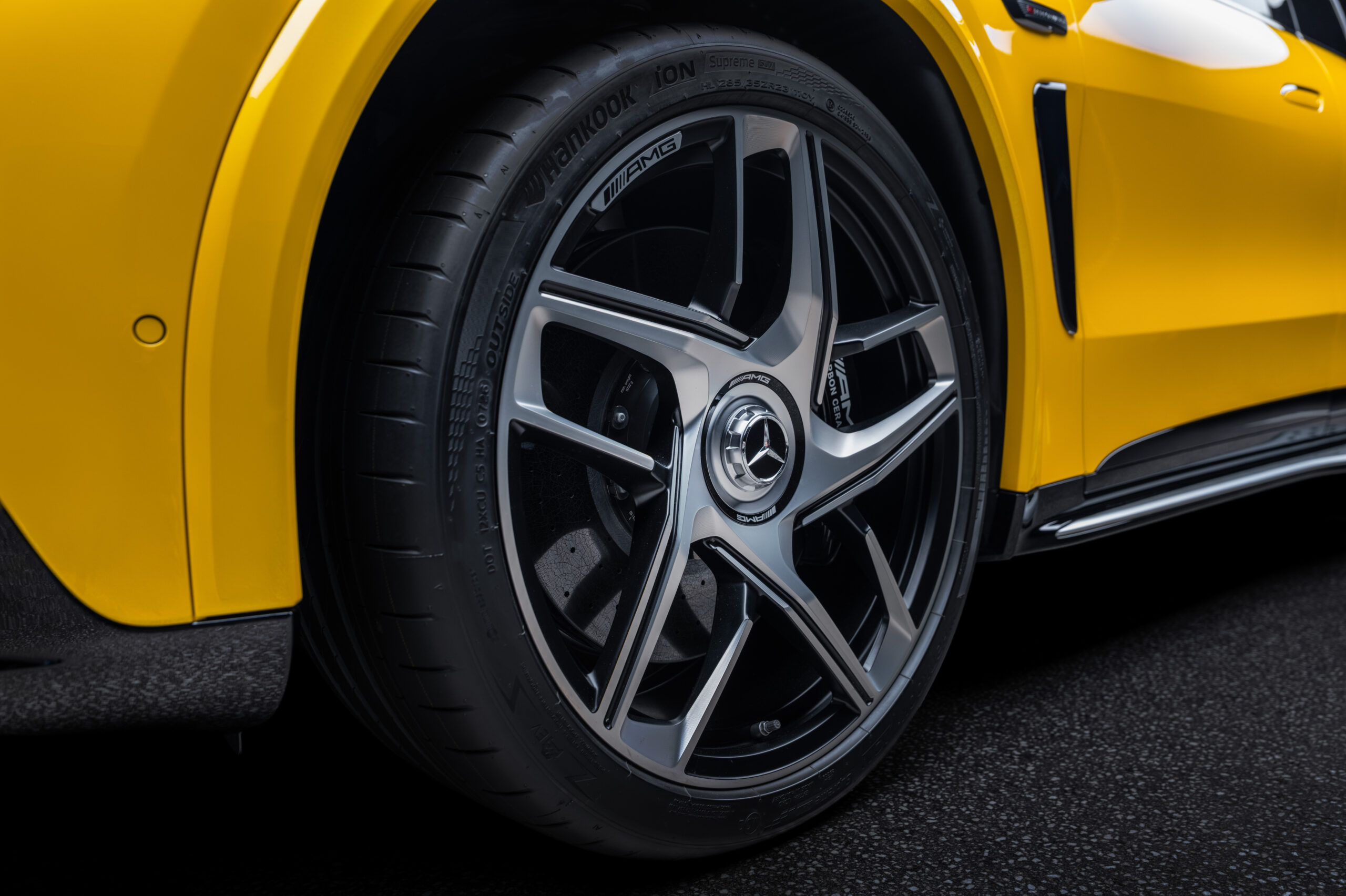
Mercedes-AMG also offers more than 60 MANUFAKTUR exterior finishes, together with distinctive wheel colours, interior materials and contrasting seatbelt options.

Recreating the Emotional Character of AMG
One of the more controversial aspects of modern electric performance vehicles is the question of sound.
AMG has traditionally been associated with powerful combustion engines, particularly its distinctive V8 models. Rather than abandoning this identity, Mercedes-AMG has developed a system intended to reproduce the acoustic and physical sensations of its combustion-powered vehicles.
The AMGFORCE Sport+ driving mode uses recordings of actual AMG V8 and six-cylinder engines, combined with simulated gear changes, steering-wheel paddle operation and vibration elements integrated into the seats.
The system responds dynamically to acceleration and driving conditions, attempting to recreate the emotional experience of a traditional high-performance AMG.
Whether this approach will appeal to enthusiasts remains an open question. Some drivers may appreciate the familiar character, while others may prefer an electric vehicle to develop its own distinctive acoustic identity.
Nevertheless, the system illustrates the difficulty manufacturers face when translating established performance brands into the electric era. Acceleration and power are relatively straightforward to reproduce electrically, but the emotional qualities associated with combustion engines are considerably more complex.
A New Direction for Mercedes-AMG
The new Mercedes-AMG GT SUV represents an important development in the evolution of high-performance electric vehicles.
Its extraordinary power output and charging capabilities demonstrate how quickly electric propulsion technology is advancing, while the sophisticated chassis systems attempt to overcome the considerable physical challenges associated with large, heavy performance vehicles.
From a design perspective, the GT SUV is equally interesting because it reflects the changing relationship between traditional automotive categories. The distinction between sports cars, Grand Turismo vehicles and luxury SUVs continues to become less clearly defined as manufacturers combine characteristics from different segments.
Mercedes-AMG has attempted to create a vehicle that delivers the emotional and dynamic qualities of a GT while retaining the comfort, passenger accommodation and everyday usability of a full-size SUV.
The result is undeniably impressive from a technical standpoint, although the concept of a nearly 2.7-tonne SUV delivering supercar acceleration inevitably raises questions about the direction of modern performance-car development.
There is also a significant difference between generating extraordinary acceleration figures and creating a genuinely engaging driving experience. The latter depends on steering feel, chassis balance, driver feedback and the way a vehicle communicates its behaviour, qualities that cannot be established through specifications alone.
Ultimately, the success of the AMG GT SUV will depend on how convincingly these technologies work together on the road.
The Mercedes-AMG GT SUV demonstrates that the future of AMG is no longer defined by engine displacement or the number of cylinders, but by the ability to create a distinctive driving experience through design, engineering and technology.
With production planned at Mercedes-Benz’s historic Sindelfingen facility, the GT 53 becoming available to order from October 20 at a German starting price of €113,050, and the GT 55 and GT 63 following in spring 2027, this new generation of electric AMG performance is rapidly moving from engineering ambition to commercial reality.