Car Design and the Almost Lost Art of Seduction


When did the automobile stop trying to make us fall in love?
There was a time when the automobile was much more than a means of transportation. It was an object of desire, a mechanical sculpture capable of stirring emotions before its engine had even started. A beautiful car could stop people in their tracks, make them turn around for a second look, or inspire dreams that lasted for decades. Its appeal was not necessarily rational, practical, or even explainable. It was seductive.
Today, despite extraordinary advances in technology, manufacturing, and engineering, that emotional connection seems increasingly difficult to find. We have cars that accelerate faster than supercars of the past, vehicles with remarkable efficiency, enormous digital displays, sophisticated driver assistance systems, and interiors that resemble contemporary living rooms. Yet somewhere along the way, much of the romance appears to have disappeared.
The automotive industry has become exceptionally good at designing products. But has it forgotten how to design desire?
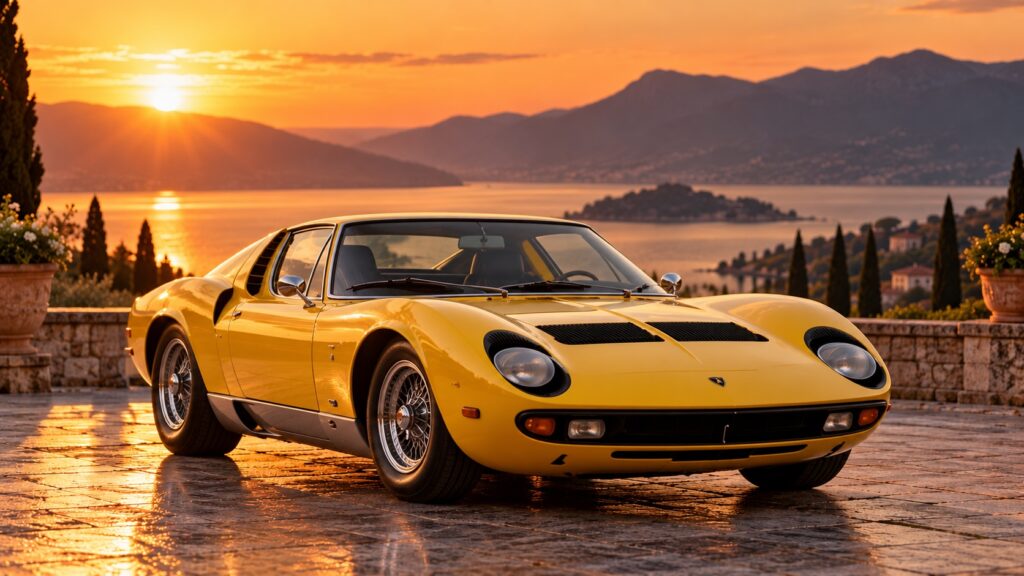
The Difference Between Attractive and Seductive
There is an important distinction between a car that looks attractive and one that is genuinely seductive. Attractive design can be achieved through pleasing proportions, carefully balanced surfaces, contemporary detailing, and fashionable styling elements. Seduction requires something more elusive: personality, mystery, tension, and an emotional promise.
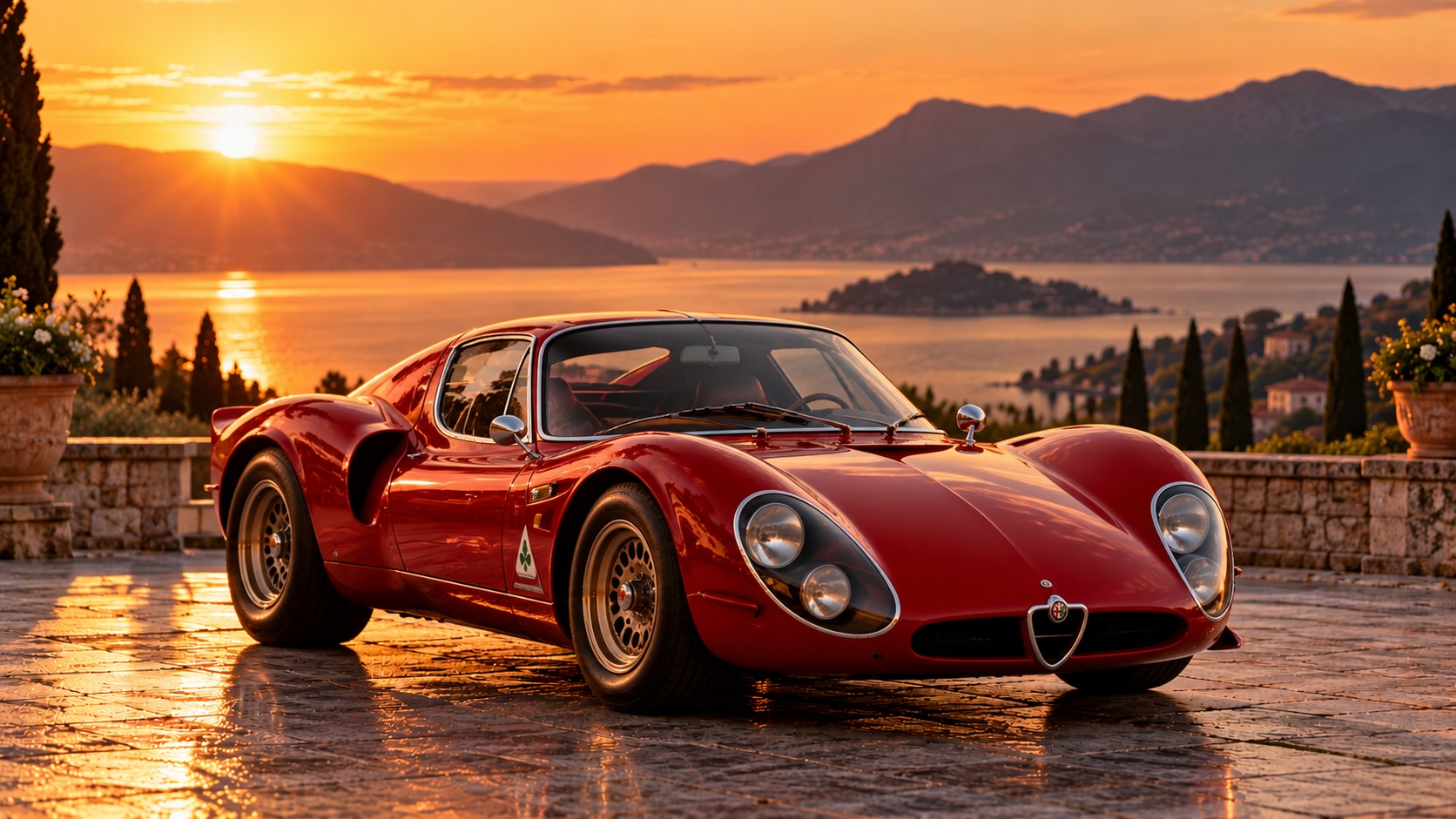
Consider the Jaguar E-Type, the original Lamborghini Miura, the Ferrari 250 GT, or the Alfa Romeo 33 Stradale. These automobiles were not merely exercises in aerodynamic efficiency or packaging optimization. Their proportions, surfaces, and details suggested movement, elegance, sensuality, and occasionally even danger. They possessed a character that made them instantly recognizable, and their beauty was not dependent on an explanation from the marketing department.
What made these cars special was not simply that they were low, wide, or expensive. Their designers understood the relationship between visual tension and emotional response. A long hood could suggest effortless power. A carefully shaped shoulder could communicate muscular confidence. A delicate greenhouse could introduce elegance and lightness. A beautifully resolved rear end could be as memorable as the front.
Every element contributed to a coherent personality. Nothing needed to shout to attract attention.
From Emotional Expression to Corporate Approval
Modern automotive design operates in an environment of extraordinary complexity. Safety regulations, pedestrian protection, aerodynamic requirements, manufacturing constraints, platform sharing, cost targets, and increasingly sophisticated electronic systems all influence the final product. These are legitimate challenges, and great designers have always had to work within technical limitations.
However, perhaps the greatest obstacle to seductive design is not engineering but the corporate decision-making process.
A vehicle that begins as a compelling design proposal must survive countless presentations, clinics, management reviews, marketing assessments, and financial evaluations. Each department has its own priorities, and every decision is usually justified by research, competitive benchmarking, or perceived customer expectations.
The problem is that genuine seduction rarely emerges from consensus.
A design that provokes a strong emotional reaction will almost inevitably divide opinions. Some people will love it, others may dislike it, but very few will remain indifferent. Corporate decision-making, however, frequently rewards designs that offend nobody. The result can be a carefully polished compromise that satisfies every requirement without creating any lasting emotional attachment.
In trying to appeal to everybody, the industry risks creating automobiles that nobody truly falls in love with.
The Tyranny of the SUV
The worldwide dominance of SUVs and crossovers has further complicated the pursuit of automotive beauty. Their popularity is understandable. They offer convenient entry and exit, elevated seating positions, versatile interiors, and the perception of safety and practicality. From a commercial perspective, they have been enormously successful.
But from a design perspective, their proportions impose considerable limitations.
The traditional ingredients of seductive automotive design—low rooflines, long hoods, elegant cabins, pronounced wheel-to-body relationships, and visually dynamic silhouettes—are often difficult to reconcile with tall bodies, high seating positions, large wheel arches, and substantial front-end structures.
Designers compensate through increasingly aggressive graphics, enormous grilles, elaborate lighting signatures, contrasting roof treatments, and complex surface developments. Rather than allowing the proportions to create the emotional impact, they are frequently forced to rely on decoration.
Consequently, many contemporary vehicles appear to be trying desperately to attract attention instead of effortlessly commanding it.
There are exceptions, of course. A beautifully proportioned SUV can possess genuine presence and elegance. But the relentless expansion of this single vehicle category has dramatically reduced the visual diversity that once made the automotive landscape so fascinating.

When Technology Becomes the Design
Another important shift has occurred inside the automobile. Traditionally, the interior was an intimate environment in which designers could create a unique relationship between the driver, passengers, and machine. Instruments, switches, materials, seating, and architecture contributed to a carefully orchestrated experience.
Think of the elegant simplicity of a classic Italian sports car, the aircraft-inspired instrumentation of a Saab, or the distinctive dashboard architecture of a Citroën DS. These interiors communicated the personality of the vehicle long before the driver turned the ignition key.
Today, an increasing number of interiors are dominated by large rectangular screens. Digital technology has unquestionably improved functionality and flexibility, but it has also encouraged a remarkable degree of visual uniformity.
A screen is not inherently seductive. Neither is a minimalist dashboard simply because almost every physical control has been eliminated.
The tactile pleasure of a beautifully engineered switch, the reassuring movement of a mechanical control, the texture of carefully selected materials, and the visual harmony of an instrument panel can all contribute to an emotional experience. When these elements disappear, something important is lost.
Technology should enhance the relationship between human beings and automobiles, not replace that relationship with yet another digital interface.
The Forgotten Power of Restraint
Perhaps one of the most misunderstood qualities in contemporary automotive design is restraint.
Seduction does not necessarily require aggression, extravagance, or visual complexity. Quite the opposite. Some of the most beautiful automobiles ever created achieved their emotional impact through remarkably simple forms.
A single uninterrupted surface, a precisely positioned character line, or a perfectly balanced relationship between body and glass can communicate more than an entire collection of sculptural gestures.
The original Porsche 911 demonstrated how a distinctive silhouette could become an enduring identity. The Ferrari 308 combined clean geometric volumes with sensual surface transitions. The Aston Martin DB5 projected sophistication without resorting to exaggerated aggression.
These designs understood the value of leaving something to the imagination.
Contemporary automotive styling often seems obsessed with communicating everything immediately. Power must be expressed through oversized air intakes. Sportiness requires sharp edges and aggressive lighting. Luxury demands enormous grilles, elaborate textures, and increasingly theatrical details.
But seduction is rarely about revealing everything at once. It is about creating curiosity, inviting exploration, and rewarding a second or third look.
A beautiful car should continue to reveal itself over time.
Can Electric Cars Bring Back the Romance?
Electrification presents an extraordinary opportunity to reconsider automotive design. Without the traditional requirements of large combustion engines, exhaust systems, and mechanical transmissions, designers have access to fundamentally different packaging possibilities.
In theory, this freedom should encourage a renaissance of automotive creativity.
Yet many electric vehicles remain remarkably conventional. Some imitate the proportions of combustion-engine automobiles, while others pursue aerodynamic efficiency through similar rounded, high-bodied silhouettes. The absence of traditional mechanical components has not automatically produced a new generation of emotionally compelling designs.
Instead, electric vehicles are frequently marketed through acceleration figures, battery capacity, charging speed, software capabilities, and digital functionality.
These are important attributes, but they are not substitutes for desire.
The real opportunity lies in using the freedom of electric architecture to create entirely new proportions, interior experiences, and visual identities. Electric propulsion should not condemn the automobile to becoming an anonymous electronic appliance. It should provide designers with the opportunity to rediscover the imagination and experimentation that characterized some of the most exciting periods in automotive history.
Designing for Desire Rather Than Approval
The automobile has always occupied a unique position among consumer products. It is simultaneously a practical machine, a personal environment, a public statement, and an emotional possession. Few other manufactured objects have inspired such powerful relationships with their owners.
People rarely develop lifelong affection for a household appliance because of its efficiency or digital features. Yet many remember the exact shape, sound, smell, and driving experience of a car they owned decades earlier.
That emotional connection is one of the automobile industry’s greatest assets, and it should not be underestimated.
For designers, rediscovering seduction means returning to fundamentals: proportion, stance, balance, surface quality, visual tension, and character. It means understanding that a vehicle must communicate something meaningful before its specifications are explained.
For manufacturers, it requires the courage to support distinctive ideas rather than continuously refining them toward the safest possible compromise. It means recognizing that emotional appeal cannot always be quantified through customer clinics or market research.
Most importantly, it requires acknowledging that beauty is not a superficial luxury added after the engineering has been completed. It is an essential part of what makes an automobile desirable.
The Automobile Must Learn to Seduce Again
The future of the automobile will undoubtedly be shaped by electrification, automation, artificial intelligence, connectivity, and changing patterns of mobility. These developments will transform how vehicles are engineered, manufactured, owned, and experienced.
But none of them eliminates the fundamental human desire to be moved by beauty.
A truly seductive automobile does not need to explain why it is special. It creates an immediate emotional connection through its presence, proportions, and personality. It makes people imagine themselves behind the wheel, traveling somewhere memorable, or simply enjoying the pleasure of possessing something beautiful.
That is an experience no software update, touchscreen, or acceleration figure can replicate.
The automotive industry has spent enormous resources teaching cars to think, communicate, and assist us. Perhaps it is time to devote a little more attention to making them beautiful again.
Because the greatest automobiles were never merely designed to transport us.
They were designed to make us fall in love.