Acura NEXERA Vision: A New Design Language Built Around the Challenger Spirit
Acura uses its 40th anniversary to point forward, not backward.
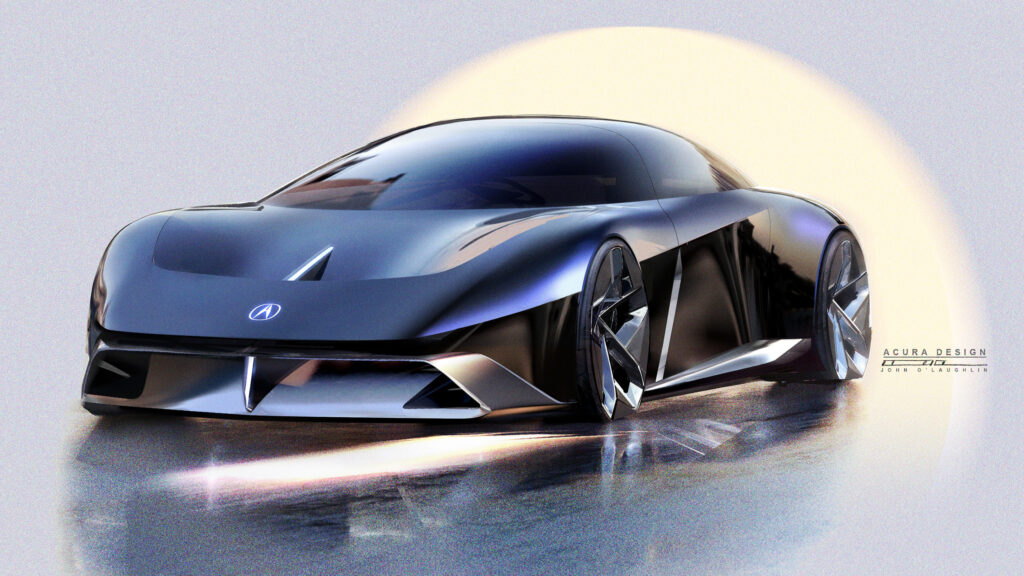
Acura has unveiled the Acura NEXERA Vision, a dramatic new concept created to introduce the brand’s next design direction. Making its global debut at The Quail, a Motorsports Gathering, during Monterey Car Week, the NEXERA Vision is intended as more than a show-car statement. Acura describes it as the beginning of a new design era, one that will influence future production models starting with the next-generation Acura RDX Hybrid.
That immediately makes the NEXERA Vision important. Many concept cars exist only as isolated design exercises: beautiful, spectacular, and quickly forgotten. Acura is positioning this one differently. It is being used to define a future styling identity for the brand at a symbolic moment: Acura’s 40th anniversary.
The message is clear. Acura does not want to celebrate the past by becoming nostalgic. It wants to use the anniversary as a springboard.
The key phrase in Acura’s own communication is “challenger spirit.” That phrase matters because Acura has often lived in an unusual space within the premium market. It is not a traditional old-world luxury brand. It does not carry the same cultural weight as German premium brands in Europe or the same flamboyant exoticism as Italian performance marques. Acura’s strength has historically come from precision, technology, engineering integrity, value, and a more progressive interpretation of premium performance.
The NEXERA Vision appears designed to make that attitude visible again.
A concept with a production mission
The most significant statement in Acura’s release is not the butterfly doors, the centerlock wheels, or the carbon-ceramic brakes. It is the confirmation that the NEXERA Vision will influence future Acura models, beginning with the 4th-generation RDX Hybrid.
That gives the concept a responsibility beyond spectacle.
The RDX is not a limited supercar. It is a core Acura product. If the NEXERA Vision is truly the starting point for the next RDX Hybrid, then its design language has to be more than theatrical. It must contain elements that can be translated into real production vehicles: lighting, proportion, surface language, fascia treatment, stance, cabin attitude, material philosophy, and brand recognition.
This is where the NEXERA Vision becomes interesting from a design strategy perspective. Acura has chosen a low, dramatic coupe concept to preview a future language that will first appear on a hybrid SUV. That is a classic automotive-design move: use the most emotionally charged body type to introduce ideas that will later be adapted to more commercially relevant vehicles.
The challenge is always translation.
A coupe can carry extreme proportions, long dash-to-axle ratio, butterfly doors, massive wheels, low roofline, fixed seats and active aerodynamic theatre. An RDX Hybrid cannot simply copy those features. It has to convert the emotional principles into SUV architecture.
So the real question is not whether the NEXERA Vision looks exciting. The question is: what survives?
Disciplined proportions and sculpted form
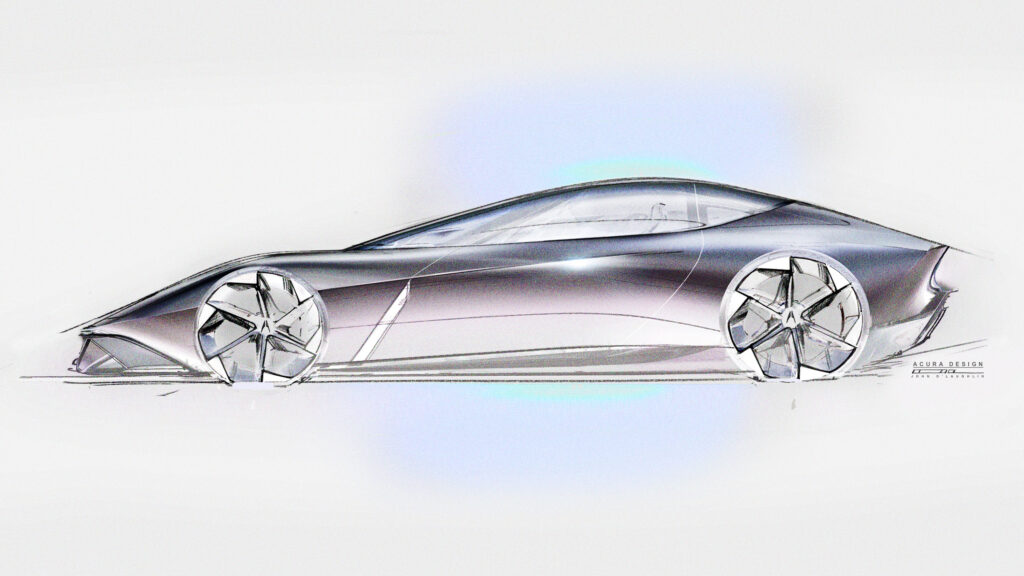
Yasutake Tsuchida, Acura Creative Director and Vice President of Auto Design, describes the new direction as defining Acura performance through disciplined proportions, sculpted form and seamless integration of advanced technology. That is exactly the kind of language Acura needs.
Performance design today has become crowded with visual excess. Many brands use exaggerated air intakes, aggressive graphics, huge black surfaces, oversized lighting animations and theatrical add-ons to suggest speed. That can create impact, but it often lacks discipline.
The word disciplined is important because Acura’s strongest identity should not be chaos. It should be precision.
The NEXERA Vision’s stated ingredients support that direction: a wide stance, long dash-to-axle relationship, one-motion cabin, sculpted muscular surfaces and an aero-channel fascia. Those are not random styling notes. They describe a vehicle built around proportion first, then surface, then technical detail.
That order matters.
Good design starts with proportion. Surface can refine proportion, but it cannot rescue it. Details can create identity, but they cannot replace architecture. If the NEXERA Vision is genuinely intended to guide future Acura products, the most important lesson for the production cars should be stance and body discipline, not concept-car decoration.
For Acura, this could be a useful reset. The brand needs design confidence, but it also needs restraint. The NEXERA Vision suggests a direction where Acura performance is not expressed through visual shouting, but through tension, precision and controlled sculptural mass.
The return of visual exhilaration
Acura uses the phrase “visual exhilaration” for the exterior design. That is a strong and slightly unusual phrase because it does not only describe how the car looks. It describes how the car should make the viewer feel.
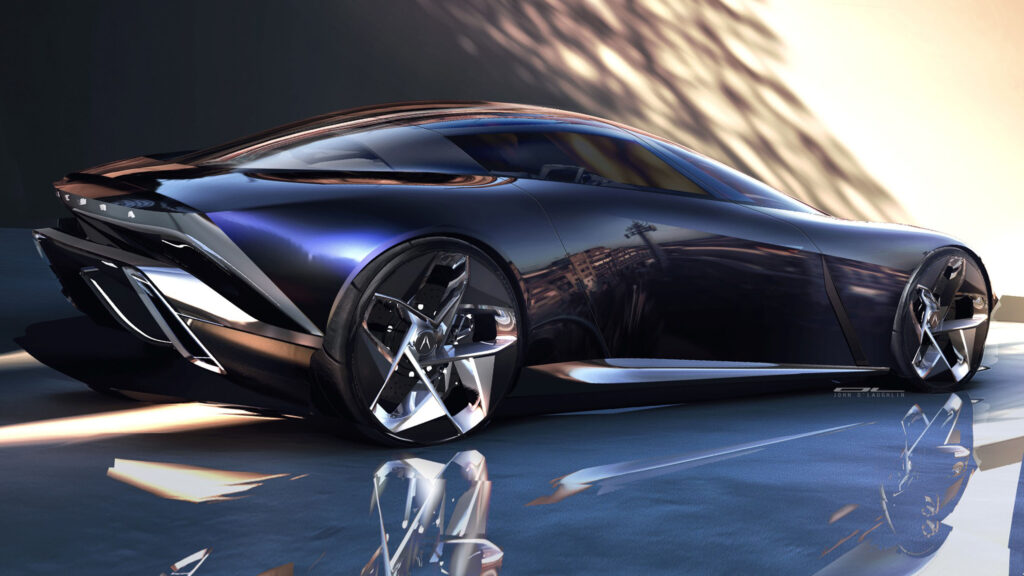
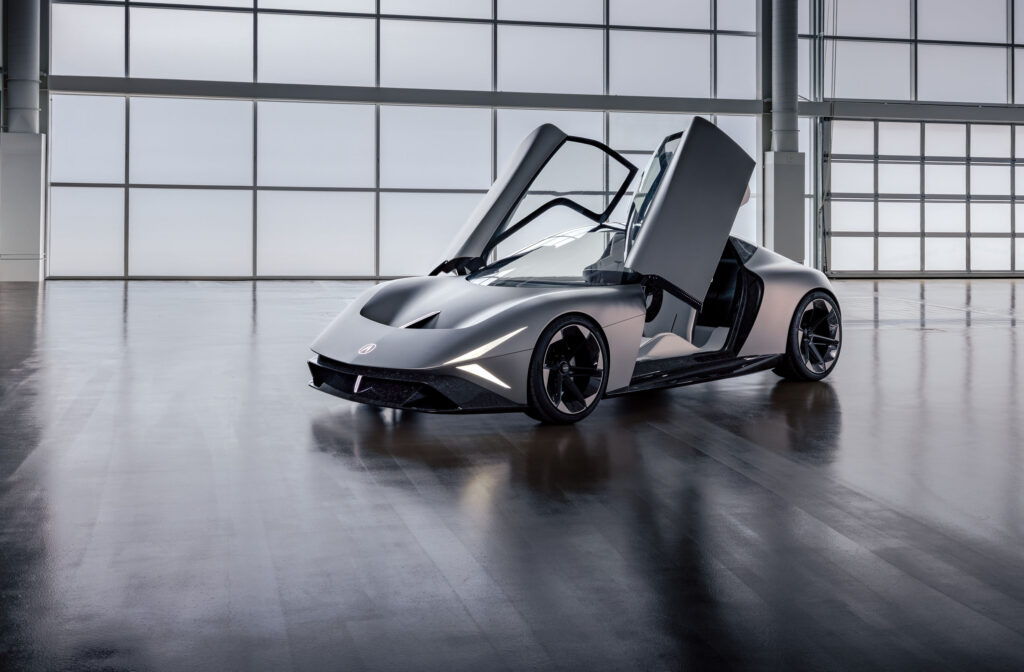
The NEXERA Vision uses several classic show-car triggers to achieve this. The dramatic dual-hinge butterfly doorscreate instant event value. The active rear spoiler makes the car appear technically alive. The 22-inch centerlock wheels, a first for Acura, immediately connect the concept to high-performance motorsport language. The carbon-ceramic Brembo brakes visible behind those wheels reinforce the idea that this is not just visual theatre but a performance object.
As a concept-car statement, this makes sense. Monterey Car Week is a highly competitive visual environment. At The Quail and Pebble Beach, a vehicle must not only be well designed; it must also create presence among some of the most valuable, exotic and historically important cars in the world.
The NEXERA Vision therefore needs drama.
The more important question is how Acura avoids letting the drama become superficial. Butterfly doors are spectacular, but they will almost certainly remain a concept gesture rather than a mainstream Acura feature. Centerlock wheels are emotionally effective, but unlikely to appear on ordinary production models. Carbon-ceramic brakes and forged carbon details create a performance signal, but their production relevance will depend on vehicle segment and price.
The transferable ideas are likely elsewhere: the stance, lighting signature, front graphic, surfacing, cabin architecture and sense of technical purity.
The A-mark lighting signature
Perhaps the most production-relevant element of the NEXERA Vision is its new lighting identity.
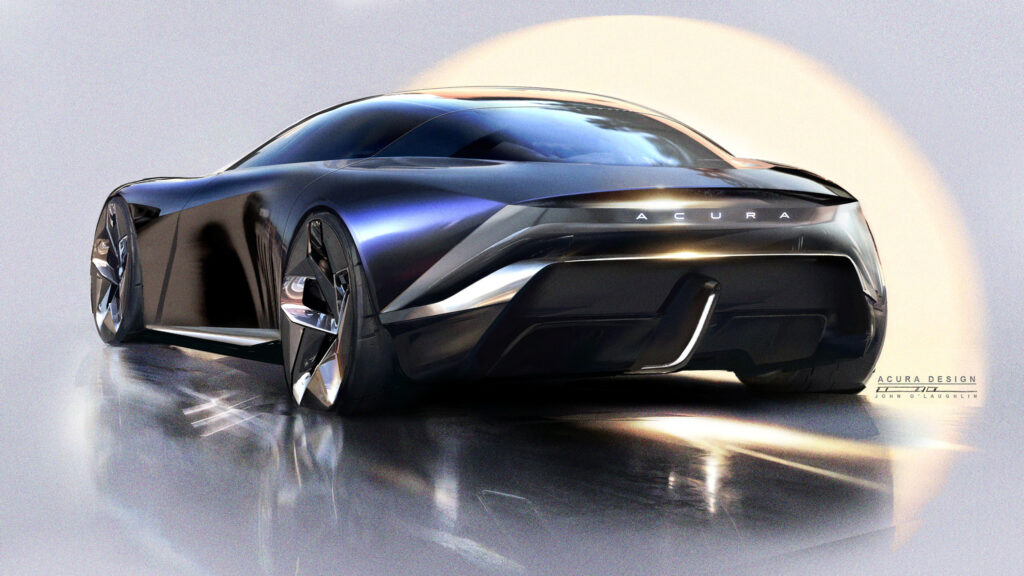
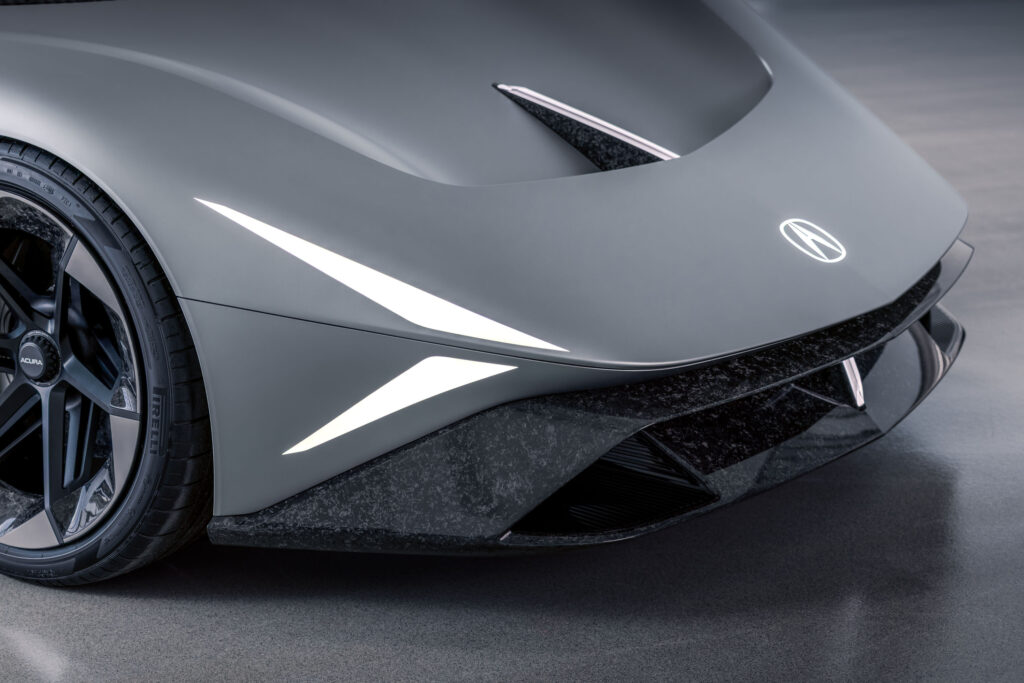
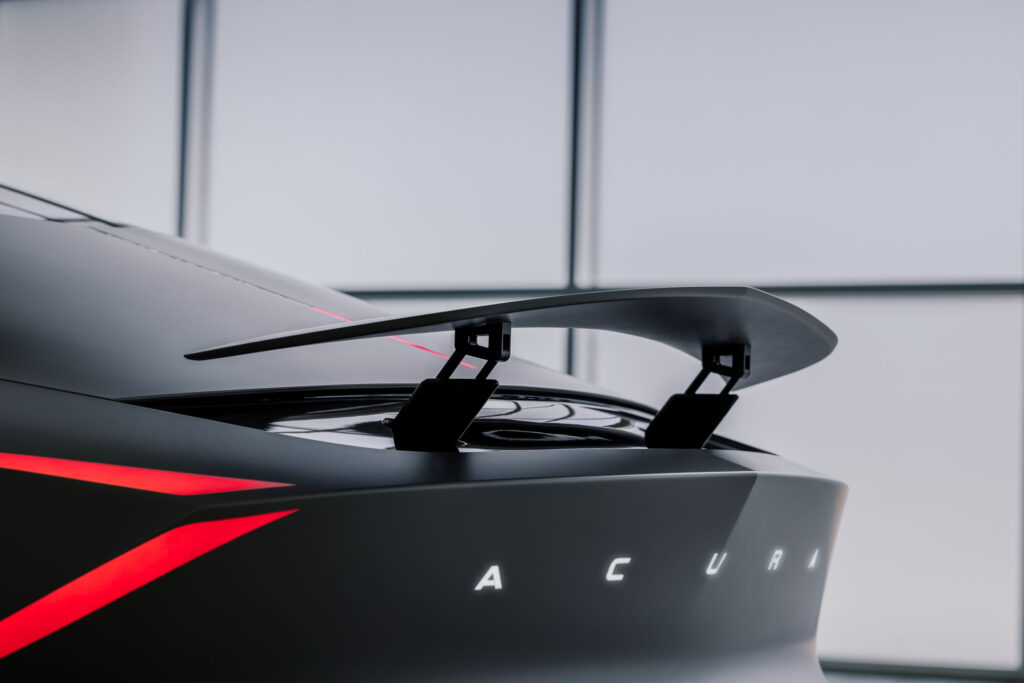
Acura says the concept uses “phantom lighting” hidden behind the bodywork, dramatically revealed when illuminated. This allows the coupe to maintain uninterrupted sculpted surfaces when the lights are off. The ultra-thin headlights and taillights are inspired by the Acura “A” mark, creating a new lighting signature that will appear on future production models, starting with the next-generation RDX Hybrid.
This is probably the most important design feature on the car.
In modern automotive design, lighting has become one of the primary tools of brand recognition. Grilles are changing. Combustion-engine cooling requirements are less dominant in electrified vehicles. Front ends are becoming more closed, more graphic and more digital. Lighting now has to carry identity in a way that radiator grilles once did.
Acura’s decision to base the new signature on the A mark is logical. It gives the brand a graphic code that can scale across body types. A sports coupe, SUV, sedan or crossover can all carry a related lighting identity without needing to share the same proportions.
The phrase “phantom lighting” also suggests a more premium direction. Instead of attaching lights as visible objects onto the body, Acura wants lighting to emerge from the form. That can create a cleaner and more futuristic effect, but it also carries production challenges. Hidden lighting has to work in daylight, comply with regulations, manage heat, survive dirt and weather, and remain serviceable.
If Acura can translate this successfully, it could become a genuine identity marker. The danger is that it becomes another thin-light-bar trend. The opportunity is that Acura makes the A-mark geometry specific enough to be instantly recognizable.
Tsuchida’s statement about clarity, consistency and purpose is important here. A new lighting signature only works if Acura uses it consistently. If every model interprets it differently, it becomes a styling experiment rather than a brand language.
The aero-channel fascia
The front fascia of the NEXERA Vision is described as an aero-channel fascia, with forged carbon forming part of the front structure. That phrase suggests a front-end design where airflow management is integrated into the visual identity rather than treated as an afterthought.
This is an important area for Acura.
As the industry moves deeper into hybrid and electric performance, the traditional performance grille is becoming less relevant. High-performance cars still need cooling, but they also need drag reduction, brake cooling, battery and power electronics thermal management, and aerodynamic stability. The front of the car increasingly becomes a technical airflow interface.
An aero-channel fascia gives Acura a way to make that technical requirement visible. It can replace the old idea of a decorative grille with a more purposeful performance graphic.
The design risk is over-complexity. Many modern performance cars use ducts and black insert shapes so aggressively that the front becomes visually fragmented. Acura’s challenge will be to make airflow look precise, not messy.
If the NEXERA Vision’s fascia language moves into the RDX Hybrid, it will have to be softened and adapted. An SUV does not need the same supercar aero drama, but it can use the same principle: airflow as identity, not decoration.
Matte Titanium and the question of premium restraint
The NEXERA Vision is finished in Matte Titanium, described as a sleek exterior color with metallic depth. That choice feels appropriate for Acura.
Matte finishes can easily become fashionable clichés, but titanium as a color idea connects well with Acura’s technological image. It suggests engineering, lightness, precision and modern performance. It is less emotional than red, less aggressive than black, and more technical than silver.
For a brand trying to express premium performance with discipline, this is a good signal.
The danger for Acura is that matte finishes can flatten surface definition if not used carefully. On a concept car with sculpted muscular surfaces, lighting quality becomes crucial. A matte titanium finish needs strong form language; otherwise it risks becoming anonymous. But if the surfacing is confident, matte titanium can make the car feel like a machined object rather than a painted consumer product.
That may be exactly the point.
Forged carbon as visual and structural theatre
Forged carbon appears throughout the NEXERA Vision: front aero-channel fascia, rear diffuser, rocker panels, inner door structures and other performance details. This material choice is interesting because forged carbon has a very different visual character from traditional woven carbon fiber.
Traditional carbon fiber communicates motorsport through regular weave. Forged carbon communicates advanced material technology through a more fragmented, stone-like pattern. It looks less like race-car tradition and more like future performance luxury.
For Acura, this is useful. The brand does not need to copy European supercar cues directly. Forged carbon helps create a more modern and technical premium feel.
However, material expression must be handled carefully. Too much exposed carbon can quickly feel like aftermarket performance styling. The NEXERA Vision seems to use forged carbon on functional or semi-functional elements — aero surfaces, diffuser, rockers, door structures — which is the correct approach. The material should appear where performance logic justifies it.
On future production Acuras, the exact material may not carry over widely. But the principle can: visible technical material used with restraint and purpose.
The rear spoiler and active aerodynamics
The NEXERA Vision’s active rear spoiler manages airflow across the rear decklid to improve aerodynamic efficiency, high-speed stability and braking performance.
That is important because Acura is not merely presenting aero as decoration. The rear spoiler is described as functional, affecting stability and braking. This connects the concept to real performance engineering.
Active aerodynamic features are becoming more relevant because electrified vehicles have conflicting demands. They need low drag for range, high downforce or stability for performance, thermal management for powertrain systems, and predictable braking behavior. Fixed aero can only compromise between those requirements. Active aero allows different states for different driving conditions.
The visual challenge is to make active aero feel integrated rather than gimmicky. A deployable spoiler can look spectacular on a concept, but on a production vehicle it needs to be quiet, robust, durable, legal and maintainable.
In design terms, the best active aero is almost invisible until needed. It should feel like the car is adapting, not performing tricks.
A cockpit with fixed seats and adjustable controls
The interior of the NEXERA Vision may be even more interesting than the exterior because it addresses the relationship between driver and machine.
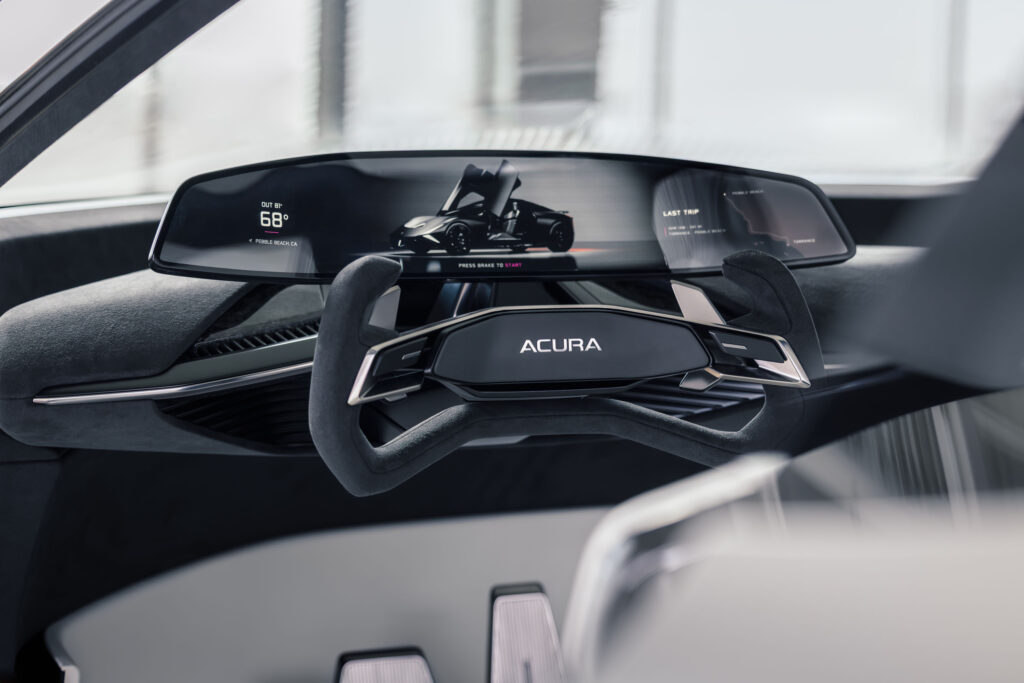
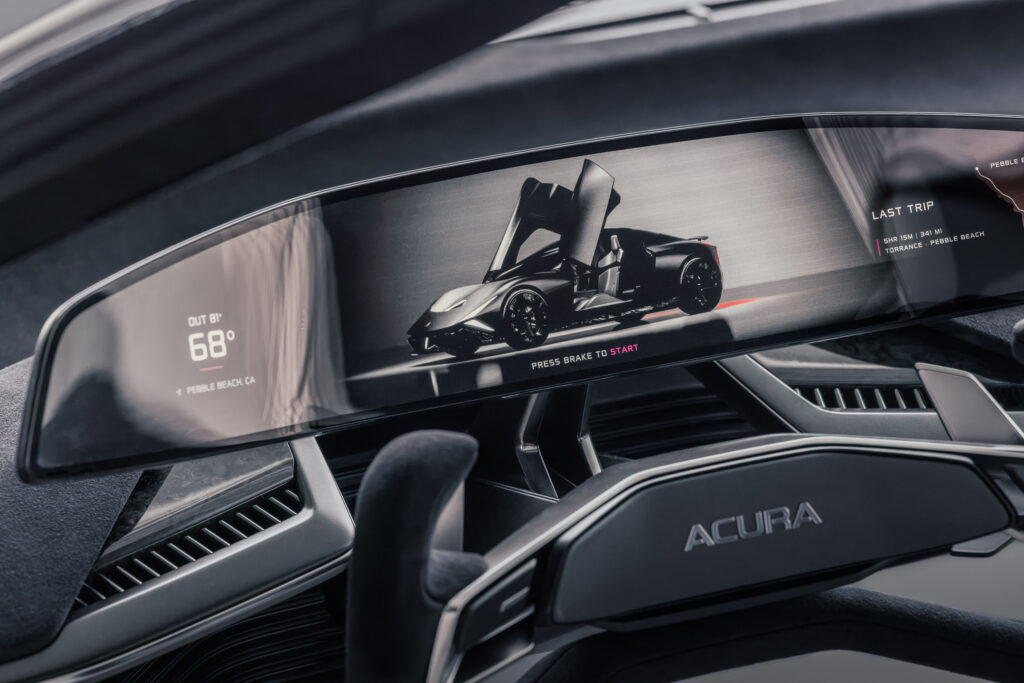
Acura says the cockpit is designed to balance spaciousness with precision-focused intimacy. The cabin is intended to eliminate distractions while amplifying the visceral thrill of driving. The most significant detail is that the front seats are integrated into the floor in a fixed position, lowering the driver’s seating position. Instead of moving the seat to the driver, the pedals and steering wheel adjust to meet the driver.
This is a very performance-oriented idea.
It echoes thinking from racing cars and advanced sports cars, where the seating position is treated as part of the vehicle architecture rather than as a movable chair placed inside a cabin. A fixed seat can improve packaging, lower the hip point, reduce mass and create a stronger sense of connection to the vehicle. It also allows the cockpit to be designed around the ideal driver position.
For a concept car, this makes enormous sense.
For production, it is more complicated. Adjustable pedals and steering can work, but customer expectations around seat adjustment, comfort, ingress/egress, safety, airbags and regulatory requirements make fixed seats difficult in mainstream vehicles. Still, the idea can influence future Acura interiors even if the exact solution does not carry over.
The production lesson may be: lower, more integrated seating; cleaner driver focus; less distraction; more precise control relationship; cockpit architecture as performance design rather than furniture design.
That would be a valuable direction for Acura.
Black, white and pink: a sharper premium language
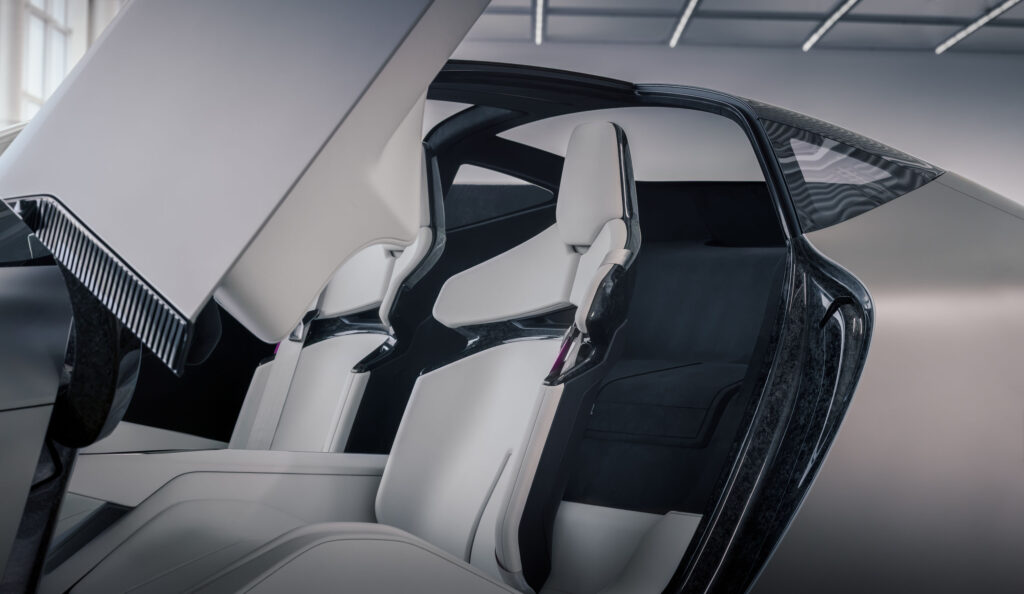
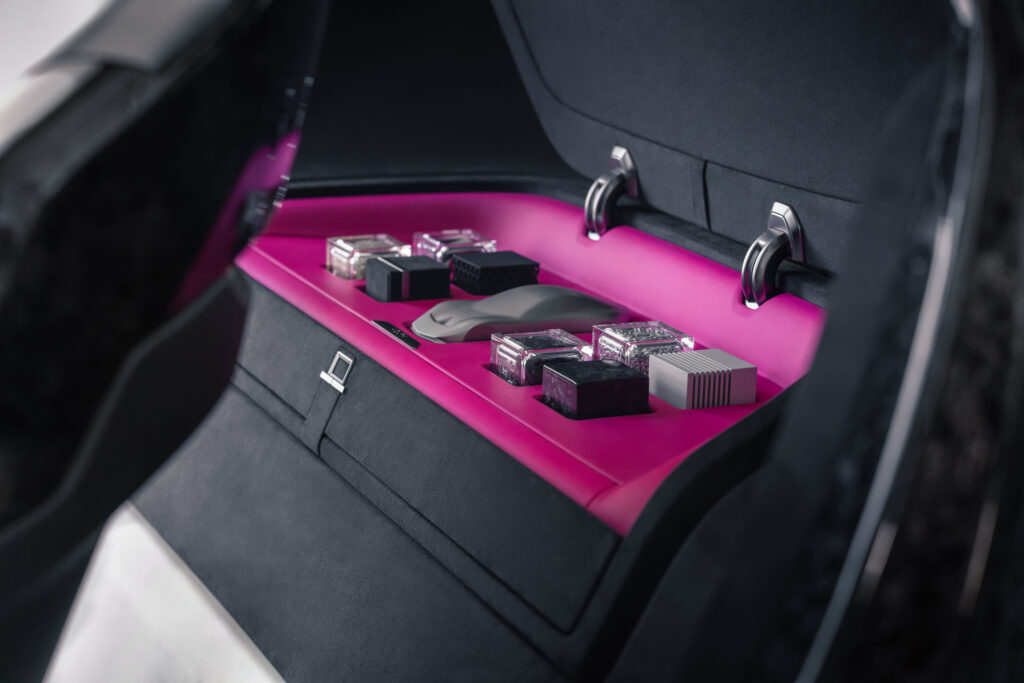
The NEXERA Vision interior uses a black-and-white material theme with gloss black finishes and high-contrast pink accents. This is a bold choice because pink is not a traditional performance color cue.
That is precisely why it is interesting.
Premium performance interiors have become predictable: black leather, red stitching, carbon fiber, aluminum, maybe Alcantara. Acura’s use of pink accents introduces a more contemporary, possibly digital and youthful tone. It challenges the default vocabulary of performance interiors.
The risk is obvious. Pink accents can easily become fashionable or polarizing. But as a concept statement, they help separate Acura from conservative luxury thinking. They suggest that performance does not have to be trapped in red-and-black masculinity.
The stronger production idea is not necessarily pink itself. It is high-contrast accent strategy: a technical, almost monochrome cockpit punctuated by precise color highlights. That can become a distinctive Acura interior signature if handled with restraint.
Sustainability as premium performance
Acura highlights sustainable materials throughout the NEXERA Vision, including recycled aluminum, Alcantara incorporating certified post-consumer recycled polyester, and CircuLeather, described as a genuine leather material designed to support a more circular material lifecycle.
This reflects an important shift in premium design.
For years, luxury was defined by rarity, softness, gloss, thickness and traditional material codes. But younger premium customers increasingly expect responsibility, innovation and transparency. Sustainable materials are no longer only a moral statement; they are becoming part of the premium proposition.
Tsuchida’s statement that sustainability is changing how premium quality and performance are defined is well judged. The challenge is to make sustainable materials feel desirable rather than compromised. Customers should not feel they are receiving a lesser material because it is environmentally responsible. They should feel they are receiving a newer, smarter, more advanced definition of quality.
This is especially relevant for Acura because the brand’s premium identity should be based on technology and progressive thinking, not old luxury conventions. Sustainable materials can help Acura avoid imitation of traditional luxury brands and build something more contemporary.
The RDX Hybrid connection
The most commercially important part of the NEXERA Vision story is the next-generation RDX Hybrid.
Acura has clearly stated that the new lighting signature and broader design direction will influence future production designs beginning with the 4th-generation RDX Hybrid. That means the NEXERA Vision is not just an emotional flagship statement; it is a preview of Acura’s future family face.
This raises an interesting design challenge. The NEXERA Vision is a coupe. The RDX is a premium SUV/crossover. The proportions are completely different.
The RDX cannot have the same low roofline, butterfly doors, long sports-car dash-to-axle relationship or fixed-seat cockpit. But it can inherit:
- the A-mark lighting signature;
- a cleaner and more technical front fascia;
- stronger stance;
- more sculpted body sides;
- a more disciplined surface language;
- a higher-tech material philosophy;
- a more driver-focused cockpit;
- sustainable premium materials;
- a stronger sense of Acura identity.
If Acura is serious, the RDX Hybrid should not simply wear a watered-down version of the NEXERA Vision face. It should translate the concept’s design philosophy into SUV form.
That means the RDX must look athletic without becoming overstyled, advanced without becoming cold, premium without copying German luxury, and hybrid without appearing apologetic.
Acura’s challenger spirit
Acura’s reference to challenger spirit is not just marketing language. It is a necessary positioning tool.
The premium car market is crowded. German brands dominate traditional premium perception. Tesla reshaped the digital EV conversation. Korean premium design has become increasingly confident. Chinese brands are moving quickly and aggressively. Japanese premium brands have to define their relevance in a changing environment.
For Acura, the answer cannot be to imitate. It has to challenge.
The NEXERA Vision’s best ideas support that challenger role. The hidden lighting, A-mark signature, fixed-seat cockpit concept, forged-carbon performance details and sustainable materials all suggest Acura trying to create its own lane.
The key will be consistency. Challenger brands often produce exciting individual concepts but struggle to turn them into a coherent family of production vehicles. Acura’s opportunity is to use the NEXERA Vision as a disciplined design manifesto, not just a Monterey showpiece.
What should make it to production?
From a Car Design TV perspective, these are the most important elements Acura should carry forward:
The lighting identity.
The A-mark-inspired phantom lighting has the strongest potential to become an immediately recognizable Acura signature.
The surface discipline.
Acura should avoid overcomplication. The promise of sculpted form and disciplined proportions is stronger than decorative aggression.
The aero logic.
The aero-channel fascia and active aero thinking can give Acura a technical performance identity that feels authentic.
The driver-focused cockpit.
The exact fixed-seat solution may not be practical for mainstream production, but the idea of a lower, more integrated, less distracting cockpit is valuable.
The material philosophy.
Recycled aluminum, advanced Alcantara and circular leather concepts can help Acura redefine premium for a more responsible era.
The confidence.
Perhaps most importantly, Acura needs the confidence to be recognizable. The NEXERA Vision suggests that the brand understands this.
What should stay concept-only?
Some elements are likely better left to the concept stage.
The dual-hinge butterfly doors are visually exciting, but they are not essential to Acura’s future production identity. They create drama at The Quail, but they do not define the brand.
The 22-inch centerlock wheels are powerful as a performance statement, especially because Acura calls them a first for the brand, but they will not be relevant to most future production models.
The carbon-ceramic Brembo brakes and extensive forged carbon details make the concept feel serious and expensive, but Acura must be careful not to let future production vehicles appear as though they are wearing concept-car accessories.
A design language succeeds when its ordinary applications still feel special. The NEXERA Vision must therefore be reduced intelligently for production, not merely simplified.
A new Acura face for a new era
The NEXERA Vision arrives at an important moment. Premium performance is being redefined by electrification, hybridization, software, materials, sustainability and changing customer expectations. A brand like Acura cannot rely only on old performance cues. It needs a new visual and philosophical identity.
This concept appears to be Acura’s attempt to create that identity.
It combines a low, dramatic coupe profile with technical surfacing, hidden lighting, active aero, forged carbon, sustainable materials and a cockpit concept that puts the driver physically lower and more integrated into the machine. More importantly, it introduces a lighting signature that can travel across future production models.
That is the true value of the NEXERA Vision.
It is not just a coupe with butterfly doors. It is a design-language carrier.
Conclusion: Acura finds a sharper way forward
The Acura NEXERA Vision is a promising statement because it does not appear to chase conventional luxury. It tries to express Acura’s challenger identity through precision, technology, disciplined sculpture and progressive material thinking.
The concept’s most dramatic features will attract attention at Monterey, as they should. The butterfly doors, active rear spoiler, 22-inch centerlock wheels, carbon-ceramic brakes and forged carbon details give the car the theatre required for The Quail and Pebble Beach. But the most important elements are quieter: the A-mark lighting signature, the uninterrupted surfacing, the aero-channel front identity, the low driver-focused cockpit and the sustainable material strategy.
Those are the ideas that can shape Acura’s future.
If the next-generation RDX Hybrid truly carries this design language into production with clarity and consistency, the NEXERA Vision could become more than a concept car. It could become the moment Acura chose to stop blending into the premium landscape and start defining its own visual territory again.
For Car Design TV, that makes the NEXERA Vision an important concept to watch. It is not simply about what Acura has shown at Monterey. It is about whether Acura now has the discipline, confidence and consistency to turn this vision into a recognizable new era.