Audi Q9: Audi Finally Builds Its True Flagship SUV
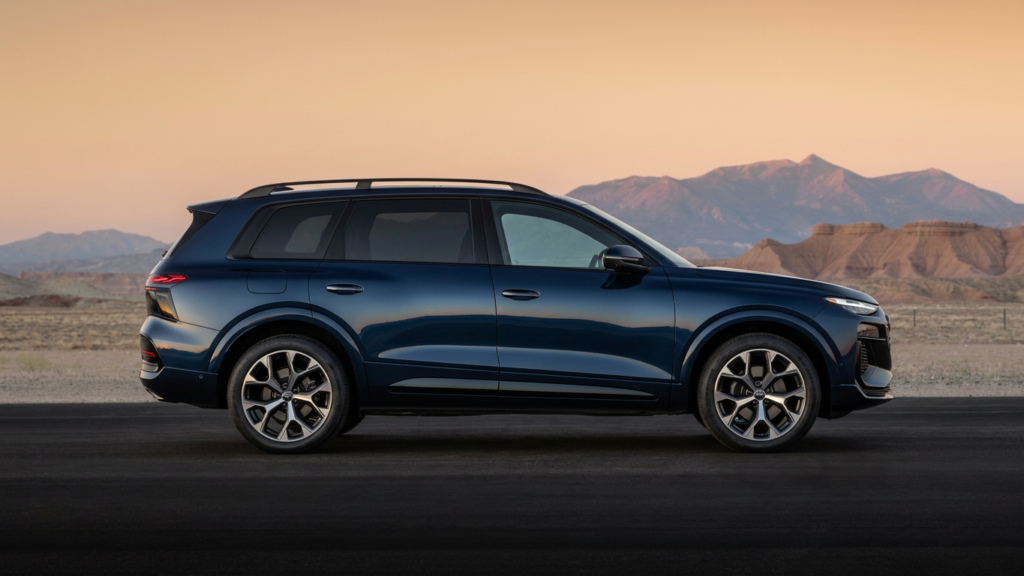
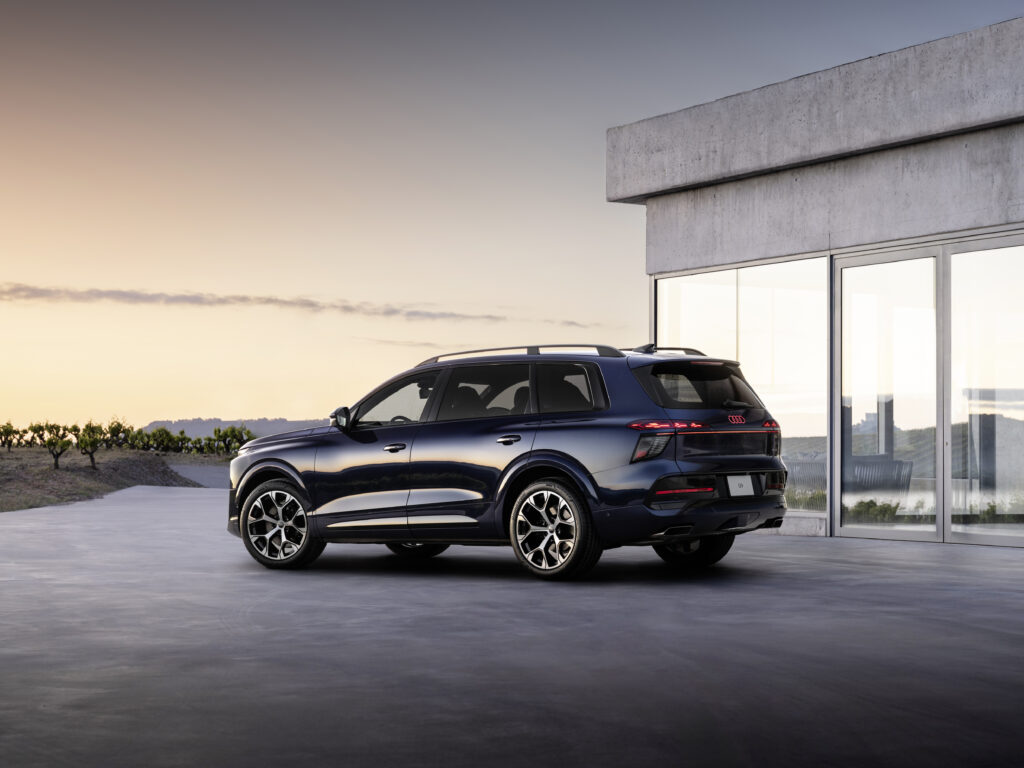
The new Audi Q9 is the largest Audi ever made, the first model to carry the number 9, and the clearest sign yet that Audi now sees interior experience, digital lighting and business-class comfort as central parts of Vorsprung durch Technik.
Audi has finally done what many people expected it to do years ago: it has created a true full-size luxury SUV above the Q7. The new Audi Q9 is not simply a stretched SUV, nor only a more luxurious family vehicle. It is Audi’s attempt to move its SUV portfolio decisively upward, into a space defined by size, status, technology, comfort and rear-seat presence.
According to Audi, the Q9 is the brand’s first large full-size SUV and the first Audi to use the number 9. It is also the largest Audi ever produced, measuring 5.31 metres long, 2.21 metres wide, 1.81 metres high, with a 3.14-metre wheelbase. Prices in Germany start at €108,400 for the Q9 TDI 220 kW quattro, with ordering from the end of July 2026 and market launch planned for the fourth quarter.
That already tells us a lot. The Q9 is not positioned as an experimental design object. It is a flagship product. It is Audi entering the upper end of the SUV market with a model that is meant to carry family, business, luxury and technology expectations at the same time.
But from a design perspective, the Q9 is more interesting than its size alone. It shows how Audi is trying to redefine premium presence in an era where large SUVs must no longer rely only on grille size, chrome, wheel diameter and mass. The Q9 still uses those traditional signals, but Audi adds something else: lighting technology, automatic doors, a highly developed second-row experience, a vast panoramic roof, advanced assistance systems and an interior concept that makes “space” part of the brand promise.

Audi’s new flagship is about space as status
Audi CEO Gernot Döllner describes the Q9 as the new top of the Audi portfolio, stating that the first large full-size SUV strengthens the premium positioning of the brand. He also says that Vorsprung durch Technik will increasingly be defined through the interior experience, because cars are becoming “mobile living spaces” for many customers.
That is the most important sentence in the entire Q9 story.
For decades, Audi built much of its design identity around exterior precision, technical surfacing, clean graphics and restrained German modernity. The brand became associated with flush integration, controlled surfacing, high-quality interiors and lighting innovation. But in the luxury SUV space, Audi has often been quieter than some of its rivals. The Q7 was rational, capable and premium, but never truly extravagant. The Q8 added style and attitude, but not maximum space.
The Q9 changes that.
Here, space itself becomes the luxury signal. The long wheelbase, upright cabin, large rear doors, optional six-seat layout and electrically adjustable second-row individual seats all suggest that Audi is no longer treating the rear cabin as secondary. This is not just a driver’s SUV. It is a chauffeured family/business/luxury vehicle as much as it is a premium Audi to drive.
That shift matters because the luxury market has changed. Customers at this level do not only want materials and performance. They want comfort architecture. They want effortless access. They want rear-seat dignity. They want technology that supports comfort without becoming intrusive. They want the vehicle to feel more like a moving private room than a high-riding estate car.
The Q9 is Audi’s answer to that.

Exterior design: status through verticality
The most obvious change compared with many previous Audi SUVs is the upright front. Audi says the vertical orientation of the front gives the Q9 height and status, while the Singleframe and headlights are integrated into a unified black mask. The grille reaches far downward, adding verticality and reinforcing the vehicle’s position at the top of the portfolio.
This is not accidental. Luxury SUVs need front-end authority. A large SUV without a strong vertical face can easily look like an inflated wagon or a softer crossover. Audi clearly wanted the Q9 to appear more formal, more architectural and more imposing.
The risk with such an approach is obvious: a tall front can quickly become heavy, blunt or aggressive for the wrong reasons. Audi’s solution is to integrate the headlights and grille into one dark technical zone, while keeping the bumper surfaces comparatively calm. The press material describes the bumpers as deliberately restrained, forming harmonious surfaces.
That is very Audi. Instead of creating excessive bumper drama, fake vents or theatrical sculpture, Audi keeps the front more controlled. The mass is there, the height is there, but the detailing remains disciplined. The result should give the Q9 presence without completely abandoning Audi’s cleaner design tradition.
The standard advanced line uses vertical slats in the Singleframe, emphasizing prestige and elegance. The optional S line removes the lamellae and makes the lower front more pronounced, pushing the car in a sportier direction.
This division is useful because a vehicle of this size needs different characters. Some buyers will want authority and luxury; others will want visual athleticism. The Q9’s size will always dominate, but the trim strategy allows Audi to shift the emphasis.
The long side profile: honest, functional and deliberately large
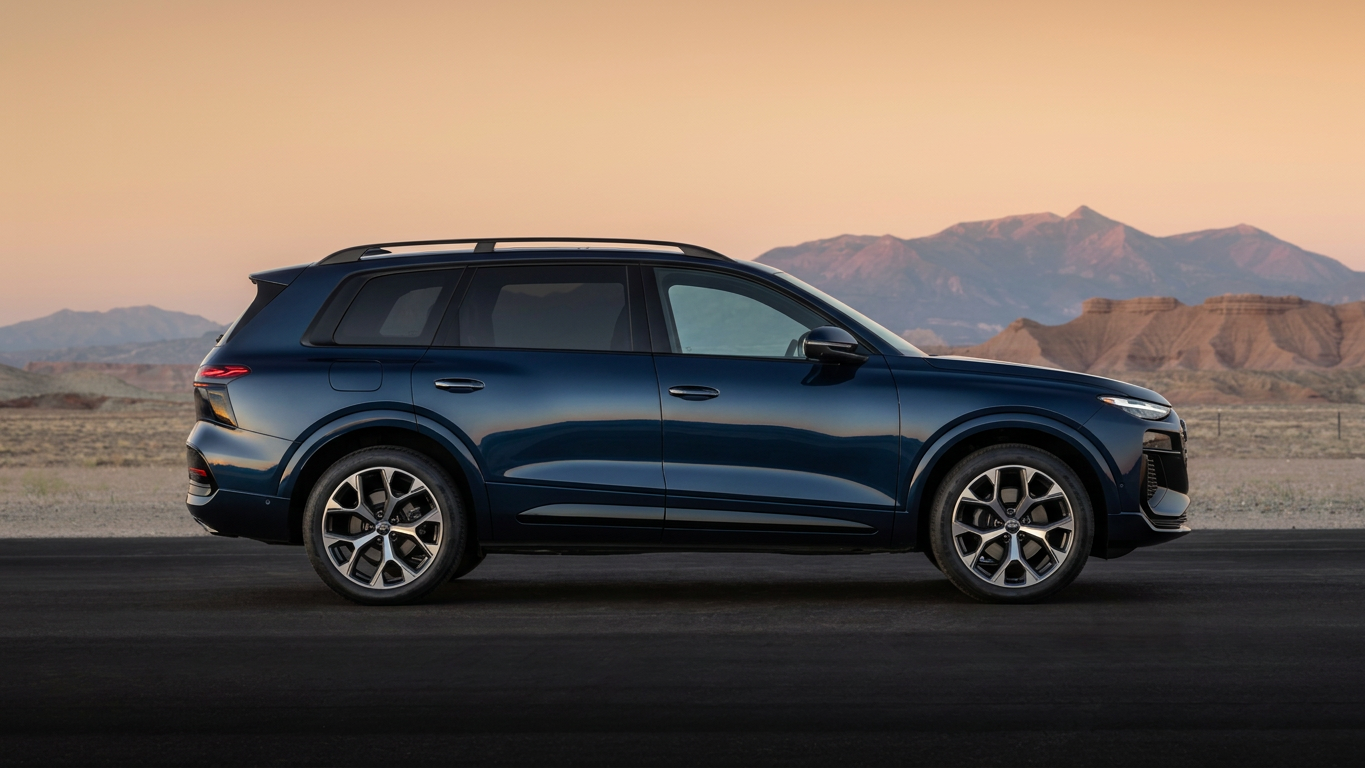
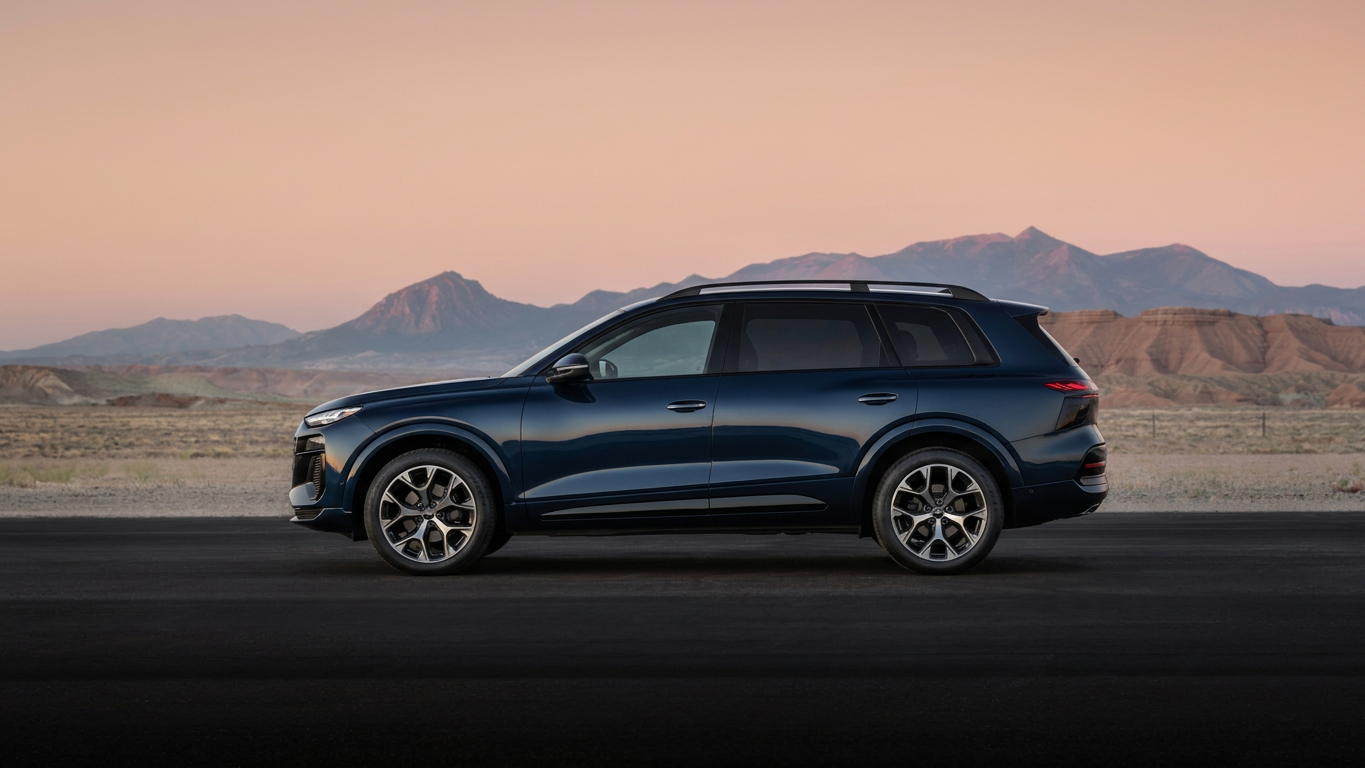
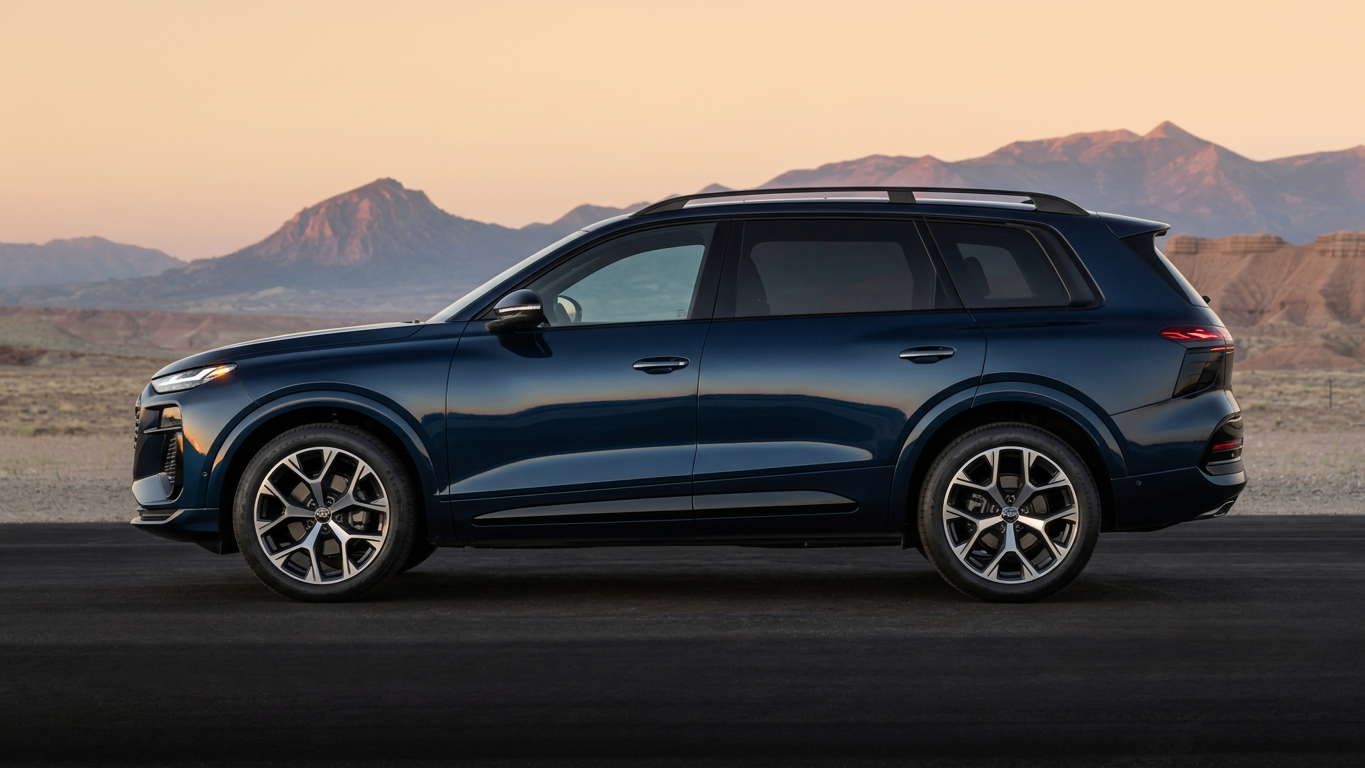
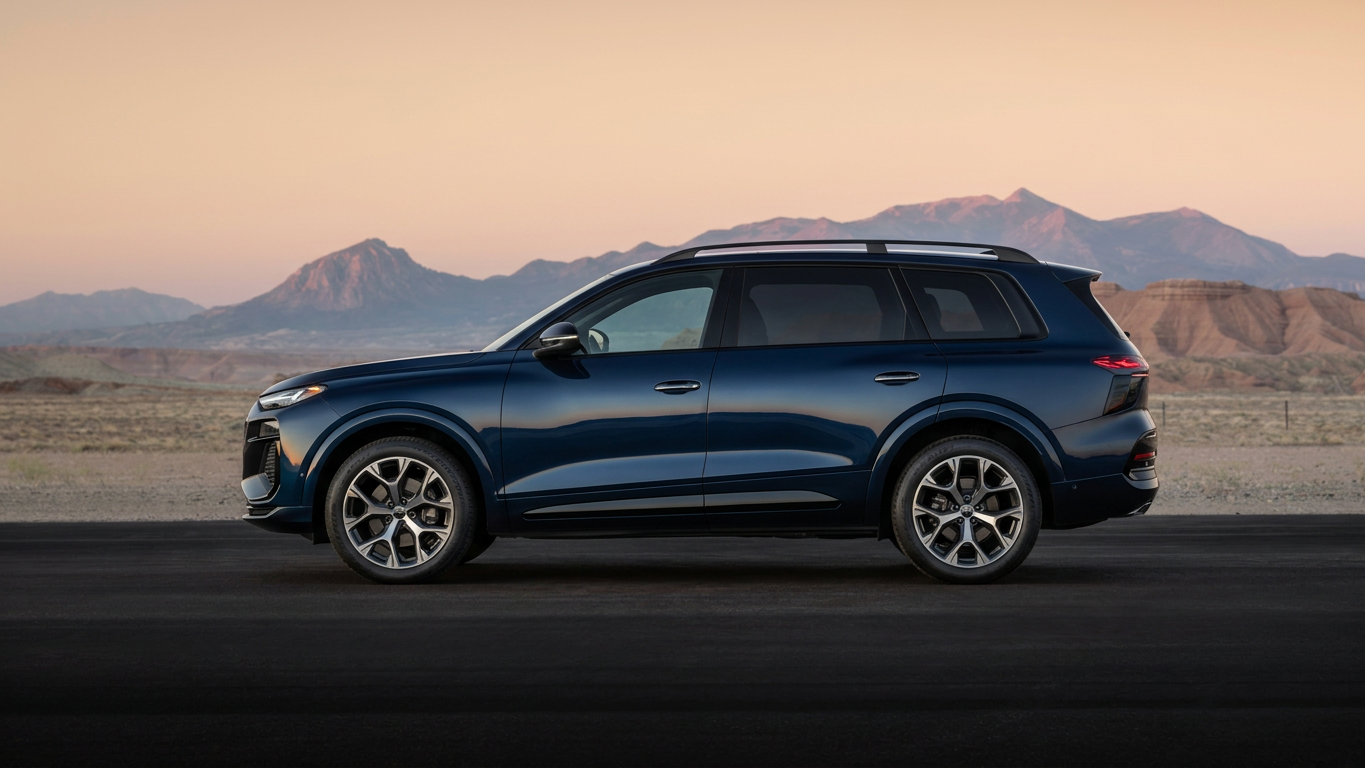
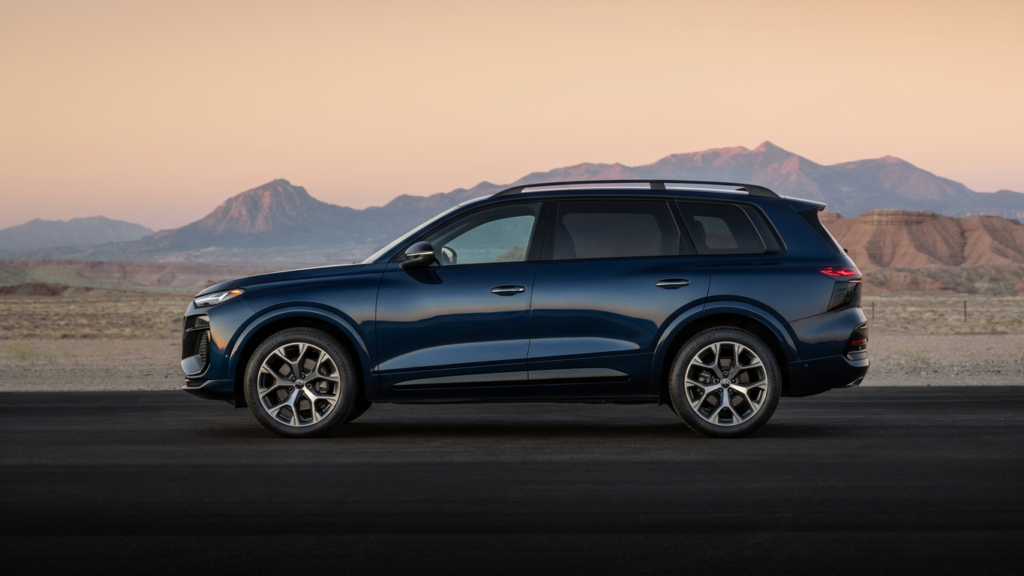
The side view appears to be one of the most important aspects of the Q9’s design. Audi highlights the straight window line, the long wheelbase, the larger rear door area, the extended rear overhang and the upright cabin as elements that express functionality and spaciousness.
This is not a coupe-SUV pretending to be sporty. It is a large SUV that admits it is large.
That honesty is valuable. In recent years, many SUVs have tried to hide their size through sloping rooflines, thick rear pillars, shrinking glass areas and aggressive body sculpting. The result is often worse visibility, compromised space and design that looks like it is fighting against its own package.
The Q9 does the opposite. It emphasizes the cabin. It emphasizes the rear passenger zone. It accepts the long rear overhang because that overhang serves luggage capacity and third-row usefulness. It keeps the window line straight because the car’s mission is not fashion; it is presence, comfort and usability.
From a pure design point of view, that may make the Q9 less dramatic than some premium SUV alternatives. But it also makes it more credible. It looks like a vehicle designed from the inside out, and that is exactly what a flagship SUV should be.
The rear: clean surface, light technology and visual width
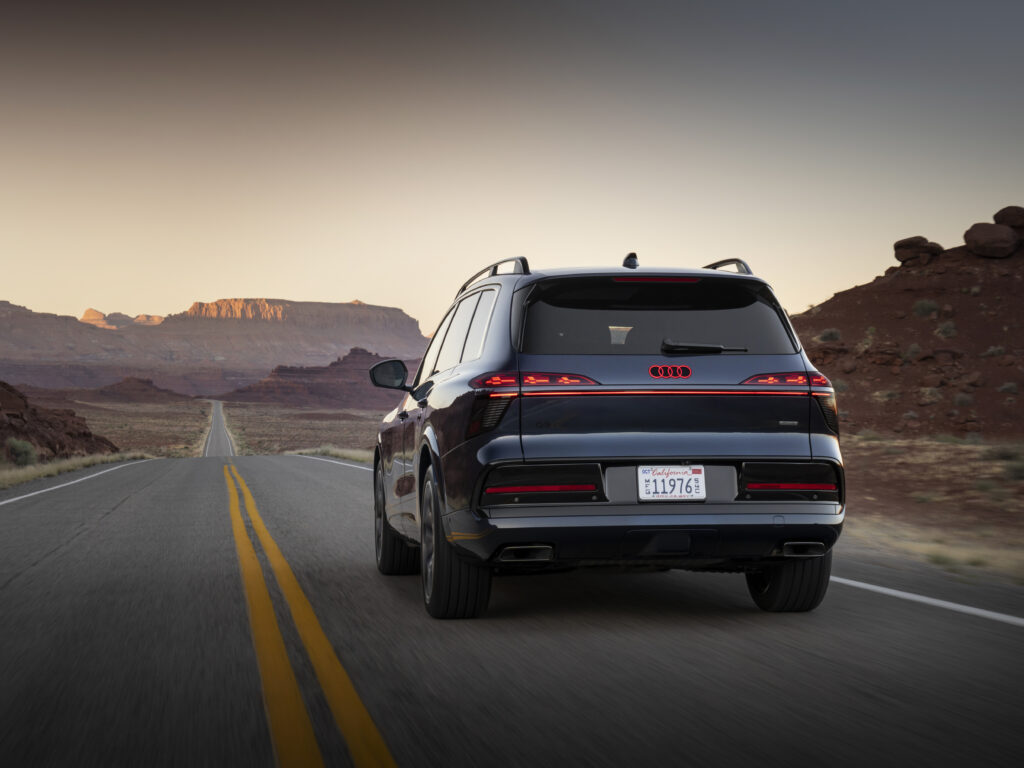
At the rear, Audi moves the license plate into the bumper. That allows the tailgate itself to become cleaner and more prestigious. Audi explicitly says this placement creates a calmer, higher-value rear surface.
This is a small but important design decision. On a large SUV, the tailgate is a huge visual surface. If it becomes overloaded with license plate recesses, badges, chrome bars, handles and lighting elements, the rear can quickly feel commercial or utilitarian. By placing the license plate lower, Audi can make the upper rear more architectural.
The main drama comes from the lighting. The Q9 introduces third-generation digital OLED rear lights with the world’s first curved digital OLED panels in a series-production vehicle. Audi says the outer OLED panels are three-dimensionally curved using ultra-thin glass technology, allowing them to follow the body contour more precisely while improving visibility from a wider angle.
This is exactly where Audi still feels most like Audi.
For many years, the brand has used lighting not only as decoration, but as a technical design signature. The Q9 continues that tradition. The rear lights are not merely thin red graphics; they are technology objects integrated into the body form.
Audi says the curved OLED carrier glass is only 0.1 millimetres thick, and that the total rear light system uses 512 segments across six large digital OLED panels. The outer panel is the largest digital OLED panel Audi has ever installed.
That gives the Q9 a modern flagship signature without resorting to excessive chrome or overdesigned surfaces. At night, the car should appear wider, more technical and more unmistakably Audi.

Lighting as communication, not just decoration
The Q9’s lighting story goes beyond aesthetics. Audi introduces an extended turn indicator that projects a stylized indicator onto the ground at night, synchronized with the dynamic front and rear turn signals. It is designed to improve visibility for other road users when the vehicle turns or changes lanes.
This is a meaningful direction for future automotive lighting. We are moving from lights that simply illuminate or signal, toward lights that communicate intent. Audi also describes communication lighting that warns other road users of accident or breakdown situations, and exit-warning light functions that can warn cyclists or approaching vehicles when passengers may open doors.
From a design perspective, this is more interesting than simply adding more LEDs. It makes light part of the user interface between the vehicle and the surrounding world.
That will become increasingly important as vehicles become larger, quieter and more automated. A large SUV like the Q9 has a responsibility to communicate clearly in urban space. The projected indicators, door-area projections and exit warning features all point toward a future where lighting becomes an active safety language.
Audi has long been one of the strongest brands in light design. The Q9 suggests that the next step is not only more complex signatures, but more communicative signatures.
Interior: the true centre of the Q9
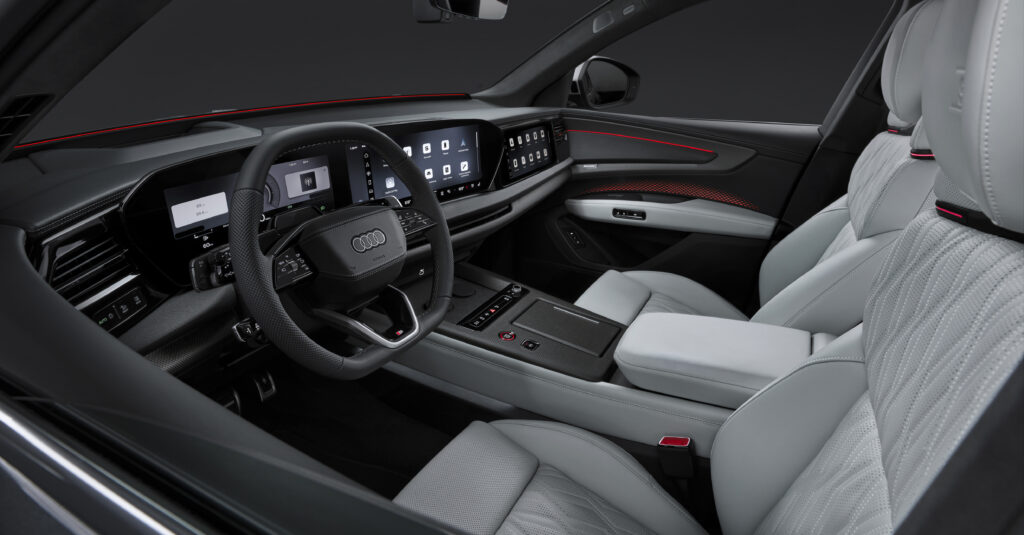
The interior is where the Q9 makes its strongest argument. Standard configuration gives the Q9 seven seats, while an optional six-seat layout provides a more business-class atmosphere with two electrically adjustable individual seats in the second row. All six seats in that configuration are electrically adjustable in parts, and depending on equipment, heated. The third-row backrests can be folded individually and electrically.
The seven-seat version is also designed for family practicality. Audi notes that child seats can be attached to all three seats in the second row, using a 35/30/35 split. The outer seats can move forward electrically for third-row access without requiring mounted child seats to be removed.
This is the kind of detail that separates a true family luxury SUV from a merely large premium vehicle. Big dimensions alone are not enough. The package has to work for people with children, luggage, passengers and daily use.
The Q9 appears to understand that.
The optional electrically driven doors are another major feature. Audi says they support easier entry and exit, use surrounding-area sensors to prevent collisions, and can be opened and closed from multiple control points or remotely via the myAudi app.
Automatic doors can easily feel gimmicky if badly executed. But in a large luxury SUV, they make sense. They support the idea of the Q9 as a business-class environment and a chauffeur-capable vehicle. They also reinforce the flagship status. Luxury is often not about one spectacular feature, but about reducing effort at every touchpoint.

A roof that changes the feeling of the whole car
One of the Q9’s most striking interior features is the largest panoramic sunroof Audi has ever installed. It is standard, has a glass area of more than 1.5 square metres, and can be opened or tilted. Optional switchable transparency uses nine individually controllable segments, allowing the roof to change between a light-filled interior and effective glare protection.
This is more than a comfort feature. In a vehicle of this size, the roof has a huge influence on perceived interior volume. A dark roof can make even a large cabin feel enclosed. A huge glass roof creates width, air and calm.
Audi also adds an optional illuminated glass roof, linked to the chosen ambient light color. The press material mentions 84 LEDs integrated into the panoramic roof.
There is a danger here: luxury interiors can become lighting demonstrations. But if handled well, the roof lighting could give the Q9 a unique night-time atmosphere. Combined with the broad interior light band, contour lighting and ambient illumination, the cabin becomes less like a traditional car interior and more like a controlled architectural space.
This is where Döllner’s “mobile living space” comment becomes tangible.
Materials: Audi moves away from gloss
Audi’s material strategy in the Q9 is particularly interesting. The company mentions high-quality wool fabrics such as alpaca, Dinamica microfiber, leather and artificial-leather combinations, fine Nappa leather, new colors including tamarind brown, natural beige and stone beige, and decorative elements such as natural ash, grey-brown structured lime wood and carbon structural fabric with basalt-grey accents.
Just as importantly, Audi says it reduces glossy surfaces in favour of matte and structured materials to create a more refined appearance and prevent fingerprints.
This is a welcome move.
Too many modern premium interiors have relied on piano black, gloss plastic, polished screens and reflective trim. They photograph well under controlled lighting but often age poorly in real life. Fingerprints, scratches and glare quickly destroy the premium impression.
Audi’s move toward wool, microfiber, matte finishes and structured decorative elements feels more mature. It suggests a quieter form of luxury: tactile, warm, technical and less dependent on shine.
That is exactly the right direction for a flagship Audi. Audi does not need to become flamboyant. It needs to become precise, calming and quietly expensive.
Digital interior: screens, Android Automotive and ChatGPT
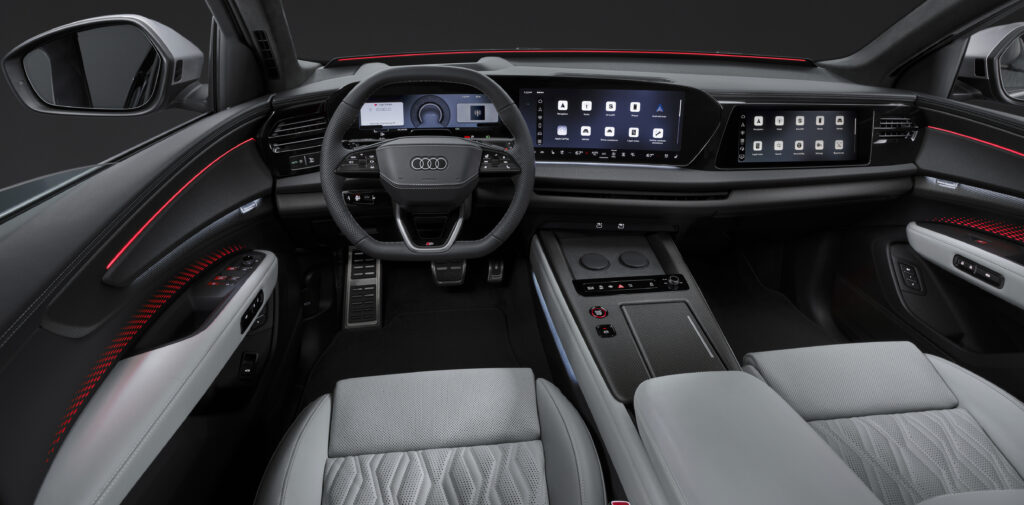
The Q9 uses Audi’s MMI Panoramic Display in curved OLED technology, consisting of a 12.3-inch Audi virtual cockpit and a 14.5-inch MMI touch display. A 12.3-inch passenger display with dynamic privacy mode is standard, preventing distracting content such as videos from being visible to the driver during driving.
The infotainment system uses Android Automotive OS, with third-party apps available directly through the Audi Application Store. Categories at launch include music, video, gaming, navigation, parking and charging, productivity, weather and news.
Audi also integrates ChatGPT into the Audi assistant. According to Audi, the assistant automatically determines whether a vehicle function should be executed, a destination searched, a weather forecast retrieved, or whether a general question should be passed to ChatGPT.
This is a significant step because voice interaction is becoming central to premium user experience. But the challenge for Audi will be restraint. Premium customers do not want a car that behaves like a gadget for the sake of novelty. They want technology that works quietly, naturally and reliably.
If the Audi assistant can control functions, retrieve information and answer general questions without forcing drivers into menu structures, it could make the Q9 feel genuinely modern. If it becomes inconsistent, it risks becoming another digital layer between the user and the vehicle.
The design challenge is no longer only physical. It is behavioral.
Sound as luxury architecture
The Q9’s optional Bang & Olufsen Premium Sound System with 4D sound uses 22 speakers, including headrest speakers, subwoofer, center speaker and seat actuators, with a total output of 1,360 watts. The system is designed to create an immersive and personalized sound experience, with Fraunhofer Symphoria adaptive sound distribution and seat vibrations to enhance bass perception.
This may sound excessive, but in the Q9 it fits the mission. A large luxury SUV is no longer only about transportation. It is a sound environment, a business space, a family room and a private lounge.
The headrest speakers are especially relevant. They allow personalized phone calls, navigation instructions and surround sound without disturbing other passengers.
In a three-row vehicle, that matters. The more seats a vehicle has, the more difficult it becomes to manage sound, privacy and comfort for every occupant. Audi appears to be treating acoustics as part of interior design, not simply audio specification.
Assistance systems: the Q9 as long-distance machine
The Q9 is designed to be a long-distance vehicle, and its assistance systems reflect that. Audi offers adaptive driving assistant plus with hands-free partially automated driving on approved motorway and highway sections. The system operates up to 130 km/h or 85 mph and is initially available in Germany, the United States and Canada. It remains classified as SAE Level 2, meaning the driver remains responsible and must stay attentive.
This is important because Audi is not presenting the system as autonomy. It is driver assistance for long-distance comfort. A steering-column camera monitors eye position and head posture to ensure attention. If the driver does not respond, the emergency assistant can bring the vehicle to a controlled stop.
The Q9 also introduces an emergency assistant function that can move the vehicle onto a free hard shoulder on the motorway, within defined conditions and between 50 and 30 km/h. If a hard-shoulder change is not possible, the vehicle comes to a controlled stop in its lane and initiates an emergency call after a few seconds.
This is the kind of technology that fits a luxury flagship better than many flashy features. It may rarely be used, but it supports the feeling of security and confidence that large premium SUVs are supposed to deliver.
Chassis: making size feel smaller
A vehicle as large as the Q9 has to solve one key dynamic problem: how to feel manageable. Audi equips the Q9 as standard with adaptive air suspension, continuously variable damping and adjustable ride height. The system adapts to speed, load and road conditions, with a total ride-height adjustment range of 90 millimetres. From balanced mode, the vehicle can be lowered by 62 millimetres to a comfort entry level.
The Q9 also uses progressive steering and available all-wheel steering. The rear wheels can steer by up to 5 degrees, turning opposite the front wheels at low speeds to reduce turning circle, and in the same direction at higher speeds to increase stability during lane changes and long curves.
This technology is essential. Without it, a 5.31-metre SUV can feel unwieldy in cities and parking structures. With it, the Q9 has a better chance of feeling like a premium tool rather than a burden.
Again, this is where design and engineering meet. The Q9’s exterior openly communicates size, but the chassis technology must make that size feel controlled.
Powertrain: the surprise is that the flagship is diesel
Perhaps the most surprising part of the Q9 is not the design, the lighting or the interior. It is the powertrain.
At launch in Germany, the Q9 is offered with a 3.0-litre V6 diesel producing 220 kW / 299 PS and 630 Nm of torque. Selected European markets also receive a 180 kW / 245 PS version with 500 Nm. Both use MHEV plus technology, an 8-speed tiptronic gearbox and quattro all-wheel drive.
This is a very pragmatic decision, and also a revealing one.
On one hand, Audi’s broader corporate language increasingly emphasizes intelligent and electric products. On the other hand, its new flagship full-size SUV launches with a diesel engine, at least in Germany. That may seem contradictory, but it also reflects the reality of this segment in Europe: large long-distance luxury SUVs still need range, torque, towing ability and efficiency over very long trips.
The V6 TDI includes an electrically driven compressor and MHEV plus system. The drivetrain generator can contribute up to 18 kW / 24 PS, while the electric compressor builds up to 3.6 bar absolute boost pressure in 1.2 seconds. Audi says this improves response and enables more torque at low engine speeds.
So the Q9 is not an old-fashioned diesel in a new body. It is a highly electrified diesel powertrain using electric assistance to improve response and efficiency. But emotionally, it still positions the car differently from an all-electric flagship.
That raises a bigger question for Audi.
Is the Q9 the final expression of Audi’s traditional long-distance luxury SUV formula, or the first step toward a future electric Q9? The answer may eventually be both.
Design judgment: does the Q9 look like enough of an Audi flagship?
From the available information, the Q9 seems to be a carefully judged vehicle rather than a radical one. It does not try to reinvent the SUV. It does not abandon Audi’s familiar design values. It does not attempt to shock.
Instead, it scales Audi upward.
The front becomes more vertical and prestigious.
The cabin becomes longer and more formal.
The rear becomes cleaner and more technically lit.
The interior becomes more lounge-like.
The lighting becomes more communicative.
The assistance systems become more confidence-oriented.
The materials become warmer and more matte.
That is a coherent strategy.
The weakness may be that the exterior, by necessity, is still a very large, formal SUV. The proportions emphasize room, not drama. The rear overhang serves function, but it will also make the car appear large and perhaps less agile. The vertical front creates status, but it may also be visually heavy depending on trim and color.
But perhaps that is exactly the point. The Q9 is not trying to be a design sports car. It is trying to be a flagship SUV for people who want space, technology and presence without moving into a more extroverted luxury brand image.
In that sense, the Q9 is very Audi.
Why the Q9 matters
The Audi Q9 matters because it shows Audi becoming more honest about what premium customers are buying in this segment.
They are not only buying performance.
They are not only buying a badge.
They are not only buying screens.
They are buying experience.
The Q9 turns that experience into a product strategy: automatic doors, second-row comfort, a huge panoramic roof, highly developed light communication, strong audio personalization, third-row practicality, advanced driver assistance and a cabin material philosophy that moves away from excessive gloss.
This is Audi translating its old strengths — precision, technology, restraint, light design and interior quality — into a new flagship format.
Car Design TV verdict
The new Audi Q9 is not a radical design revolution. It is something more strategic: Audi’s first true full-size SUV flagship, and the clearest expression yet of how the brand wants to define luxury beyond the traditional sedan.
Its design is not about flamboyance. It is about vertical authority, clean surfaces, interior atmosphere and technical light. Its most advanced design feature is not one single exterior line, but the way the entire product repositions Audi’s premium identity around space and experience.
There is, however, an interesting tension. Audi talks increasingly about the future of mobility, digital experience and electrification, yet the Q9 launches with a powerful V6 diesel. That may be commercially logical, especially for long-distance European use, but it also makes the Q9 feel like a bridge: one foot in Audi’s traditional engineering world, one foot in a more digital, interior-led future.
From a design perspective, that bridge is exactly what makes the Q9 important.
The Q9 may not be the most emotional Audi ever created. It may not be the most radical. But it could become one of the most significant, because it shows how Audi intends to compete where luxury is measured not only in speed or badge value, but in space, calm, technology, comfort and controlled presence.
Audi has finally built its true flagship SUV.
Now the question is whether the Q9 will become a one-off portfolio extension, or the beginning of a new luxury design chapter for the brand with the four rings.
Source: Audi press information, “Neue Spitze im Portfolio – der Audi Q9 definiert Raum und Komfort als erster seiner Art,” Ingolstadt, 29 July 2026.