Genesis GV90: The Electric Flagship SUV That Turns Hospitality Into Architecture
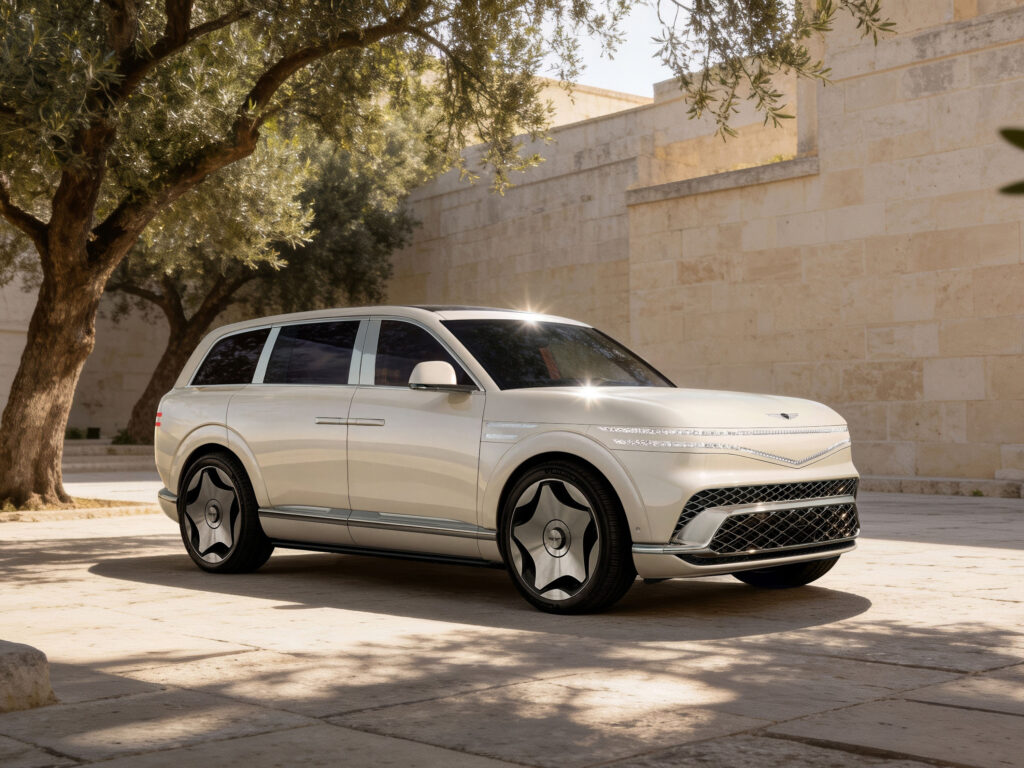
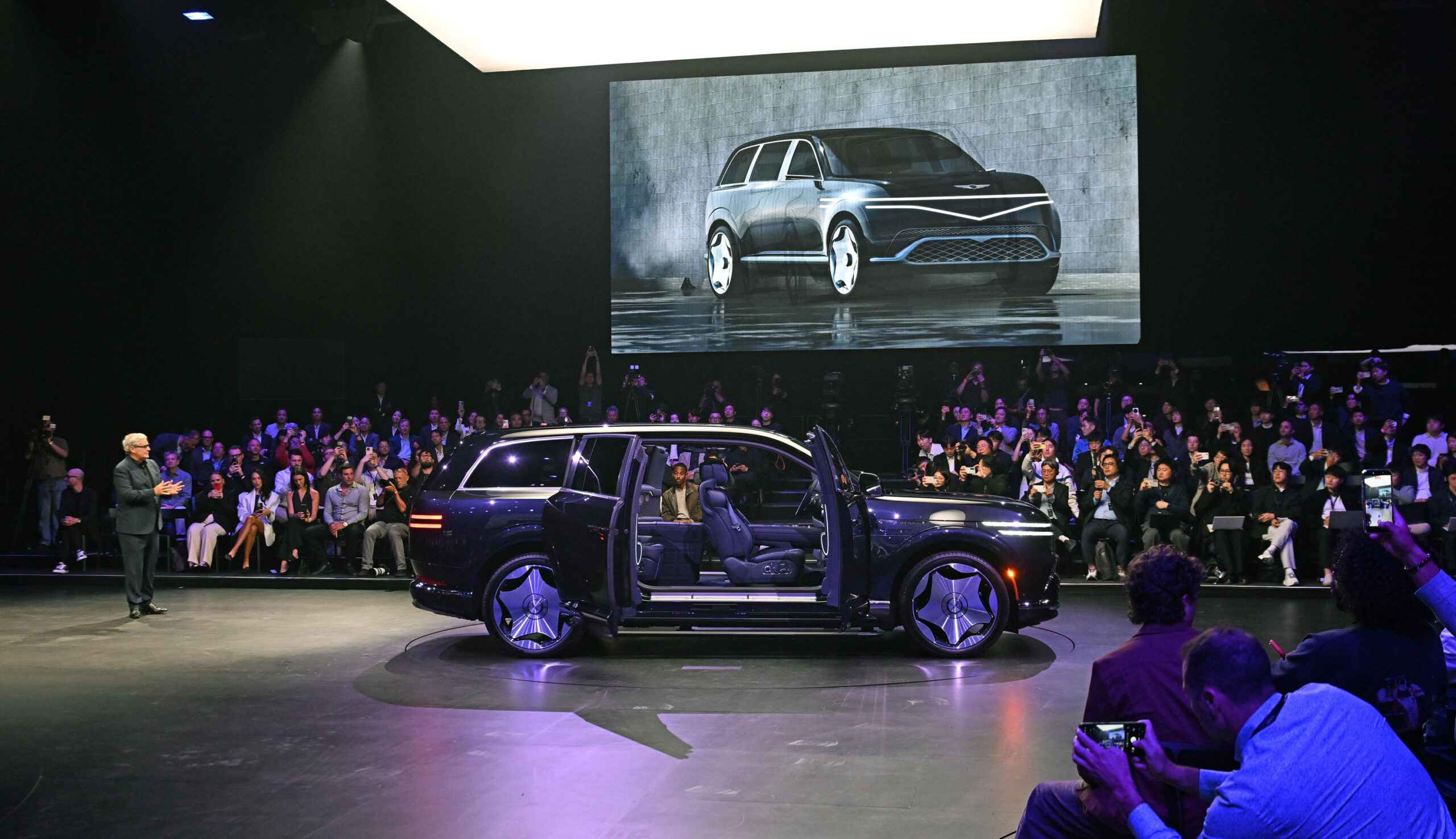
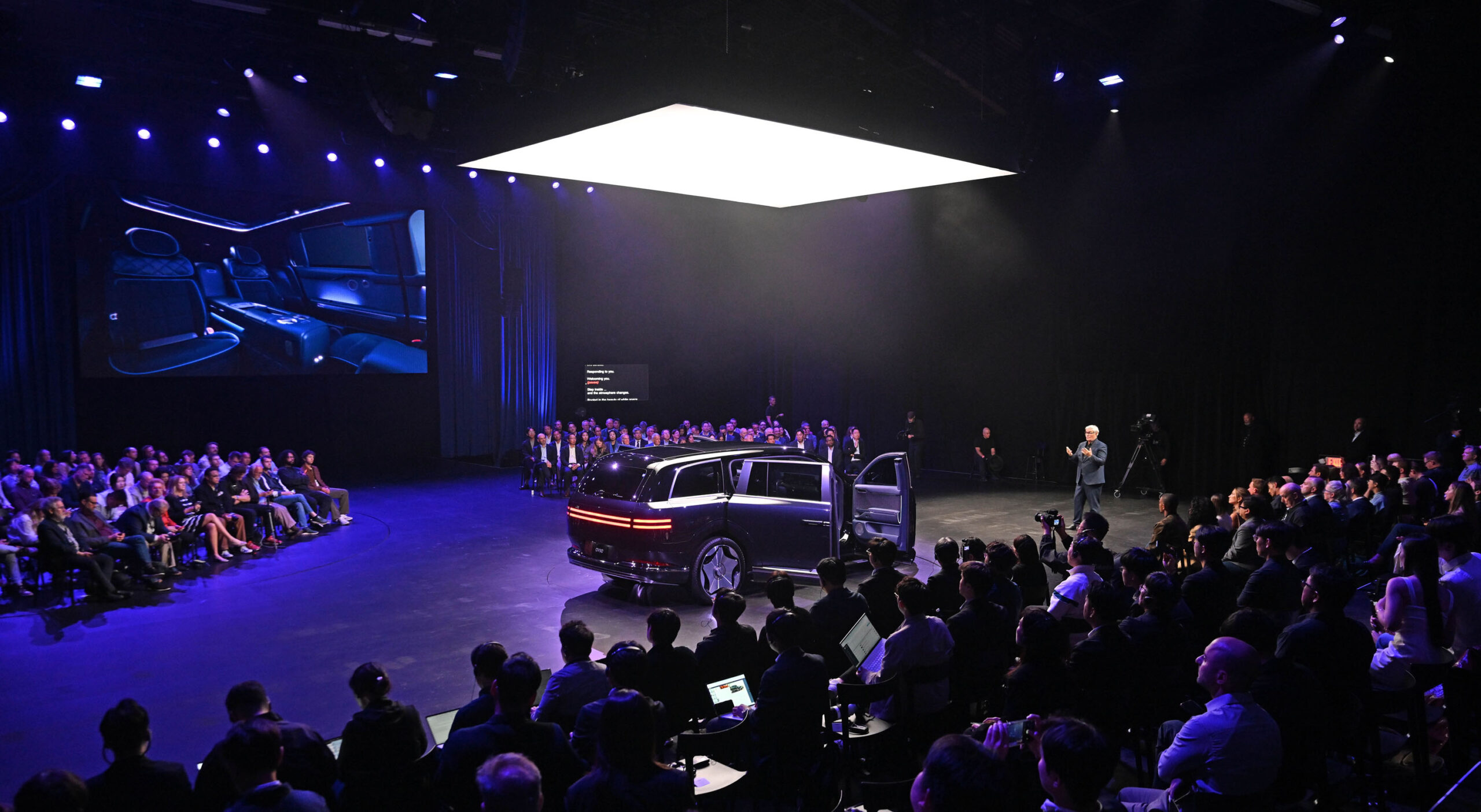
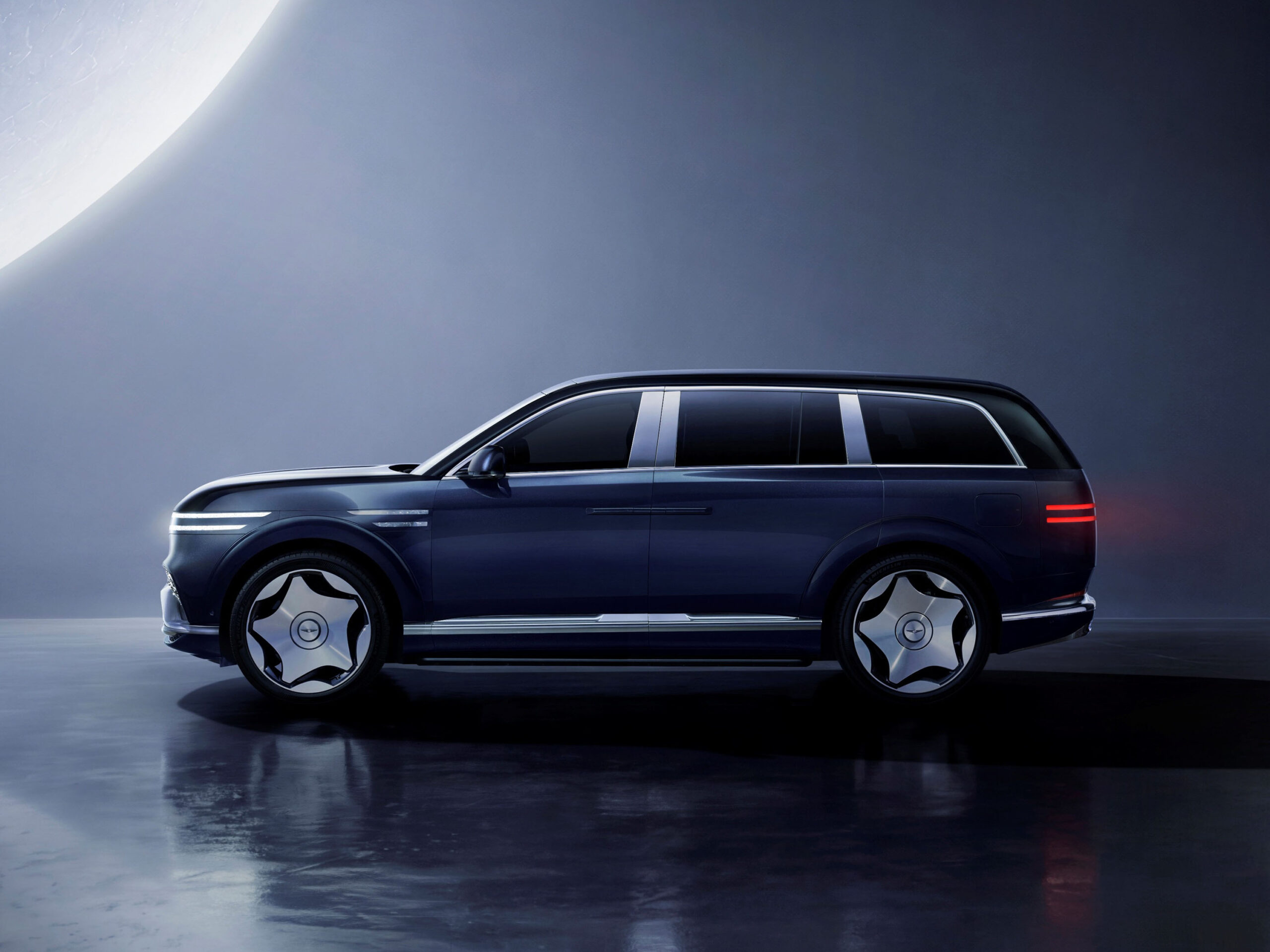
Genesis has unveiled the GV90, its first full-size flagship SUV and arguably the most important production model in the brand’s short history. Presented in San Francisco, the GV90 arrives as a production interpretation of the earlier NEOLUN concept and is positioned not simply as a larger electric SUV, but as a new definition of Korean luxury in the electric era. Genesis describes the GV90 as the culmination of its brand capabilities, combining design, AI-powered software, connectivity, safety, electric performance and an elevated interpretation of hospitality.
For Car Design TV, the GV90 is interesting because it is not trying to be another anonymous premium electric SUV. It is trying to give Genesis a true flagship object — something above the GV80, above the existing sedan and SUV range, and closer in ambition to the role played by vehicles such as the Range Rover, Mercedes-Maybach GLS, Rolls-Royce Cullinan or BMW i7, depending on how it is specified. But where some established luxury brands lean heavily on heritage, monumentality or status, Genesis is clearly trying to build its own luxury language around Korean culture, restraint, technology and what the brand calls “Son-nim” hospitality: treating the customer as an honored guest.
That is the central design story of the GV90. It is not just about size, battery capacity or screens. It is about whether Genesis can turn its cultural philosophy into a convincing physical experience.
A Flagship With Two Personalities
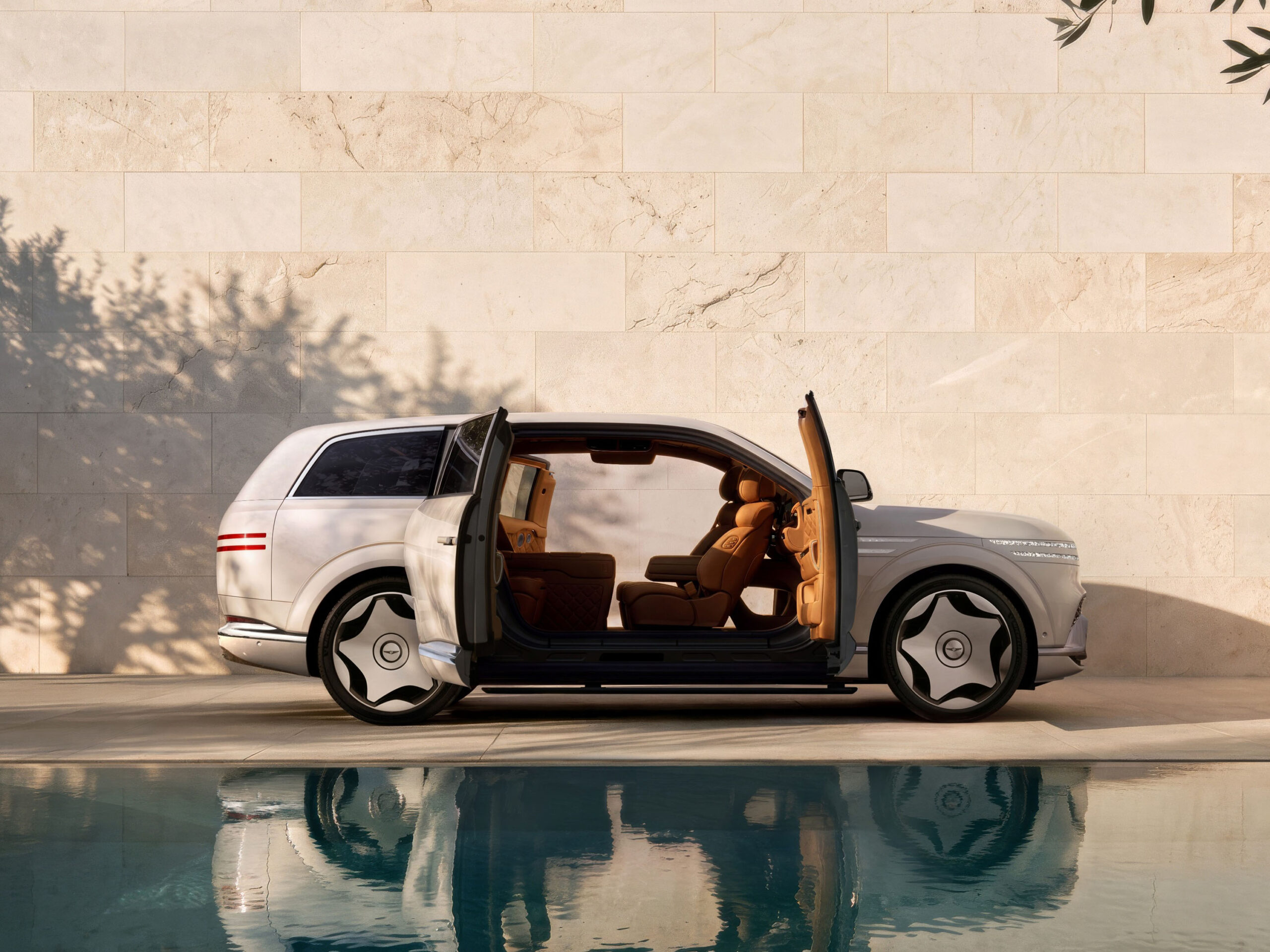
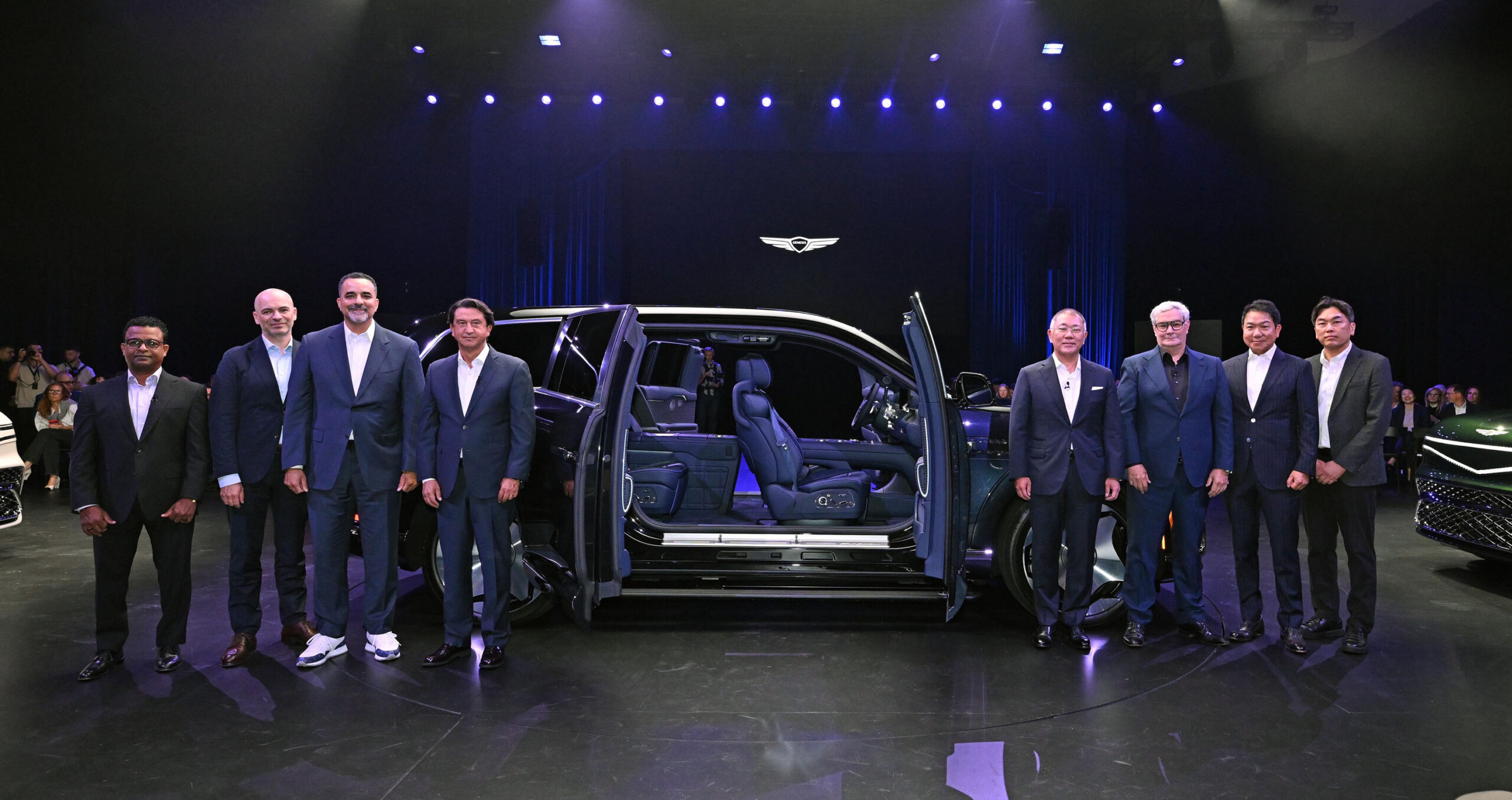
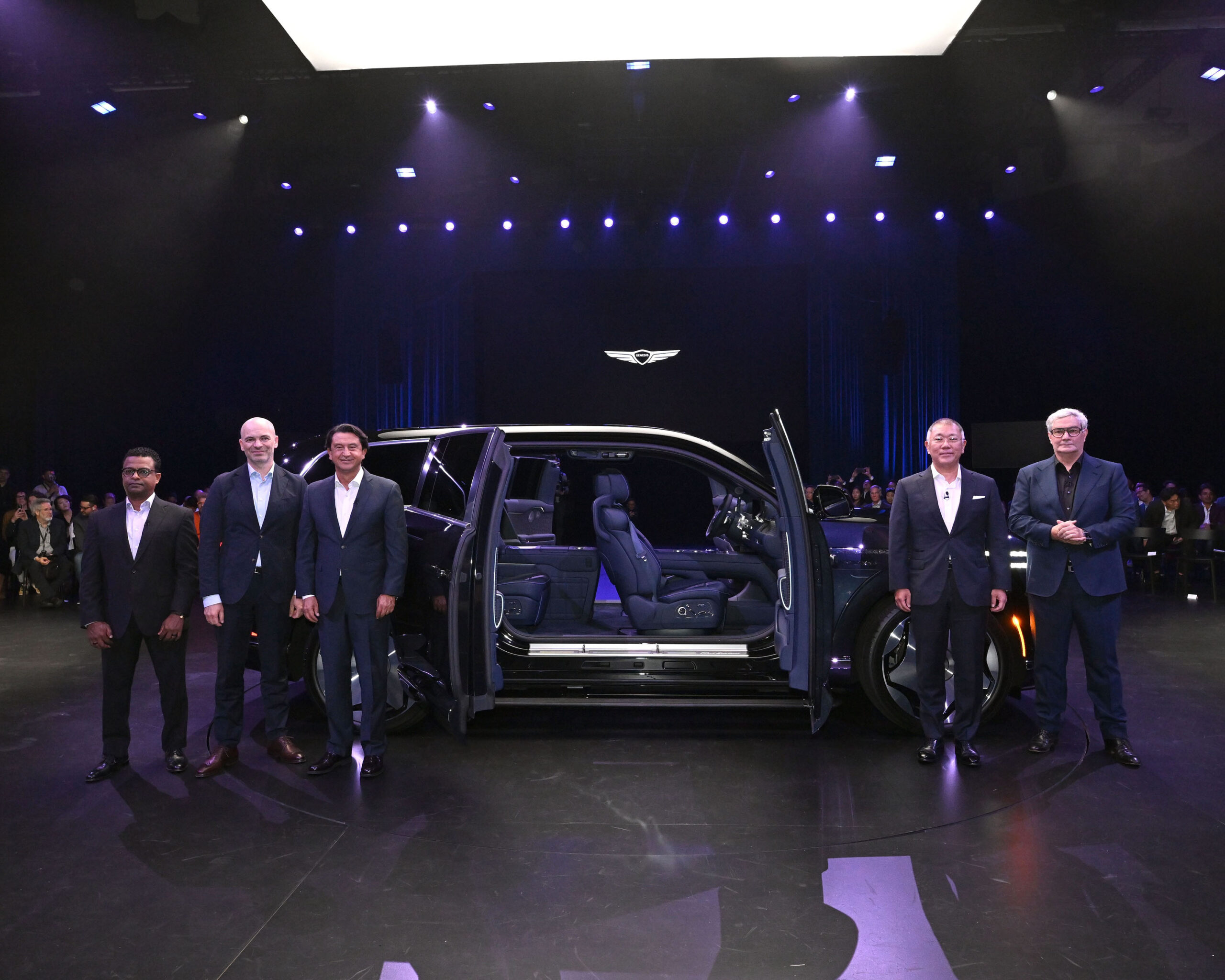
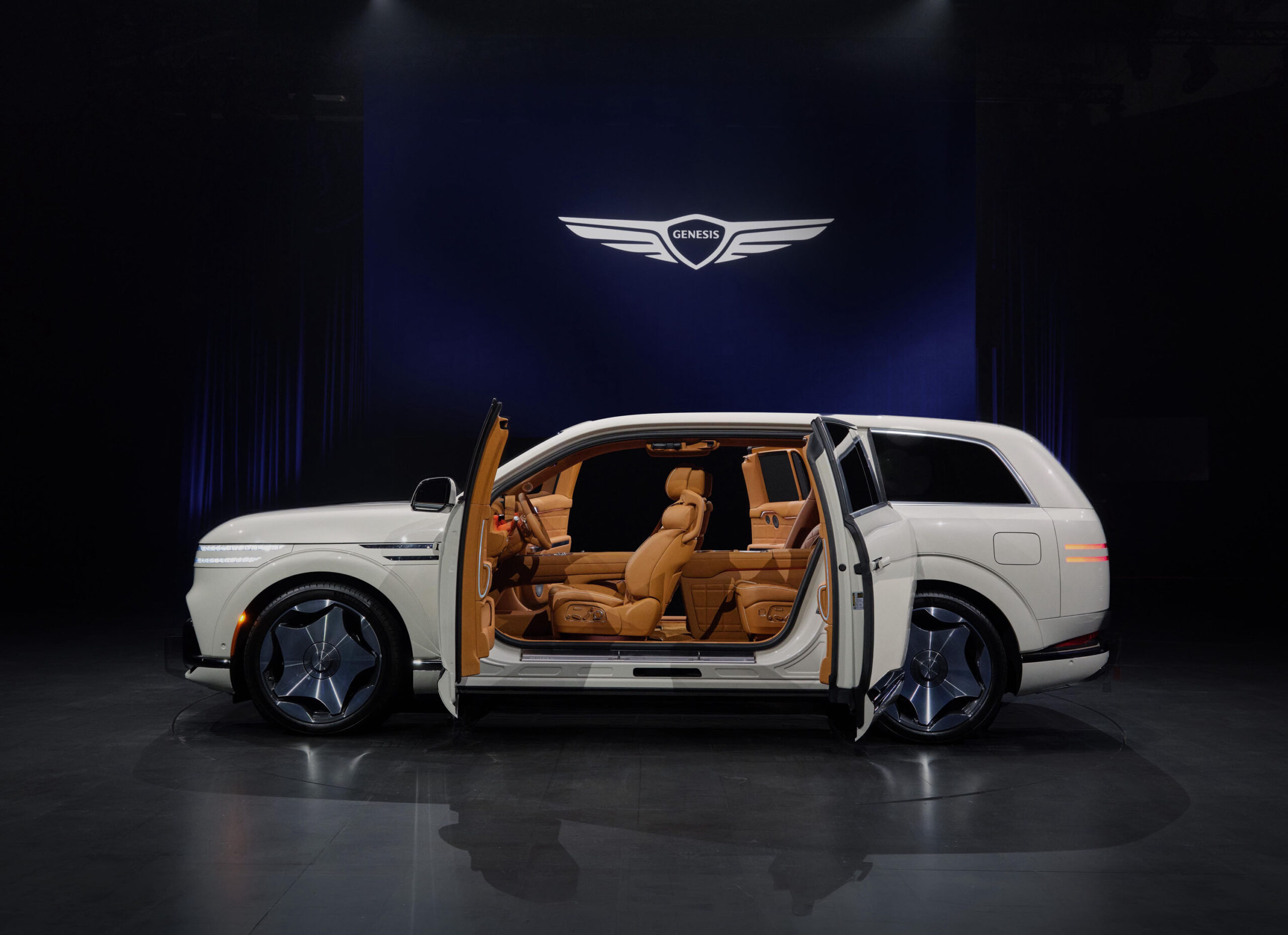
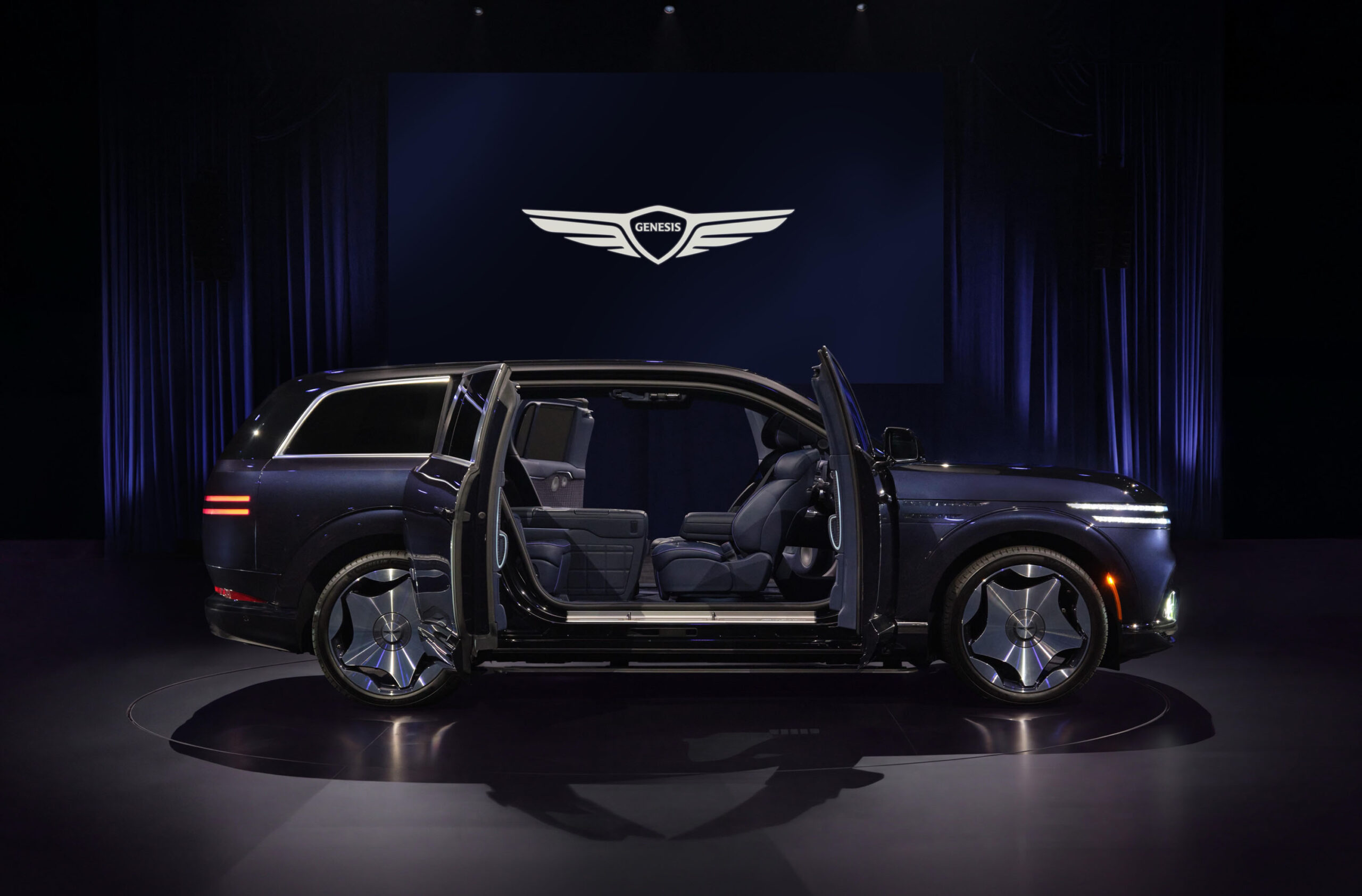
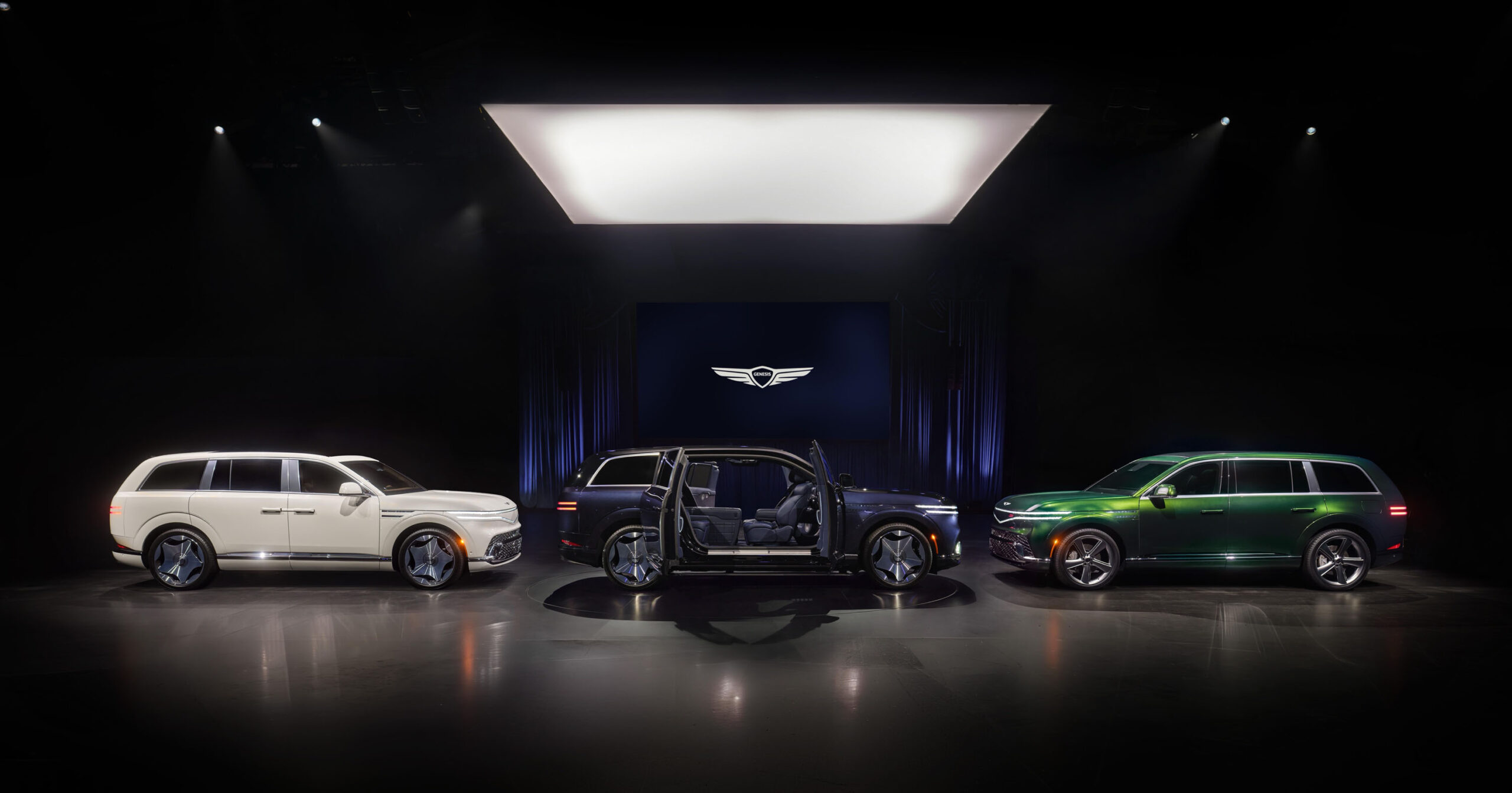
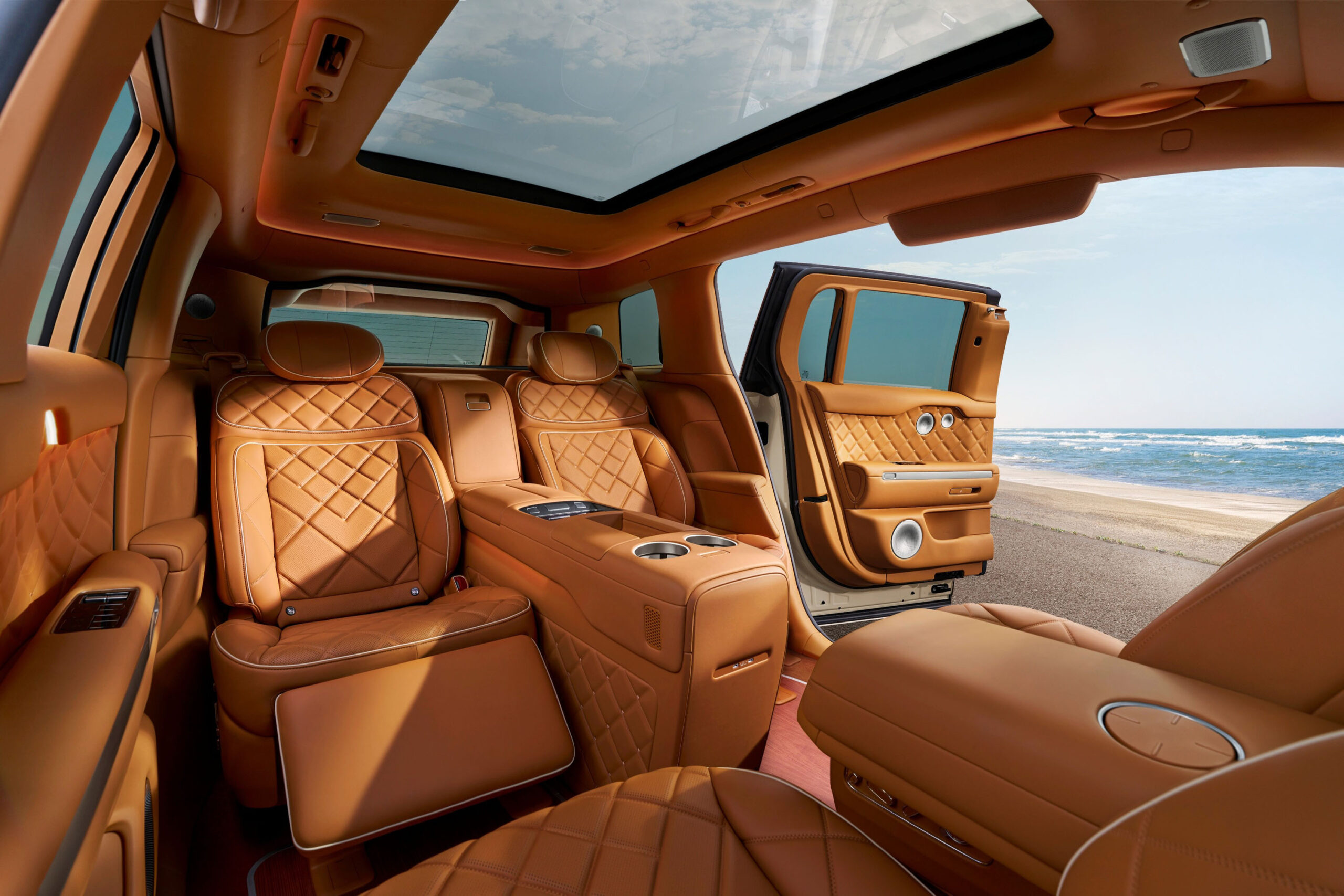
Genesis will offer the GV90 in two forms: the standard GV90 with conventional swing doors, and the GV90 Neolun, which introduces the dramatic Neolun Arch Gate. The Neolun version is the real design statement. It features what Genesis describes as the world’s first independently opening and closing hidden B-pillar coach door system. The front and rear doors can open toward each other, creating a wide, ceremonial entry into the cabin.
This is a bold move. Coach doors are not new in luxury cars, but they are usually associated with ultra-luxury sedans and chauffeur-driven vehicles. Applying that idea to a large electric SUV gives the GV90 Neolun a different character. It becomes less of a conventional family SUV and more of a rolling reception space.
The hidden B-pillar solution is especially important. Designers have always wanted large, open entries, uninterrupted side apertures and clean cabin access, but engineers usually bring the conversation back to side-impact safety, body stiffness, roof strength and door integration. Genesis claims it has addressed this through a newly developed dual-motion hinge mechanism for the rear doors and a reinforced structure that integrates high-strength dual steel beams, a thicker cabin frame, steel tubes and structural foam.
The design intent is clear: the vehicle should greet its occupants. The opening sequence becomes part of the luxury experience. It is not just a door; it is a gesture.
Hospitality as Design Strategy
The most interesting thing about the GV90 is that Genesis is not talking about luxury only in terms of leather, screens, power or price. It is framing the vehicle around hospitality. That may sound like marketing language, but in design terms it gives the car a useful organizing principle.
Hospitality affects how people enter the car. It affects how seats are arranged. It affects how light is used. It affects how sound, privacy, warmth and material tactility are handled. It affects whether the vehicle feels like a machine, a lounge, a private room or a ceremonial space.
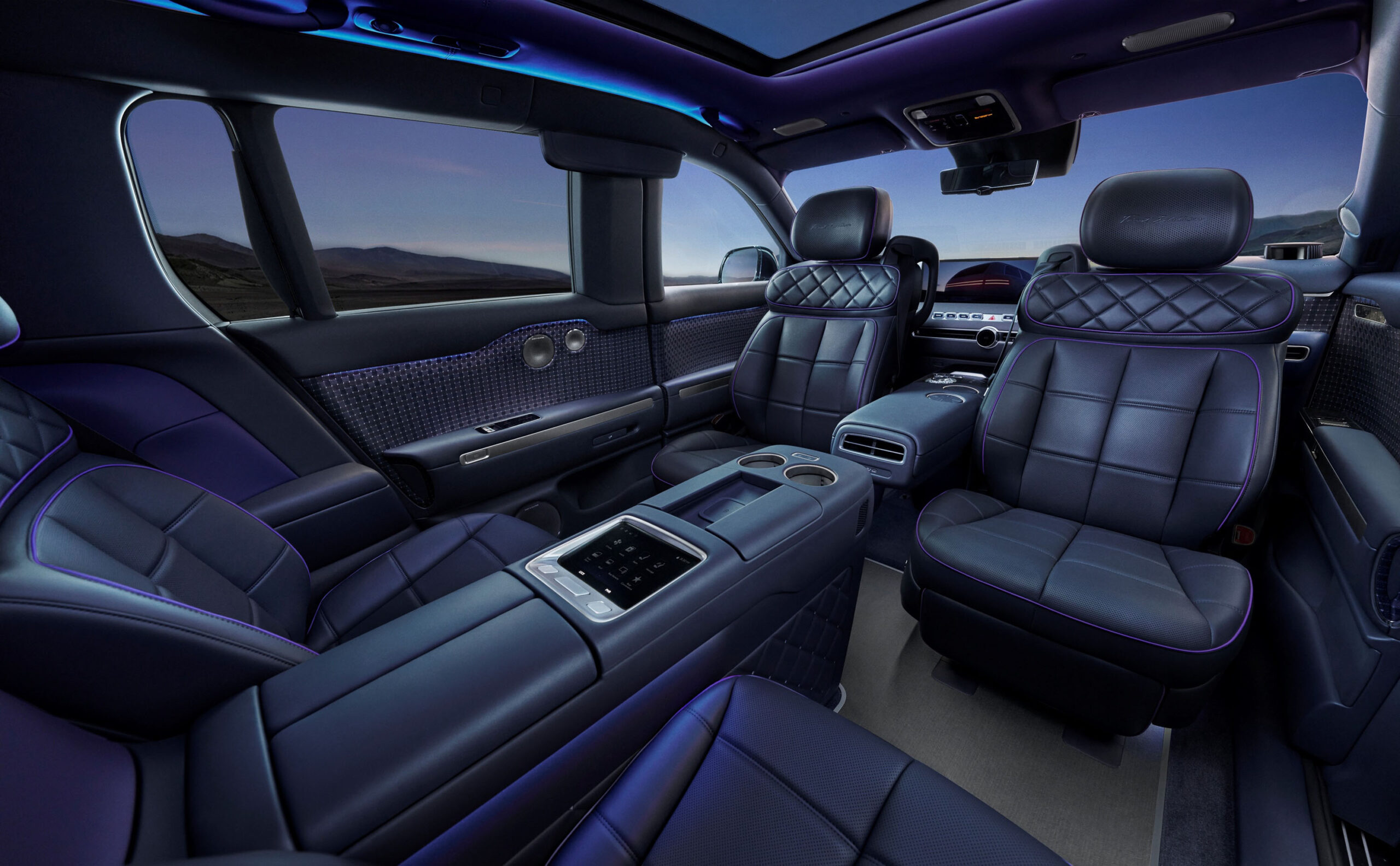
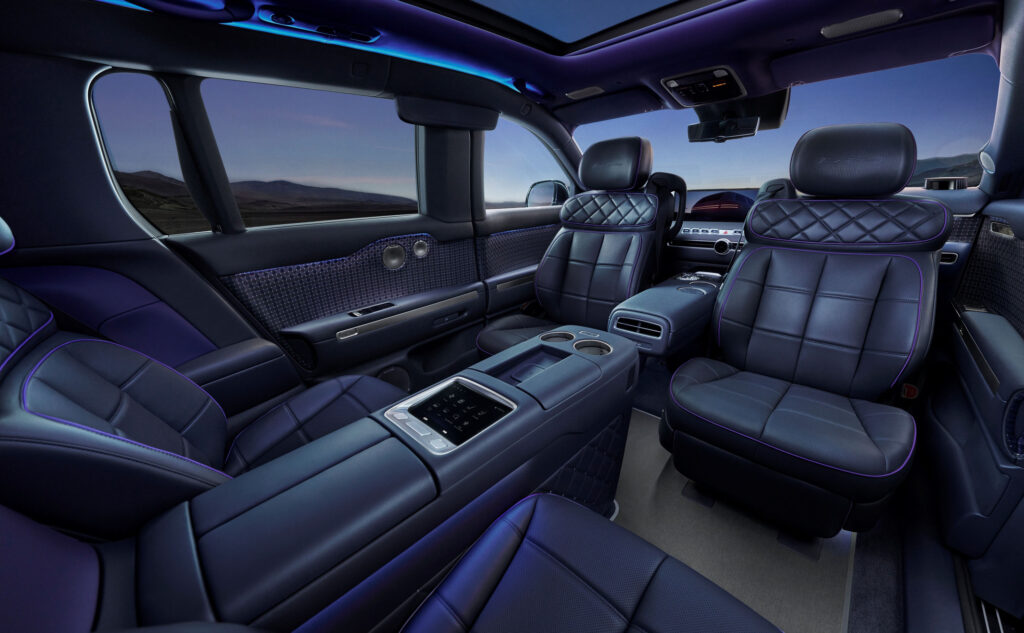
The GV90 Neolun makes this idea literal through its doors and interior layout. Genesis says the front seats can rotate 180 degrees while the vehicle is parked, allowing occupants to sit face-to-face in a lounge-like configuration. This feature, combined with the flat floor and long 3,245 mm wheelbase, shifts the SUV away from a purely driver-focused layout and toward a mobile interior space.
This is where the GV90 reflects a broader trend in electric luxury vehicles. Once the drivetrain is no longer the visual and mechanical center of the vehicle, interior space becomes the new battlefield. The question is no longer simply how fast the vehicle is, but what the cabin allows passengers to do, feel and experience.
In that sense, the GV90 is very much an EV-era flagship. It uses the electric platform not only for performance, but also for architecture.
The Exterior: Korean Restraint at Full Scale
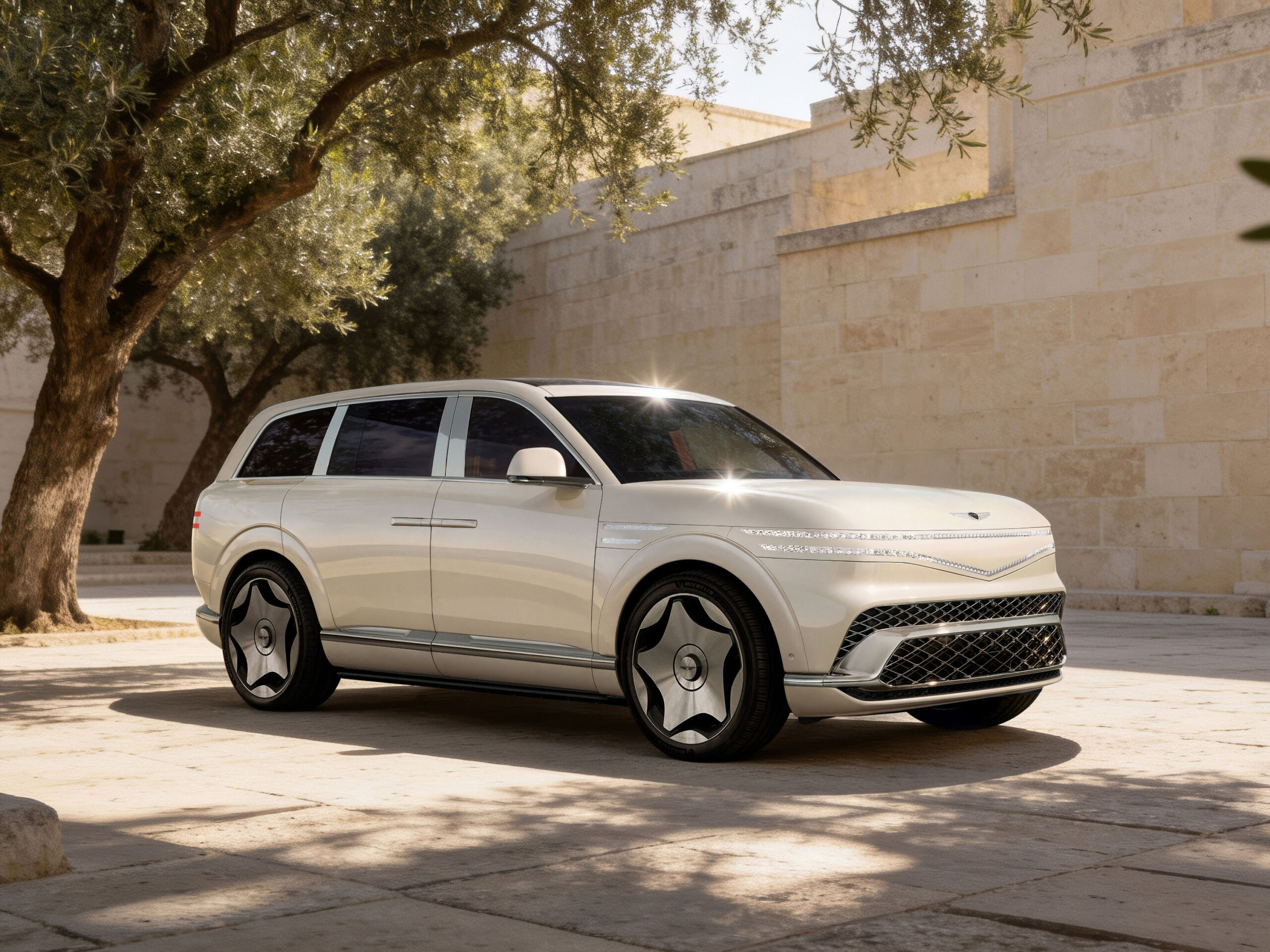
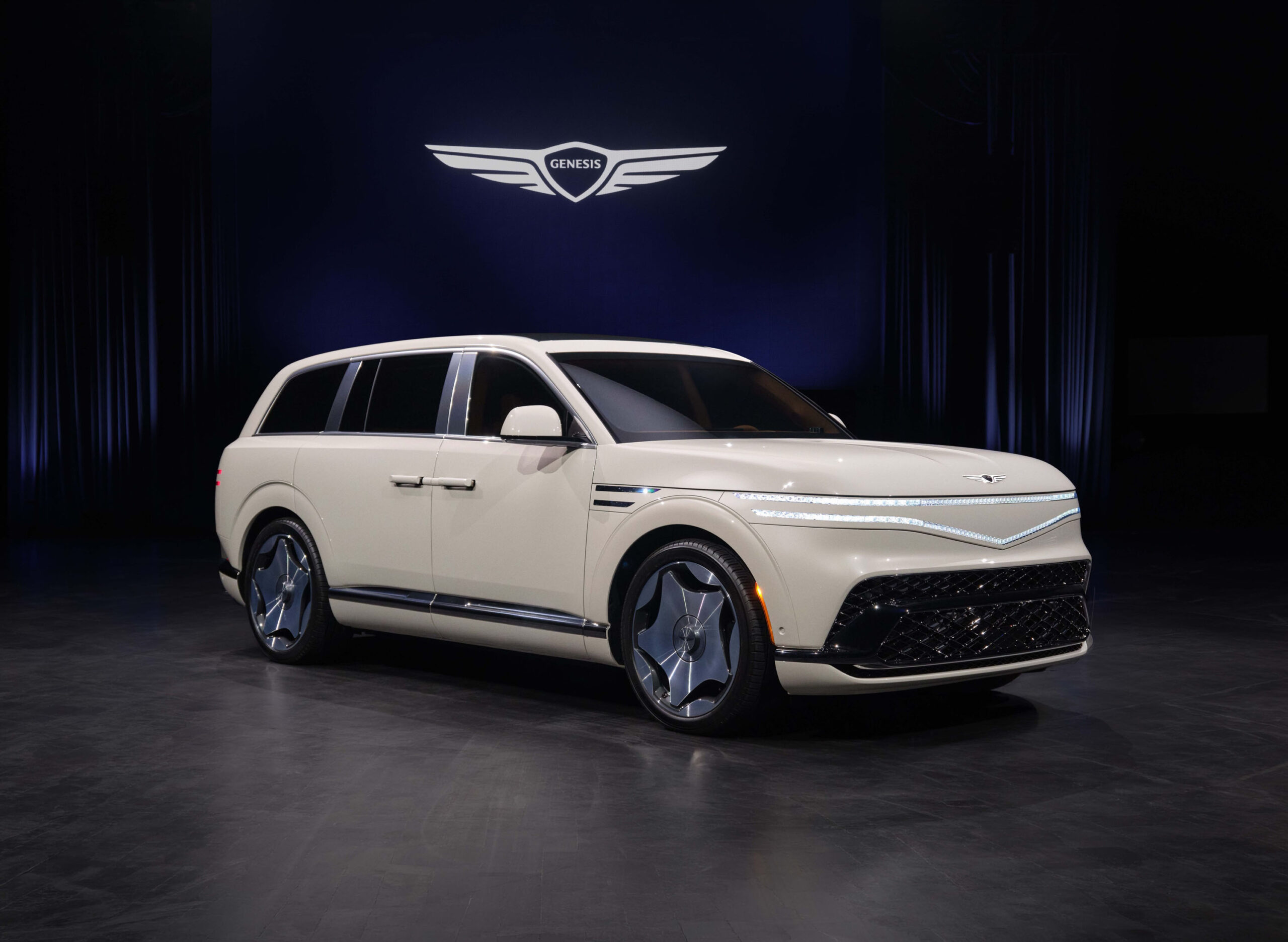
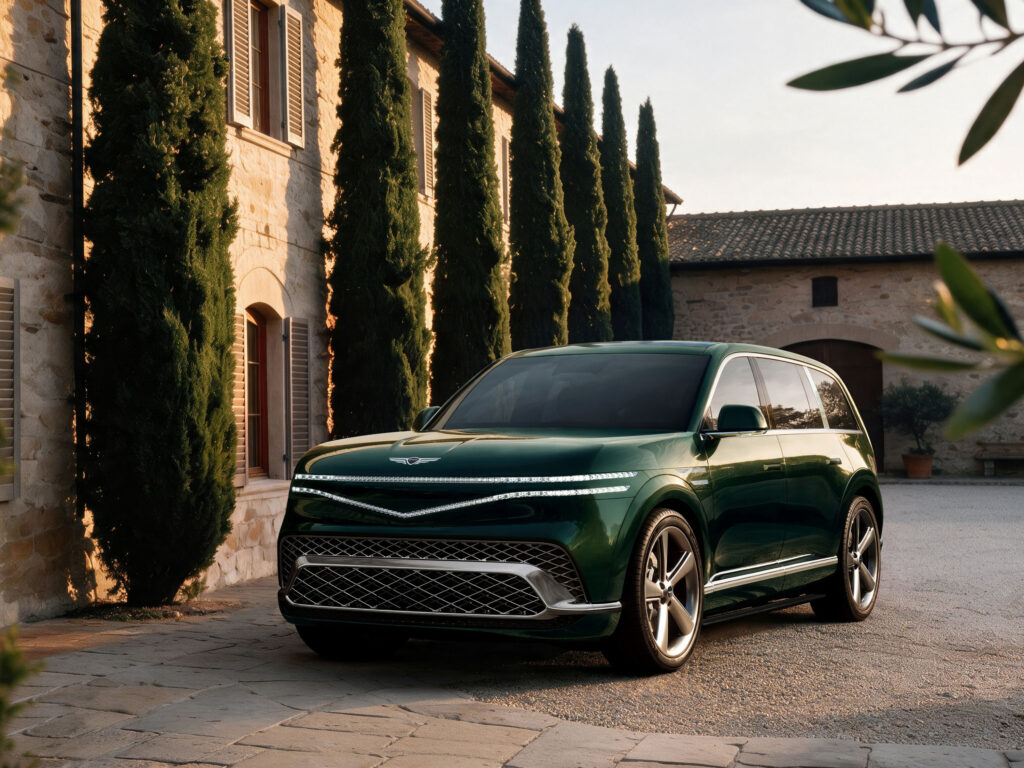
Genesis says the GV90 exterior is inspired by Korea’s traditional moon jar pottery, emphasizing proportion, curve, white space, craftsmanship and the beauty of reduction. The company describes the design as “restrained elegance” rather than aggressive display.
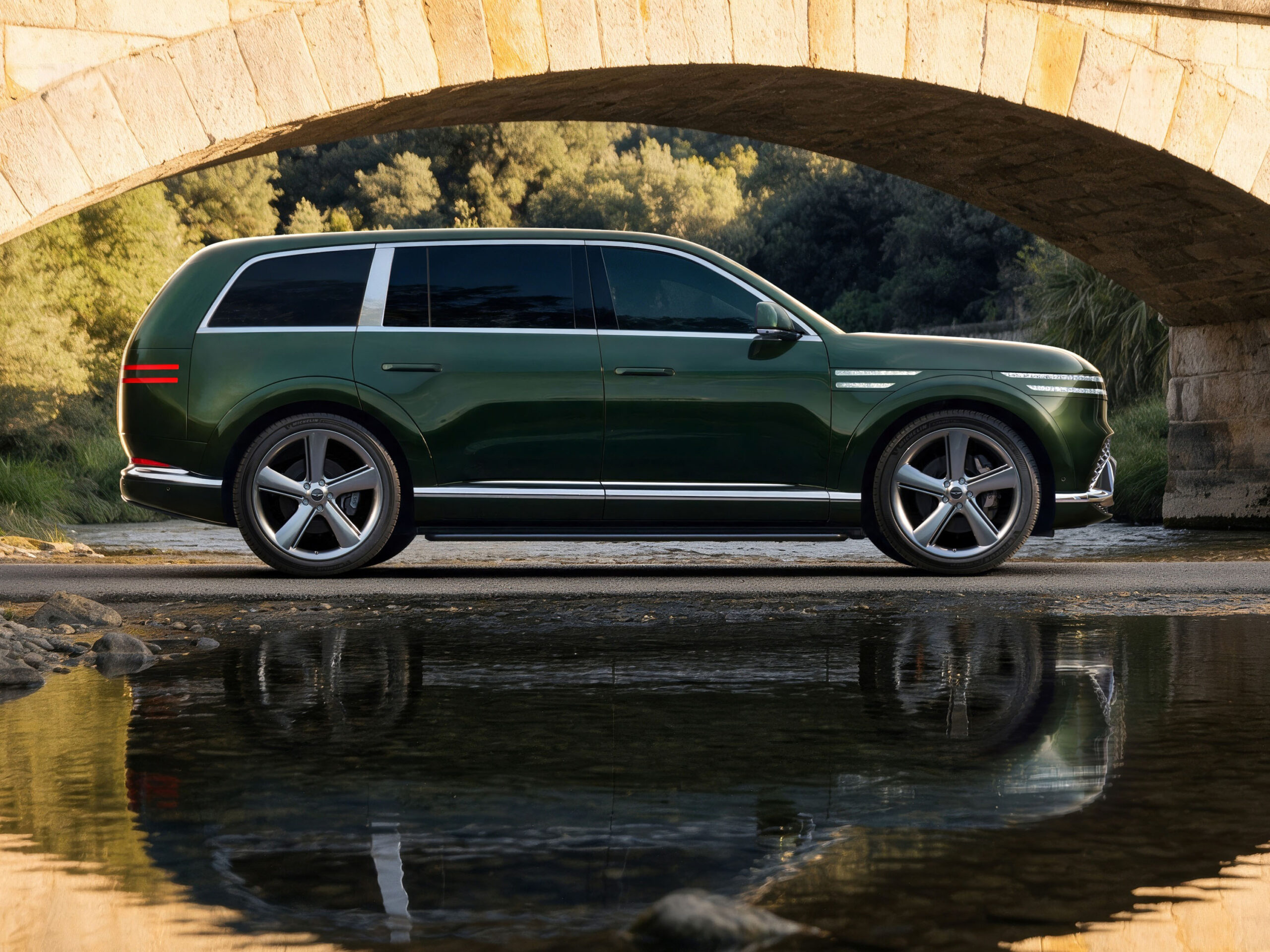
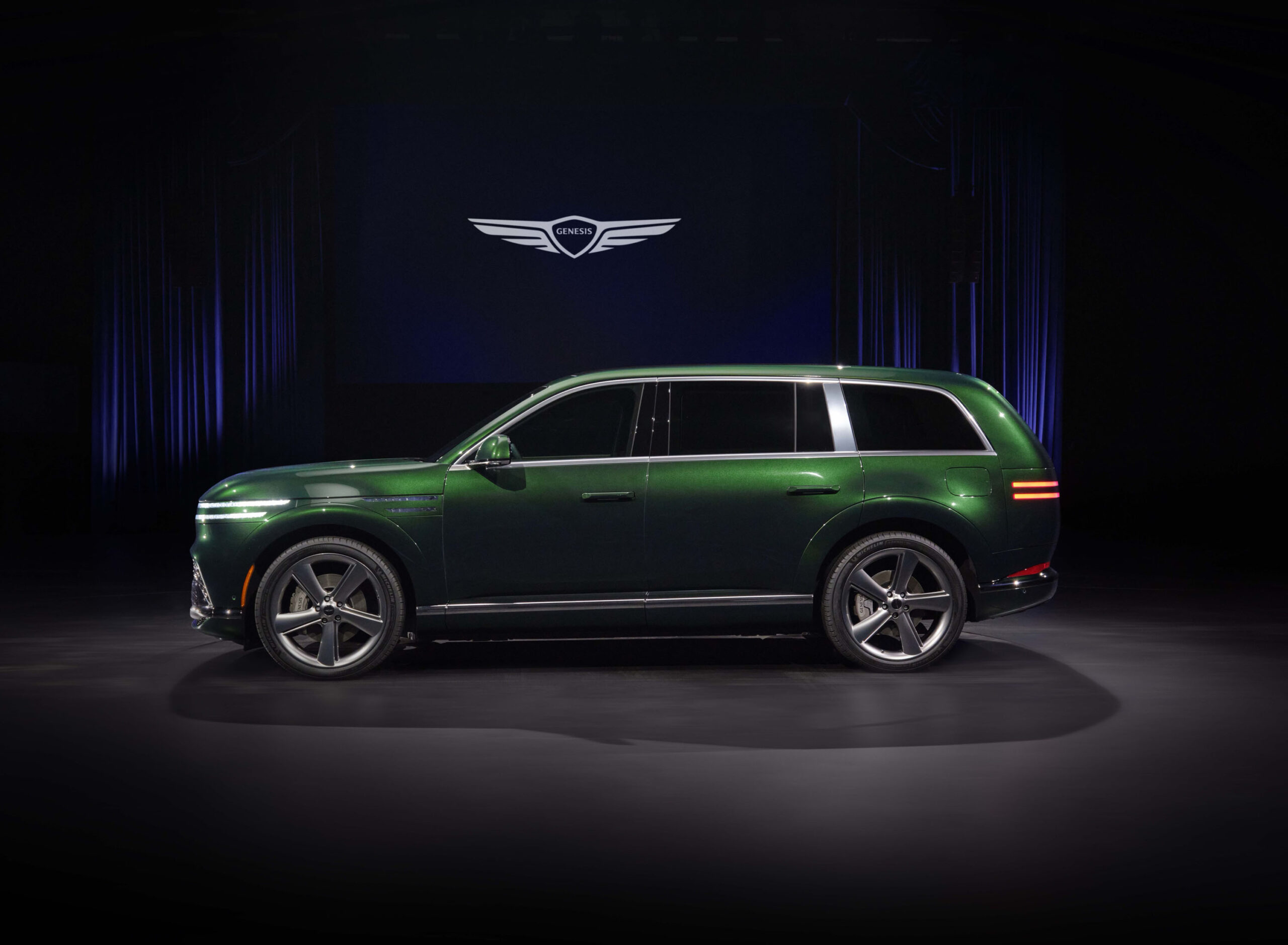
That is an ambitious approach for a vehicle that is 5,285 mm long, 2,030 mm wide and up to 1,825 mm high depending on wheel and tire specification. The risk with a full-size luxury SUV is that it easily becomes too heavy visually. Many flagship SUVs rely on mass, verticality, chrome and intimidation. Genesis appears to be trying something more refined: large scale without excessive decoration.
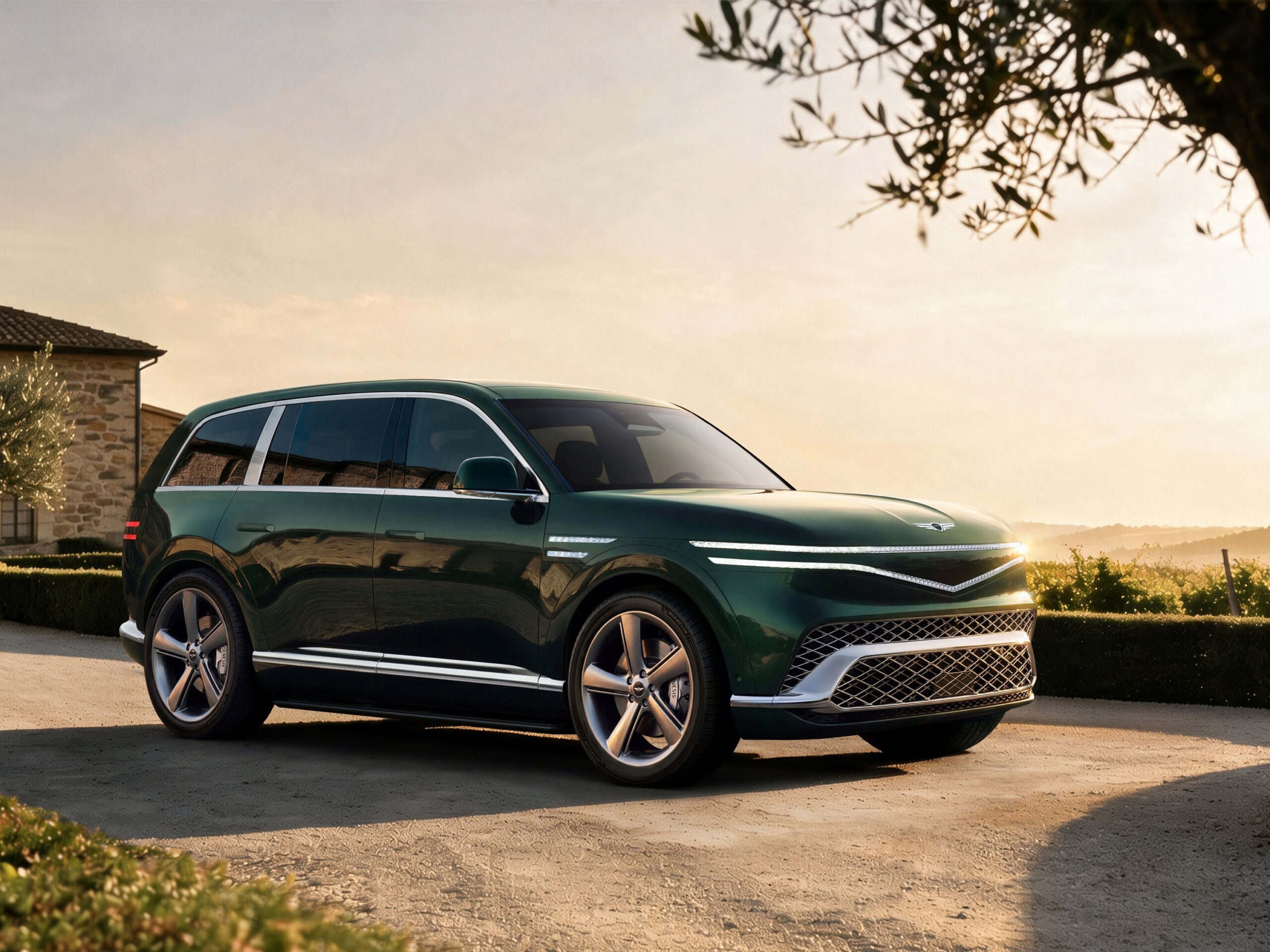
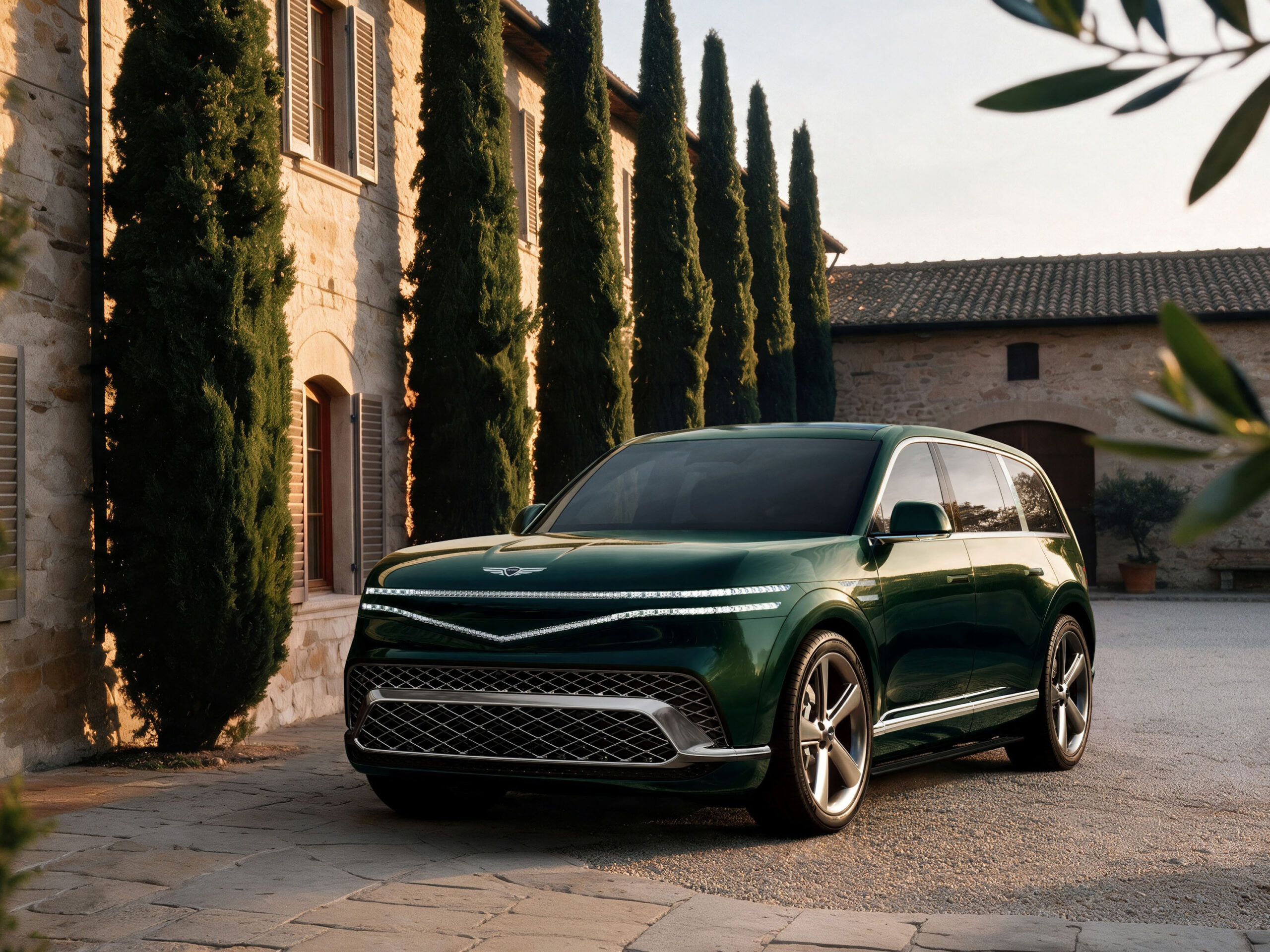
The front uses Genesis’ Wing Face lighting identity with Micro Lens Array headlamps spanning the fascia. The familiar Two-Line graphic remains central to the brand, but here it is applied to a much larger, more imposing vehicle. The lower bumper carries a three-dimensional dual-layer G-matrix patterned chrome grille, giving the front more structure and visual richness without simply copying the traditional combustion-engine luxury grille.
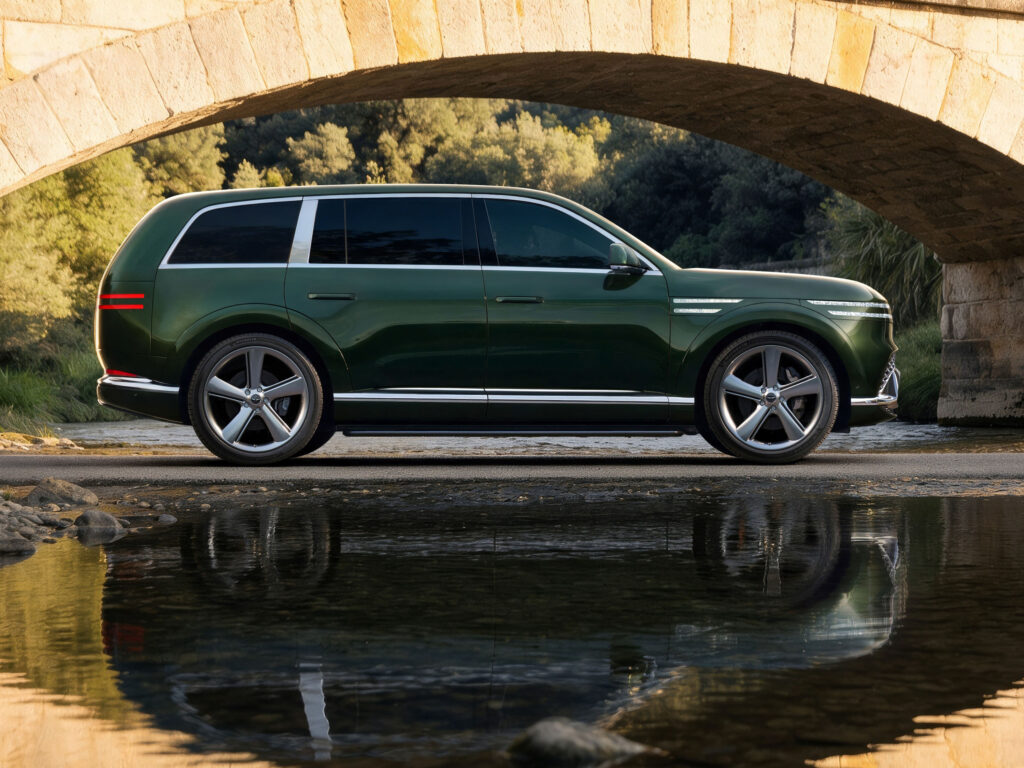
The side view is likely where the GV90 must do the hardest work. A 5.3-meter SUV can easily become slab-sided or overcomplicated. Genesis says the GV90 uses bold but gracefully sculpted fenders and 24-inch forged wheels to create authority. The Neolun model uses anodized aluminum accents between the first and second row windows, while the standard GV90 uses frame-flush door glass for a cleaner look.
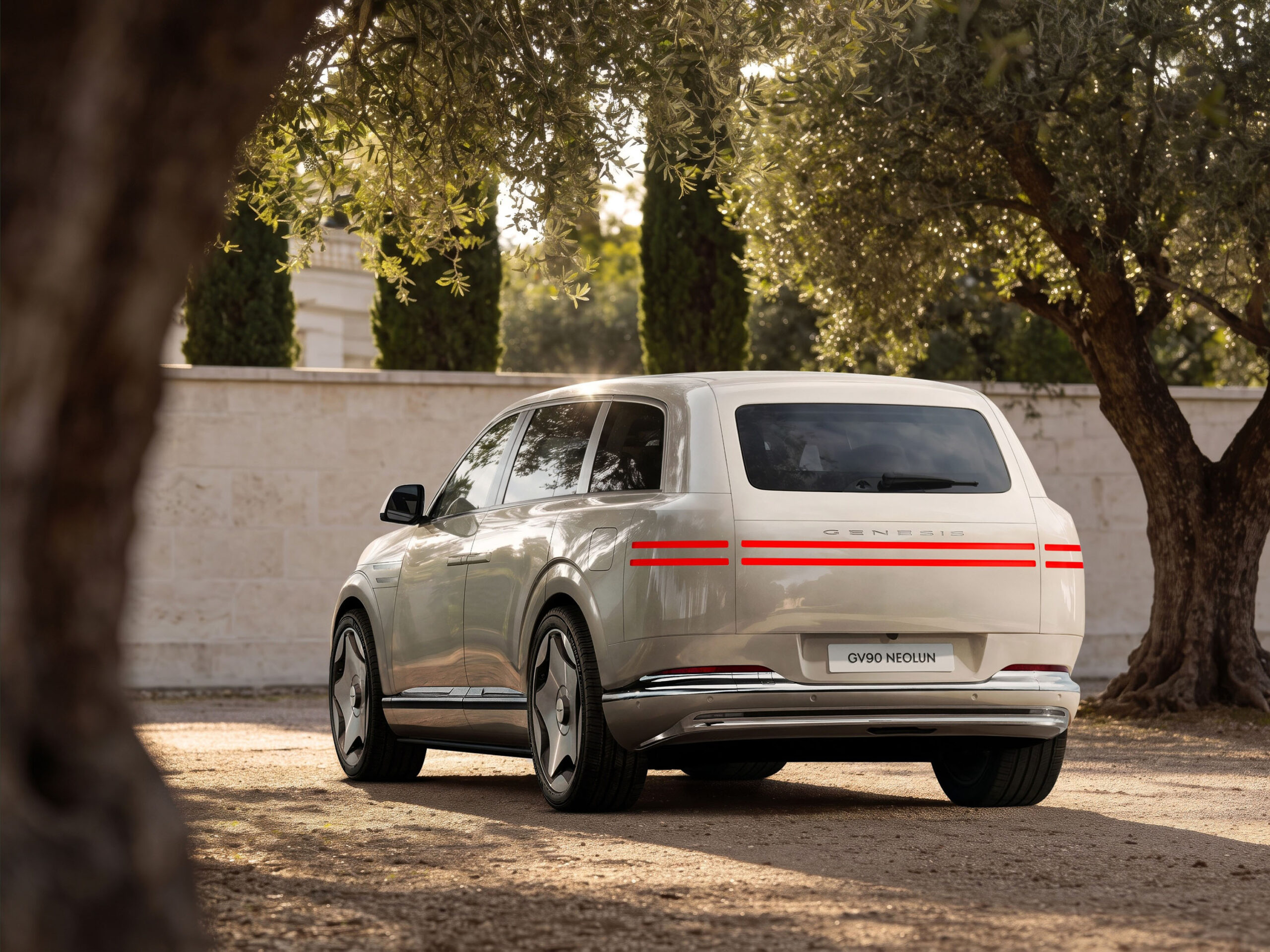
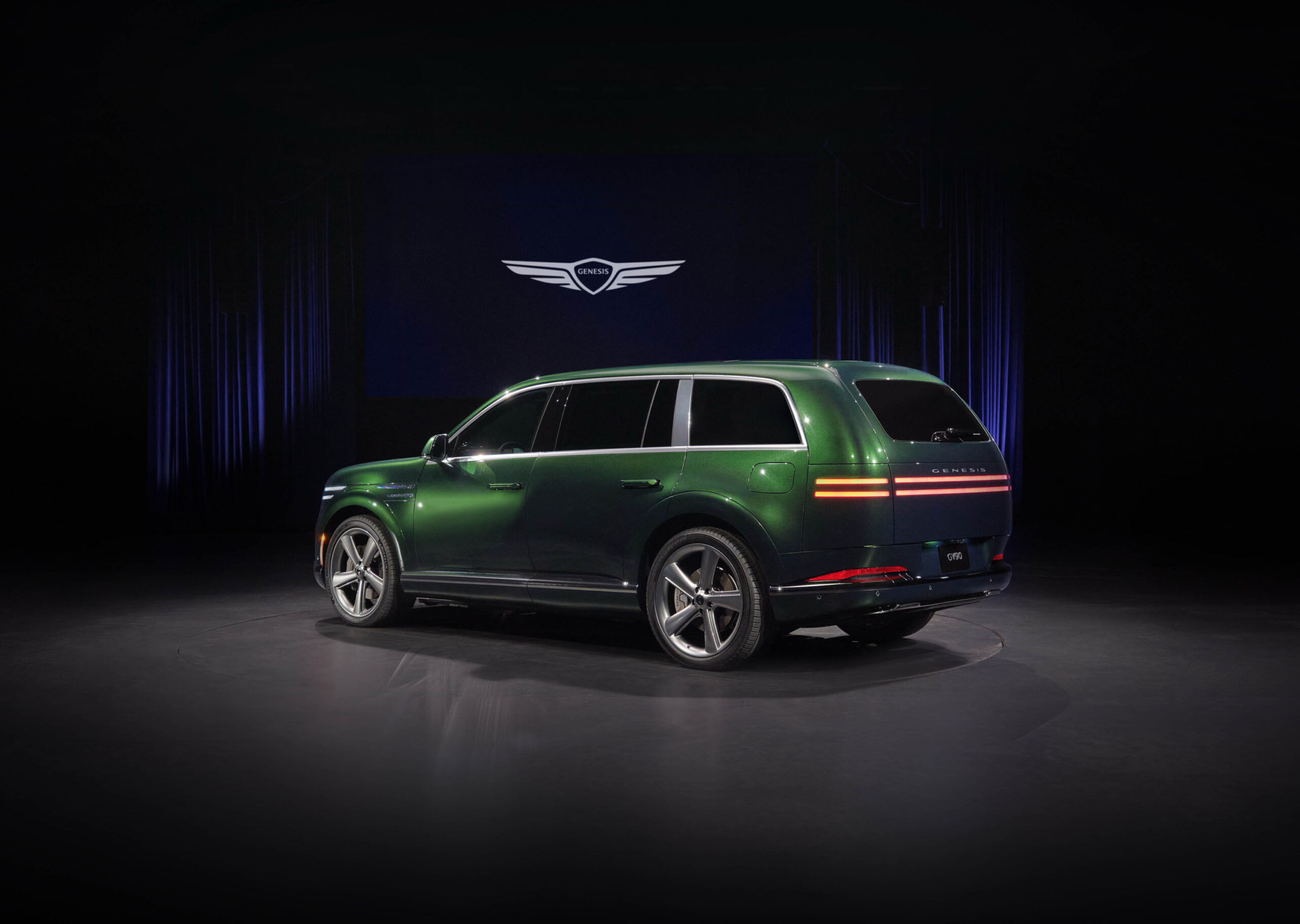
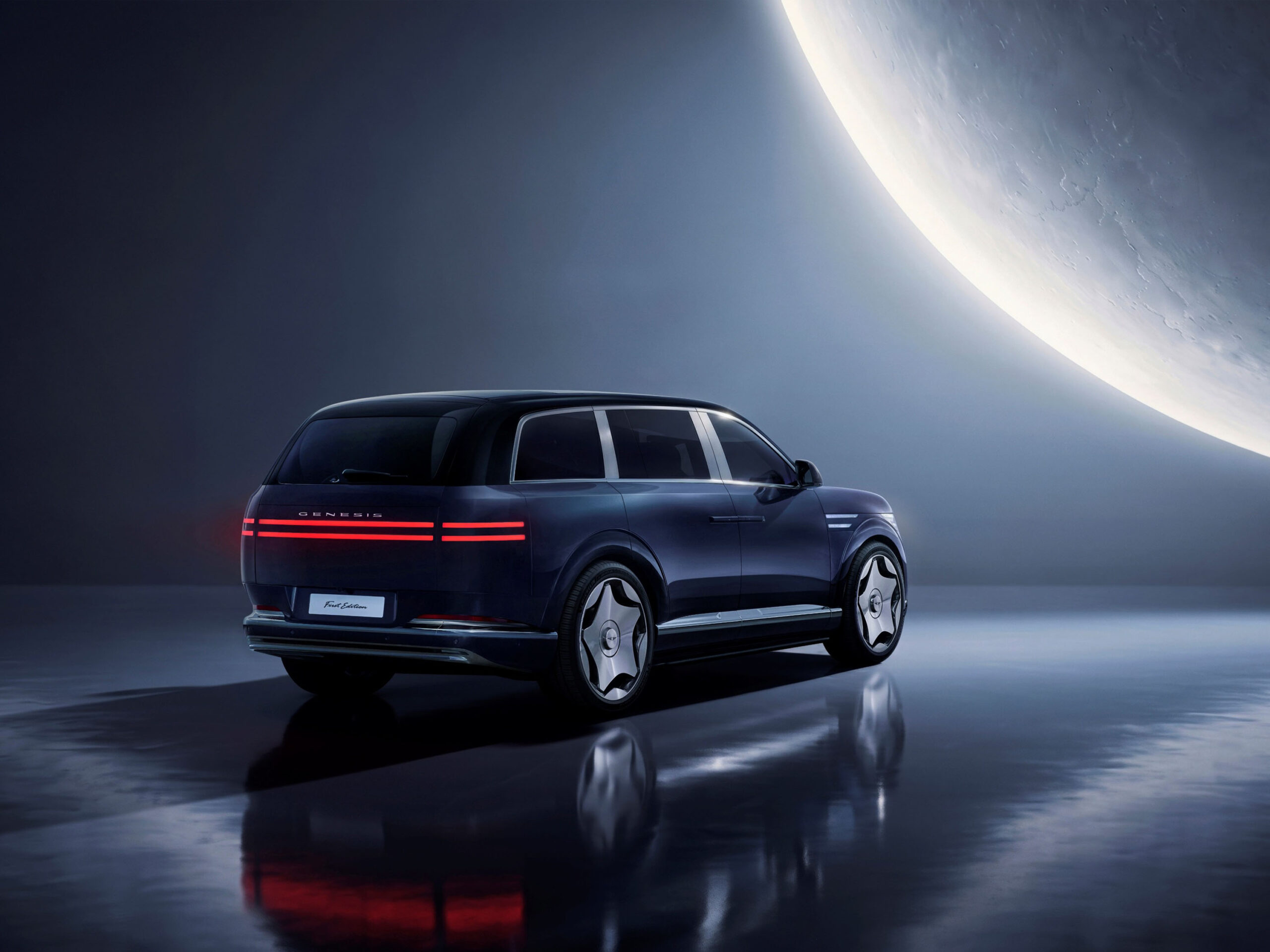
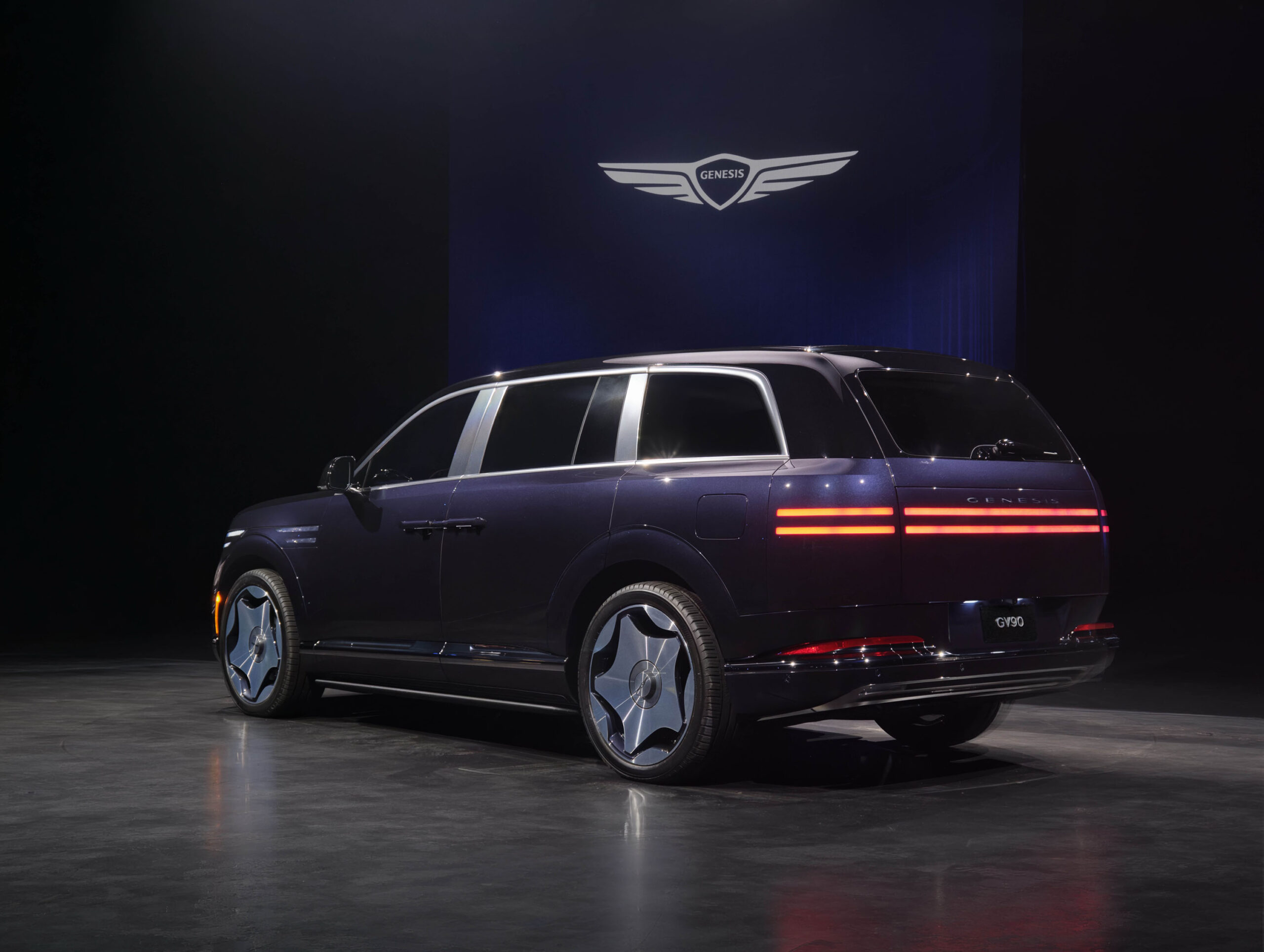
The rear may be the most important design area. Genesis says it deliberately avoided unnecessary decoration, even omitting a rear spoiler, and used flush-mounted surface-emitting taillights and Genesis lettering to create a smooth rear composition.
That restraint is refreshing. Many large electric SUVs are becoming visually noisy, with excessive lighting signatures, black graphic panels, aggressive fake intakes and complicated surfacing. The GV90 seems to be attempting the opposite: a large luxury form that reduces visual clutter. If successful in person, this could be one of the clearest expressions yet of Genesis’ evolving design maturity.
Luxury Through Reduction, Not Addition
Luc Donckerwolke describes the GV90 as an expression of “The Ultimate Majestic Presence,” and says Genesis pursued purity by removing unnecessary elements so that only the essential remains. That is a strong statement because luxury car design often moves in the opposite direction. More chrome, more screens, more lines, more signatures, more animations, more features. Genesis is claiming that the GV90 is defined by subtraction rather than accumulation.
That idea is promising, but also difficult.
Reduction only works when the remaining forms are strong enough. A simple surface must be beautifully proportioned. A quiet rear must have perfect stance. A large body without decoration must have confident architecture. Minimalism is not the absence of design; it is the exposure of design quality.
This is where Genesis has a chance to differentiate itself. German luxury brands often communicate status through precision, technicality and hierarchy. British luxury brands often use tradition and ceremony. American luxury historically leaned on scale and presence. Genesis is trying to build a modern Korean premium language around calmness, craft, technology and hospitality.
The GV90 is the biggest test yet of whether that language can scale.
The Interior: A Bespoke Living Space
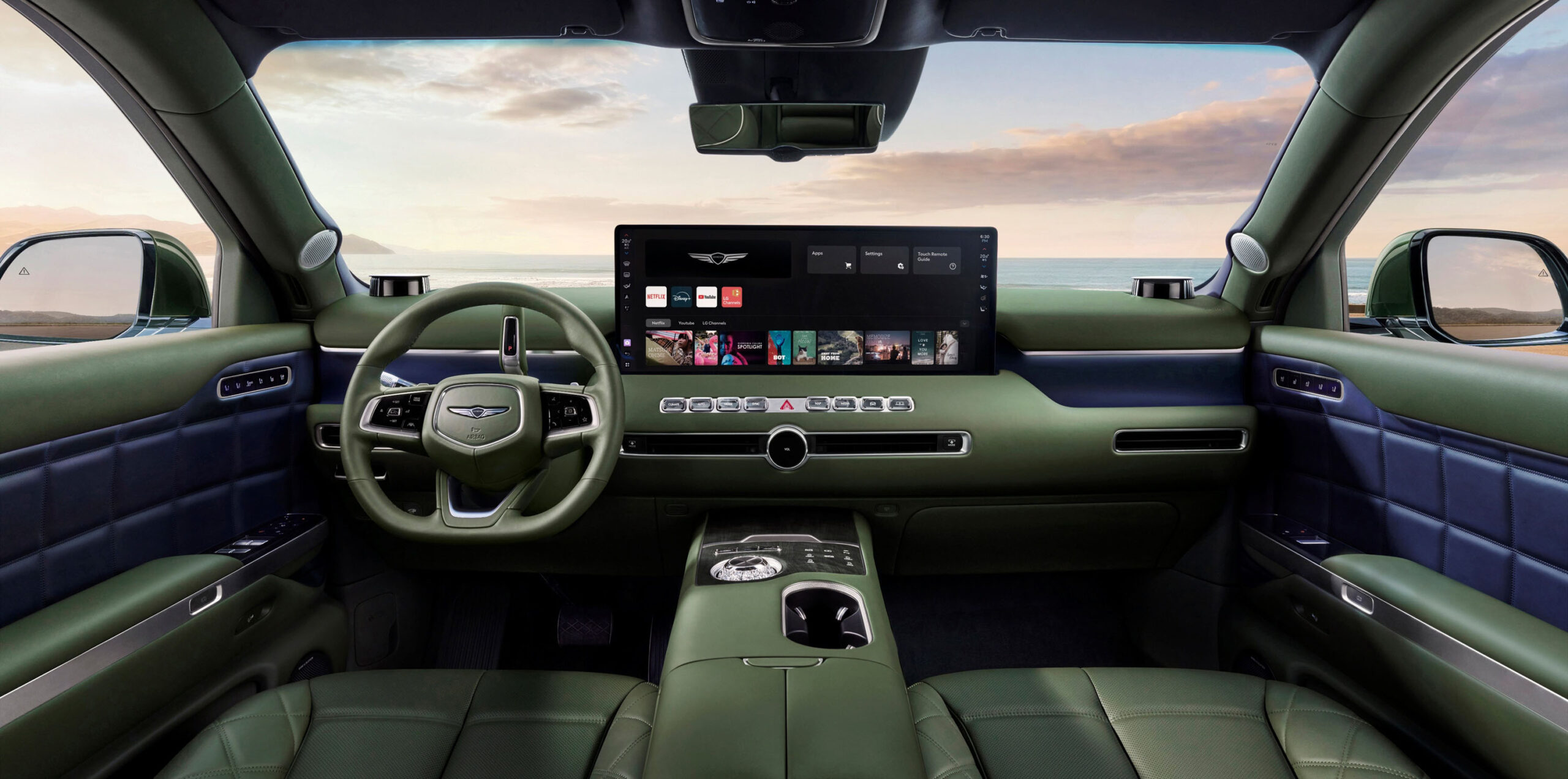
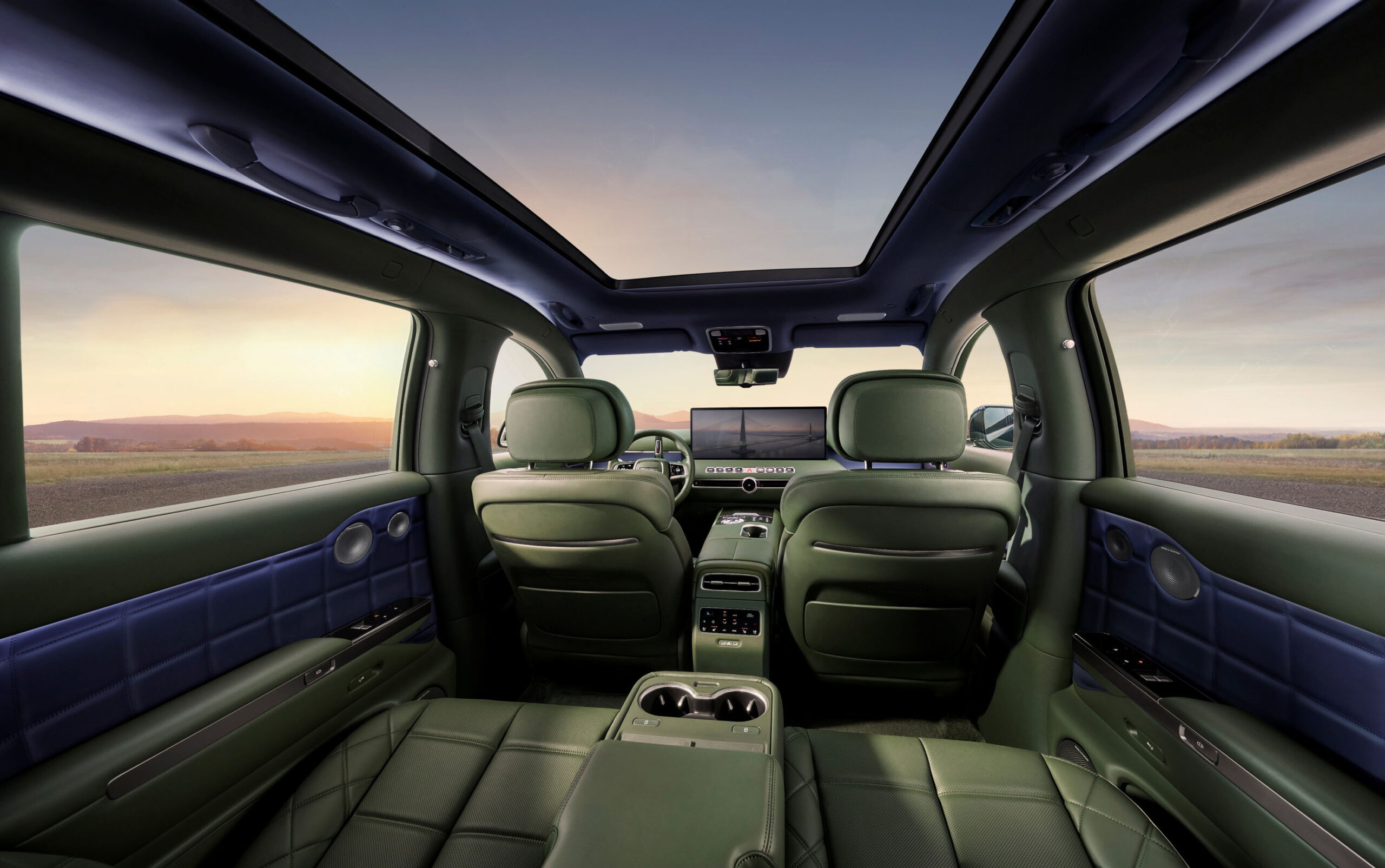
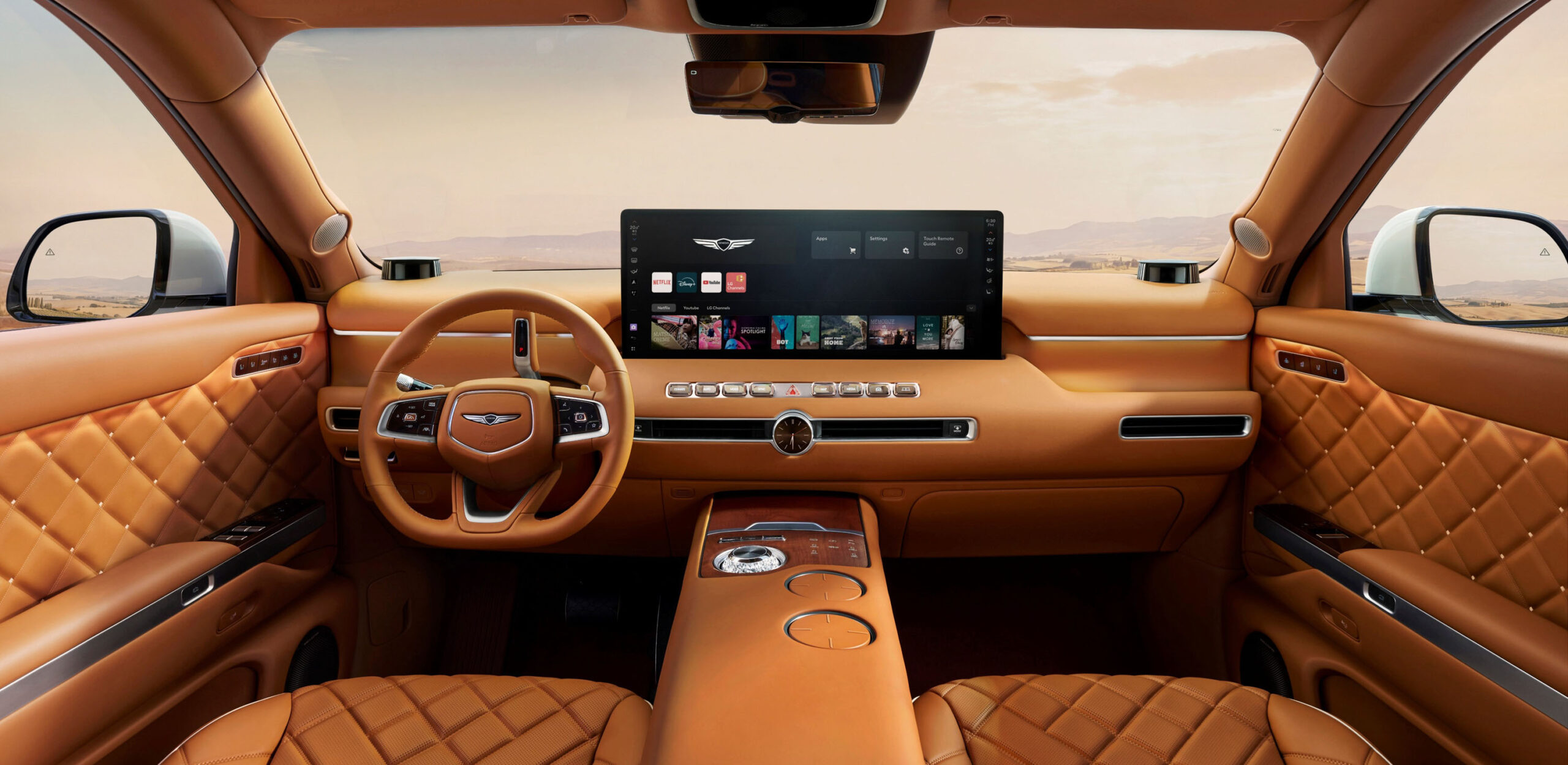
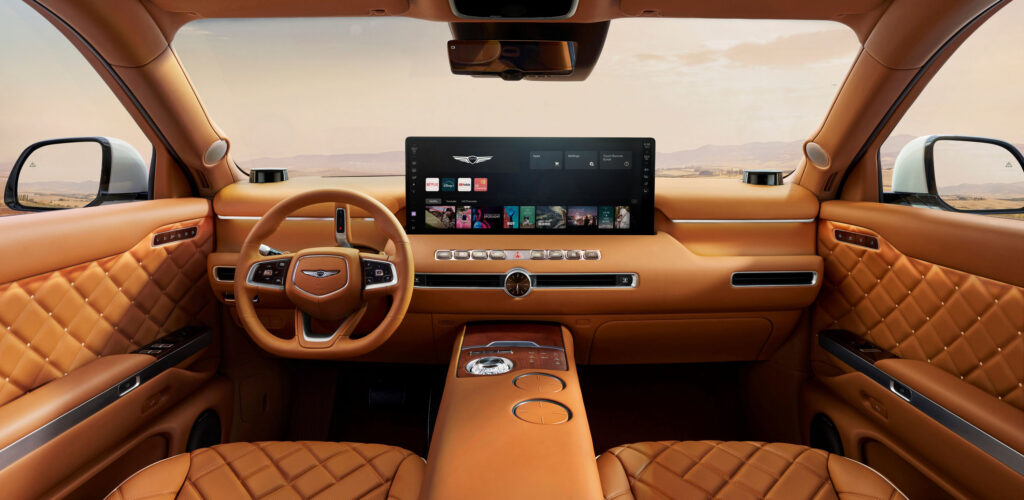
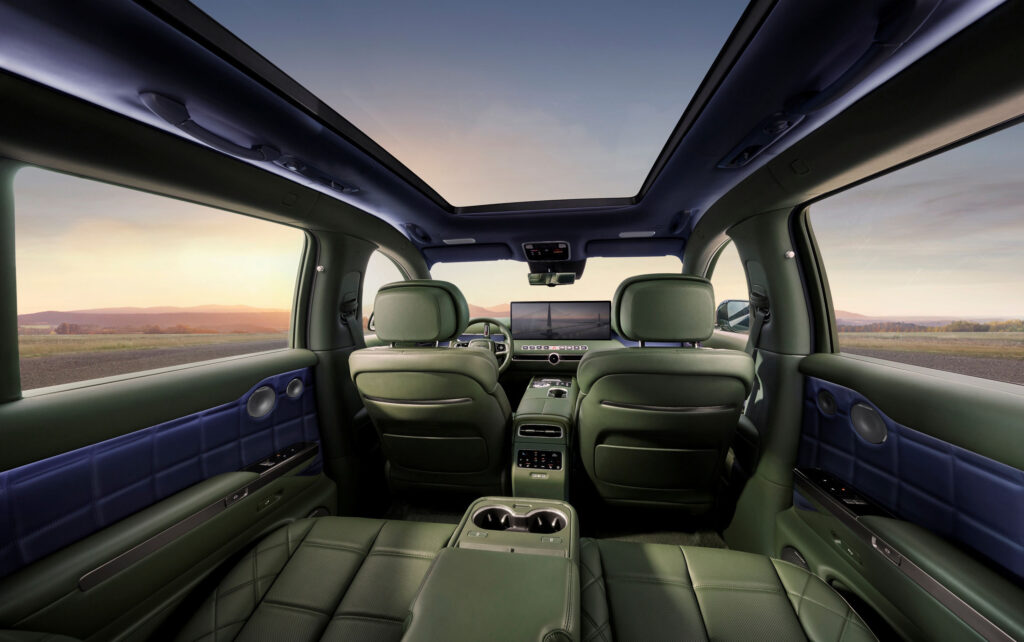
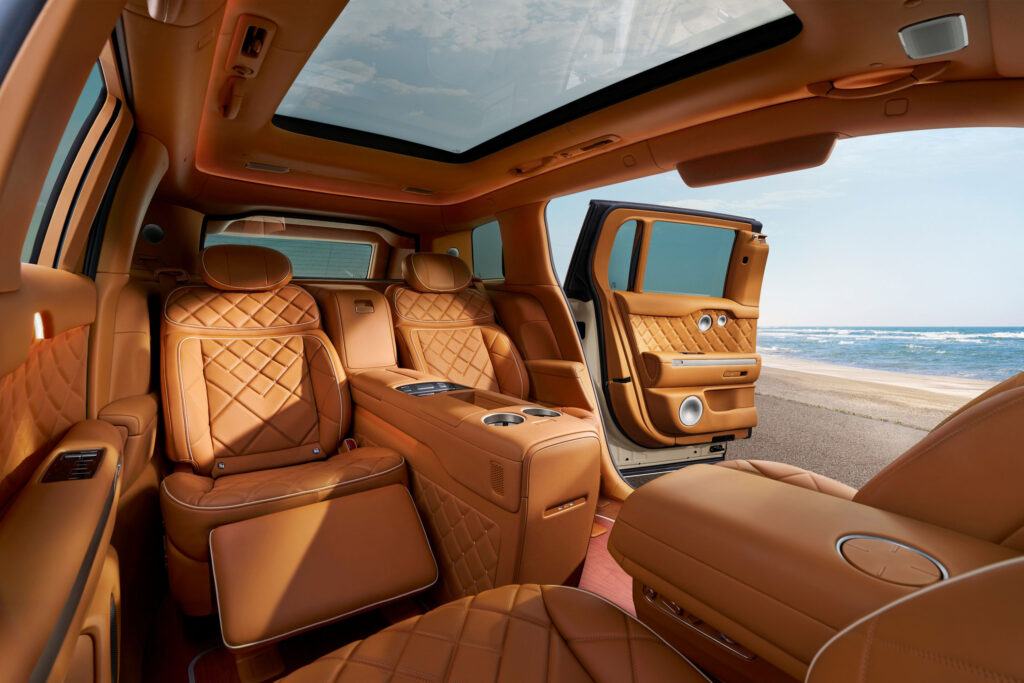
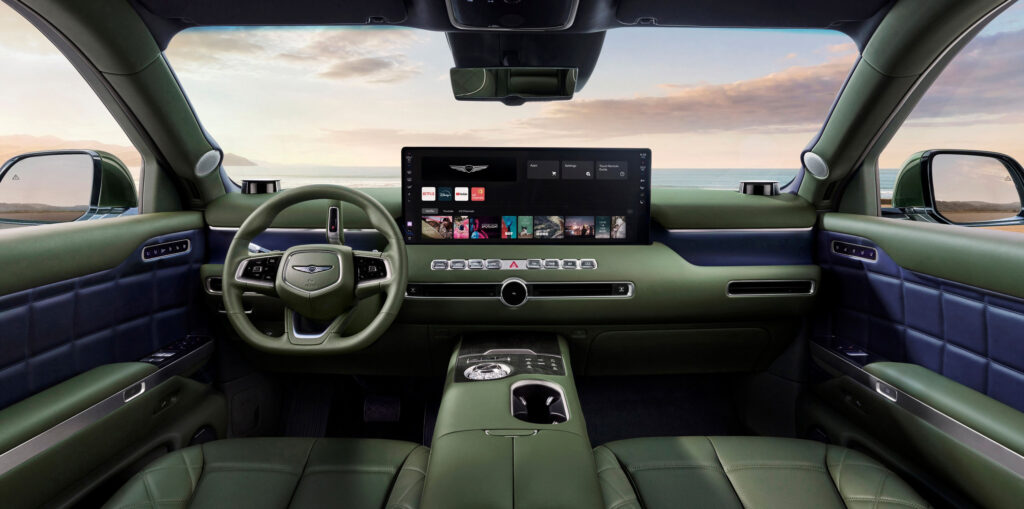
Genesis describes the GV90 interior as a bespoke living space rather than simply a cabin. The dashboard and door trims use a dual-layer structure with a recessed center section, allowing contrasting materials to define inner and outer planes. The seats, console and display are positioned like luxury furniture, aiming to create the atmosphere of a sophisticated lounge.
This is exactly the right territory for a flagship EV. In a large electric vehicle, the interior should not simply replicate the old dashboard-and-tunnel logic of a combustion car. The flat floor, long wheelbase and silent drivetrain allow a more architectural approach.
The GV90’s material strategy also seems more sophisticated than the usual luxury checklist. Genesis mentions natural wood, genuine stone and wool cashmere, alongside premium leather and semi-aniline leather depending on configuration. Interior color combinations include more adventurous palettes such as Veiled Indigo / Puglia Green, Tyrian Purple / Travertine Beige and Saddle Brown / Shadow Gray. The Neolun version adds its own exclusive combinations.
This matters. Modern luxury is increasingly about atmosphere, not just specification. The ability to combine color, light, texture, warmth and tactility will define whether these new EV flagships feel genuinely premium or merely expensive.
The GV90 Neolun Executive Suite takes this further with a four-seat configuration, real wood veneer floor, radiant floor heating inspired by traditional Korean ondol underfloor heating, a comfort partition, roll blinds, refrigerator, integrated tables and a Smart Vision Roof using PDLC film with six independently controllable zones.
That is not ordinary SUV thinking. That is closer to private aviation, luxury rail or limousine architecture.
Technology as Theater
One of the most interesting aspects of the GV90 is that Genesis uses technology not only functionally, but theatrically.
The New Power Control System eliminates the start button. The vehicle powers on as the door handle is pulled and the door closes automatically. Then the Motion Column Shifter moves into position, the Crystal Sphere Controller rotates to reveal its integrated controller, and the tweeter covers on the dashboard slide open. The car communicates readiness through movement.
This is luxury theater, but it is also interface design. Instead of simply adding another digital prompt, Genesis uses physical motion and material transformation to tell the driver that the vehicle is awake. That is more emotionally engaging than a button or chime, and it fits the brand’s idea of hospitality.
The pop-up center OLED Cinematic Display is another example. During normal driving, the 23.6-inch screen integrates cluster, navigation and media. When parked, the display can rise by 90 mm and become a 24.6-inch cinematic screen for multimedia use. Genesis also replaces a separate instrument cluster with a 25-inch head-up display.
This is a fascinating shift. Many carmakers are simply putting larger and larger screens in front of the driver. Genesis appears to be separating driving information from parked entertainment. The HUD becomes the primary driving information layer, while the center display becomes more flexible and experiential.
That is a more considered approach than the usual “bigger screen equals more advanced” formula.
The AI-Defined Luxury Vehicle
The GV90 also points toward the next phase of the software-defined vehicle. Genesis says the car uses Pleos Connect, Hyundai Motor Group’s next-generation infotainment platform based on Android Automotive OS, with third-party vehicle apps available through the Pleos App Market. Occupants can also interact through natural conversation with the onboard generative AI agent, Gleo AI.
This is significant. Luxury is no longer only mechanical, material or visual. It is becoming conversational, predictive and adaptive. The car is expected to understand, respond, assist and personalize.
That changes the role of automotive design.
The interior is no longer just a place with seats, screens and controls. It becomes an intelligent environment. The question is not simply whether the system works, but whether it feels trustworthy, intuitive and respectful. A flagship vehicle must not behave like a tech demo. It must use technology in a way that feels calm, natural and dignified.
If Genesis can make Gleo AI feel genuinely useful rather than gimmicky, it could strengthen the GV90’s luxury proposition. If it feels intrusive, inconsistent or overly digital, it could work against the calm atmosphere the brand is trying to create.
Safety as a Design Feature
The GV90 announcement places unusual emphasis on safety. Genesis says the vehicle uses a new aluminum frame that increases rigidity while reducing weight, an impact-absorbing structure, extensive use of ultra-high-strength steel, enhanced battery protection and a 12-airbag system including what it describes as the world’s first Roof Airbag.
The Roof Airbag is intended to deploy in severe rollover events to cover the roof glass, reduce ejection risk and mitigate injuries from roof contact. Genesis also mentions dual-depth passenger airbags, seat-cushion airbags, extended curtain airbags covering the third row, larger side airbags and an in-cabin monitoring system that identifies occupant type and seating status to optimize safety systems.
This is important because the Neolun door architecture could easily raise questions. A hidden B-pillar coach-door structure looks spectacular, but customers will need confidence that it is not a compromise. Genesis clearly understands this, which is why the safety story is so central to the vehicle’s introduction.
For design, this reinforces a larger truth: the future of luxury will not be only about visible beauty. It will also be about invisible reassurance.
Performance Without Aggression
The GV90 is built on Genesis’ eMP platform for its flagship electric vehicle. It uses a 123.5 kWh battery, the largest capacity among Hyundai Motor Group electric vehicles according to Genesis, and is estimated to achieve approximately 500 km of range in seven-seat form based on internal R&D testing. Genesis also claims 10 to 80 percent charging in 22 minutes using a 350 kW fast charger.
Performance is substantial: 490 kW and 800 Nm from front and rear motors. The vehicle also introduces Dual E-LSD for Hyundai Motor Group, with electronic limited-slip differentials at both front and rear motors. Multi-chamber air suspension, electronically controlled dampers, rear-wheel steering up to five degrees and large braking hardware complete the dynamic package.
Yet the way Genesis frames the performance is important. This is not being presented as a brutal high-performance SUV. It is about effortless power, refined ride comfort, control and serenity. That fits the brand better. A flagship Genesis SUV should not need to shout. It should move with authority.
Rear-wheel steering is especially relevant for a vehicle of this size. At 5,285 mm long, the GV90 needs maneuverability as much as it needs high-speed stability. Genesis says the system can reduce the turning radius to that of a mid-size car, which would be a major practical benefit in urban environments and parking situations.
Sensory Luxury
The GV90 places strong emphasis on sensory experience. The Bang & Olufsen Premier 3D sound system uses 25 speakers and Dolby Atmos. The Ambient Glow lighting flows from dashboard to doors and is integrated into the headliner and console. Genesis says the cabin can evoke the feeling of a private art gallery.
That phrase is telling. Many luxury cars describe themselves as lounges, but Genesis seems to be aiming for something quieter and more curated. The use of light, indirect illumination, soft materials, warm surfaces and acoustic isolation suggests a cabin designed less around spectacle and more around mood.
The massage seats use 15 individual air cells and pulse vibration. The heated windshield uses a metal coating to generate heat directly in the glass, while radiant heat warmers are integrated into armrests, side panels and door trims.
This is an important detail because EV luxury is not only about silence. It is also about thermal comfort, energy management and reducing the need for aggressive climate control. Radiant warmth feels more natural and can also be more efficient when carefully applied.
The First Edition and the Problem of Exclusivity
Genesis also unveiled the GV90 Neolun First Edition, an ultra-exclusive version based on the four-seat Executive Suite. It features two-tone exterior palettes, body-color 24-inch forged wheels, wool cashmere garnishes and special engraving on the Crystal Sphere Controller, headrests and doorsteps.
The First Edition makes sense. A flagship needs a halo specification, and Genesis needs to show that it can play in the ultra-premium personalization space. The color combinations — including Jaipur Rose / Seychelles Beige, Vik Black / Baena Green and Vik Black / Sonoran Navy — suggest Genesis is willing to move beyond predictable black, silver and white luxury formulas.
The challenge will be restraint. Personalization can easily become decoration. Genesis’ own design argument is about reduction, calmness and essential beauty. The First Edition must therefore feel curated, not merely loaded.
A Real Flagship Moment for Genesis
Genesis has grown quickly, but the GV90 feels like a different kind of milestone. Sedans such as the G80 and G90 established credibility. The GV80 gave the brand a strong SUV presence. But the GV90 is different because it attempts to create a full luxury ecosystem around the vehicle: architecture, entry ritual, lounge interior, AI interface, advanced safety, sound, lighting, material culture and chauffeur-style rear-seat experience.
That is what a true flagship must do. It cannot simply be a larger version of existing products. It must define the top of the brand’s worldview.
The GV90 appears to do that.
Its strongest idea is not the battery, the screen, the power output or even the coach doors. Its strongest idea is that Genesis is trying to make Korean hospitality the foundation of a luxury vehicle. That gives the car a cultural and emotional basis, rather than relying only on technology.
Final Assessment
The Genesis GV90 is important because it shows a young luxury brand becoming more confident in its own identity. It does not appear to be chasing German precision, British aristocracy or American excess. Instead, it is building a flagship around Korean restraint, craft, spatial generosity and ceremony.
The GV90 Neolun, in particular, could become a defining Genesis model if the dramatic door architecture, lounge interior and technology theater work as convincingly in reality as they do in concept. The challenge will be execution. A vehicle this ambitious must feel effortless. The doors must operate with perfection. The AI must be intuitive. The pop-up display must feel premium rather than gimmicky. The materials must justify the flagship positioning. The minimalist exterior must have enough presence in person to avoid becoming anonymous.
But the direction is compelling.
In an electric luxury market increasingly filled with large, smooth, screen-heavy SUVs, Genesis is trying to add meaning. The GV90 is not just another big EV. It is a statement that the future of luxury may be less about domination and more about welcome.
If Genesis can deliver on that promise, the GV90 could become the vehicle that turns the brand from an impressive challenger into a true global luxury name.