How DAF Trucks Connects Design Heritage to an AI-Augmented Future
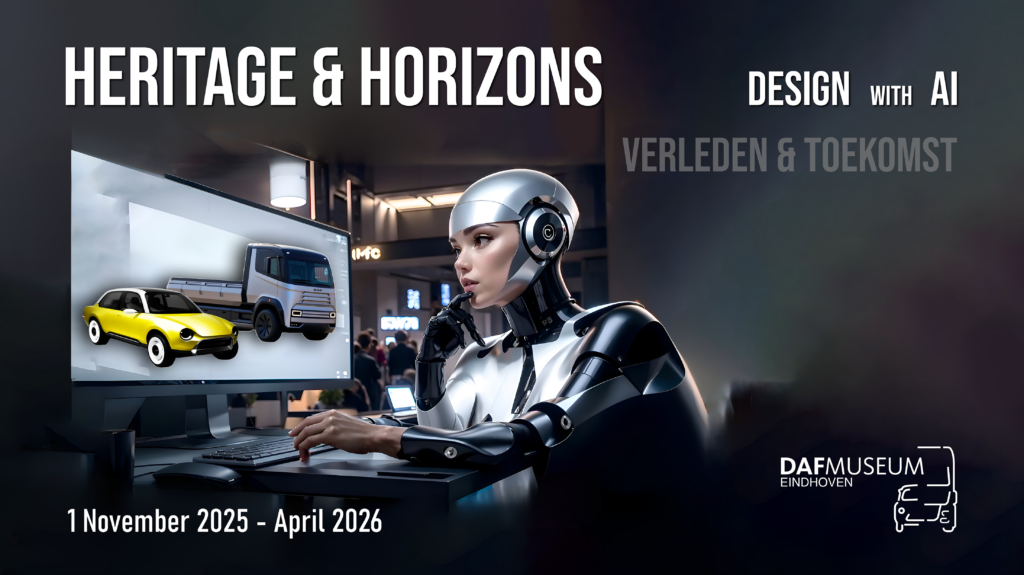
Most museum exhibitions about vehicle design look backward. This one does something more ambitious: it uses the past as fuel for the future.
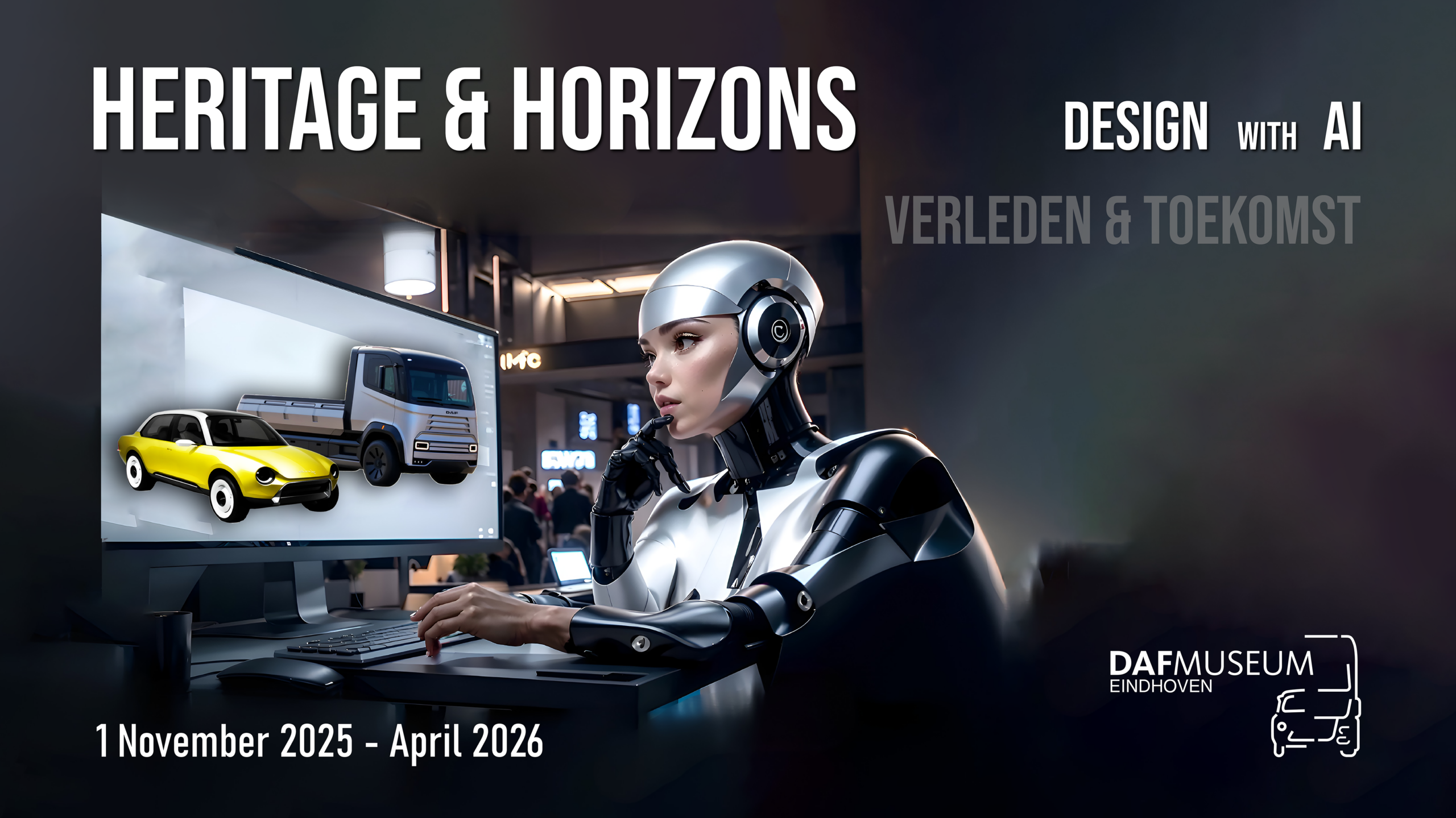
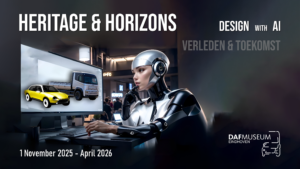
At the DAF Museum in Eindhoven, Design with Artificial Intelligence – Heritage & Horizons explores how artificial intelligence is entering transportation design as a practical, everyday tool, while also reminding us that the strongest design futures are usually built on clear identity, craft, and continuity. The exhibition runs through 30 April 2026 and is paired with a book of the same name, positioning this moment as something worth documenting, not just demonstrating.
For Car Design TV readers, the key question is simple: what does AI actually change inside a design process, especially in a sector as constraint-driven as truck design? This exhibition offers a grounded, design-led answer.
Why this exhibition is different
It would be easy to fill a gallery with AI images and call it innovation. Heritage & Horizons takes a more credible route: it places AI inside a context of real design history, real brand values, and real constraints.
DAF is an ideal case study because truck design has always been about more than styling. In commercial vehicles, every design decision carries performance consequences: driver visibility, aerodynamic drag, serviceability, packaging, regulation compliance, durability, and manufacturing reality. The “freedom” a designer has is often the freedom to solve problems elegantly, not the freedom to ignore them.
That’s precisely where AI becomes interesting. When the solution space is constrained, the cost of exploring alternatives rises quickly. AI can reduce that cost, accelerating iteration and widening the range of plausible directions designers can evaluate.
Heritage and horizons: what the visitor experiences
The exhibition is structured like a bridge between two worlds.
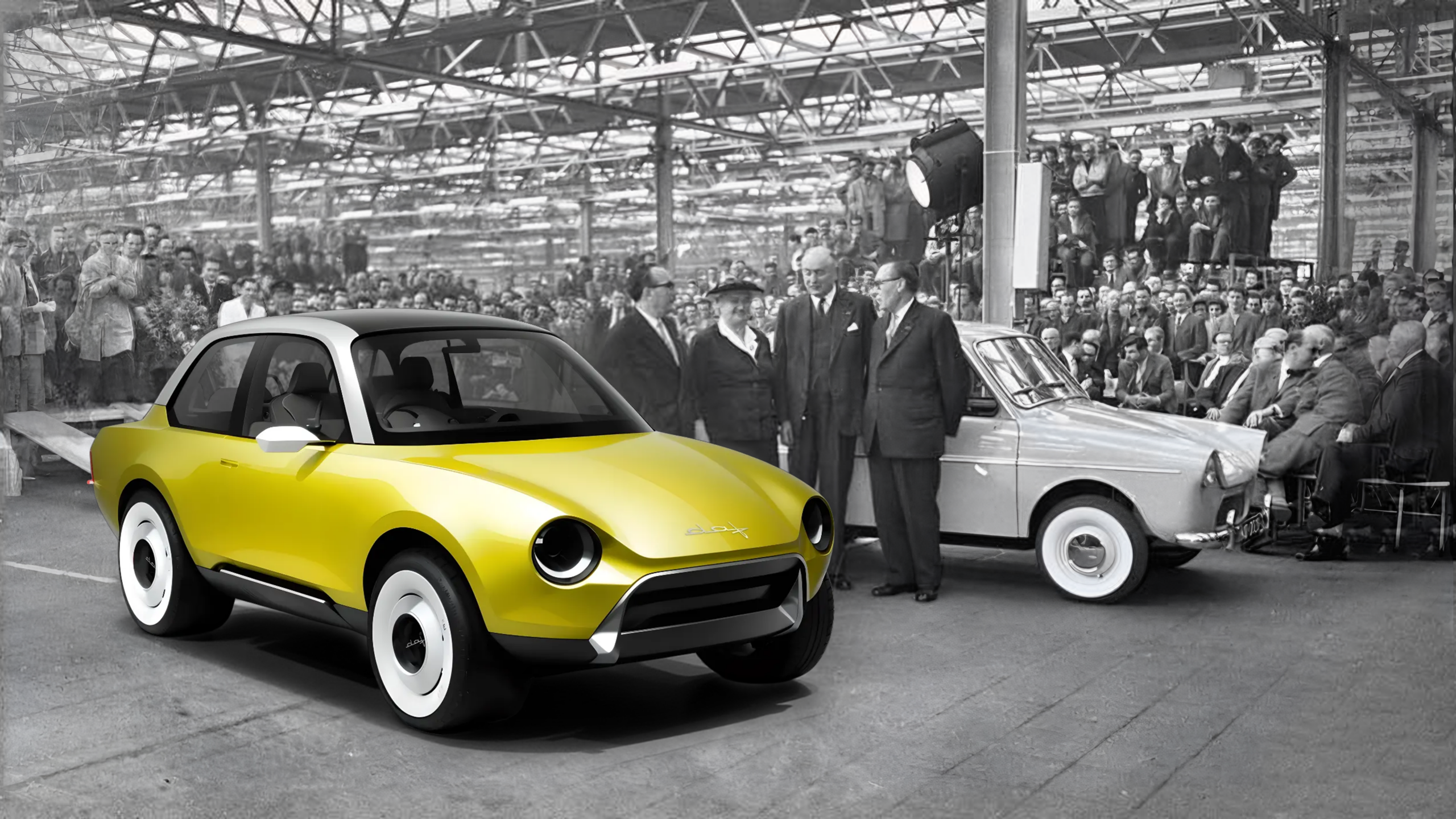
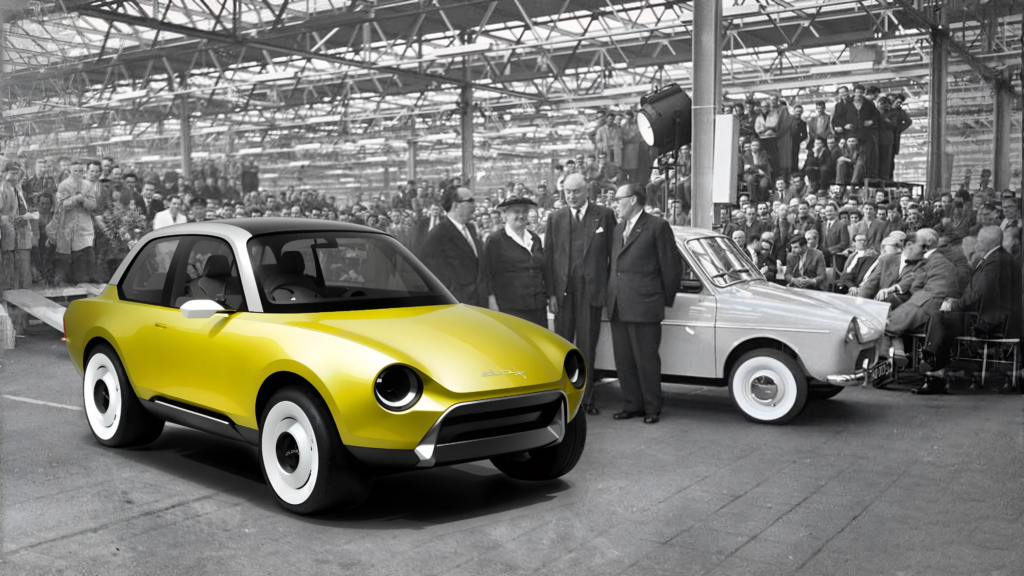
On one side is heritage: DAF’s design milestones, historic vehicles, archival imagery, and the broader design culture that shaped how DAF trucks became recognizable, functional, and premium in their segment.
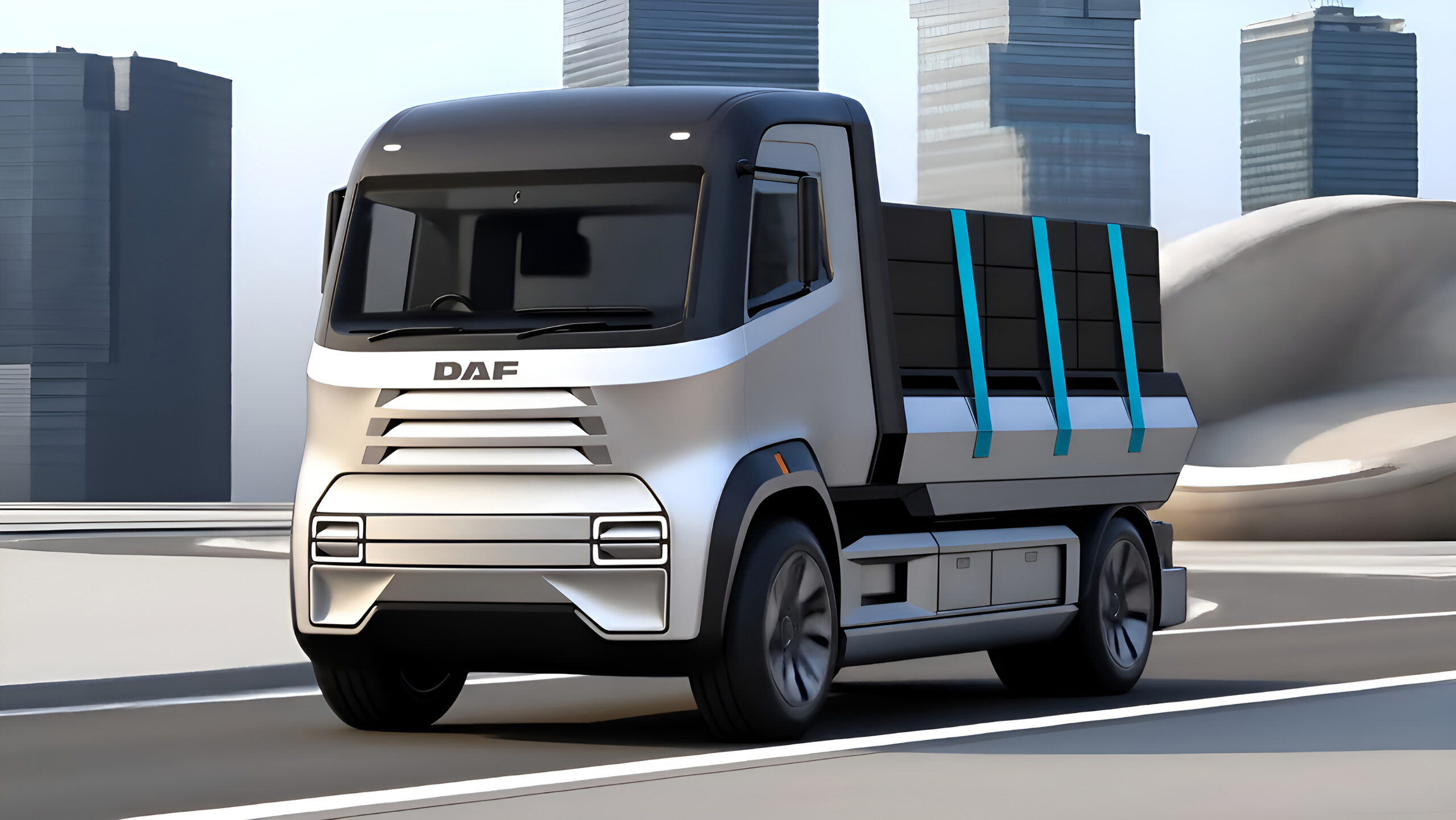
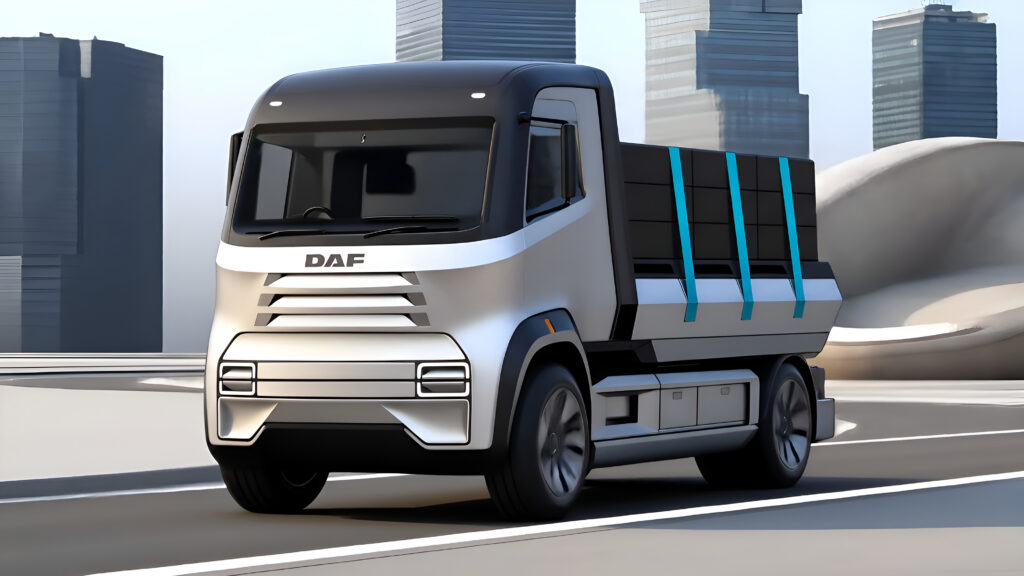
On the other side is the horizon: AI-generated reinterpretations, animated archival visuals, and interactive experiences that demonstrate how concept exploration can evolve when designers combine hand skills with machine-supported variation and visualization.
The exhibition makes a strong point without preaching it: AI is most powerful when it amplifies intent. The human still chooses the direction, the values, the proportions, the brand cues, and the final resolution. AI speeds up the journey between questions and options.
There is also an interactive element that connects strongly with education: visitors can sketch and see AI transform that input into a moving design visualization. It’s not a “make me a truck” button. It’s a window into iteration: how a rough idea becomes a series of alternatives, and how those alternatives can be refined.
Bart van Lotringen and the design-led framing
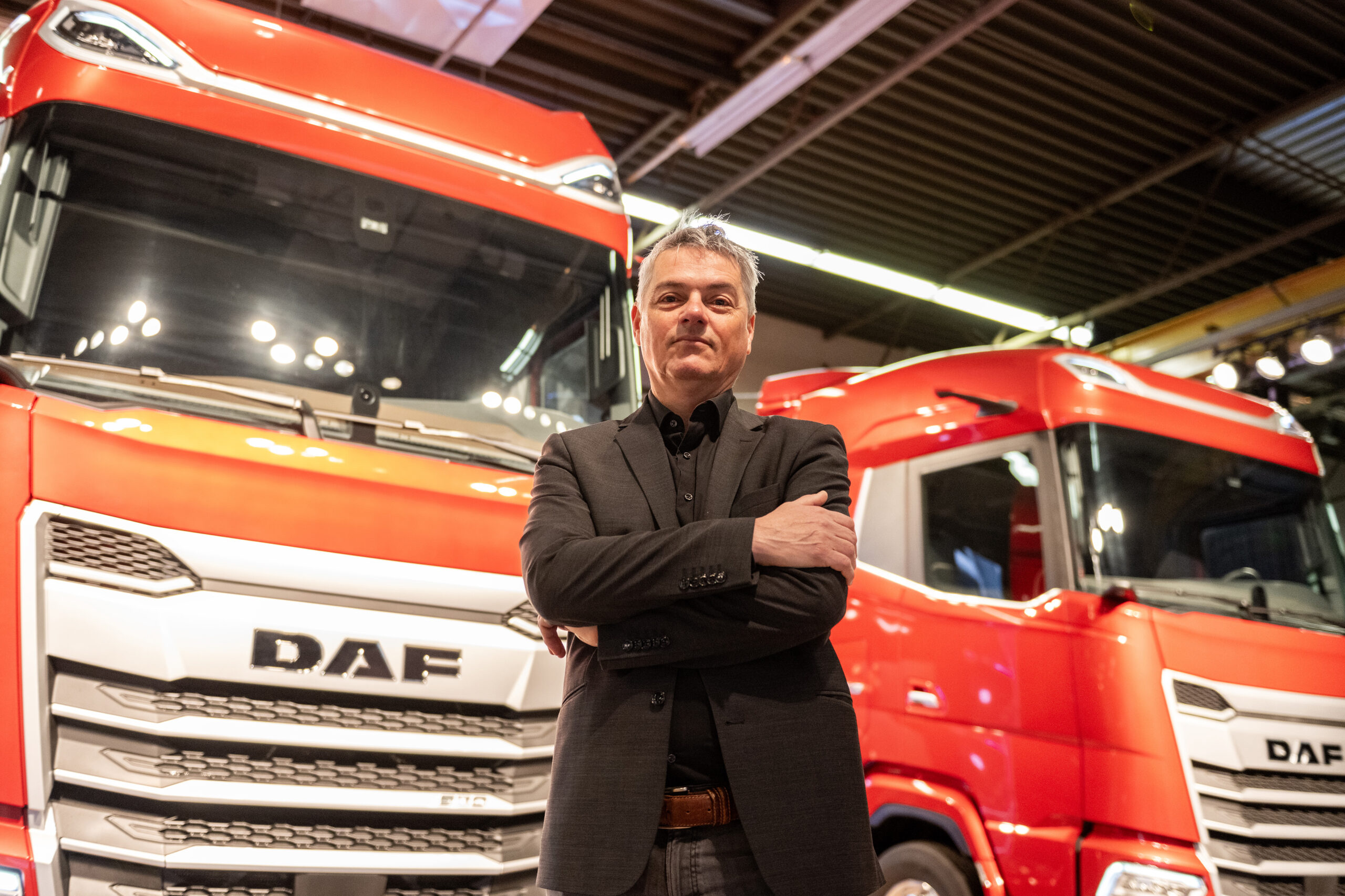
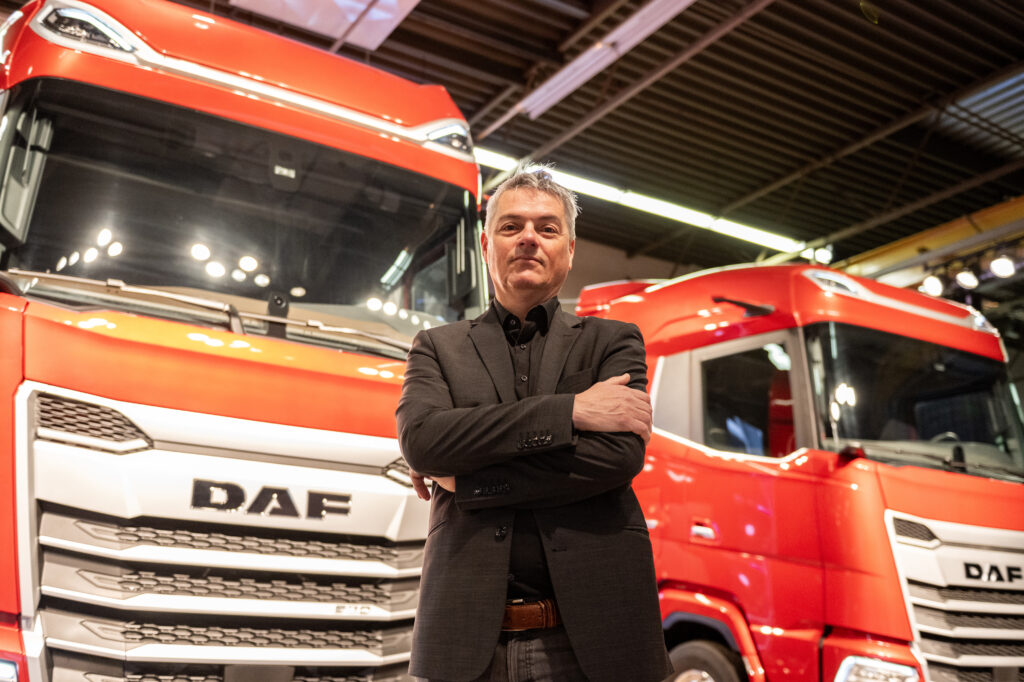
Heritage & Horizons is closely tied to Bart van Lotringen, Director of Design at DAF Trucks, and that is one reason the project feels anchored in professional reality.
A design director curating an AI exhibition sends an important message: this isn’t a tech showcase with design pasted on top. It’s a design conversation about tools, process, and responsibility. It also signals confidence in the brand’s design continuity. You don’t put your heritage next to AI experiments unless you believe your identity is strong enough to survive reinterpretation.
For transportation designers, that’s the part worth paying attention to. AI is not being positioned as a replacement for the studio, but as an evolving extension of how studios think, explore, and communicate.
DAF truck design history in one thread
To appreciate what the exhibition is doing, it helps to view DAF’s history through a design lens rather than a purely industrial one.
DAF’s design story is the story of a commercial vehicle manufacturer steadily increasing the role of design as a competitive advantage. Over time, truck design shifted from being dominated by straightforward function to becoming a balanced discipline where function and brand experience co-exist.
A few themes have defined that evolution:
Cab as a working and living environment
Long-haul trucking demands interior comfort, space, visibility, ergonomics, and an intuitive interface. DAF’s design culture matured in parallel with these needs, treating the cab as an environment, not just a container.
Coherent visual identity
Truck brands live on recognition. A consistent front-end graphic and a clear brand face matter in a way many passenger-car audiences underestimate. DAF’s design language has increasingly leaned into coherence across the range.
Efficiency as form-giver
Aerodynamics and energy efficiency are not optional in modern trucking. They shape proportions, surfaces, transitions, and detailing. In that sense, performance has always been a design material at DAF.
The exhibition uses these themes as the baseline, then shows what happens when new tools are introduced into that tradition.
What AI changes in transportation design, realistically
The most useful way to understand AI in design is to separate hype from workflow.
AI does not remove the need for strong designers. It increases the demand for designers who can judge. In a world where options become cheap, taste and decision-making become expensive.
The exhibition implicitly demonstrates several practical AI advantages:
Faster ideation without losing authorship
Designers can explore multiple plausible directions early, then converge faster once a strong path is found.
Heritage-based exploration
AI can generate alternatives that remain anchored in historical cues, allowing designers to test how far identity can stretch while still feeling authentic.
Communication speed
AI can produce compelling early visuals that help align stakeholders sooner. In a large organization, that can remove weeks of uncertainty.
Public engagement and training
Interactive AI experiences make iteration visible to non-designers and help younger designers understand the value of iteration and refinement.
The key limitation is also clear: AI can produce output, but it cannot carry accountability. Designers still own the consequences: feasibility, safety, manufacturability, and brand integrity.
The book: why pairing a publication matters
The exhibition is paired with a book titled Design with Artificial Intelligence – Heritage & Horizons. That pairing is not a minor detail.
Exhibitions are temporary and experiential. Books are durable and referenceable. By publishing alongside the exhibition, DAF is effectively saying: this moment in design methodology matters enough to preserve.
For the design community, a book anchored in a museum show becomes a timestamp. It captures how the industry framed AI at this specific point, what it considered credible, and how it connected new tools to established design values.
What to look for when you visit
If you visit the exhibition with a designer’s eye, focus on these three things:
How heritage is translated rather than copied
Look for cues that remain constant across time: graphic identity, proportion logic, surface character, and functional honesty.
Where AI is accelerating iteration
Pay attention to how many alternatives are explored and how quickly, and how those alternatives vary while staying within a coherent design language.
How the exhibition positions human judgment
The most important part of AI design is not generation. It’s selection, refinement, and responsibility. Notice where the exhibition makes that clear through examples.
Closing perspective
Design with Artificial Intelligence – Heritage & Horizons is ultimately an exhibition about continuity. It argues, quietly but convincingly, that the future of transportation design will not be built by abandoning heritage, and it won’t be built by surrendering creativity to tools.
It will be built by designers who understand identity, craft, and constraint, and who can use AI as an amplifier, not an autopilot.