Peugeot RCZ Vision: The Return of the French Sports Coupé


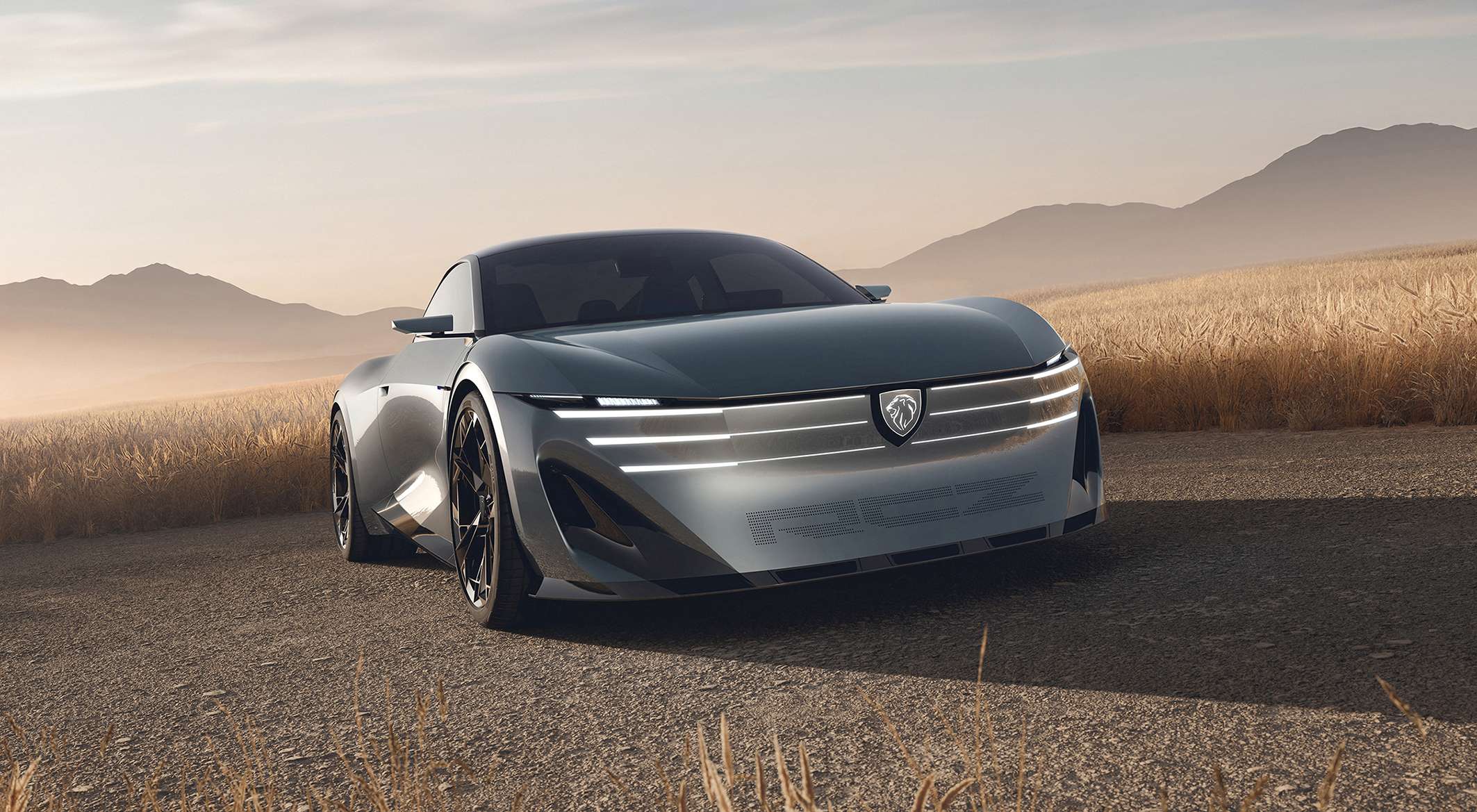
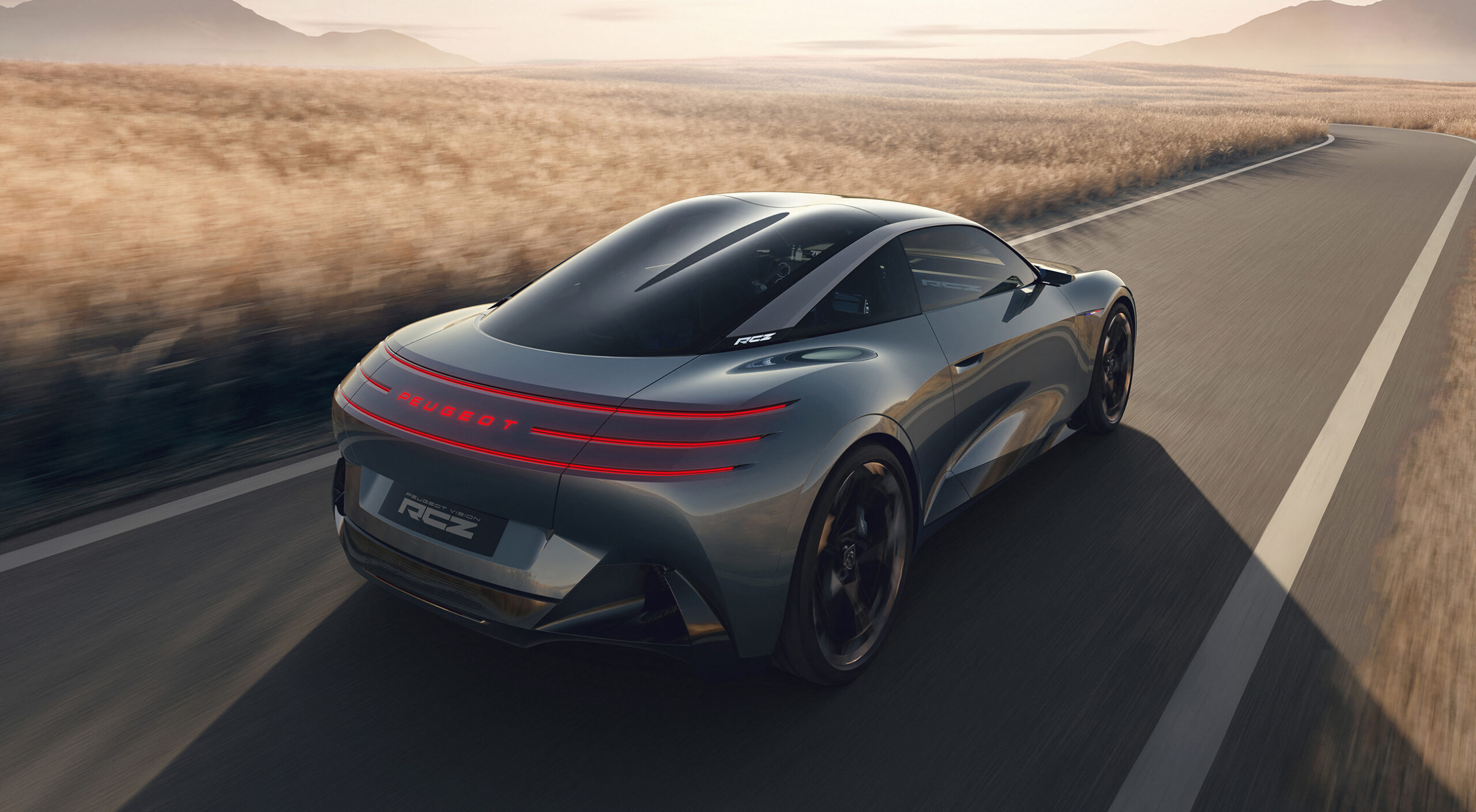
Peugeot has unveiled the RCZ Vision Concept, a striking reinterpretation of its distinctive RCZ sports coupé, produced between 2009 and 2015. Presented as a design and technology manifesto rather than a confirmed production model, the new concept combines the original car’s unmistakable double-bubble roof with an entirely new design language, advanced electric propulsion and a radically reimagined driver interface.
At a time when traditional sports coupés have almost disappeared from mainstream manufacturers’ portfolios, it is encouraging to see Peugeot revisiting a body style that once contributed significantly to the brand’s identity. More importantly, RCZ Vision demonstrates how Peugeot intends to combine emotional design with advanced technology without allowing the technology itself to dominate the vehicle’s character.
With 500 horsepower, a proposed solid-state battery and a 1,000-volt electrical architecture, the concept also explores technologies that could fundamentally change the performance and packaging possibilities of future electric vehicles.

Feline Future: A New Peugeot Design Language
RCZ Vision introduces Peugeot’s latest interpretation of its Feline Future design philosophy, developed under Design Director Matthias Hossann. The approach is built around five principles: freedom, courage, elegance, inner strength and instinct.
The resulting design moves away from the increasingly complicated surface treatments seen on many contemporary vehicles. Instead, Peugeot has concentrated on powerful proportions, carefully controlled sculpture and the contrast between a relatively delicate greenhouse and a substantial, muscular lower body.
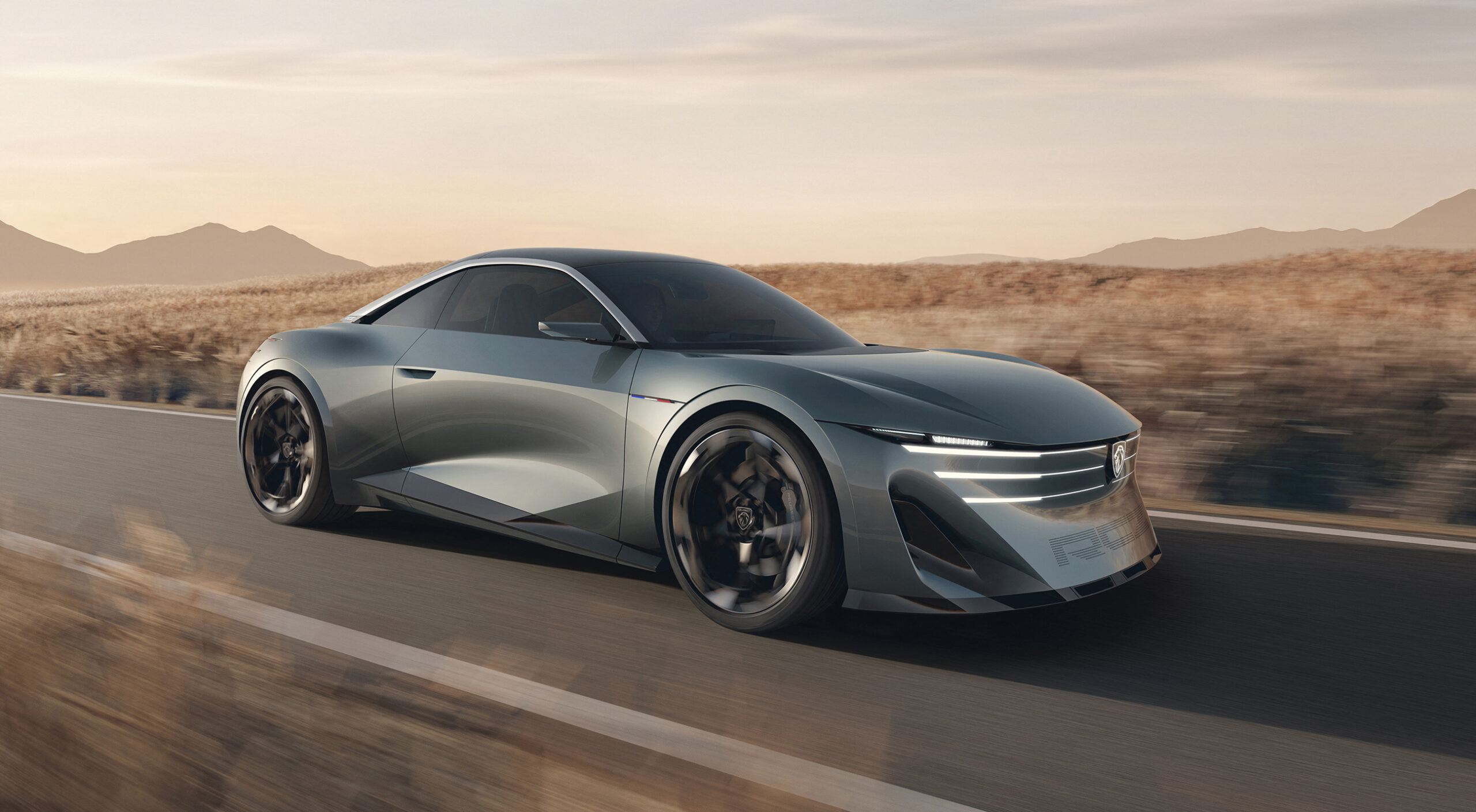
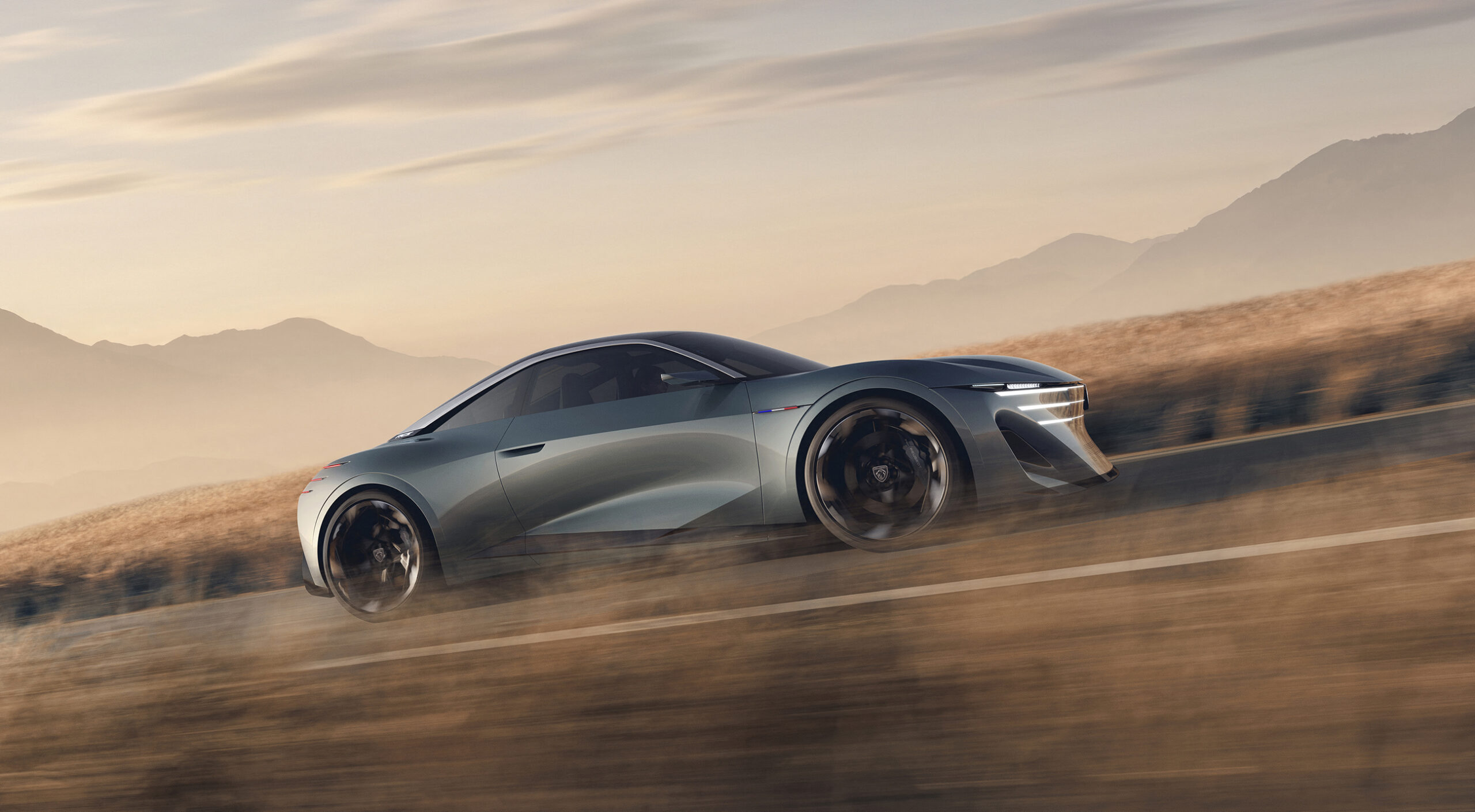
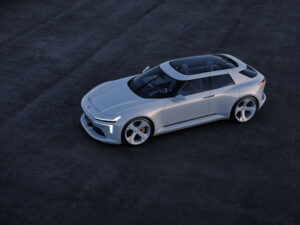
The concept has an unmistakably feline stance, with pronounced shoulders over both axles and a body that appears slightly inclined forward, ready to accelerate. Its sculpted flanks create tension without relying on excessive character lines, while the rounded volumes maintain the sensuality traditionally associated with French automotive design.
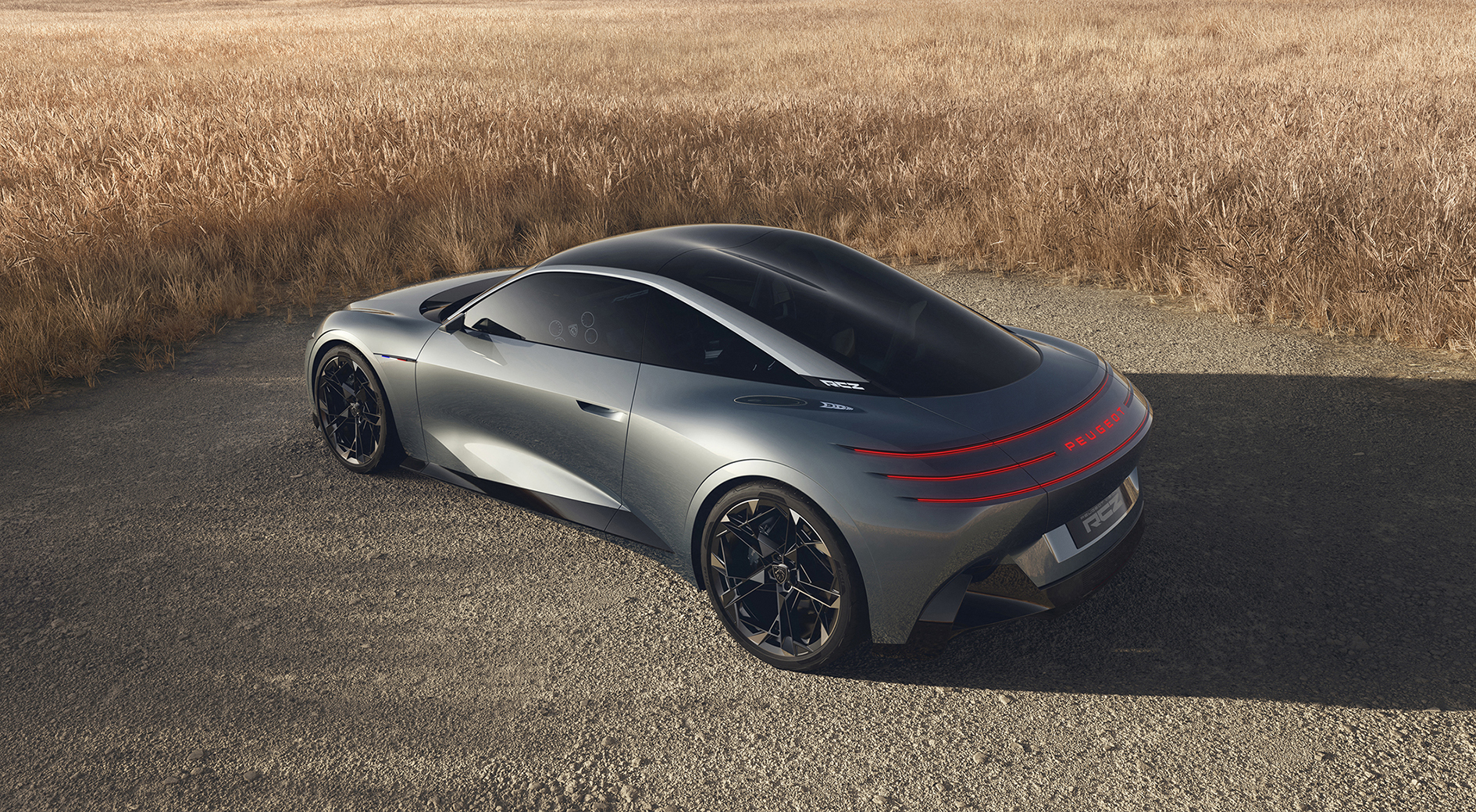
Perhaps the most successful aspect is the relationship between the body and the cabin. The greenhouse appears almost like a transparent bubble resting on the muscular lower structure, creating a particularly distinctive silhouette. This separation gives RCZ Vision an elegant lightness that many contemporary electric performance cars struggle to achieve.

The Double-Bubble Roof Returns
The original Peugeot RCZ was particularly memorable for its unusual double-bubble roof and the sweeping aluminium arches that framed its greenhouse. Those elements gave the car a recognizable identity that distinguished it from more conventional sports coupés.
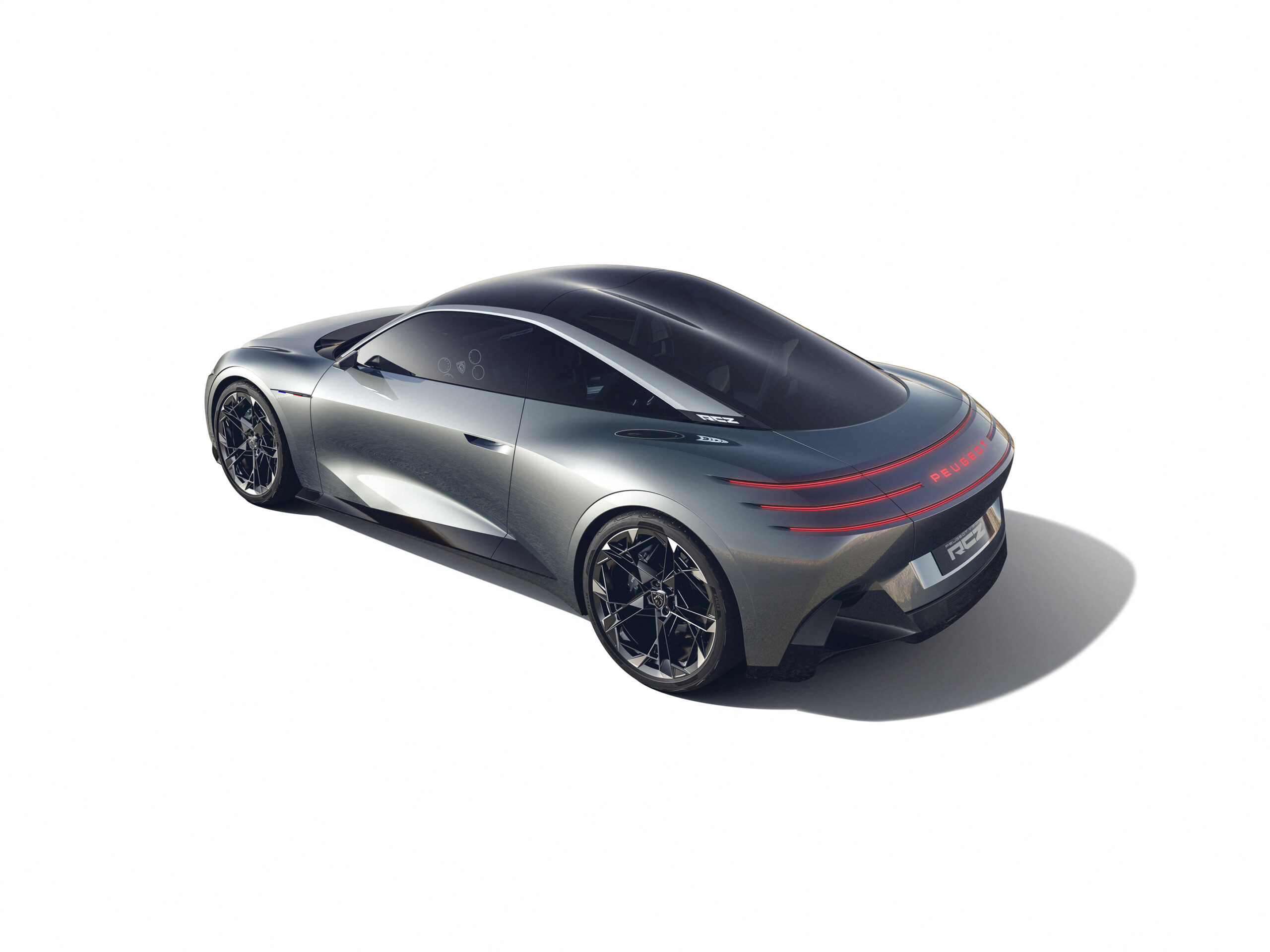
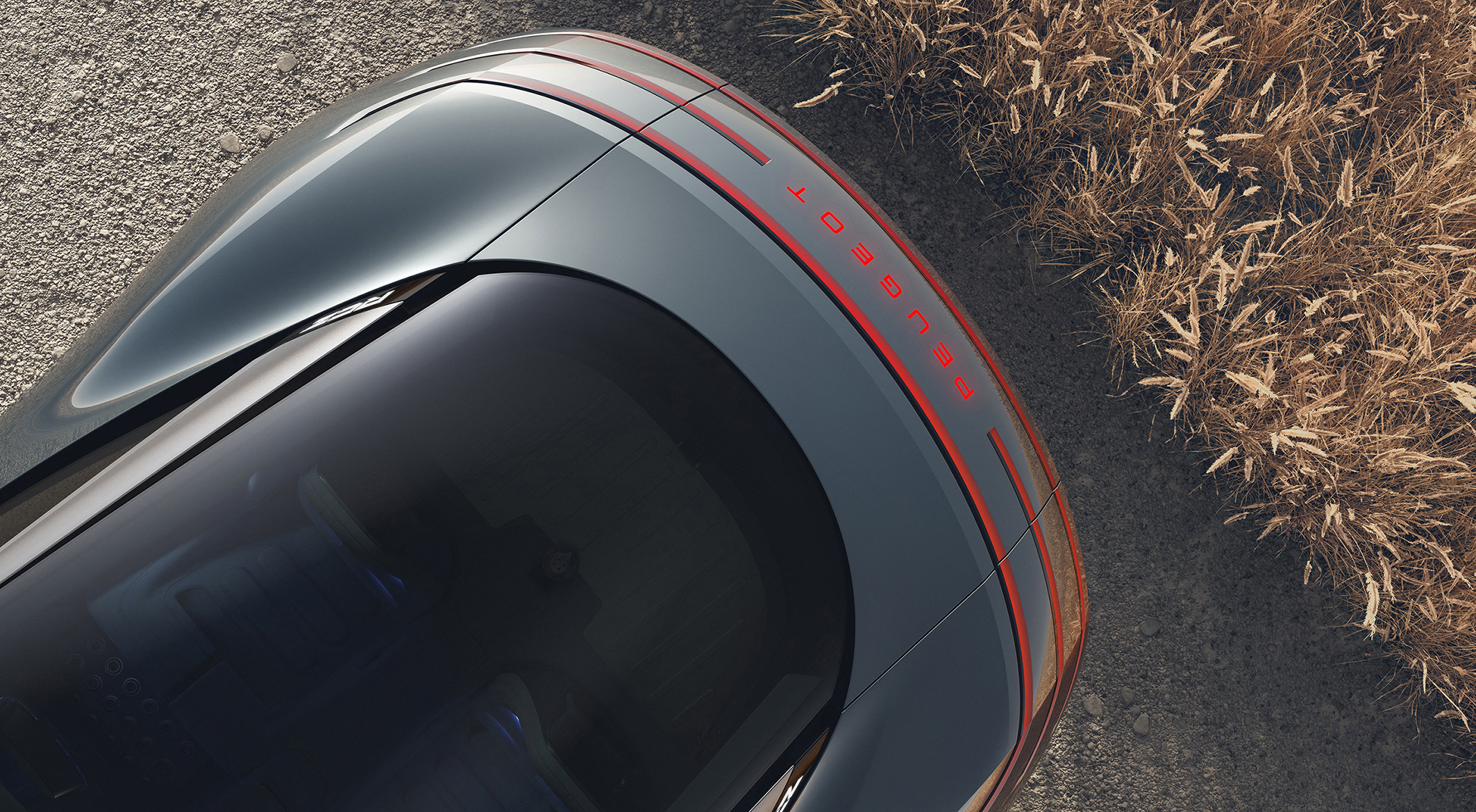
RCZ Vision retains both features but reinterprets them with considerably greater freedom. The glass-bubble theme now extends visually from the bonnet toward the rear of the vehicle, while the double-bubble roof has been developed to provide additional headroom for rear passengers.
The characteristic roof arches are slimmer and appear to float alongside the greenhouse. Rather than using solid aluminium, Peugeot has developed a finish incorporating recycled aluminium, reducing material use while preserving the metallic appearance associated with the original.
This is an intelligent approach to heritage design. Peugeot has retained the original RCZ’s strongest visual characteristics without simply reproducing its surfaces. The result is immediately recognizable as an RCZ, yet its proportions and sculpture are unmistakably contemporary.
The concept also features staggered forged-aluminium wheels measuring 21 inches at the front and 22 inches at the rear. Their radiating-spoke design recalls traditional Peugeot wheel themes, while small triangular details reference the original RCZ’s wheel designs.

A New Interpretation of the Peugeot Face
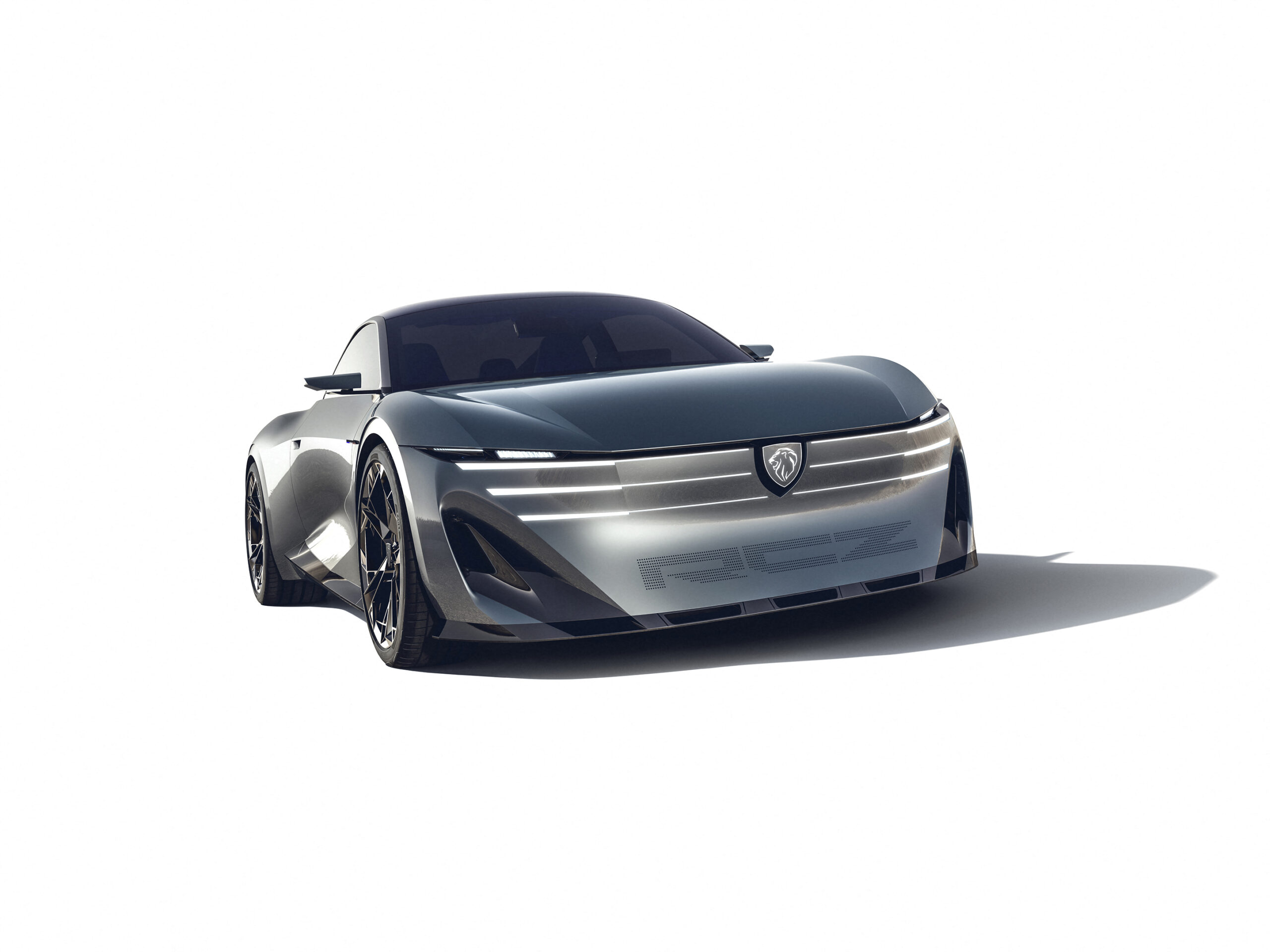
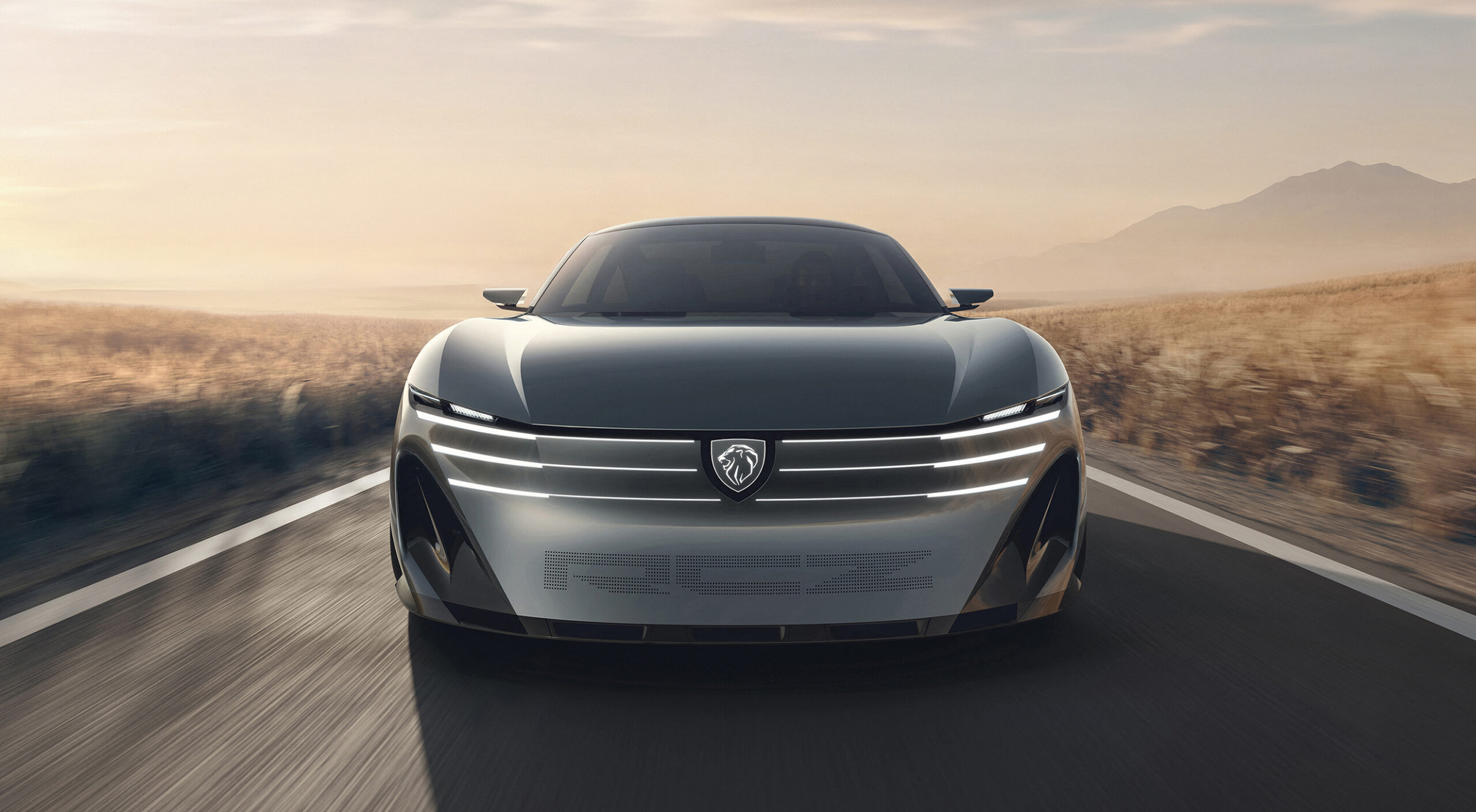
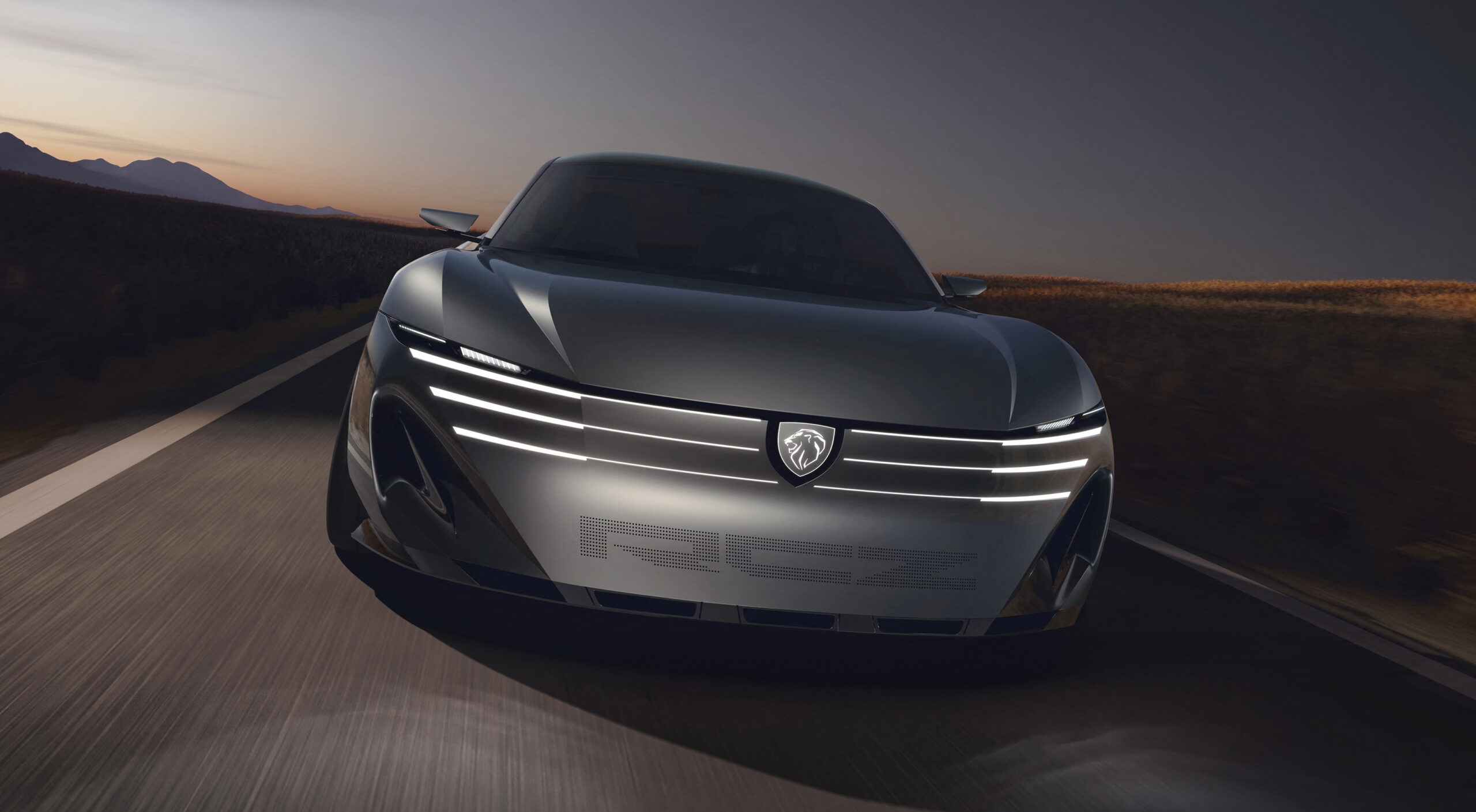
The front introduces Peugeot’s latest lighting signature, replacing the familiar vertical three-claw arrangement with three exceptionally thin horizontal elements.
These are combined with compact Thin Lens LED headlights, creating a concentrated expression that emphasizes the vehicle’s width. An illuminated Peugeot emblem and a micro-perforated RCZ graphic across the front bumper contribute to a more technical appearance without overwhelming the underlying body sculpture.
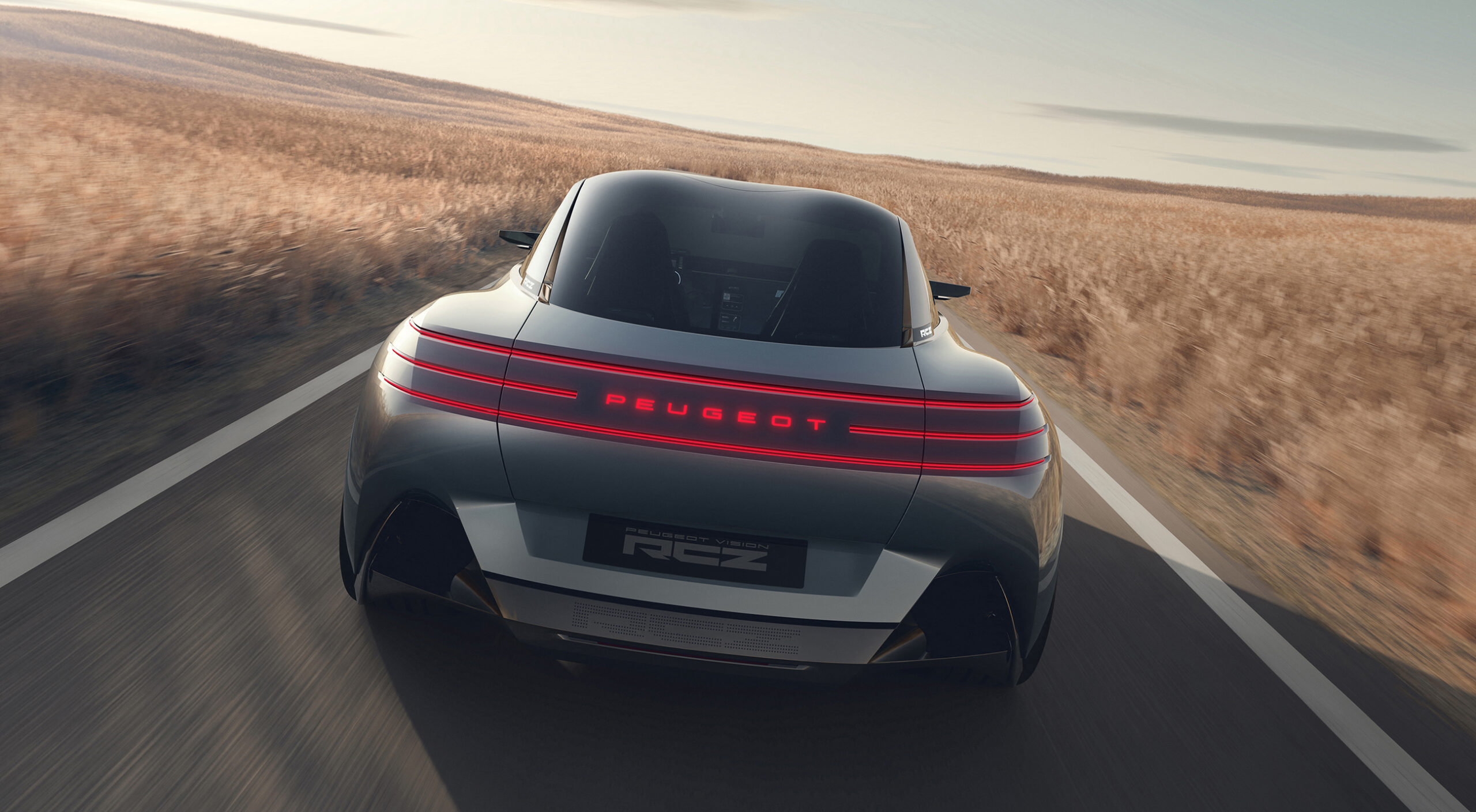
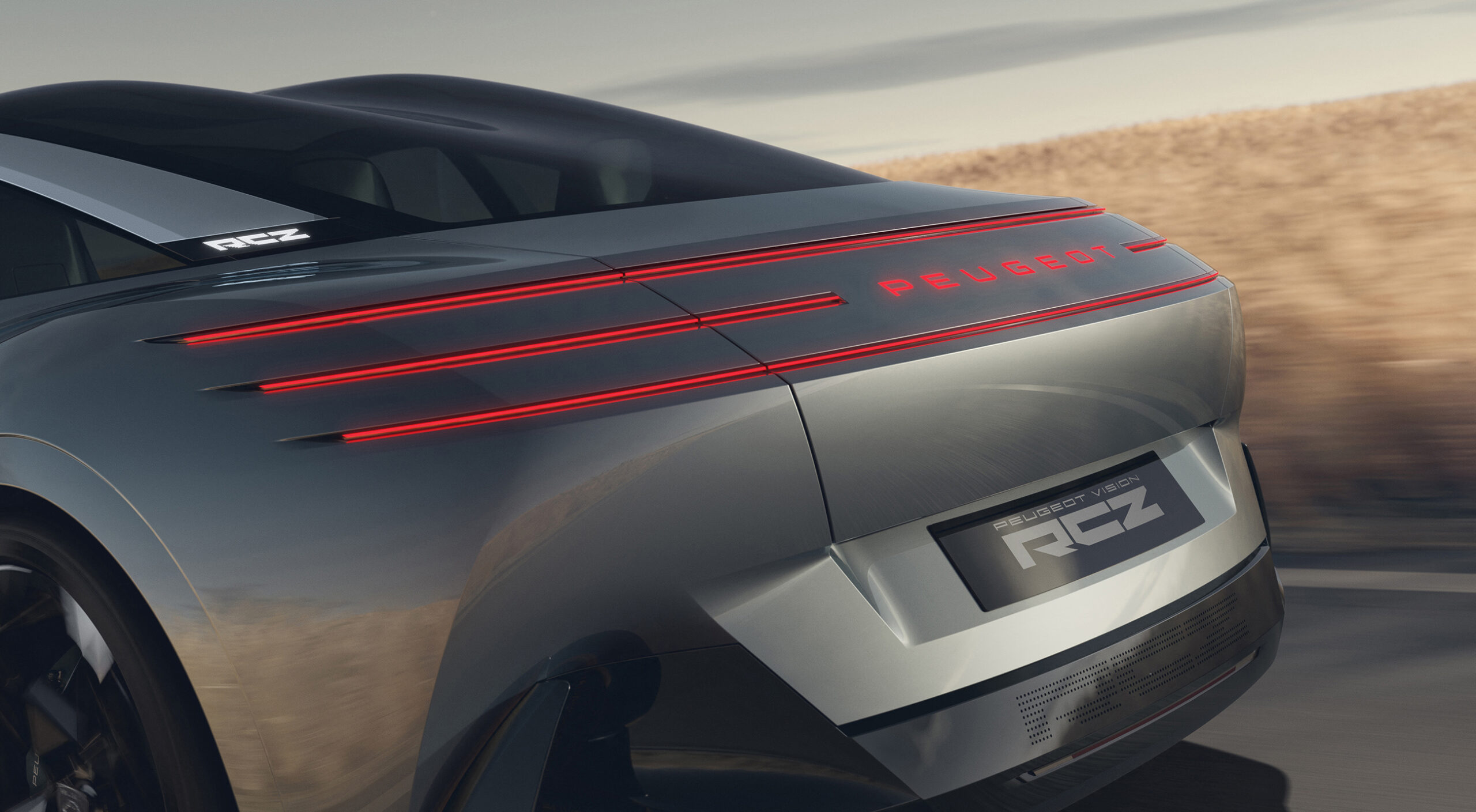
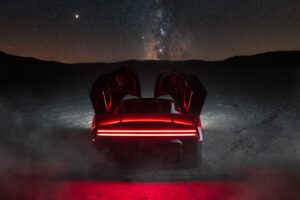
At the rear, the three horizontal lighting elements integrate the various lighting functions into a clean graphic composition. An active rear spoiler remains concealed when the vehicle is stationary and deploys while driving, recalling a similar feature on the original RCZ.
From a design perspective, this is an important evolution for Peugeot. The three-claw signature has become a central part of the brand’s visual identity, but its horizontal reinterpretation creates a different character that could influence future production models.

A Radical Rethink of the Driver Interface
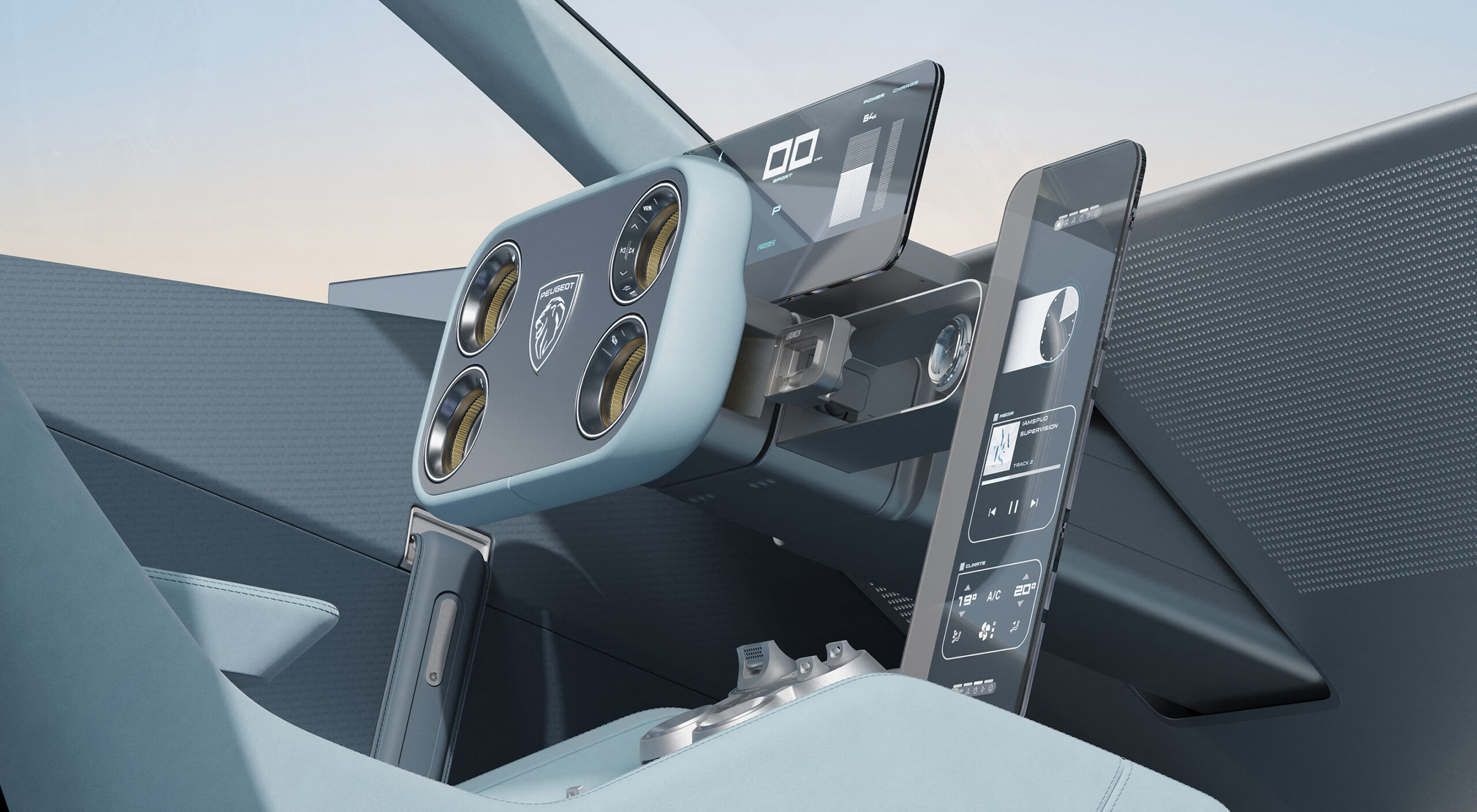
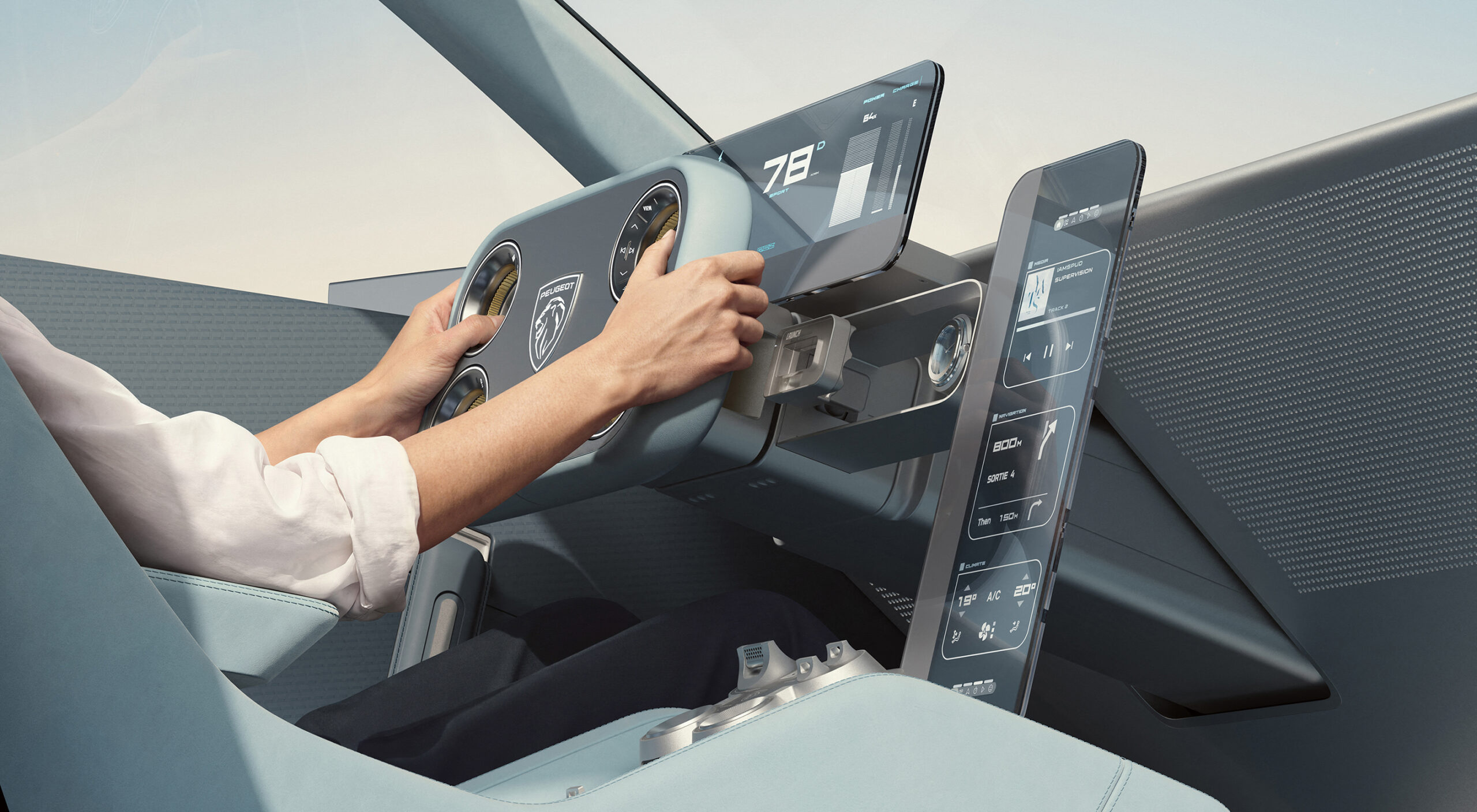
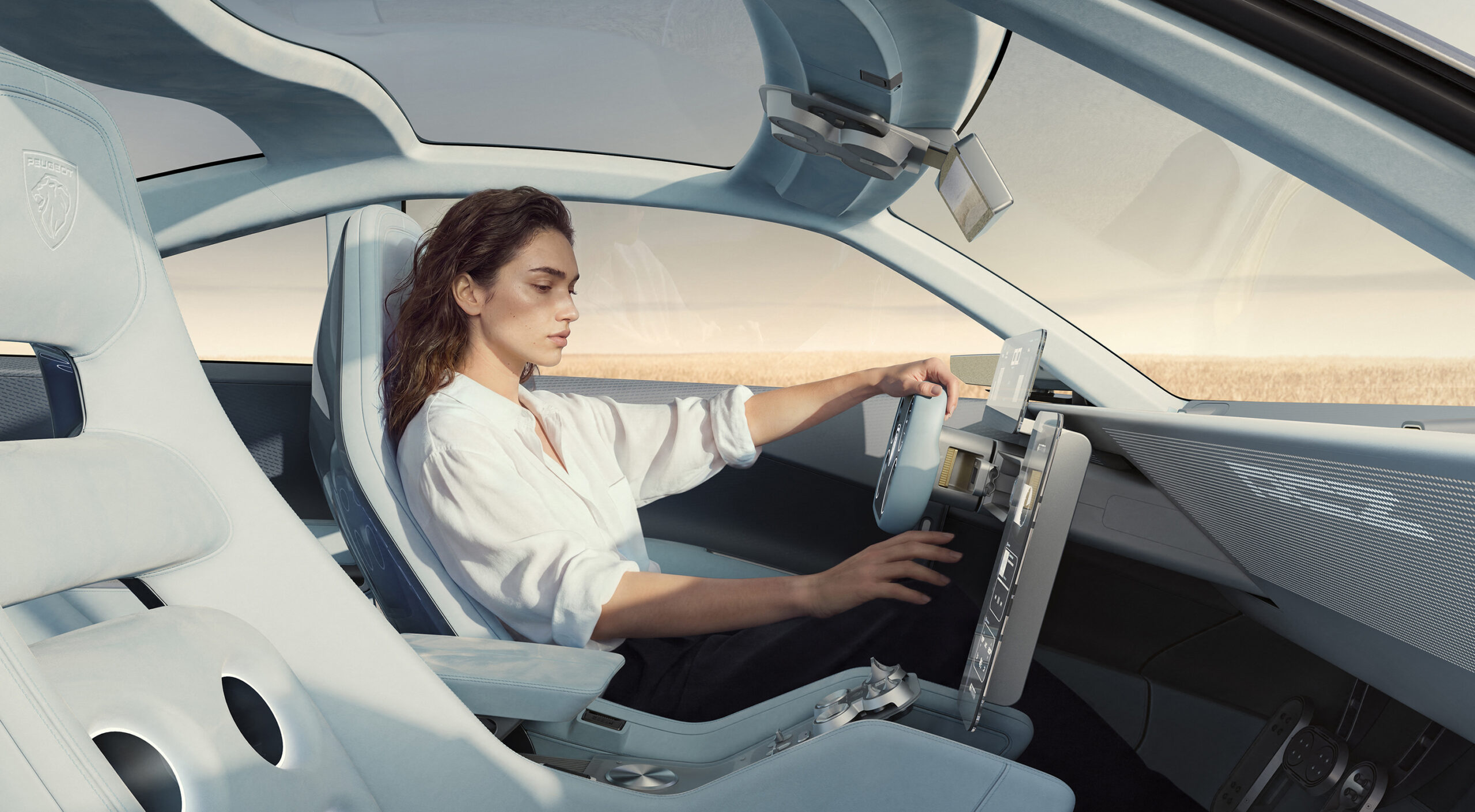
Inside, RCZ Vision introduces a new generation of Peugeot’s i-Cockpit, combining the unconventional Hypersquare steering control with transparent Micro LED displays.
The Hypersquare replaces the traditional circular steering wheel with a compact rectangular control incorporating four circular touch areas. Combined with steer-by-wire technology, it eliminates the mechanical connection between the steering control and the front wheels.
This allows the steering ratio to change according to vehicle speed. At low speeds, the driver can manoeuvre without repeatedly turning the steering control, while higher speeds produce a more progressive response.
The concept also introduces brake-by-wire technology, replacing the conventional hydraulic connection between the brake pedal and the braking system with electronic control. Peugeot claims this allows more precise braking modulation and improved integration of regenerative braking.
These technologies offer considerable opportunities for vehicle packaging and ergonomics, although the ultimate challenge will be preserving the natural feedback and confidence that enthusiastic drivers expect from a sports car.

Technology That Can Disappear
One of the most interesting interior developments is Peugeot’s use of transparent Micro LED displays.
Rather than covering the dashboard with increasingly large conventional screens, Peugeot has created a transparent instrument display positioned above the Hypersquare, complemented by a floating central touchscreen angled toward the driver.
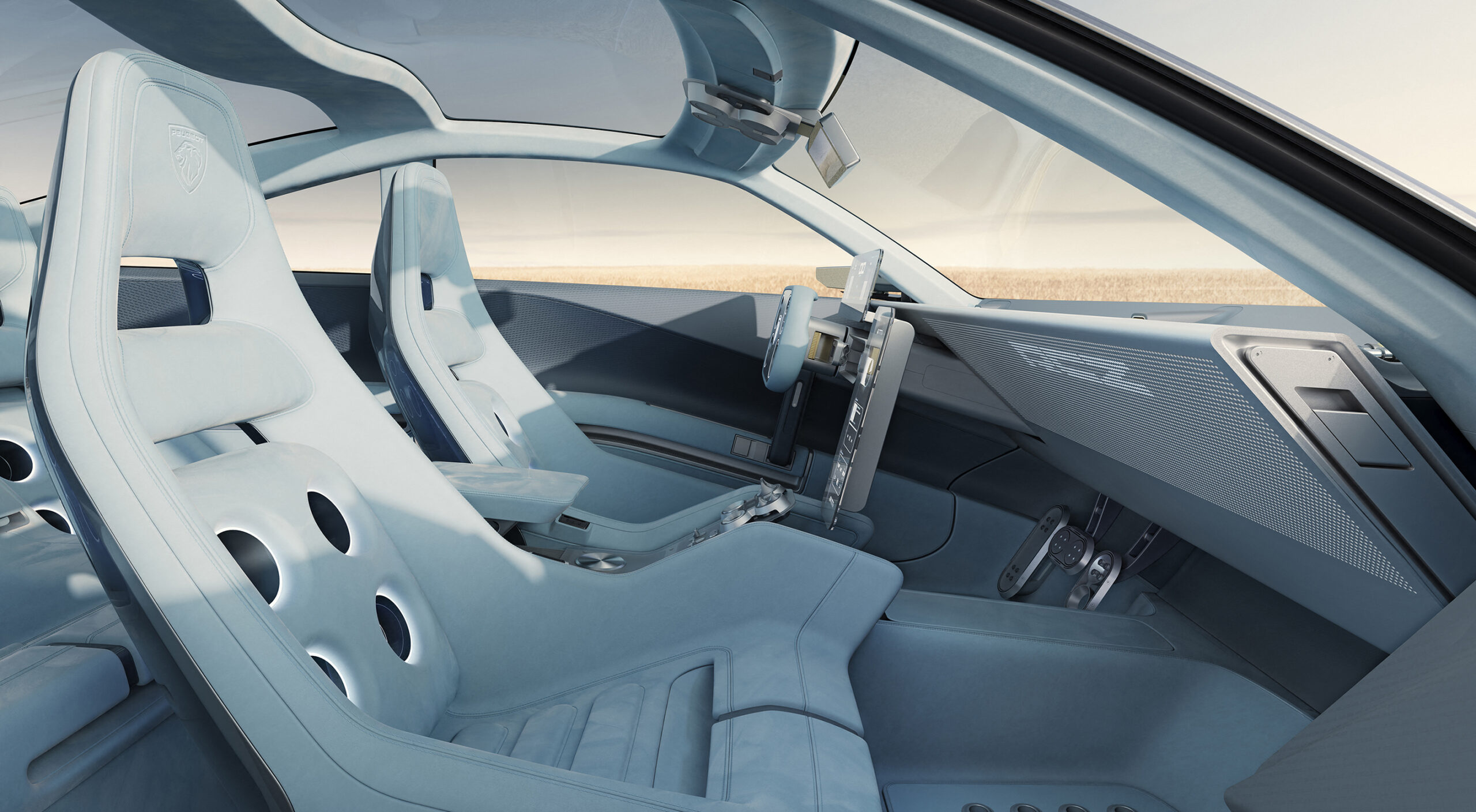
The central display can be switched off completely, allowing it to virtually disappear from view. This creates a cleaner interior and reduces visual distractions when the driver wants to concentrate on the road.
It is a refreshing direction. Modern automotive interiors increasingly resemble digital entertainment centres, often at the expense of ergonomics and visual simplicity. Peugeot is exploring a more intelligent relationship between technology and the driving experience, allowing information to become available when required without constantly demanding attention.
The floating centre console retains physical controls for important functions, while machined aluminium elements and frosted glass introduce a level of material sophistication more commonly associated with luxury grand tourers.

A Genuine Four-Seat Grand Tourer
Despite its dramatic proportions, RCZ Vision is designed as a four-seat grand tourer rather than a two-seat sports car.
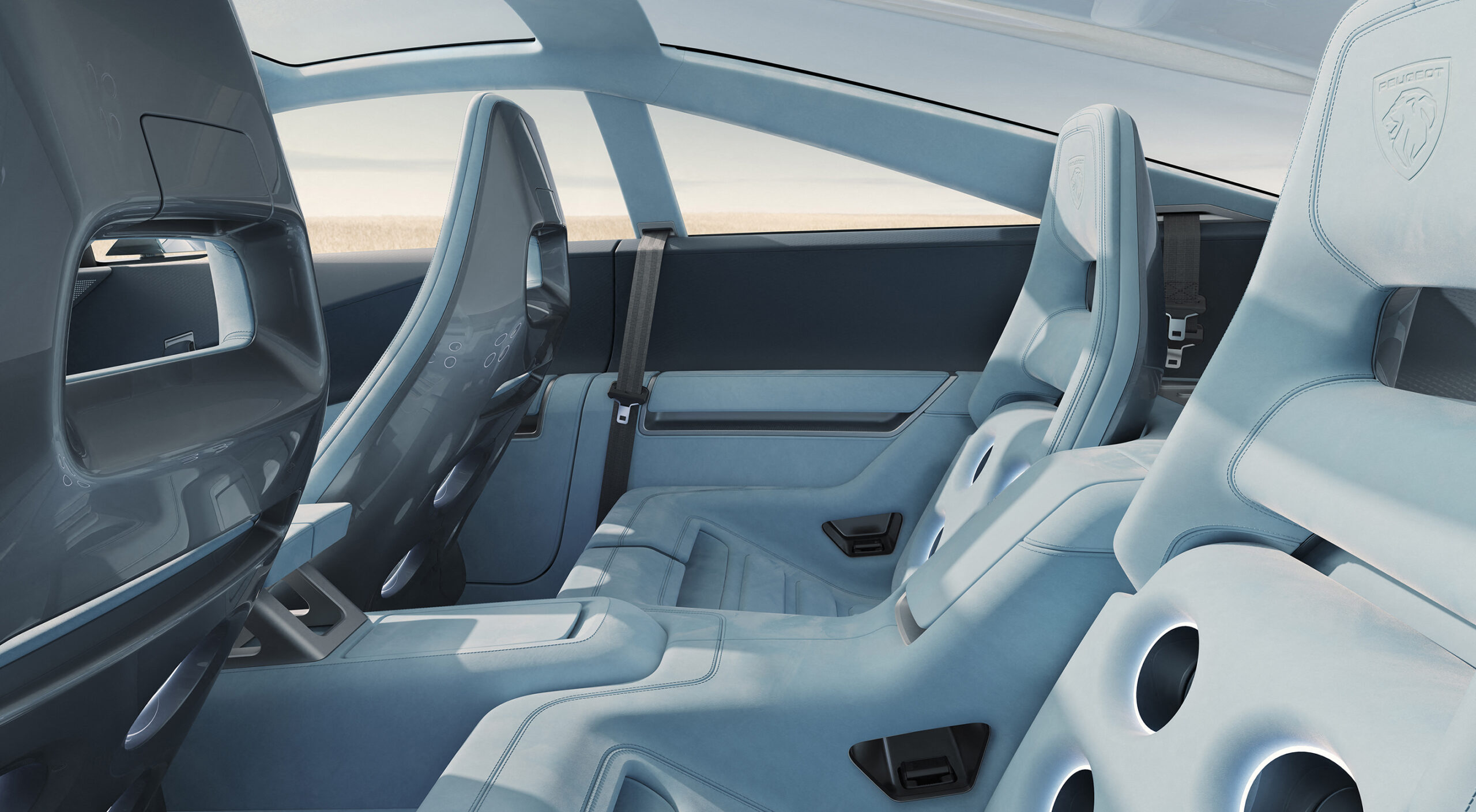
Peugeot has developed an unusually slim dashboard structure to maximize interior space, while the front seats use asymmetrical support structures and open sections in their backrests to reduce weight. The rear seats are intended to accommodate two adults, with folding backrests providing additional luggage capacity.
The cabin combines Alcantara with PELINOVA leather produced from recycled leather-industry offcuts. A light-blue colour scheme contrasts with the machined aluminium components, creating a relatively bright and welcoming environment.
A particularly interesting detail is the dashboard clock developed with French watchmaker SERICA. Rather than adding another purely decorative digital element, Peugeot has integrated a physical timepiece into the central display structure, reinforcing the concept’s grand-touring character.

500 Horsepower and Solid-State Battery Technology
RCZ Vision’s technical specification is ambitious. Peugeot proposes a 500 hp electric drivetrain, combined with a solid-state battery developed in collaboration with Factorial Energy.
The battery is only 110 mm thick, allowing Peugeot to create a particularly low vehicle architecture without the compromises normally associated with placing a large battery beneath the passenger compartment.
Operating at 1,000 volts, the electrical system is intended to support charging from 10 to 80 percent in less than ten minutes. Peugeot also targets a driving range of up to 600 kilometres and energy consumption of approximately 11.5 kWh/100 km.
These are impressive figures, particularly for a high-performance electric coupé. However, they remain concept targets rather than independently verified production specifications, and achieving this combination of performance, efficiency and charging speed would represent a significant technical accomplishment.
The concept uses an architecture based on the future STLA One platform, designed to accommodate advanced electronic control systems and next-generation battery technologies.

A Welcome Return to Emotional Automotive Design
What makes RCZ Vision particularly appealing is that Peugeot has not attempted to disguise the fact that it is a sports coupé.
Its low stance, muscular proportions, distinctive roof architecture and carefully sculpted surfaces emphasize driving pleasure rather than simply presenting another technological demonstration vehicle.
The original RCZ was successful as a design statement because it offered something different from the conventional hatchbacks and SUVs that dominated Peugeot’s range. Its double-bubble roof, sweeping arches and compact coupé proportions gave it a personality that remains recognizable today.
RCZ Vision develops those characteristics into a much more ambitious interpretation of the French grand tourer. The advanced electric drivetrain, transparent displays and steer-by-wire technology demonstrate how future engineering could support an entirely new generation of driver-focused vehicles.
There are naturally questions about whether such an ambitious concept could reach production, particularly with its proposed solid-state battery and sophisticated electronic control systems. Peugeot has not confirmed that RCZ Vision itself will become a production model.
Nevertheless, the design direction is encouraging. It demonstrates that Peugeot still recognizes the importance of emotional appeal, distinctive proportions and a recognizable brand identity.

At a time when the automotive industry increasingly concentrates on SUVs and crossover vehicles, the Peugeot RCZ Vision is a welcome reminder that there is still room for a beautiful, driver-focused French sports coupé.
Whether Peugeot ultimately decides to build it remains to be seen, but from a design perspective, this is exactly the kind of concept the brand needs to keep its sporting heritage alive.