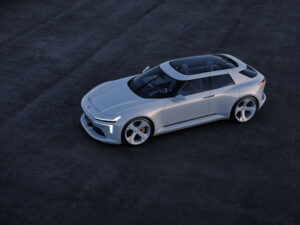
Alpine A310 Vision: Reinterpreting a French Sports Car Icon

Alpine has unveiled the A310 Vision Concept, a dramatic reinterpretation of one of the most distinctive sports cars in the French manufacturer’s history. Celebrating the 55th anniversary of the original four-cylinder A310 and the 50th anniversary of the A310 V6, the concept explores how the unmistakable design character of the 1970s sports car could evolve using contemporary technology, materials and proportions.
Unlike many heritage-inspired concepts, the A310 Vision is not intended as a direct preview of a production model. Instead, it represents a design exploration, allowing Alpine’s designers to revisit the brand’s past while investigating the possibilities offered by its new APP platform.
The result is a remarkably low, wide and sculptural sports car that preserves the spirit of the original A310 without attempting to reproduce its appearance. More importantly, it demonstrates how Alpine intends to develop its design identity beyond the familiar A110.

Rediscovering the Original A310
Introduced in 1971, the original Alpine A310 represented a significant departure from the celebrated A110 Berlinette. Its sharply defined wedge-shaped body, geometric surfaces and distinctive front-end treatment reflected the changing automotive design philosophy of the early 1970s.
Where the A110 relied on compact, rounded volumes, the A310 adopted a longer, lower and more angular silhouette. The later V6 versions introduced wider fenders and a more muscular stance, reinforcing the car’s performance character.
For the A310 Vision project, Alpine’s design team placed an original A310 directly inside the design studio. Rather than relying exclusively on photographs and historical drawings, designers studied the actual vehicle’s proportions, surfaces and graphic elements, developing hand sketches to identify the characteristics that made the original so recognizable.
The objective was not to recreate the A310, but to imagine how its design philosophy might have developed if the car had been conceived using today’s technologies and design possibilities.

Dramatic Proportions and a New Design Language
The A310 Vision measures 4.55 metres long, 2.03 metres wide at the rear and just 1.18 metres high, with a relatively compact 2.45-metre wheelbase.
These dimensions create an exceptionally dramatic stance. The combination of considerable width, minimal height and short wheelbase produces a powerful visual concentration around the passenger compartment, while the sculpted bodywork emphasizes the car’s rear quarters.
The original A310’s wedge-shaped character remains evident, but the new concept replaces much of its angular geometry with more fluid, carefully controlled surfaces. The result combines the visual tension of a traditional sports car with the more organic sculpture increasingly associated with contemporary aerodynamic design.
Particularly interesting is the contrast between the aluminium bodywork and the black lower section. Inspired by Formula 1 aerodynamic treatments, the dark lower surfaces visually separate the main body from the technical elements underneath, making the upper structure appear lighter and more sculptural.
The semi-transparent cabin bubble further emphasizes this distinction, creating an almost aircraft-like relationship between the passenger compartment and the surrounding body.

A New Interpretation of Alpine’s Identity
The front of the A310 Vision introduces several distinctive features that reinterpret Alpine’s traditional design elements.
The headlights are integrated into a flexing section of the front bodywork, creating what Alpine describes as a pop-down effect when the vehicle is activated. Rather than using conventional exposed headlamp units, the lighting becomes part of the front-end sculpture.
The bonnet incorporates a pronounced S-duct channel, combining sharp edges with softer surrounding surfaces. This feature gives the front a more technical character while reinforcing the concept’s connection with motorsport aerodynamics.
Another particularly interesting element is the central Y zero blade, which runs through the vehicle and establishes a visual axis extending toward the rear. This creates a strong sense of direction and movement, emphasizing the arrow-like symbolism traditionally associated with Alpine’s identity.
The wheels continue this theme through an A-shaped triangular design, referencing the distinctive full-metal wheels of early A310 models. Rather than reproducing the historic wheel pattern, Alpine has transformed it into a contemporary graphic that connects the vehicle’s heritage with its new design language.

Aerodynamics as Part of the Sculpture
At the rear, the A310 Vision introduces one of its most dramatic design features: a two-part split wing incorporating translucent elements inspired by ice and mountain landscapes.
The treatment is particularly appropriate for Alpine, whose identity has always been closely connected with the mountainous environment from which the brand takes its name.
Rather than treating the rear wing as a separate aerodynamic attachment, the designers have integrated it into the overall composition of the rear bodywork. Its transparency creates an interesting contrast with the solid aluminium surfaces, reducing the visual mass of what would otherwise be a substantial aerodynamic element.
The blade-shaped rear lamps also serve an aerodynamic purpose, contributing to downforce while creating a distinctive lighting signature.
This integration of lighting, aerodynamic components and body sculpture is becoming increasingly important in contemporary sports-car design. The challenge is to ensure that functional elements contribute to the overall appearance rather than becoming a collection of unrelated technical features.
The A310 Vision demonstrates a promising approach, although its more elaborate aerodynamic treatments would inevitably require considerable development before any potential production application.

The APP Platform Opens New Possibilities
The concept is based around the design freedom offered by Alpine’s new APP platform, developed to support future generations of Alpine sports cars.
According to Alpine, the architecture allows designers to explore different proportions, volumes and vehicle configurations while retaining the modularity required for practical development.
This is particularly significant because traditional sports-car proportions have historically been dictated by the position of the engine, transmission and associated mechanical components. New vehicle architectures provide opportunities to reconsider these relationships, potentially allowing more dramatic exterior designs without compromising the fundamental character of a sports car.
Alpine has not provided detailed powertrain specifications, performance figures or battery information for the A310 Vision. The concept is primarily intended to demonstrate design possibilities rather than establish a technical specification for a future production vehicle.

A Glimpse Into the Future Alpine Interior
Although the A310 Vision is principally an exterior design study, its semi-transparent greenhouse provides a glimpse of an equally unconventional interior.
The cabin features organically sculpted seats, bold colour-blocked surfaces and physical controls inspired by high-fidelity audio equipment. Rather than relying exclusively on large digital displays, Alpine appears interested in creating a more tactile relationship between the driver and the vehicle.
The use of strong colours and unified interior elements creates an interesting contrast with the metallic exterior. It also suggests that Alpine is exploring a more expressive interior identity rather than following the increasingly standardized digital architecture found in many contemporary sports cars.
However, the interior remains deliberately conceptual, with Alpine concentrating primarily on the exterior design and its connection with the original A310.

Heritage Without Simply Repeating the Past
The Alpine A310 Vision is an interesting example of how automotive heritage can be used creatively without becoming an exercise in nostalgia.
The original A310 was memorable because it represented a bold departure from the established A110 design philosophy. Its geometric wedge shape, unusual proportions and distinctive front-end treatment made it immediately recognizable as an Alpine while establishing an entirely different visual character.
The new concept follows a similar philosophy. Rather than reproducing the original’s sharp surfaces and 1970s details, it translates the fundamental qualities of the A310 into a contemporary design language.
Its extremely low silhouette, powerful rear quarters, distinctive lighting treatments and carefully integrated aerodynamic features create a car that feels connected to Alpine’s history without appearing trapped by it.
Perhaps most importantly, the A310 Vision demonstrates that Alpine’s future design identity does not have to revolve exclusively around the A110. The brand possesses a broader history of distinctive sports cars, and the A310 provides an excellent foundation for exploring a different type of Alpine.
The A310 Vision may not be destined for production, but it succeeds in demonstrating something more important: Alpine’s heritage offers considerably more creative possibilities than simply recreating its most famous models.
For a manufacturer preparing to expand its range of performance vehicles, that is an encouraging direction.